

 Show Advanced Search Options
 Hide Advanced Search Options
Browse Books for Adults
1
-
15
of
45 Results;
Sort By
Go To
of 3
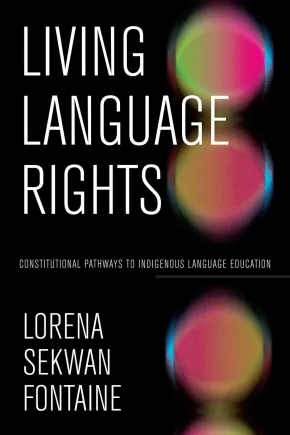


Living Language Rights: Constitutional Pathways to Indigenous Language Education
$27.95
Format:
Paperback
Text Content Territories:
Indigenous Canadian;
Reading Level: N/A
ISBN / Barcode: 9781772841145
Synopsis:
Synopsis:
Beyond Bilingualism
In Living Language Rights: Constitutional Pathways to Indigenous Language Education, Lorena Fontaine's ground-breaking work explores the constitutional foundations and growing recognition of Indigenous language rights in Canada. By documenting the history of First Nations' language transmission on the prairies, Fontaine demonstrates how Indigenous language rights are deeply embedded in both First Nations law and Canadian constitutional law. Equal parts personal and scholarly, Living Language Rights highlights the sacred responsibility within First Nations law to preserve and transmit language. Fontaine argues that language transmission is not only culturally significant, but also a constitutionally protected right that Canada has a duty to uphold-especially following decades of attempted linguistic genocide.
Focusing on education as the path to Indigenous language revitalization, she examines the current health of Indigenous languages and urges governments to act. Living Language Rights is a crucial read, filling an important void for anyone seeking to understand Indigenous rights, language revitalization, and Canadian constitutional law.
Reviews
"Fontaine’s interweaving of history and perspectives with the law make this a significant contribution to the field of language loss and revitalization. Living Language Rights is a “must read” for educators interested in Indigenous languages and their revitalization." - Marie Battiste, University of Saskatchewan
Educator Information
Table of Contents
List of Figures
Acknowledgements
Preface
Introduction: Foundations: First Nations Language Transmission
Chapter 1: Intercustomary Law: First Nations Language Transmission in the Prairies
Chapter 2: Linguistic Genocide: Canada's Educational System
Chapter 3: Canada's Constitution: First Nations Language Rights in Education
Chapter 4: International Law: Indigenous Peoples Language Rights in Education
Chapter 5: Indigenous Languages Act: Section 35 of Canada's Constitution Act, 1982
Conclusion
Appendix
Notes
Bibliography
Additional Information
264 pages | 6" x 9" | Paperback
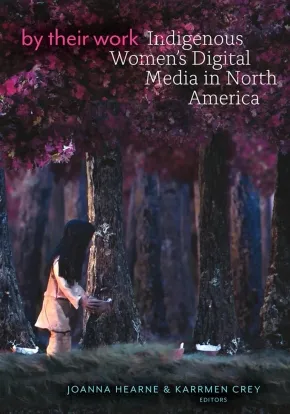
By Their Work: Indigenous Women's Digital Media in North America
$41.99
Editors:
Format:
Paperback
Text Content Territories:
Indigenous American; Indigenous Canadian;
Reading Level: N/A
ISBN / Barcode: 9781517919061
Synopsis:
Synopsis:
A first-of-its-kind collection to transform our understanding of digital media from Indigenous women creators
Indigenous women form a vital force in digital media production now and have over the past several decades—in fact, nearly three quarters of the projects at the 2017 imagineNATIVE Film and Media Arts Festival were created by women. By Their Work highlights the prismatic nature of Indigenous women’s digital media, connecting the digital arts with their creative labor and adaptive activism.
Joanna Hearne and Karrmen Crey bring together a collection of essays and interviews to highlight the voices of powerful and important media makers, from Indigenous video game creators to animators to social media influencers and from theorists of early Indigenous digital media to current practitioners, including trans and nonbinary creators often left out of public narratives about the digital. Creating a space to hear critical voices on Indigenous media history, theory, and production, the contributors share stories, genealogies, and practices behind Indigenous women’s power and presence in the digital world.
Focusing on the history of digital media as a whole, this collection presents a compelling case for Indigenous women’s crucial roles across the history of digital forms and platforms. In doing so, By Their Work transforms digital Indigenous studies in the twenty-first century.
Contributors: Nanobah Becker; Reilley Bishop-Stall, McGill U; Meagan Byrne; Tawny Trottier Cale; Dana Claxton; Crystal Harrison Collin; Elizabeth Day; Kristin L. Dowell, Florida State U; Miranda Due; Heid E. Erdrich; Marcella Ernest, U of New Mexico; Marisa Erven; David Gaertner, U of British Columbia; Carol Geddes; Faye Ginsburg, New York U; Patuk N. Glenn; Lisa Jackson; Jacqueline Land, William Jewell College; Jason Edward Lewis, Concordia University, Montreal; Joshua D. Miner, U of Kansas; Salma Monani, Gettysburg College; Jas M. Morgan, Simon Fraser U; Archer Pechawis, York U; Mikhel Proulx, Queen’s U Canada; Ryan Rice; Jolene Rickard, Cornell U; Channette Romero, U of Georgia; Wendi Sierra, Texas Christian U; Skawennati.
Additional Information
344 pages | 7" x 10" | Paperback
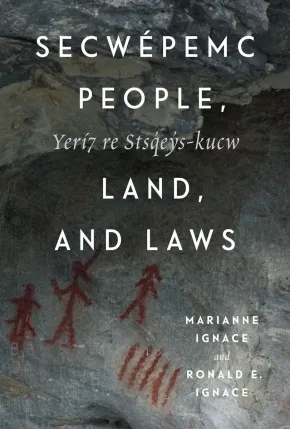
Secwépemc People, Land, and Laws: Yerí7 re Stsq'ey's-kucw (PB)
$39.95
Format:
Paperback
Text Content Territories:
Indigenous Canadian; First Nations; Salish; Interior Salish; Secwepemc (Shuswap);
Reading Level: N/A
ISBN / Barcode: 9780228026358
Synopsis:
Synopsis:
Secwépemc People, Land, and Laws is a journey through the 10,000-year history of the Interior Plateau nation in British Columbia. Told through the lens of past and present Indigenous storytellers, this volume details how a homeland has shaped Secwépemc existence while the Secwépemc have in turn shaped their homeland. Marianne Ignace and Ronald Ignace, with contributions from ethnobotanist Nancy Turner, archaeologist Mike Rousseau, and geographer Ken Favrholdt, compellingly weave together Secwépemc narratives about ancestors’ deeds. They demonstrate how these stories are the manifestation of Indigenous laws (stsq?ey?) for social and moral conduct among humans and all sentient beings on the land, and for social and political relations within the nation and with outsiders. Breathing new life into stories about past transformations, the authors place these narratives in dialogue with written historical sources and knowledge from archaeology, ethnography, linguistics, earth science, and ethnobiology. In addition to a wealth of detail about Secwépemc land stewardship, the social and political order, and spiritual concepts and relations embedded in the Indigenous language, the book shows how between the mid-1800s and the 1920s the Secwépemc people resisted devastating oppression and the theft of their land, and fought to retain political autonomy while tenaciously maintaining a connection with their homeland, ancestors, and laws. An exemplary work in collaboration, Secwépemc People, Land, and Laws points to the ways in which Indigenous laws and traditions can guide present and future social and political process among the Secwépemc and with settler society.
Reviews
"This text is not only impressive and powerful for the sheer depth in which it introduces and documents Secwépemc history, enduring laws, language, and relationships to land, but also in the ways in which Secwépemc voices, past and present, are represented and foregrounded throughout." - Transmotion
"Secwépemc People, Land, and Laws will not only become known as the Secwépemc encyclopedia, it also sets the new gold standard for Indigenous scholarship. I will treasure this book as a family heirloom, but I will also be using it to teach Indigenous studies research methods and Indigenous history and to provide an aspirational example of what Indigenous community-engaged, decolonized scholarship can look like. And for this I am deeply indebted to the Ignaces for their lifetime of work." - Sarah Nickel, McColl Magazine
"A masterful and definitive story of an ancient culture that continues to thrive despite years of colonial oppression." - BC Studies
Additional Information
640 pages | 6.25" x 9.25" | Paperback
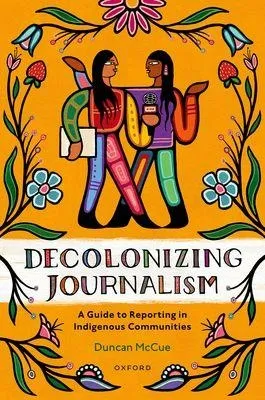
Decolonizing Journalism: A Guide to Reporting in Indigenous Communities
$69.99
Format:
Paperback
Text Content Territories:
Indigenous Canadian;
Reading Level: N/A
ISBN / Barcode: 9780190164263
Synopsis:
Synopsis:
Recent events including the Truth and Reconciliation Commission and the discovery of mass graves at the sites of former residential schools have brought increased coverage of Indigenous Peoples to Canada's mainstream media outlets. However, there is no guide for current and aspiring journalists to building respectful and reciprocal relationships with Indigenous people and communities when researching and sharing their stories. Written by a leading Indigenous journalist, Duncan McCue, specifically for journalism students in Canada, Decolonizing Journalism delivers practical, up-to-date advice in a guidebook-like text that students will use throughout their studies and careers. Readers will learn how to develop a critical consciousness when engaging with and reporting on Indigenous communities, and will draw insights into the histories, processes, and obstacles central to decolonizing journalism from exclusive interviews with 9 leading Indigenous journalists.
Educator Information
Decolonizing Journalism guides students through building critical consciousness vis-à-vis Indigenous people and communities, teaches them how to apply their journalistic skills and minds to working with communities, and offers 9 exclusive interviews with leading Indigenous journalists and podcasters in Canada and the United States.
With this text, students will gain insight into the histories, processes, and obstacles central to decolonizing journalism and media from the inside out.
Table of Contents
A Brief History of Indigenous Relations in Canada
Chapter 1: At the Desk
Chapter 2: In the Field
Chapter 3: On the Air
Chapter 4: Teachings
4.1 Becoming Trauma-Informed – A Conversation with Connie Walker
4.2 Lessons in Humility – A Conversation with Waubgeshig Rice
4.3 “In Love With My People” – A Conversation with Mark Trahant
4.4 Northern Reflections – A Conversation with Juanita Taylor
4.5 Respect and Relationships – A Conversation with Tanya Taylor
4.6 In Pursuit of Truth – A Conversation with Karyn Pugliese
4.7 Punching Up – A Conversation with Tim Fontaine
4.8 The Need for Knowledge-Based Journalism – A Conversation with Merelda Fiddler-Potter
4.9 Asking Hard Questions – A Conversation with Tristan Ahtone
Conclusion: The Last Word
Appendix 1: UNDRIP Articles Relating to Media
Appendix 2: TRC Calls to Action Relating to Media
Appendix 3: OCAP Principles for Indigenous Research and Data Collection
Appendix 4: Residential School Apology
Additional Information
232 pages | 6.12" x 9.25" | Paperback
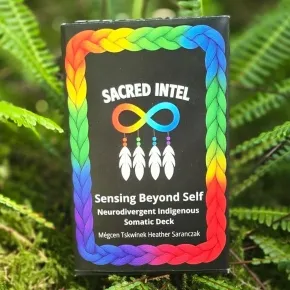
Neurodivergent Indigenous Somatic Nervous System Regulation Card Deck
$39.99
ISBN / Barcode: N/A
Synopsis:
Synopsis:
A 55-card deck (3.9" × 5.9") grounded in neurodivergent, Indigenous, and somatic wisdom to support nervous system regulation, embodiment, and self-trust. Made for every body and every brain, because healing isn’t one-size-fits-all. With gratitude and respect, tobacco down.
Kukwstsétselp Elder Caroline Buckshot (Algonquin), Elder Larry Grant (Musqueam), Elder Phillip Gladue (Métis-Cree), and Elder Ken Pruden (Métis) for the gift of their Teachings. They continue to shape the journey of Sacred Intel and the Core Truths included in this deck are shared with their permission and love.
Inside you’ll find:
- 55 unique cards, including Opening and Closing Cards, and Elder's Teachings, structured by the Seven Chakras and the Seven Sacred Teachings, and grounded in Cḱuĺtn, Secwepemc Teachings for whole-being balance.
- 44 somatic practice cards offering gentle, breath and body-based exercises for nervous system regulation, grounding, and relief from stress and anxiety.
Created from lived experience and sensory-friendly knowledge by a neurodivergent Indigenous educator, this deck is a decolonial alternative to mainstream wellness, a living reminder of our innate wholeness, our belonging, and our connection to all our relations.
Use this deck for daily somatic practice, in therapeutic settings, or during moments of overwhelm. Each card is a gentle companion to help you reconnect with your body, your breath- your Sacred Intelligence.
Ideal for neurodivergent people, therapists, caregivers, educators, and anyone seeking embodied, inclusive, culturally grounded self-care.
Locally made in Langley, BC. Printed on durable, matte-finish card stock. Comes in a sturdy box for safe storage, transport, and ease of use. Beautiful, vibrant packaging makes this card deck a thoughtful gift.
A medicine bundle for practical self-care. Pull a card. Breathe your truth.
Additional Information
5.9 inches x 3.9 inches | 55 Cards
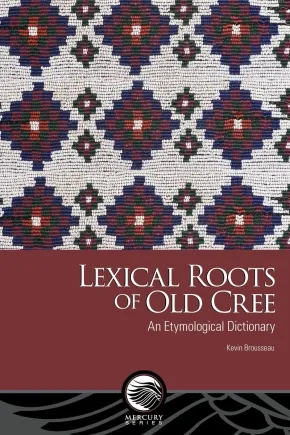
Lexical Roots of Old Cree: An Etymological Dictionary
$59.95
Format:
Paperback
Text Content Territories:
Indigenous Canadian; First Nations; Cree (Nehiyawak);
ISBN / Barcode: 9780776645490
Synopsis:
Synopsis:
Lexical Roots of Old Cree: An Etymological Dictionary is the result of over two decades of research on historical and contemporary Cree dialects. Built from extensive linguistic fieldwork with nearly a hundred fluent speakers and supported by lexical databases and textual corpora, it offers a detailed reconstruction of Old Cree roots and their evolution across dialects such as Moose Cree, Southern East Cree, Atikamekw, and Western Innu.
Lexical roots—the smallest meaningful units of words—are central to Cree’s polysynthetic structure, where words can function as entire sentences. By meticulously tracing these roots, this dictionary provides critical insights into how words were formed in Old Cree and how they continue to be structured in modern dialects.
Beyond linguistic reconstruction, this work addresses practical challenges in Cree lexicography, particularly those arising from orthographic variations and dialectal differences. It serves as a valuable resource for lexicographers, linguists, and community members engaged in language preservation and revitalization.
The research draws from historical manuscripts, early dictionaries, and oral traditions, ensuring a comprehensive and evidence-based approach to linguistic analysis. At a time of rapid linguistic erosion, this dictionary not only documents Cree’s rich lexical heritage but also supports ongoing efforts to sustain and strengthen the language for future generations. It stands as a testament to the knowledge generously shared by fluent speakers and to the enduring vitality of Cree linguistic traditions.
Additional Information
520 pages | 6" x 9" | Paperback
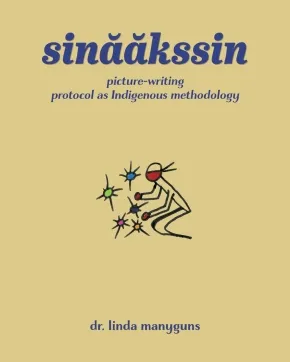
sinaakssin: picture-writing protocol as Indigenous methodology
$65.20
Text Content Territories:
Indigenous Canadian; First Nations; Blackfoot Confederacy (Siksikaitsitapi); Siksika (Blackfoot);
Reading Level: N/A
ISBN / Barcode: 9781038340313
Synopsis:
Synopsis:
sinăăkssin is grounded in cultural practice and insists on writing about research from an Indigenous perspective, focusing on the theme of Indigenous communication methods and emphasizing that culture is alive and capable of influencing research in a good way.
active applications are guided by traditional protocol and informed by symbolic methodologies from the old ways, animating and disrupting the research process to open a respectful bridge that enables the Okaki otapi'ksi to modify the housing crisis depicted in storied form. the symbolic/storied housing replication challenges the tenets of research by creating unique, culturally informed housing models designed to promote building strong families.
critical to the application of Indigenous research methodologies process, Indigenous communications methods are a significant, forgotten part of Indigenous knowledge that has not been explored as an Indigenous research method. Using Indigenous symbols as communication tools for research and applying Indigenous protocols bring people respectfully together. that respect enables the contribution of ancient knowledges to correct the current misalignment in society with Indigenous ways of living.
sinăăkssin is a purposive application of humility and humbleness. written in lowercase, it resists conforming to colonial forms of writing and helps distinguish authentic Indigenous knowledge. this book's perspective is relevant to each Indigenous studies courses or teachings about Indigenous cultures, demonstrating the marvelous opportunities we can develop by using some of the oldest communication tools to juxtaposition Indigenous and non-indigenous interfaces.
Additional Information
Paperback
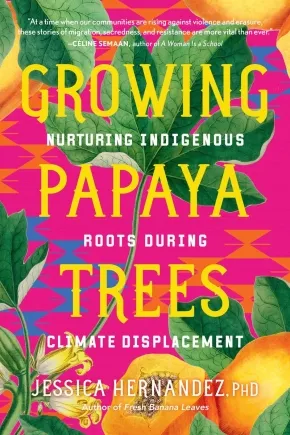
Growing Papaya Trees: Nurturing Indigenous Roots During Climate Displacement
$27.95
Format:
Paperback
Text Content Territories:
Indigenous Central American; Indigenous Peoples in El Salvador; Maya; Maya Ch'orti' ; Indigenous Peoples in Mexico; Zapotec;
Reading Level: N/A
ISBN / Barcode: 9798889840978
Synopsis:
Synopsis:
Leading Binnizá and Maya Ch'orti' scientist Jessica Hernandez, PhD, weaves together Indigenous knowledge, environmental science, and personal family stories in her highly anticipated follow-up to the LA Times best-seller Fresh Banana Leaves.
Not every environmental problem is a result of climate change, but every environmental and climate change problem is a result of colonialism.
Dr. Jessica Hernandez offers readers an Indigenous, Global-South lens on the climate crisis, delivering a compelling and urgent exploration of its causes—and its costs. She shares how the impacts of colonial climate catastrophe—from warming oceans to forced displacement of settler ontologies—can only be addressed at the root if we reorient toward Indigenous science and follow the lead of Indigenous peoples and communities.
Growing Papaya Trees explores:
- Energy as a sociopolitical issue
- The interconnectedness of natural disasters, sociopolitical turmoil, and forced migration
- Our oceans, our forests, and our Indigenous futures
- Moving Indigenous science from mere acknowledgement into real action
- How to nourish Indigenous roots when displaced beyond borders
Dr. Hernandez asks: what does it mean to be Indigenous when we’re separated from our lands? How do we nurture future generations knowing they, too, will have to live away from their ancestral places? She illuminates that cultures are not lost, even amid genocide, turmoil, war, and climate displacement—and shows us how to be better kin to each other against the ecological violence, colonial oppression, and distorted status quo of the Global North.
Reviews
"In Growing Papaya Trees, Jessica Hernandez makes the case that Indigenous science is the best way to challenge the current climate crisis. Through beautiful prose and storytelling based on her own Maya Ch'orti' and Zapotec people's experiences with settler colonialism, she argues that we need collaboration and solidarity from all Indigenous communities, whether on their homelands or displaced into diaspora, and it is through our collective strength that we can meet the challenges of our times. If you want to learn about the importance of Indigenous science and papaya trees to address the climate crisis produced by colonialism, this is a must-read."—Kyle T. Mays (Black and Saginaw Chippewa), author of An Afro-Indigenous History of the United States
"A critical and timely contribution to the discourse on how Indigenous land-based knowledge, relationships, and stewardship can address climate displacement. Hernandez weaves together realities of Indigenous displacement, marginalization, and ongoing impacts of colonialism with stories and teachings rooted in Indigenous resilience and solidarity. Her deep connection to and love for ancestral homelands infuses the book with an intimacy that is rare and powerful. The teachings embedded in the book are not only important for other Indigenous people and scholars, but are also critical for everyone who cares about our shared histories and futures." —Styawat / Dr. Leigh Joseph, author of Held by the Land
"With Growing Papaya Trees, Dr. Hernandez breaks open discussions of diasporic Indigenous identity, shared histories, and climate displacement. Drawing from personal narratives and compelling research, Hernandez has provided an urgent second book that calls for both a keen eye on the past and solidarity in the present."—Kinsale Drake, author of The Sky Was Once a Dark Blanket
"Transported by stories that remind us that the Land remembers, Dr. Hernandez weaves tales that carry ancestral wisdom—guiding us toward collective survival, healing, and belonging. This book is a prayer, a balm, and a call to return to each other and to the Earth. At a time when our communities are rising against violence and erasure, these stories of migration, sacredness, and resistance are more vital than ever."—Céline Semaan, author of A Woman Is a School
Additional Information
224 pages | 6" x 8.99" | Paperback
Cedar Tea
$24.99
Format:
Paperback
Text Content Territories:
Indigenous American; Native American;
Reading Level: N/A
ISBN / Barcode: 979-8332412875
Synopsis:
Synopsis:
Cedar Tea is a heartwarming anthology of poems and short stories designed to offer comfort, healing, and emotional clarity to those in need. Inspired by the soothing properties of traditional Pacific Northwest Cedar Tea, this collection serves as a trusted companion, providing wisdom, peace, and solace for anyone navigating life's challenges.
Whether you’re seeking emotional support during a difficult time or simply need a gentle reminder that you're not alone, Cedar Tea provides a comforting embrace through its powerful words. Each piece is a reminder that healing is possible and that you belong to a greater, compassionate whole.
Ideal for readers who seek peace, clarity, and emotional healing, Cedar Tea is an essential read for those looking to restore balance and perspective. Order your copy today and experience the healing power of storytelling, one page at a time.
Additional Information
126 Pages | 5 x 0.29 x 8 inches | Paperback
wītāmōwik / Tell Them: On a Life of Inspiration
$27.95
Format:
Paperback
Text Content Territories:
Indigenous Canadian; First Nations; Cree (Nehiyawak); Plains Cree; Saddle Lake Cree Nation ;
Reading Level: N/A
ISBN / Barcode: 9781779400840
Synopsis:
Synopsis:
Cree poet and kēhtē-aya Louise Bernice Halfe – Sky Dancer’s genre-bending collection chronicles her childhood in a cabin on reserve, through the Indian Residential School system, and into her reclamation of her nēhiýaw language, culture, and spirituality.
My parents taught us the art of observation. I learned to hunt, skin, and butcher game through non-verbal methods. I also watched my grandparents work on the land and live their spirituality. I helped gather, dry, and grind their medicines. I inhaled the medicines’ power and ingested it. When I left for residential school all this fell asleep.
Poet Louise Bernice Halfe – Sky Dancer tells the story of how she woke up from the trauma of separation in these never-before-collected essays and new poems about her life and the source of her inspiration: her culture and the land. In Cree, inspiration is described as a sudden insight. It can come from visits from spirit, from the charged reciprocal experience of being taught by Elders and teaching the next generation, from speaking Cree which allows the poet to “somersault into memory,” and in the practice of observing and being in relationship with the land as it “constantly gives birth to itself.” wītāmōwik / Tell Them! is a stunning love song to nēhiýaw ways of knowing—ways which Halfe has reclaimed from the violence of colonization to celebrate their survival and share their enduring relevance with future generations.
Reviews
“Louise Halfe, with great generosity and insight, draws us into her lodge where a person can begin to receive what she calls ‘spiritual intelligence.’ One of Canada’s most remarkable poets, she takes us through the trauma of residential school and its corrosive aftermath, through racism and injustice – she is one of our leaders and we are in good hands.” -Tim Lilburn
Additional Information
288 pages | 5" x 8.03" | Paperback
By the Fire We Carry: The Generations-Long Fight for Justice on Native Land (PB)
$24.99
Format:
Paperback
Text Content Territories:
Indigenous American; Native American; Cherokee; Cherokee Nation (Cherokee Nation of Oklahoma);
Reading Level: N/A
ISBN / Barcode: 9780063112056
Synopsis:
Synopsis:
A powerful work of reportage and American history that braids the story of the forced removal of Native Americans onto treaty lands in the nation’s earliest days, and a small-town murder in the ‘90s that led to a Supreme Court ruling reaffirming Native rights to that land over a century later.
Before 2020, American Indian reservations made up roughly 55 million acres of land in the United States. Nearly 200 million acres are reserved for National Forests—in the emergence of this great nation, our government set aside more land for trees than for Indigenous peoples. That changed on July 9, 2020, when a high-profile Supreme Court case—which originated with a small-town murder two decades earlier—affirmed the reservation of Muscogee Nation. The ruling resulted in the largest restoration of tribal land in U.S. history, merely because the Court chose to follow the law.
In the 1830s Muscogee people were rounded by the US military at gunpoint and forced into exile halfway across the continent. At the time, they were promised this new land would be theirs for as long as the grass grew and the waters ran. But that promise was not kept. When Oklahoma was create on top of their land, the new state claimed their reservation no longer existed. Over a century later, when a Muscogee citizen was sentenced to death for murdering another Muscogee citizen, his defense attorneys argued the murder occurred on the reservation of his tribe, and therefore Oklahoma didn’t have the jurisdiction to execute him. Oklahoma argued that reservation no longer existed. In the summer of 2020, the Supreme Court said: no more; a ruling that would ultimately underpin multiple reservations covering half the land in Oklahoma, including Nagle’s own Cherokee Nation.
Here Rebecca Nagle tells the story of the generations-long fight for tribal land and sovereignty in Eastern Oklahoma. By chronicling both the contemporary legal battle and historic acts of Indigenous resistance, By the Fire We Carry stands as a landmark work of American history. The story it tells exposes both the wrongs that our nation has committed in its long history of greed, corruption and lawlessness, and the Native battle for the right to be here that has shaped our country.
Awards
- Winner of the J. Anthony Lukas Book Prize
Reviews
“Part legal page-turner, part her own compelling family saga, and part eloquent lament for the horrific way our nation has treated Native Americans over the centuries, Rebecca Nagle’s By the Fire We Carry has also given us something exceedingly rare—a story about Native Americans in the Supreme Court in which the good guys actually win.” — Adam Cohen, author of Supreme Inequality
“Nagle gracefully carries readers back and forth through time, explaining the history of the Five Tribes before and after the Trail of Tears, the evolution of U.S. policy toward Native Americans, and the unique peculiarities of Indian law…. She is just as careful to elucidate the technicalities of court procedure, helping readers understand how a death-row appeal on jurisdictional grounds led to `the largest restoration of Indigenous land in US history.’ The legal arcana are dense, but Nagle’s writing is not. With restrained passion she exposes one injustice after another…. Gripping, infuriating, and illuminating—a valuable corrective to our national ignorance.” — Kirkus, starred review
Educator Information
By the Fire We Carry is hard-hitting American history that expands on the nation's story. It tells of the treatment of Native Americans, their removal and displacement, and the genocide committed against them by the US government from their viewpoint.
Additional Information
352 pages | 5.31" x 8" | Paperback
Indigenous Voices: Inspiring & Empowering Quotes from Global Thought Leaders
$25.99
Format:
Hardcover
Text Content Territories:
Indigenous Canadian; Indigenous American; Indigenous South American;
Reading Level: N/A
ISBN / Barcode: 9781577154914
Synopsis:
Synopsis:
Immerse yourself in Indigenous Voices, an inspiring volume of quotations by Indigenous thought leaders, activists, politicians, and scholars illustrated with stunning artwork by Indigenous artists.
This captivating book weaves together the timeless wisdom of Indigenous people from various nations and regions through a mosaic of more than 60 quotes, words, and stories by elders, leaders, activists, scholars, and influential contemporaries spanning all walks of life. Discover the diverse and unique heritage of extraordinary people like:
- Shina Novalinga – A member of the Inuk living in Montreal, Canada, Shina Novalinga is a content creator, singer, and activist who shares her Inuk culture across social media, of which an important aspect is traditional throat singing with her mother.
- Natali Segovia – A member of the Quechua, Natali Segovia is the Executive Director of the Water Protector Legal Collective and a human rights attorney. Her advocacy focuses on defending Water Protectors and human rights defenders facing repression for their activism.
- Corrina Gould – Of the Ohlone, Corrina Gould is the chair and spokesperson for the Confederated Villages of Lisjan, the Co-Director for the Sogorea Te' Land Trust, and the lead organizer for Indian People Organizing for Change.
- Elias Not Afraid – A member of the Apsáalooke (Crow), Elias Not Afraid is a mega-award-winning queer beader and fashion designer. He says, “When people think of native beadwork, they think trinkets and good luck charms and dream catchers but it’s far from it. I create wearable art that is durable and can be used daily and last over a lifetime and be used as a family heirloom.”
- Lily Gladstone – An American actress from the Blackfeet Reservation, Gladstone is of Piegan Blackfeet, Nez Perce, and European heritage. They earned critical acclaim for portraying Mollie Kyle, an Osage woman who survived the Osage Indian murders in Martin Scorsese’s film Killers of the Flower Moon, among other important roles in film and television.
- Kola Shippentower – A member of the Umatilla, Shippentower is the first Native American player for the Oregon Ravens, a tackle football team for women and non-binary players.
- Shiloh Maples – Of the Odawa, Maples is a citizen of the Little River Band of Indians based in Michigan. Through her interest in Indigenous food systems and her own Ojibwe and Odawa heritage, she developed the program Sacred Roots for the American Indian Health and Family Services in Detroit, where she taught cooking classes and promoted dishes using traditional, seasonal, and local ingredients in a way that improved participants’ health while connecting them with their culture.
- Alvera Sargent – Sargent, of the Akwesasne Mohawk, worked with the Akwesasne Freedom School, one of the oldest Indigenous language schools in North America. “My hope for our tribal community at large is that more of our people come back to our traditional space. I am grateful that our time has come as Indigenous people are being recognized for their traditional knowledge systems. The community is recognizing that Indigenous people do have the wisdom of our ancestors to share, which helps all areas of our society.”
- And more!
Indigenous Voices offers a unique opportunity to connect with ancient traditions, refresh your perspective with modern insight, and gain awareness and understanding that resonate across cultures and generations.
Additional Information
192 pages | 7.5" x 8.6" | Hardcover
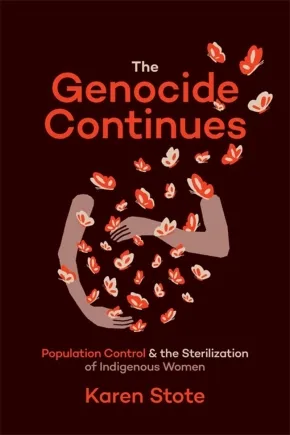
The Genocide Continues: Population Control and the Sterilization of Indigenous Women
$36.00
Format:
Paperback
Text Content Territories:
Indigenous Canadian;
Reading Level: N/A
ISBN / Barcode: 9781773637693
Synopsis:
Synopsis:
Indigenous Peoples in Canada have experienced coerced sterilization under eugenics legislation since the 1930s, and the violence has never stopped, even though eugenics fell into disrepute. In The Genocide Continues, Karen Stote traces the historical, political, economic and policy context informing the coerced sterilization of Indigenous women from 1970 onward. She shows how a powerful idea paved the way for the expanded violations of Indigenous People’s bodies and futures. That idea was population control — a concern with who occupied land and how resources were distributed — and it was a central thread guiding public health interventions from eugenics to family planning.
The Genocide Continues offers new insights to show how federal, provincial and corporate activities intersected to criminalize and regulate Indigenous reproduction. Saskatchewan, which first established family planning policies in the 1970s and is now the province with the highest number of Indigenous women coming forward with experiences of coerced sterilization, is Stote’s case study to demonstrate why family planning activities consistently targeted Indigenous women.
Stote weaves compelling archival evidence with principled storytelling to connect violence against Indigenous bodies to violence against Indigenous lands. Unless and until colonialism, extractivism and dispossession are addressed, a genocide against Indigenous peoples will continue.
Reviews
"Karen Stote has skillfully woven archival documents with evidence in policy, philanthropy, and medicine to show the repulsive side of Canada’s health care system as an assimilation tool. This book recounts the reasons why forced and coercive sterilization of Indigenous Peoples happened and is still happening." - Karen Lawford, Queen's University
Additional Information
288 pages | 6" x 9" | Paperback
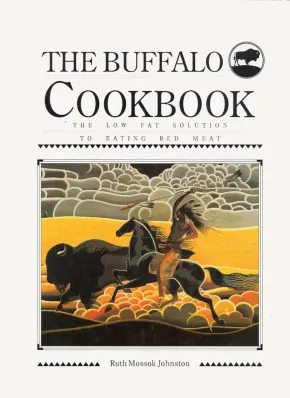
Buffalo Cookbook: The Low Fat Solution to Eating Red Meat (2 in Stock)
$24.95
Format:
Hardcover
Text Content Territories:
Indigenous American; Native American;
ISBN / Barcode: 9780888393456
Synopsis:
Synopsis:
A low fat cookbook providing delectable dishes with buffalo or bison as the unusual and tasty alternative to beef.
Three years later and tofued into oblivion, David and I were in South Dakota, as David was commissioned to do the painting for Mt. Rushmore's fiftieth-anniversary celebration. Numerous local eateries were serving buffalo burgers and other bison specialities--touting this game as a healthy alternative to beef. The claims were accurate; there was virtually no fat present in the meat. Buffalo/bison became the salvation of our dietary dilemma.
Additional Information
152 pages | 8.5" x 11" | Hardcover
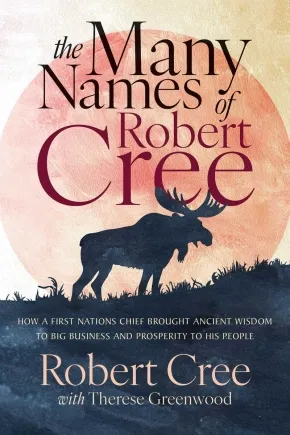
The Many Names of Robert Cree: How a First Nations Chief Brought Ancient Wisdom to Big Business and Prosperity to His People
$26.95
Format:
Paperback
Reading Level: N/A
ISBN / Barcode: 9781770418301
Synopsis:
Synopsis:
A vital account of the life and many names of Robert Cree, and his plan for a peaceful, sincere, and just path to reconciliation in an angry and chaotic world.
His mother called him “Bobby Mountain.” Elders called him “Great Man.” His people called him “Chief.” Oil men called him “Mr. Cree.” But the government called him “Number 53.” Robert Cree was all of these while facing his people’s oppressors and freeing the ghosts of tortured spirits.
The Many Names of Robert Cree is his first-person account of survival in a brutally racist residential school system designed to erase traditional Indigenous culture, language, and knowledge. It is also the story of an epic life of struggle and healing, as Cree takes the wisdom of his ancestors and a message of reconciliation to the halls of government and to industry boardrooms.
In the storytelling tradition of his people, Cree recounts his early years in the bush, his captivity at a residential school, his struggles with addiction, his political awakening as one of Canada’s youngest First Nation Chiefs, and the rising Indigenous activism of the late 20th and early 21st centuries. He also recounts the oil industry’s arrival on his poverty-stricken reserve and the ensuing struggle to balance economic opportunity with environmental challenges.
Throughout, Cree’s leadership is rooted in his unshakable commitment to the sacred traditional teachings of his people. His beliefs give him the strength to focus on hope, dignity, and building a better future for his community. Now a respected Elder and spiritual leader, Cree champions forgiveness as a powerful force that can bring healing and transformation for all.
Additional Information
264 pages | 6" x 9" | Paperback
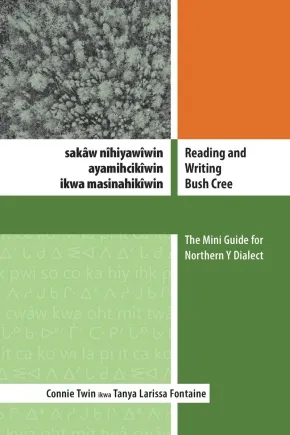
Reading and Writing Bush Cree: The Mini Guide for Northern Y Dialect
$34.95
Format:
Paperback
Text Content Territories:
Indigenous Canadian; First Nations; Cree (Nehiyawak); Woodland Cree;
Reading Level: N/A
ISBN / Barcode: 9781550599855
Synopsis:
Synopsis:
A Vital Resource to Preserve, Teach, and Live the Bush Cree Language
Reading and Writing Bush Cree is a heartfelt, practical, and approachable guide for fluent speakers and Cree language educators who want to learn to read and write sakâw nîhiyawîwin—Bush Cree, or the Northern Y dialect. Written by Connie Twin, a first-language speaker from Bigstone Cree Nation in northern Alberta, and Tanya Fontaine, a dedicated Cree language learner and educator, this book bridges oral fluency with written literacy to support language preservation and revitalization.
Through personal stories and cultural insight, the authors guide readers into the structure of Cree grammar and the use of Standard Roman Orthography (SRO). With clear examples of both fluent and full written forms, this book also sheds light on how Cree sounds are represented in writing and highlights important differences between Northern and Southern Y dialects.
This is more than a how-to book—it’s a call to keep sakâw nîhiyawîwin alive for future generations.
Features
- A first-language speaker’s perspective on learning to read and write Cree
- Focus onsakâw nîhiyawîwin (Bush Cree / Northern Y dialect)
- A step-by-step introduction to Standard Roman Orthography (SRO) and syllabics
- Need-to-know basics of Cree reading, writing, grammar, and Y dialect variation
Additional Information
116 pages | 6" x 9" | Paperback

Wilful Neglect: The Federal Response to Tuberculosis among First Nations, 1867–1945
$34.95
Format:
Paperback
Text Content Territories:
Indigenous Canadian; First Nations;
ISBN / Barcode: 9780228026204
Synopsis:
Synopsis:
How colonial medical policies are linked to health inequities that persist in First Nations a century later.
Tuberculosis, once a leading cause of death in Europe and North America, was understood to be preventable and even curable by the early twentieth century. Yet despite growing knowledge about the disease and interventions that would slow its spread, tuberculosis deaths among First Nations in Canada remained staggeringly high. Government policies rooted in colonialism exacerbated a tuberculosis epidemic. Wilful Neglect explores the devastating consequences of the Department of Indian Affairs’ failed responses to tuberculosis among First Nations in Canada from 1867 to 1945. Even when medical treatment for tuberculosis became widely available, and despite the codification of the federal government’s obligations in treaties and other legislation, the basic health needs of First Nations remained unmet. The government instead prioritized an assimilationist agenda, including the placement of Indigenous children in residential schools, which became hotbeds for the spread of the infection. Drawing on the department’s own annual reports, memoranda, and budgets over more than seventy years, Jane Thomas traces key moments, decisions, and individuals involved in shaping federal health policy, laying bare the repercusions of racializing a disease. Health policies developed by colonial governments without the involvement of First Nations have always failed. Wilful Neglect demonstrates a direct link between the federal government’s historical health policies and the disparities that continue into the present.
Reviews
“Wilful Neglect is a compelling national case study of the federal government’s complicity in the deaths of thousands of First Nations individuals during the tuberculosis epidemics of the nineteenth and twentieth centuries.” - Hugh Shewell, Carleton University
Educator Information
Table of Contents
Figures and Table • ix
Foreword • xi
Shawn Batise
Acknowledgments • xv
Abbreviations • xxi
Introduction • 3
1 “The promises we have to make to you are not for today only but for tomorrow”: Setting Precedent Through Legislation, Treaties, and Government Practice, 1867–1883 • 25
2 “There is a ready compliance on their part with regulations”: Assimilation at All Costs Through Civilizing, Christianizing, and Sanitizing the Infected, 1884–1903 • 47
3 “We are giving the best attention we can to the medical needs of the Indians”: Dr Peter Bryce’s anti-TB Crusade, 1904–1913 • 70
4 “We have been trying to get off rather cheaply”: Treatment of “Indian Tuberculosis,” 1914–1928 • 109
5 “The activities of the medical branch cannot fairly be judged by the visible results”: Vaccine Trials, Pilot Projects, and a New Medical Services Branch, 1929–1937 • 139
6 “A comprehensive and progressive program is long overdue”: New Funding and Treatment Facilities, 1938–1945 • 172
Conclusion: If Preventable, Why Not Prevented? • 193
Afterword • 199
Appendix A: Individuals Responsible for the Department of Indian Affairs (1867–1945) • 202
Appendix B: Department of Indian Affairs Medical Expenses (1868–1904) • 206
Appendix C: Timeline of United Church Mission Hospitals Opened in Canada • 208
Appendix D: Canadian Tuberculosis Association Expenses (1902–1945) • 210
Appendix E: Department of Indian Affairs Medical Expenses (1905–1945) • 212
Notes • 217
Bibliography • 271
Index • 289
Additional Information
318 pages | 6" x 9" | Paperback
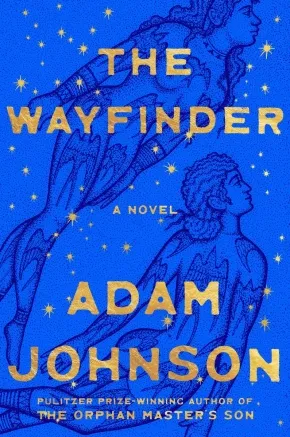
The Wayfinder: A Novel
$42.00
Format:
Hardcover
Text Content Territories:
Indigenous Polynesian; Indigenous Tongan;
Reading Level: N/A
ISBN / Barcode: 9780374619572
Synopsis:
Synopsis:
A historical epic about a girl from a remote Tongan island who becomes her people's queen.
Talking corpses, poetic parrots, and a fan that wafts the breath of life—this is the world young Kōrero finds herself thrust into when a mysterious visitor lands on her island, a place so remote its inhabitants have forgotten the word for stranger. Her people are desperate and on the brink of starvation, and the wayward stranger offers them an impossible choice: they can remain in the only home they’ve ever known and await the uncertainty to come, or Kōrero can join him and venture into unfamiliar waters, guided by only the night sky and his assurance of a bountiful future in the Kingdom of Tonga. What Kōrero and her people don’t know is that the promised refuge is no utopia—instead, Tonga is an empire at war and on the verge of collapse, a place where brains are regularly liberated from skulls and souls get trapped in coconuts with some frequency.
The perils of Tonga are compounded by a royal feud: loyalties are shifting, graves are being opened, and everyone lives in fear of a jellyfish tattoo. Here, survival can rest on a perfectly performed dance or the acceptance of a cup of kava. Together, the stranger and Kōrero embark upon an epic voyage—one that will deliver them either to salvation or to the depths of the Pacific.
Evoking the grandeur of Wolf Hall and the splendor of Shōgun, the Pulitzer Prize–winning novelist Adam Johnson conjures oral history, restores the natural world, and locates what’s best in humanity. Toweringly ambitious and breathtakingly immersive, The Wayfinder is an instant, timeless classic.
Reviews
“A powerful and original epic . . . Deadly politics, tragic romance and dangerous sea journeys keep the drama at a spirited boil.”—The New York Times
“[An] epic-scale historical adventure from Pulitzer Prize winner Adam Johnson . . . Johnson paints a rich tale of nature, politics, and tradition . . . It's a unique, spellbinding saga that drew us into an elaborate world.”—Apple's Best of the Month
“Expansive in scope, historically detailed, and totally enthralling . . . Johnson's monumental research into the history, legacy, and imprint of the Polynesian culture is evident in the meticulous detail of his narrative—which is about much more than his characters, whose vibrancy demands acknowledgement, and his gorgeous landscape descriptions . . . Part bildungsroman, part historical exploration, this novel is a study of the many islands in the South Pacific, their power struggles, abuses of power, and the perseverance to survive.”—Booklist (starred review)
"Epic historical fiction with a twist of magical realism, The Wayfinder follows a Tongan royal family facing political upheaval and a community on a distant island facing starvation. It is a dual timeline with multiple viewpoints that makes you feel totally immersed in the story." — Goodreads Review, Shannon
Additional Information
736 pages | 6.00" x 9.00" | Hardcover
Divided Power: How Federalism Undermines Reconciliation
$32.00
Format:
Paperback
Reading Level: N/A
ISBN / Barcode: 9781773637723
Synopsis:
Synopsis:
Reconciliation, as set out by the Truth and Reconciliation Commission, is a process of understanding the Canadian state's genocide against Indigenous Peoples and creating a new relationship between Indigenous Peoples and settlers based on mutual respect and dignity. Given the racism and paternalism embedded in the Canadian state and related institutions, building such a relationship is a monumental task, but in addition, there is a major structural roadblock in the way: federalism, the political system that organizes Canadian governance.
Divided Power argues that Canada’s system of federalism, rooted in settler colonialism, has dispossessed Indigenous Peoples for settler benefit. Far from being a neutral, balanced way to distribute responsibilities and powers, the division between the state and provinces and territories obstructs Indigenous Peoples’ agency and governance. Under such coercive political exclusion, how can truth and reconciliation be fully achieved? Emily Grafton meticulously traces the ways that federalism limits the potential for reconciliation and proposes alternative power-sharing models.
Guiding readers through the terrain of debate, Grafton deftly and accessibly merges a political analysis of federalism with a clear assessment of settler colonialism to argue that reconciliation will be incomplete for as long as the current division of powers persists. Divided Power points to a promising approach to holding the Canadian state responsible for integrating the principles of truth and reconciliation into its very foundation.
Reviews
“Emily Grafton explores Canadian federalism – not the usual division of powers between the federal and provincial governments, but between the colonized and the colonizer. Federalism, Grafton argues, was informed by Indigenous political frameworks but has been torqued by colonial assumptions about Indigenous inferiority so as to require colonial dominance and Indigenous subordination. This book is a useful antidote to the complacent endorsement of the settler state status quo, so prevalent in scholarship and in politics.” - Joyce Green, Ktunaxa Nation, Professor Emerita, University of Regina; Elder-Auntie, CPSA Reconciliation Committee
“Grafton exposes the evolution and coloniality of Canadian federalism in its unjust and mundane efforts to diminish Indigenous sovereignties. Divided Power is a tour de force of alternatives, and you’ll never think of federalism the same way after reading it!” - Ajay Parasram, author of Pluriversal Sovereignty and the State
Additional Information
192 pages | 6.00" x 9.00" | Paperback
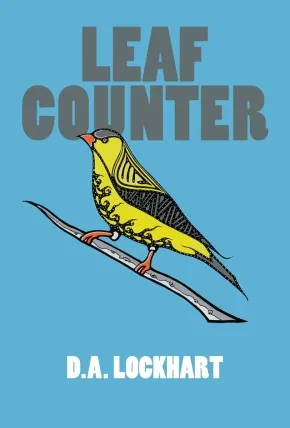
Leaf Counter
$24.95
Format:
Paperback
Text Content Territories:
Indigenous Canadian; First Nations; Lenape (Delaware);
Reading Level: N/A
ISBN / Barcode: 9781997580034
Synopsis:
Synopsis:
Flow into a new season in one of Canada’s most celebrated literary landscapes, with Leaf Counter. A lyric decolonial romp through the Ontario’s famed Prince Edward County, Aginjibagwesi (Spinus tristis) draws us through the poetics of the land and the struggles of the poet as decolonizer in this new epic border-crossing collection. Golden witness to the timelessness of land and spirits, Leaf Counter criss-crossed the lands around Ameliasburgh, its ghosts, heroes, and even the poets of Purdy’s A-Frame. Leaf Counter knows of sorrow, struggle, and wends a tale in a braided narrative as he scans "light and steeple” and sees timeless men at the centre and edges of the order of things, Simon Girty, Al Purdy, Charles Bukowski, and even Bret Hart, move and shift in time and place. Leaf Counter is our celestial, Lenape, winged guide of legend and myth. And through his spring enumeration of all things, we garner an understanding of the famed Canadian poet Al Purdy and the lands that he grew from. Witness the collapse of the old repressive order through the eyes of the poet and movements of the mighty little bird.
Additional Information
148 pages | 6.00" x 9.00" | Paperback
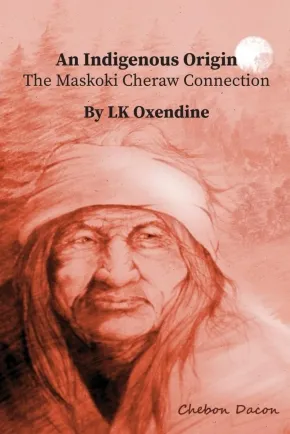
An Indigenous Origin: The Maskoki Cheraw Connection
$34.78
Format:
Paperback
Text Content Territories:
Indigenous American; Native American; Cheraw;
ISBN / Barcode: 9798894065298
Synopsis:
Synopsis:
An Indigenous Origin – The Maskoki Cheraw Connection unveils a deeply researched and long-overlooked history of the Lumbee Tribe’s ancestral connection to the Cheraw people. Drawing on fourteen years of meticulous research, LK Oxendine uncovers historical records, maps, treaties, and cultural narratives that restore a suppressed identity erased by centuries of denial, displacement, and political marginalization.
From the ancient Maskoki territories to the arrival of Spanish, French, and British forces, this compelling account traces the Lumbee Cheraw’s journey through survival, cultural preservation, and the ongoing struggle for recognition. Oxendine’s work honors the voices of ancestors, the strength of matrilineal societies, and the unbreakable ties between people and land.
Part memoir, part ethnographic history, this book invites readers to witness the truth long hidden in archives and oral traditions, truth that affirms an honorable Indigenous heritage and demands acknowledgment in the twenty-first century.
If you are drawn to Indigenous history, identity reclamation, and the untold stories of the American Southeast, An Indigenous Origin – The Maskoki Cheraw Connection is an essential read.
Additional Information
416 pages | 6.00" x 9.00" | Paperback
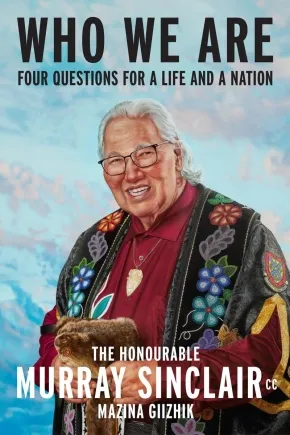
Who We Are: Four Questions For a Life and a Nation (PB)
$26.00
Format:
Paperback
Text Content Territories:
Indigenous Canadian; First Nations; Anishinaabeg; Ojibway;
Reading Level: N/A
ISBN / Barcode: 9780771099137
Synopsis:
Synopsis:
Judge, senator, and activist. Father, grandfather, and friend. This is Murray Sinclair’s story—and the story of a nation—in his own words, an oral history that forgoes the trappings of the traditional written memoir to center Indigenous ways of knowledge and storytelling. As Canada moves forward into the future of reconciliation, one of its greatest leaders guides us to ask the most important and difficult question we can ask of ourselves: Who are we?
For decades, Senator Sinclair has fearlessly educated Canadians about the painful truths of our history. He was the first Indigenous judge in Manitoba, and only the second Indigenous judge in Canadian history. He was the Chair of the Truth and Reconciliation Commission, and remains one of the foremost voices on Reconciliation. And now, for the first time, he will share his full story—and his full vision for our nation—with readers across Canada.
Drawing on Senator Sinclair’s unique experiences, and his perspectives regarding Indigenous identity, human rights, and justice in Canada, Who We Are will examine the roles of history, resistance, and resilience in the pursuit of finding that path forward, and healing the damaged relationship between Indigenous Peoples and non-Indigenous peoples in Canada. And in doing so, it will reveal Senator Sinclair’s life in a new and direct way, exploring how all of these experiences shaped him as an Anishinaabe man, father, and grandfather.
Structured around the four questions that have long shaped Senator Sinclair’s thinking and worldview—Where do I come from? Where am I going? Why am I here? Who am I?—Who We Are will take readers into the story of his remarkable life as never before, while challenging them to embrace an inclusive vision for our shared future.
The book includes the What We Have Learned report, created by the Truth and Reconciliation Commission of Canada (TRC).
Reviews
“Who We Are is a very special, very important book. With deep humility, surprising humour, and abiding humanity—all the 'humes,' if you will—Murray Sinclair made me feel as though I was sitting beside him at a campfire, listening to stories and teachings from his most remarkable life. I could hear his voice. I could feel the fire. I could imagine a better world. But Murray Sinclair asks us to do more than imagine it. By sharing with unflinching honesty what shaped him as a visionary leader, he calls us to change the world, to make it better for each new generation, and to honour the sacredness of Creation. I will return to Who We Are again and again, for his stories, his soulful poems, and his guidance. This book, so much about understanding where we have come from, is a gift to where we are going.”—Shelagh Rogers, O.C., Chancellor of Queen’s University and Honorary Witness in the Truth and Reconciliation Commission
“It would be impossible to quantify Murray Sinclair’s impact on this place that we call Canada. He’s said that since education got us into this mess, education must get us out of it. If that’s true, and I believe it is, he is one of our most important teachers. The pursuit of reconciliation takes place on a long and winding road. It will take generations to reach our destination, but this book and Sinclair’s voice will stand the test of time, guiding us in his wisdom and the example he has set in how he has lived his life.”—David A. Robertson, bestselling author of the Misewa Saga Series
Additional Information
480 pages | 5.18" x 8.00" | Paperback
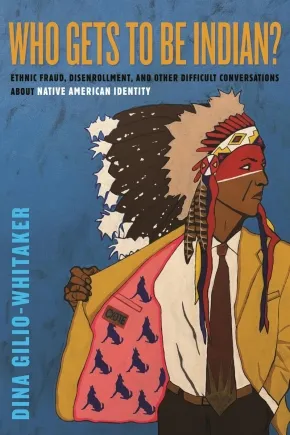
Who Gets to Be Indian?: Ethnic Fraud, Disenrollment, and Other Difficult Conversations About Native American Identity
$39.95
Format:
Hardcover
Text Content Territories:
Indigenous American; Native American;
Reading Level: N/A
ISBN / Barcode: 9780807044964
Synopsis:
Synopsis:
An investigation into how Native American identity became a commodity, from cultural appropriation to ethnic fraud to disenrollment
Settler capitalism has been so effective that the very identities of Indigenous people have been usurped, misconstrued, and weaponized. In Who Gets to Be Indian?, scholar and writer Dina Gilio-Whitaker (Colville Confederated Tribes) explores how ethnic fraud and the commodification of Indianness has resulted in mass confusion about what it means to be Indigenous in the United States.
As an entry point to the seemingly intractable problem of ethnic fraud, Gilio-Whitaker critically looks to the film industry, including a case study of Sacheen Littlefeather, who is most known as the Native American woman that rejected an Oscar on behalf of Marlon Brando in 1973—though later revealed, she was not who she said she was. Gilio-Whitaker argues that this pretendian phenomenon originated in Southern California when the United States was forcing assimilation of Indians into white America culturally, but also into its capitalist economic system. With Indianness becoming a marketized commodity in the Hollywood film business, the field became open to anyone who could convincingly adopt an Indian persona.
Deeply researched using socio-historical analysis, Gilio-Whitaker offers insights from her own experiences grappling with identity to provide clarity and help readers understand how the commodification of Indianness have ultimately left many people of legitimate American Indian heritage to be disconnected from their tribes. Personal and compelling, Gilio-Whitaker takes settler capitalism to task and helps us better understand how we got here in order to counteract the abuses of pretendianism and disenrollment.
Reviews
“This incendiary j’accuse isn’t afraid to name names.”—Publishers Weekly, Starred Review
“With clarity and conviction, Dina Gilio-Whitaker exposes what’s at stake for Native people when Indianness becomes a commodity. A sharp, personal, and urgent look at the high cost for actual Native people in a system built to exploit them at every turn.”—Kim TallBear, author of Native American DNA: Tribal Belonging and the False Promise of Genetic Science
“Indigeneity is caught between truth tellers and tricksters. With abiding concern for tribal nationhood, Dina Gilio-Whitaker boldly espouses our truths while confronting the tricksters among us. Indigenous America needs more truth tellers like her and books like this.”—Gabe Galanda, Indigenous rights attorney
“Dina Gilio-Whitaker’s Who Gets to Be Indian? tackles the problem of the commodification of Native identity at a crucial moment in American history. With incisive analysis, Gilio-Whitaker reveals how settler capitalism has distorted and exploited Indigenous identities and exposes the roots of folks pretending to be Native and its harms to Native communities. This book is a call to action and a vital tool for understanding how we can protect Indigenous people. A must-read for anyone seeking to confront the complexities of Native identity, sovereignty, and power in America.”—Liza Black, author of Picturing Indians: Native Americans in Film, 1941–1960
“A fresh and unflinching look into the rise of pretendianism—when it became normalized for Hollywood to grant Native American identities to various grifters. Dina Gilio-Whitaker’s courageous and original analysis will challenge readers, Indigenous or not, to think deeply about the nature of settler colonialism today.”—Darryl Leroux, author of Distorted Descent: White Claims to Indigenous Identity
Additional Information
280 pages | 6.22" x 9.30" | Hardcover
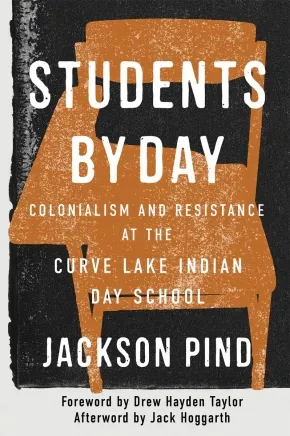
Students by Day: Colonialism and Resistance at the Curve Lake Indian Day School
$29.95
Format:
Hardcover
Text Content Territories:
Indigenous Canadian; First Nations; Anishinaabeg; Ojibway; Mississaugas; Curve Lake First Nation;
Reading Level: N/A
ISBN / Barcode: 9780228026044
Synopsis:
Synopsis:
Offering readers a unique history of an Indian Day School and a profile of Anishinaabe resilience.
The atrocities of the residential school system in Canada are amply documented. Less well-known is the history of day schools, which some two hundred thousand Indigenous youth attended.
The Curve Lake Indian Day School operated for over ninety years, from 1899 to 1978. Implementing Indigenous community research practices, Jackson Pind, alongside the Chief and Council of Curve Lake First Nation, conducted a search of the federal archive on operations at the school. Students by Day presents the findings, revealing that the government failed in its fiduciary duty to protect students. Harmful and discriminatory policies forced children to abandon their language and culture and left them subject to many types of abuse. To supplement this documentation, Pind also interviewed survivors of the school, who shared their often difficult testimony. He situates Curve Lake’s development and operations within the wider context of Canadian assimilation policies, noting the lasting impacts on Anishinaabe identity and culture.
Not only recovering the archive, written and oral, but building on files repatriated to the community, Students by Day is a story of Indigenous resilience, activism, and hope in the face of educational injustice.
Reviews
“An incredible achievement. Students by Day is innovative and collaborative, pushing Indigenous historical research forward in ways that will offer real, tangible improvements to communities and individuals.” - Lianne C. Leddy, author of Serpent River Resurgence: Confronting Uranium Mining at Elliot Lake
“Students by Day is an intricate uncovering of day schools’ history, navigating archives and life stories. It sets a gold standard for community-centred research, reminding us of the centrality of love to culture, people, and politics.” - Niigaan Sinclair, author of Wînipêk: Visions of Canada from an Indigenous Centre
“With care, clarity, and accountability, Jackson Pind’s book listens to Curve Lake First Nation and honours survivors’ experiences. Students by Day is not only powerful history; it’s a model for community-based research that serves Indigenous resurgence.” - Crystal Gail Fraser, author of By Strength, We Are Still Here: Indigenous Peoples and Indian Residential Schooling in Inuvik, Northwest Territories
Educator Information
Table of Contents
Figures vii
Foreword: Day Schools xi
Drew Hayden Taylor
Acknowledgments xv
1 Introduction to Place: Growing Up in Michi Saagiig Anishinaabeg Territory 3
2 Researching Indian Day Schools in Canada 15
3 The New England Company and the Creation of the Indian Day School 30
4 Mismanagement and Mistrust: The Methodist Missionary School in Curve Lake 45
5 A Legacy of Neglect: The United Church of Canada’s Indian Day School 86
6 Beyond the Classroom: Educational Philosophies and Opportunities 122
7 Experiencing Indian Day School: Education and Integration 150
8 A Class in Resistance: Curve Lake First Nation’s Fight for Education 173
Afterword 197
Jack Hoggarth
Appendix: Letter of Support from Curve Lake First Nation 201
Notes 203
Index 255
Additional Information
256 pages | 6.00" x 9.00" | 9 photos, 5 drawings | Hardcover
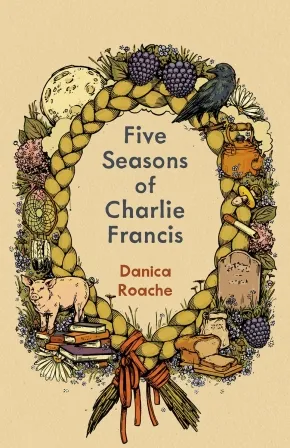
Five Seasons of Charlie Francis
$24.95
Format:
Paperback
Text Content Territories:
Indigenous Canadian; First Nations; Mi'kmaq (Mi'gmaq);
Reading Level: N/A
ISBN / Barcode: 9781774714645
Synopsis:
Synopsis:
A bold, refreshing, and darkly funny debut novel about a mixed-ancestry Mi'kmaw woman balancing academia, grief, love, and new motherhood, for fans of Fleabag and Amanda Peters.
When the tides in the Cobequid Bay went out and left stretches of mudflats, I could walk halfway to the other shore. Sometimes the mud engulfed my feet, right up to my ankles, and made it hard to move. The longer you stayed stuck, the harder it was to keep going.
Charlie Francis's five-year plan has gone to shit. She was supposed to greet the new millennium by diving head-first into a master's degree, but her thesis has ground to a halt, Y2K was a bust, her rambunctious family and claustrophobic hometown are driving her around the bend—and the maybe-love-of-her-life, Adam, keeps joking about her moving home to marry him and have his babies.
When Charlie's beloved uncle—the same person who told her to get out of town and never look back—dies suddenly, Charlie leans into her independence, breaking Adam's heart and rushing headlong into an academic career despite the baked-in racism of the predominantly white institution. When she unexpectedly becomes pregnant, she has to navigate being a (mostly) single mother on top of everything else.
Charlie finds herself at a crossroads—and only so much stress-baking can keep reality at bay. How can she reconcile being a student of history within the colonial system that exploited her ancestors? How can she be a good mother when she can barely afford groceries? And how can she be a proud Mi'kmaw woman when the world seems determined to keep her down?
Maybe it's time for a new five-year plan.
With grit, humour, a lovable cast, and the nostalgia of the early aughts, this bold and refreshing novel from a powerful new voice in Indigenous fiction explores grief, the complex bonds of family, and cultural identity.
Additional Information
320 pages | 5.50" x 8.50" | Paperback
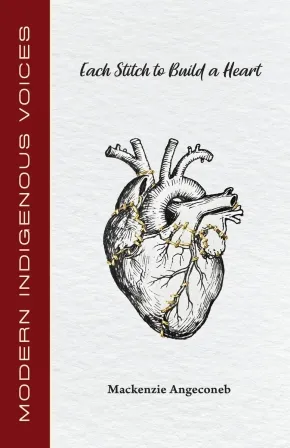
Each Stitch to Build a Heart
$19.95
Format:
Paperback
Text Content Territories:
Indigenous Canadian; First Nations; Anishinaabeg; Ojibway; Lac Seul;
Reading Level: N/A
ISBN / Barcode: 9781772312577
Synopsis:
Synopsis:
The central theme of this poetry collection revolves around the idea that each individual is shaped by the connections they forge with others throughout their lives. Each poem serves as a tribute to the relationships that influence us, weaving a rich tapestry of shared experiences and emotions. The collection is guiding readers through a journey of reflection and introspection. Each poem follows a distinct outline: it begins with a cherished memory that encapsulates the essence of the relationship, then delves into the significance of that bond and what it has taught us. Next, the poems explore the evolution of these connections—whether they have transformed, faded away, or remain vibrant in our lives. As the verses unfold, they evoke sensory reminders of these individuals—objects, places, or moments that bring them to mind—while also celebrating the qualities we admire in them. The poems culminate in a heartfelt exploration of their lasting impact on our identities and the permanent marks they leave behind. Each poem becomes a mirror, inviting readers to consider their own relationships and the intricate ways in which these connections shape who they are. Through this collection, we are reminded that we are, in many ways, a mosaic of everyone we have loved, learned from, and lost along the way.
Educator & Series Information
This book is part of the Modern Indigenous Voices series.
Additional Information
96 pages | 5.50" x 8.50" | Paperback
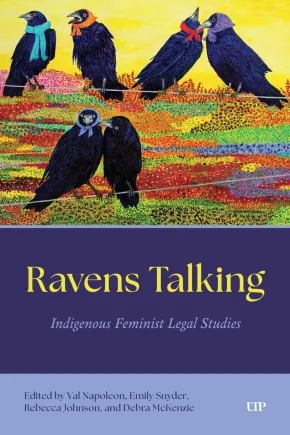
Ravens Talking: Indigenous Feminist Legal Studies
$36.95
Editors:
Format:
Paperback
Text Content Territories:
Indigenous Canadian; First Nations; Cree (Nehiyawak); Haudenosaunee (Iroquois);
Reading Level: N/A
ISBN / Barcode: 9781487551476
Synopsis:
Synopsis:
While awareness of the sexual and gendered colonial violence faced by Indigenous women, girls, and 2SLGBTQI+ people has grown, the field of Indigenous law and beyond has yet to fully engage with Indigenous feminisms, gender, and sexuality in a sustained way. Ravens Talking challenges this gap, treating Indigenous feminisms as essential, insightful, and deeply transformative.
Through critical feminist analyses, this book examines key issues in Indigenous law, demonstrating how legal understandings shift when gender is consistently, meaningfully, and creatively engaged. The contributors to this collection confront the forms of power shaping these essential conversations and bring to the fore intergenerational Indigenous feminisms; Indigenous law and gender; the forms of expression and translation between and across legal and political worlds; and the rich array of disagreements and conflicts between Indigenous women. Ravens Talking intends to capture the complexities arising from Indigenous feminisms in living contexts to provoke questions and develop critical perspectives.
Both intellectually rigorous and practically grounded, Ravens Talking is a vital contribution encouraging dialogue on Indigenous legal traditions, justice, and sovereignty.
Educator Information
Chapters
1. Indigenous Women Talking: The Work of Indigenous Feminisms in the World
2. Introduction: Indigenous Feminist Legal Studies
3. Nêhiyaw Ceremony, Gendered Protocols, and Nêhiyaw Law
4. Understanding Indigenous Womxn’s Economic Sovereignty through Story
5. Giving Voice to Jigonsaseh: A Feminine Perspective on the Haudenosaunee Legal Order
6. What if Survivors Wrote the Laws? An Indigenous Feminist Audit of Tribal Sexual Assault in the United States
7. Deliberating Feminist Legal Strategies in R v Barton
8. Visualizing Violence Against Indigenous Women: Documentary Film as Disruption in Finding Dawn and American Outrage
9. Sovereign Refusals: Spending Time with Apak in the Journals of Knud Rasmussen
10. Thoughts and Questions and Questions
Additional Information
272 pages | 6.00" x 9.00" | Paperback
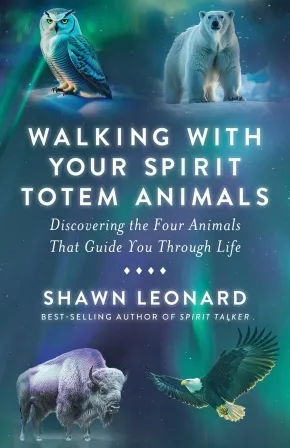
Walking with Your Spirit Totem Animals: Discovering the Four Animals That Guide You Through Life
$23.99
Format:
Paperback
Text Content Territories:
Indigenous Canadian; First Nations; Mi'kmaq (Mi'gmaq);
Reading Level: N/A
ISBN / Barcode: 9781401997250
Synopsis:
Synopsis:
From Shawn Leonard, Indigenous medium and host of Spirit Talker, comes a guide for assembling your unique team of spirit totem animal guides to be your personal guides through your life.
We are deeply connected to the animal nation, and through the four stages of life—Childhood, Youth, Adulthood, and Elderhood—there are four sacred animal totems that guide us energetically using their sacred medicine.
In Walking With Your Spirit Totem Animals, Mi’kmaq medium and host of Spirit Talker Shawn Leonard invites readers on a profound journey into the mystical world of animal totems. His insightful guide reveals how specific animal totems, that are personal to each and every one of us, support us. Leonard intertwines personal anecdotes with spiritual teachings, illustrating how these animal guides have appeared in his own life—his totems are Buffalo/Bison, Eagle, Polar Bear, and Owl—and provided wisdom at each stage.
The book includes comprehensive discussions on the Medicine Wheel and practical tools such as prayers and meditations to help readers connect with their own animal totems. Leonard also incorporates reflections on the connection between pets and their spiritual roles, messages revealed through animal dreams, and encounters with the animal nation in the astral realm.
Additional Information
208 Pages | 5.63 x 8.50" | b&w interior | Paperback
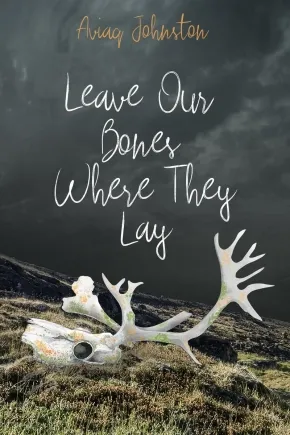
Leave Our Bones Where They Lay
$19.95
Format:
Paperback
Text Content Territories:
Indigenous Canadian; Inuit;
Reading Level: N/A
ISBN / Barcode: 9781772275896
Synopsis:
Synopsis:
Every solstice, Jupi—just as his father did before him, and his before him—must make a nearly impossible pilgrimage to light an oil lamp at the base of a remote cliff. There he must wait for Kipik, an ancient being who has bound Jupi’s family to a mammoth task: share a story every visit that appeases the fickle Kipik, or suffer unthinkable consequences.
For decades, Jupi has made the trek, growing grey and exhausted carrying this burden. Nearing the end of his life, Jupi knows he must name a successor, someone from his bloodline who can carry this weight and pass it on to future generations. But Jupi’s life has not been easy. His three children, one deceased, one incarcerated, one addicted, are not suitable successors. So Jupi must connect with a granddaughter he barely knows, whose language he barely speaks, and convince her to carry the weight of their family, perhaps their whole community, for the rest of her life.
This moving collection explores shifting definitions of what it means to be accountable to others, how family and community are defined, and how the spirits and demons of the past (both personal and legendary) are very much alive today.
Additional Information
136 pages | 6.00" x 9.00" | b&w illustrations | Paperback
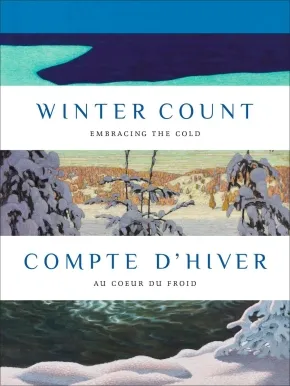
Winter Count | Compte d'hiver: Embracing the Cold | Au cœur du froid
$55.00
Format:
Paperback
Text Content Territories:
Indigenous Canadian; First Nations;
Reading Level: N/A
ISBN / Barcode: 9781773104928
Synopsis:
Synopsis:
Winter Count draws inspiration from the Plains First Nations practices of recording significant events each winter, a visual reminder that helps structure histories and traditions passed down to future generations. This handsome volume explores how winter has long shaped Indigenous, Canadian settler, and northern European art, uniting different cultural perspectives through such diverse topics as storytelling, effects of light, physical adaptation, and community and isolation.
Presenting a selection of works spanning from the early 19th century to the present day — including artists such as Kenojuak Ashevak, J.E.H. MacDonald, Claude Monet, Kent Monkman, Megan Musseau, and Jin-me Yoon — Winter Count features approximately 170 plates, along with illustrated essays by curators from the National Gallery of Canada. The result is a book that invites readers to see winter anew — not as a season to be endured, but as a source of invention, connection, and mutual respect across time and place.
Educator Information
Dual-language: English and French
Additional Information
304 pages | 9.00" x 12.00" | Paperback
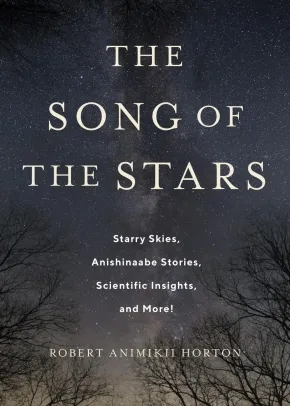
The Song of the Stars: Starry Skies, Anishinaabe Stories, Scientific Insights, and More!
$29.95
Format:
Hardcover
Text Content Territories:
Indigenous Canadian; First Nations; Anishinaabeg;
Reading Level: N/A
ISBN / Barcode: 9781487564155
Synopsis:
Synopsis:
Since the earliest days of human memory, countless generations have turned their eyes to the skies in wonder, drawing patterns, understanding the stars’ connection to cycles and events, and carrying their stories and teachings forward to subsequent generations.
The Song of the Stars offers a unique journey through the skies, linking us to generations of ancestors who marvelled at the same stars we still gaze upon today. The book brings together Anishinaabe cultural teachings about the cosmos and the Anishinaabemowin language with scientific insights to demonstrate how both viewpoints can help us foster deeper and more meaningful relationships to the Earth and the cosmos. Robert Animikii Horton, Anishinaabemowin educator, proves that this dual perspective can be a source of awe and wonder, inspiring in us a love of both language and science.
Demonstrating how Anishinaabe cultural teachings and scientific insights can complement one another and need not be irreconcilable opposites, The Song of the Stars provides a combination of perspectives that cultivates a deeper understanding of the vast mystery surrounding our place in the universe.
Educator Information
Contents
1. In Awe of the Awe-Inspiring
2. Aki: The Earth
3. Giizis: The Sun
4. Gichi-giizis: The Solar Eclipse
5. Naawakwe: Solar Noon
6. Ma’iingan Omiikana: The Sun’s Ecliptic
7. Aadwaa’amoog: Orion’s Belt
8. Waawaate: The Northern Lights (Aurora Borealis)
9. Jiibay Miikana: The Milky Way
10. Gookomisinaan Dibiki-giizis: The Moon
11. Gaagige-giizhig: The Universe
12. Anang: Star
13. Ojiig Anang: Fisher Star
14. Ojiig: The Big Dipper
15. Gichi-Ogimaa Anang: Vega
16. Gaa-bibooniked: The Wintermaker
17. Maang: The Little Dipper
18. Bagonegiizhig: The Pleiades
19. Moonz: Pegasus
20. Onwaajige Anang: Halley’s Comet
21. Madoodiswan: Corona Borealis
22. Ma’iingan: Canis Major
23. Nanaboozhoo: Scorpius
24. Waaban Anang: The Morning Star
25. Biidaaban, Waaban, Zaagajiwens, & Mooka’am: The Process of Sunrise
26. Mishibizhiw: Leo, Cancer, and Hydra
27. Gaa-madoodood: Hercules
28. Bangishin Anang: Falling Star
29. Binesi: Cygnus
30. Mishiginebig: Draco
31. Ikwe Anang: Venus
32. Directions and More
Additional Information
120 pages | 6.00" x 9.00" | Hardcover
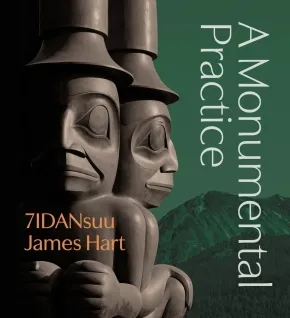
7IDANsuu James Hart: A Monumental Practice
$60.00
Format:
Hardcover
Text Content Territories:
Indigenous Canadian; First Nations; Haida;
ISBN / Barcode: 9781773272276
Synopsis:
Synopsis:
Ask Haida artist and hereditary chief 7IDANsuu James Hart how long it took him to master the art of carving, and he'll tell you: "Around ten thousand years."
Hart has achieved national prominence and international acclaim for his towering poles, stately cedar sculptures, and massive bronzes - monumental works that extend the long continuum of Haida visual traditions into powerful new forms. Since his early days assisting Robert Davidson and Bill Reid, through his reproductions of historical Haida poles and his carving of original house front, story, and memorial poles for private commissions and clan-based contexts in Haida Gwaii and beyond, he has developed an innovative practice rooted in tradition, and widely celebrated: thousands of people gathered to witness the raising and activation of his Reconciliation Pole; his Three Watchmen bronzes overlook the Audain Art Museum, National Gallery of Canada and the Plains of Abraham; and The Dance Screen (The Scream Too) in Whistler is considered a once-in-a-generation sculptural masterpiece.
This, the first publication devoted to Hart, is both a survey of his major career achievements and a document of an impossible-to-assemble exhibition. Alongside hundreds of photos of nineteen monumental works and associated smaller carvings and bronzes scattered across North America and Europe, and drawing on over two years of interviews with the artist, Curtis Collins illustrates how key animal and supernatural figures reappear across scales and mediums, from jewellery to sixty-foot poles (the "backbone" of his practice), and speaks to the associated activation ceremonies as integral to Haida monumental art. Wade Davis considers Hart's expressions of Haida resilience within the people's long history, from time immemorial to the nation's present-day efforts towards national sovereignty; Gwaliga Hart offers a personal perspective on his father's work; and in an autobiographical essay the artist himself reflects on his life, and his life's work.
Educator Information
Contributors:
- Gwaliga Hart
- Wade Davis
- Michael Audain (foreword)
Additional Information
256 pages | 10.25" x 11.25" | 200 colour photographs | Hardcover
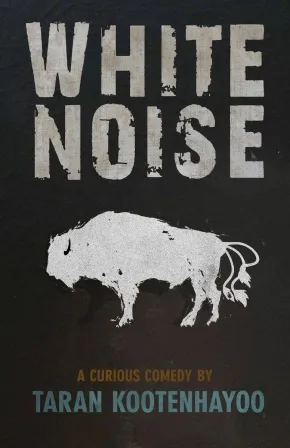
White Noise
$19.95
Format:
Paperback
Text Content Territories:
Indigenous Canadian;
Reading Level: N/A
ISBN / Barcode: 9781772015577
Synopsis:
Synopsis:
Two neighbouring families, one Indigenous and one white, dine together during Truth and Reconciliation Week. As cultural misunderstanding, colonial violence, and racism both covert and overt surface, White Noise asks, “How do we deal with internalized racism? Do we keep pushing it away … or do we make a change?” Taran Kootenhayoo’s answer is both emotionally intense and outrageously hilarious, a blistering comedic exploration of what it means to live in so-called Canada.
Additional Information
128 pages | 5.51" x 8.50" | Paperback
Retcon
$24.95
Format:
Paperback
ISBN / Barcode: 9781998779000
Synopsis:
Synopsis:
When Tom, an art house aficionado, returns to his hometown to attend the Brolleywood film studies conference, he discovers that his ex-girlfriend Esme has recently married their former prof, Cinny. Contact with the couple, gossip with his friend Nasim, and flirtation with a Hollywood bit player known as Lady Lex draw Tom into a noirish plot that may have Chabrol-ish consequences for his rival, and permanently distance him from his fiancée, a skilled harpsichordist named Ciana. As he navigates shifting islands of personal memory, Tom begins to wonder if life is not just a retcon (or the most contrived form of retroactive continuity). The price of admission includes an amateur opera matinee, a pub discourse on Godard-McBride Breathless Paradox, a giallo nightmare, and a hypnagogic hallucination inspired by a Tarkovsky retrospective, all threatened by the skintight spectre of the next superhero franchise.
Educator & Series Information
This is the second book in the Tulpa series.
Additional Information
400 pages | 6.00" x 9.00" | Paperback
Tulpa Mea Culpa
$24.95
Format:
Paperback
Reading Level: N/A
ISBN / Barcode: 9781988168951
Synopsis:
Synopsis:
When Gellhorn, a notable poet, begins a university residency in a “dynamic metropolis” and stays at the illustrious Máximo College, he finds himself scandalized, and for little known reason. Scrutiny by his new academic neighbours is the least of his worries, as he learns of the existence of Aaron Schnell, his physical pseudo-twin, and an actor and film “double.”
The Chair shares fragments from the oeuvre of Thomas Claque, a recently deceased author who contrived the tale of the pseudo-twins. The Chair’s scholarship leads him to the real Máximo College, where he revives those characters and scenarios, before travelling to a smaller prairie town where he reimagines one of Claque’s risqué getaways. There he meets a young woman doing her creative thesis on the double in literature.
Petra, a police clerk in an entirely different prairie city, receives a photograph of a missing person and recognizes a passenger from her weekday commute. Non-routine surveillance draws her deeper into his world until a global pandemic abruptly stalls her progress. Her romantic prospect soon leads to a greater mystery punctuated by the words, TULPA MEA CULPA, although its uncanny truth will be ultimately less provocative than serial coverage in the Prairie Pulse. Tulpa Mea Culpa is a literary tour-de-force and solidifies Morse as one of Canada’s most exciting writers today, and proves why he is a two-time Governor General Award nominee.
Educator & Series Information
This is the first book in the Tulpa series.
Additional Information
600 pages | 9.00" x 6.00" | Paperback
Still Ruffling Feathers: Let Us Put Our Minds Together
$24.95
Format:
Paperback
Text Content Territories:
Indigenous Canadian; First Nations; Cree (Nehiyawak); Plains Cree; Red Pheasant Cree Nation;
Reading Level: N/A
ISBN / Barcode: 9781772841183
Synopsis:
Synopsis:
Revisiting the political activism of WIC Wuttunee
William (Bill) Wuttunee was a trailblazing lawyer, a courageous native rights activist; and one of the architects of the process for the Truth and Reconciliation Commission. His 1971 book, Ruffled Feathers: Indians in Canadian Society, decried conditions on reserves and pressed for integration-on Indigenous peoples' own terms-supporting many of the aims of the Trudeau government's 1969 "White Paper." Though controversial at the time, Wuttunee's arguments were rooted in a foundational belief in the strengths of his people and a steadfast rejection of victimhood. In the fifty years that have followed its publication, Ruffled Feathers has been largely forgotten, though ideas that Wuttunee put forth-ending the Indian Act and the reserve system-continue to find space within contemporary Canadian political discourse.
In this volume, editor Wanda Wuttunee gathers a diverse cohort of scholars to engage with her father's ideas and offer their own perspectives on the opportunities and challenges facing Indigenous peoples in Canada, then and now. Favouring discourse over conclusions, Still Ruffling Feathers leads the reader to a nuanced understanding of the ongoing conversations and unresolved issues stemming from the Indian Act and invites us to envision miyo-pimâtisiwin, "the good life."
Reviews"
"Still Ruffling Feathers explores an important area of modern history on Indigenous leadership. The thoughts and ideas expressed by William Wuttunee still have resonance today." - Dr. Brian Caillou, University of Calgary
Educator Information
Table of Contents
Brotherhood by William I.C. Wuttunee
Acknowledgements
Contributors
Introduction by Wakchan (Wanda Wuttunee), Red Pheasant Cree Nation, Saskatchewan
Chapter 1. Reflections on a Legacy--An Eagle Eye Perspective by Wakchan (Wanda Wuttunee), Red Pheasant Cree Nation, Saskatchewan
Chapter 2. Still Ruffling Feathers Too--More than 50 Years Later by Makookins (Xakiji (Chief) Lee Crowchild), Tsuut'ina Nation, Alberta
Chapter 3. William Wuttunee--Ruffling Feathers in "Indian" Time and Space by Thohahoken (Michael Doxtater), Mohawk Turtle Clan Family of Satekariwate, Ontario
Chapter 4. Learning to Straighten Our Ruffled Feathers: An Education by Askîy Pihêsiw (Robert Falcon Ouelette), Red Pheasant Cree Nation, Saskatchewan
Chapter 5. Ruffled Feathers: A Critical Assessment by Bush Doctor (Peter Kulchyski), Bissett, Manitoba
Chapter 6. Final Thoughts--Debating Our Future, Coming to One Mind by David Newhouse, Onandaga, Six Nations of the Grand River, Ontario.
Appendix A: Excerpts from Ruffled Feathers (1971) by William I.C. Wuttunee
Appendix B. Selected Poetry of William I. C. Wuttunee
Appendix C. Discussion Questions Bibliography
Additional Information
204 pages | 5.50" x 8.50" | Paperback
Mary and her Métis Grandma
$24.95
Format:
Paperback
Text Content Territories:
Indigenous Canadian; Métis;
Reading Level: N/A
ISBN / Barcode: 9781998779895
Synopsis:
Synopsis:
A gripping work of auto-fiction / biography and memoir resulting in historical accountability. Divided into two parts; starting at the turn of the 20th century leading into the 1980's.
Filled with wisdom, grit and honesty, this is the journey of a Métis teenager overcoming personal grief, witnessing the pain of others, and experiencing the healing power of a Grandma’s love.
At times harrowing and instead of succumbing to self-pity Mary will rise above her presumed narrative with courage and love as her Grandma takes Mary under her wing to guide her into the mature woman she will become.
Educator Information
To learn more about this work, visit the author's website: https://ritajasperart.com/category/mary-and-her-metis-grandma/
Additional Information
250 pages | 5.50" x 8.50" | Paperback

Hole in the Sky: A Novel
$39.99
Format:
Hardcover
Text Content Territories:
Indigenous American; Native American; Cherokee;
ISBN / Barcode: 9780385551113
Synopsis:
Synopsis:
A Native American first contact story and gripping thriller from the New York Times bestselling author of Robopocalypse
"Thrilling and personal... an important addition to the landscape of science fiction."—Pierce Brown, #1 New York Times bestselling author of Red Rising
"Hole in the Sky is mind-bending… indigenous knowledge collides with science fiction in a thrilling page-turner."—Sterlin Harjo, filmmaker and writer of Reservation Dogs
On the Great Plains of Oklahoma, in the heart of the Cherokee Nation, a strange atmospheric disturbance is noticed by Jim Hardgray, a down-on-his-luck single father trying to reconnect with his teenage daughter, Tawny. At NASA’s headquarters in Houston, Texas, astrophysicist Dr. Mikayla Johnson observes an interaction with the Voyager 1 spacecraft on the far side of the solar system, and she concludes that something enormous and unidentified is heading directly for Earth. And in an undisclosed bunker somewhere in the United States, an American threat forecaster known only as the Man Downstairs intercepts a cryptic communication and sends a message directly to the president and highest-ranking military brass: “First contact imminent.”
Daniel H. Wilson’s Hole in the Sky is a riveting thriller in the most creative tradition of extraterrestrial fiction. Drawing on Wilson’s unique background as both a threat forecaster for the United States Air Force and a Cherokee Nation citizen, this propulsive novel asks probing questions about nonhuman intelligence, the Western mindset, and humans’ understanding of reality.
Reviews
“Incredible... Hole in the Sky is not only a thrilling, brilliant page-turner, its pages also turned me into the kind of reader I always want to be—deeply involved and curious about the world and the story unfolding before me, as if by magic—the kind of reader who can’t stop reading, who dreads the book coming to an end even while I can’t stop making my way toward it, who goes back and starts all over to figure out how it was done. Here we have a highly original premise about alien contact—no small feat unto itself—which also manages to seamlessly fold in Indigenous lives and knowledge. Every character here is alive, and there are so many stunning sentences I had to stop underlining. The story is killer. I love it. Run don’t walk to read this book.”—Tommy Orange, New York Times bestselling author of There There and Wandering Stars
“Hands down one of the best books I’ve read in a couple of years. Daniel H. Wilson has crafted a technotradish ride into the future in the most harrowing and engaging ways imaginable. Tightly tuned, sharply researched, and warm in all the best ways, you’ll want to clear your schedule because this is a sit-down-and-read-the-whole-thing-right-now kind of book. Bravo, Mr. Wilson!”—Theodore C. Van Alst Jr., bestselling co-editor of the Never Whistle At Night series
“This book doesn’t whisper. It roars from the edges of space, memory, and grief. Hole in the Sky is Indigenous sci-fi at its rawest: part cosmic threat, part broken father-daughter elegy, part fever dream of classified government failures. The humanity here is bruised, sharp-tongued, and holding on. And the fear? It’s in the blood. This one gets under your skin and stays there.”—Shane Hawk, bestselling co-editor of the Never Whistle at Night series
Additional Information
288 pages | 6.35" x 9.54" | Hardcover

Gino: The Fighting Spirit of Gino Odjick
$39.95
Format:
Hardcover
Text Content Territories:
Indigenous Canadian; First Nations; Anishinaabeg; Algonquin; Kitigan Zibi Anishinabeg;
Reading Level: N/A
ISBN / Barcode: 9781778402708
Synopsis:
Synopsis:
From veteran hockey reporter Patrick Johnston and Gino’s longtime friend Peter Leech comes the authorized biography of Gino Odjick.
In the 1980s and ’90s, National Hockey League games were very different from the nimble, skill-focused displays we see today. One of the greatest differences—and one of the sport’s more popular facets at the time—was the widespread presence of “enforcers”: hulking, battle-scarred players whose main task was to police the sport by chasing down and brawling with opponents who had broken unwritten codes determining which aspects of violence counted as dishonorable or unjustified.
When hard-hitting Vancouver Canucks player Gino Odjick emerged in the early 1990s, he quickly became one of the game’s most feared enforcers and revered teammates, a sign of a new era for the team, racking up 296 penalty minutes in the 45 games he played in his rookie season. Hailing from Kitigan Zibi, an Algonquin community near Maniwaki, Quebec, Gino was one of the few Indigenous players in the NHL at the time. But it was Gino’s ferocious play contrasted by his genuinely affable and openhearted personality off the ice that won him a special place in the hearts of Canucks supporters.
Yet legends often obscure the human stories behind them. Patrick Johnston and Peter Leech look beyond Gino’s legendary persona, drawing on insights from family members, friends, and teammates to recount Gino’s early years in a loving household that was always ready to welcome foster children. Gino’s father, Joe, had suffered the lonely traumas of the residential school system, and the experience had instilled a commitment in the family to those who were less fortunate.
The book also details Gino’s eventual struggles with alcohol abuse, and how he responded by taking on the role of empathetic mentor to young Indigenous people, travelling from community to community to hear their stories and offer hope. He never wavered in this role, even as he confronted serious illnesses, including chronic traumatic encephalopathy (CTE) and the rare blood disorder that he survived for years longer than expected, but that eventually led to his death at age fifty-two.
Gino is a moving tribute to a beloved hockey legend.
Reviews
"Gino was the greatest teammate; he had such a huge heart and knew his role better than anyone in the league. Gino loved being a Vancouver Canuck and gave back to the community in so many ways. He will be greatly missed by his family, friends, and fans. This book will give people insight into his remarkable life."—Geoff Courtnall
“Gino provides a compelling account of the life of a beloved Vancouver Canuck. From his humble beginnings in Quebec to NHL stardom and beyond, Odjick was dedicated to the well-being of teammates and the Indigenous community. This is an excellent tribute to an exceptional man.”—Randi Druzin, author of Between the Pipes and Behind the Mask
Additional Information
288 pages | 6.00" x 9.00" | b&w insert | Hardcover
CoyWolf
$18.95
Format:
Paperback
Text Content Territories:
Indigenous Canadian; Métis;
Reading Level: N/A
ISBN / Barcode: 9780369105738
Synopsis:
Synopsis:
Isidor, a half-coyote, half-wolf coywolf, has always struggled to find his place as a half-breed. After the untimely death of his mother, he leaves his community to roam across prairies, forests, and mountains, sharing stories in his search for kinship and belonging. But as Sharp-Tooths are increasingly policed, tagged, or killed to make way for insatiable human expansion, Isidor and his pack are forced to make impossible decisions. Do they retreat to better their chances of survival, or risk everything by joining a resistance of rogue animals to protect what’s left of their homeland?
In this gripping drama, Colin Wolf weaves a powerful allegory through the lives of animals, paralleling the displacement of Métis people and the enduring struggle for Indigenous land rights on Turtle Island. CoyWolf is a hopepunk thriller and a roadmap for young revolutionaries navigating the realities of resistance, doing your best, and learning the wisdom of those who have walked the path before.
Additional Information
112 pages | 5.12" x 7.62" | Paperback
Once upon This Land: Archaeology in British Columbia and the Stories It Tells
$29.95
Format:
Paperback
Text Content Territories:
Indigenous Canadian;
Reading Level: N/A
ISBN / Barcode: 9780774881081
Synopsis:
Synopsis:
With evidence of human habitation dating back to the last ice age, British Columbia boasts a fascinating array of archaeological sites. In this thoroughly up-to-date survey, professional archaeologist Robert Muckle takes readers to some exciting locations to explain what archaeology is (and isn’t), how research is undertaken in BC, and what it contributes to our broader understanding of human history.
Once upon This Land introduces readers to some of the most notable archaeological investigations in the province, including footprints left in mud on Calvert Island 13,000 years ago, the remains of a First Nations village near Lillooet, and the body of a man frozen in ice for centuries in the Tatshenshini region. He also explores more recent phenomena, such as a First World War internment camp near Fernie, a Japanese logging camp in North Vancouver, shipwrecks, airplane crashes, and even the remnants of COVID-19 left behind in urban landfills.
This unique book will appeal to readers who want to understand how and where archaeology happens in British Columbia, including those interested in a career in the field. It is also for those who would like to explore and know more about the province’s archaeological sites and history.
Reviews
"May this book offer all who read it a glimmer of understanding of the fourteen thousand years of documented relationships between Indigenous peoples and the land which has sustained us."— From the foreword by archaeologist Karen Rose Thomas
"Bob Muckle’s beginner’s guide to archaeology in what is now British Columbia requires no experience with the discipline to grasp vocabulary and ideas currently used by archaeologists. His clear, plain-language narrative peels back the layers of earth to reveal a story contained in the soil of this province." — Eldon Yellowhorn, Indigenous Studies, Simon Fraser University
"I have always wished for an archaeology of BC book like this that I could use in teaching my own classes. While the writing style is accessible and never condescending, Once upon This Land will help inquisitive readers appreciate just how complex and vast the archaeological history of the northwest part of North America really is." — Brian Pegg, Department of Anthropology, Kwantlen Polytechnic University
Educator Information
Table of Contents
Foreword: An Indigenous Archaeologist’s Perspective / Karen Rose Thomas
Introduction
1 Archaeology as Storytelling and a Profession
2 The Distant Past: The Ice Age to 5,000 Years Ago
3 The Human Story: 5,000 to 200 Years Ago
4 Recent Times: The 1800s and 1900s
5 Archaeology in Contemporary Times
Epilogue: Ten Important Things to Remember
Glossary; Further Reading; Index
Additional Information
222 pages | 5.50" x 8.50" | 14 colour photos, 15 b&w photos, 2 colour illus., 2 b&w illus., 1 map | Paperback
The Water Remembers: My Indigenous Family's Fight to Save a River and a Way of Life
$40.00
Format:
Hardcover
Text Content Territories:
Indigenous American; Native American; Yurok;
Reading Level: N/A
ISBN / Barcode: 9780316568951
Synopsis:
Synopsis:
A moving multigenerational memoir of Indigenous resistance, environmental justice, and a Yurok family's fight to protect their legacy and the Klamath River.
For the members of a Northern California tribe, salmon are the lifeblood of the people—a vital source of food, income, and cultural identity. When a catastrophic fish kill devastates the river, Amy Bowers Cordalis is propelled into action, reigniting her family's 170-year battle against the U.S. government.
In a moving and engrossing blend of memoir and history, Cordalis propels readers through generations of her family’s struggle, where she learns that the fight for survival is not only about fishing—it’s about protecting a way of life and the right of a species and river to exist. Her great-uncle's landmark Supreme Court case reaffirming her Nation’s rights to land, water, fish, and sovereignty, her great-grandmother’s defiant resistance during the Salmon Wars, and her family's ongoing battles against government overreach shape the deep commitment to justice that drives Cordalis forward.
When the source of the fish kill is revealed, Cordalis steps up as General Counsel for the Yurok Tribe to hold powerful corporate interests accountable, and to spearhead the largest river restoration project in history. The Water Remembers is a testament to the enduring power of Indigenous knowledge, family legacy, and the determination to ensure that future generations remember what it means to live in balance with the earth.
Reviews
"A powerful interweaving of memory, history, and activism, The Water Remembers is a lyrical and uncompromising account of Amy Bowers Cordalis’s fight to protect the Klamath River and the sovereignty of the Yurok Nation. Told through a Yurok storytelling lens, this book traverses ancestral knowledge, ecological devastation, and legal resistance, revealing the sacred bond between people and river. Bowers Cordalis, an attorney and lifelong fisherwoman, writes with the clarity of lived experience and the heart of a riverkeeper. This is a vital work of Indigenous resurgence and environmental justice, brimming with spirit, truth, and unstoppable resolve."—Terese Marie Mailhot, author of Heart Berries
"The Water Remembers is a powerful, poetic testament to Indigenous resilience and reverence for the natural world. Amy Bowers Cordalis weaves history, activism, and sacred connection into a compelling narrative of communities fighting to protect what is most vital. This book is not just a call to action; it’s a song of survival and restoration."—Leah Thomas, environmental educator and author of The Intersectional Environmentalist
Additional Information
288 pages | 6.00" x 9.25" | Hardcover
The Door on the Sea
$35.99
Format:
Hardcover
Text Content Territories:
Indigenous American; Alaska Native; Tlingit;
Reading Level: N/A
ISBN / Barcode: 9781837863785
Synopsis:
Synopsis:
An epic quest fantasy debut that is the Tlingit indigenous response to The Lord of the Rings
When Elān trapped a salmon-stealing raven in his cupboard, he never expected it would hold the key to saving his people from the shapeshifting Koosh invaders plaguing their shores. In exchange for its freedom, the raven offers a secret that can save Elān’s home: the Koosh have lost one of their most powerful weapons, and only the raven knows where it is.
Elān is tasked with captaining a canoe crewed by an unlikely team including a human bear-cousin, a massive wolf, and the endlessly vulgar raven. To retrieve the weapon, they will face stormy seas, cannibal giants and a changing world. But Elān is a storyteller, not a warrior.
As their world continues to fall to the Koosh, and alliances are challenged and broken, Elān must choose his role in his own epic story.
Reviews
“Goodness, it’s so exciting when epic fantasy tropes are done well, when they feel fresh and unexpected. I am always so thankful for writers who can breathe new life into the genre elements we love the most, and Russell has done exactly that here.” —Reactor
“Storytelling at its purest, harkening back to times spent around a fire to listen to a master of their craft weave an engrossing tale… A thoroughly enjoyable, unique, and long overdue voice in modern fantasy.” —Karin Lowachee, author of The Crowns of Ishia trilogy
Additional Information
400 pages | 5.56" x 8.68" | Hardcover
The Devil Is a Southpaw: A Novel
$36.00
Format:
Hardcover
Text Content Territories:
Indigenous American; Native American; Cherokee;
Reading Level: N/A
ISBN / Barcode: 9780063259652
Synopsis:
Synopsis:
A haunting, unforgettable novel of obsession, pride, and forgiveness, exploring the friendship and rivalry between two gifted boys in harrowing circumstances, from the acclaimed writer of The Removed.
Milton Muleborn has envied Matthew Echota, a talented Cherokee artist, ever since they were locked up together in a dangerous juvenile detention center in the late 1980s. Until Matthew escaped, that is.
A novel within a novel, we read here Milton’s dark, sometimes comic, and possibly unreliable account of the story of their childhood even as, years later, he remains jealous of Matthew’s extraordinary abilities and unlikely success. Milton reveals secrets about their friendship, their families, and their nightmarish, surreal, experience of imprisonment. In revisiting the past, he explores the echoing traumas of incarceration and pride.
Filled with Brandon Hobson’s swirling yet visceral writing, and punctuated with original artwork, The Devil Is a Southpaw is an ambitious, elegant, and propulsive novel in the spirit of Vladimir Nabokov and Gabriel García Márquez.
Reviews
"Hobson has never been more brilliant, more transcendent, more in touch with the beating human spirit, than he is in The Devil is a Southpaw. No other writer is so continuously reinventing the novel, weaving together Cherokee myth, rock and roll, the supernatural, and his own first published paintings. Perhaps his best novel yet, which is really saying something." — Deb Olin Unferth, author of Barn 8
“Brandon Hobson is a great contemporary American fiction writer—wily, funny, sly, sad, and vast. The Devil Is a Southpaw is a welcome addition to his very significant stack. It’s got a little Cervantes in it, a little Pink Floyd, and a lot of American tragedy. I bet you’ll love it, as I did.” — Rick Moody, author of Hotels of North America
"Hobson holds the reader’s attention with appealing surrealistic asides, such as the boys’ encounter with a doppelgänger of painter Salvador Dalí, who rhapsodizes over the band Duran Duran. There’s plenty of fun to be had with this cerebral novel." — Publishers Weekly
Additional Information
352 pages | 5.50" x 8.25" | 27 b/w illustrations | Hardcover
Sharing the Light: Stories and Reflections
$26.99
Format:
Hardcover
Text Content Territories:
Indigenous Canadian; First Nations; Cree (Nehiyawak); Sioux; Lakota;
Reading Level: N/A
ISBN / Barcode: 9781487013547
Synopsis:
Synopsis:
Uplifting stories, vignettes, and reflections to inspire gratitude, love, joy, and hope in navigating life in a changing, challenging world.
This beautiful and welcoming book can be read cover to cover or used as a daily source of guidance, providing gentle wisdom that inspires and empowers. Through the lens of five transformative practices - gratitude, love, joy, happiness, and hope - bestselling author Monique Gray Smith weaves together short stories, poignant reflections, and thoughtful questions that invite readers to pause and reconnect with their inner light. And as an Indigenous author, Monique brings her cultural wisdom and unique perspective to each offering.
Sharing the Light is a powerful reminder that when we embrace our light and share it with the world, that energy not only transforms us but ripples out to uplift everyone around us.
Additional Information
208 pages | 5.00" x 7.75" | Hardcover
We Survived the Night: An Indigenous Reckoning
$39.00
Format:
Hardcover
Text Content Territories:
Indigenous Canadian; First Nations; Salish; Interior Salish; Secwepemc (Shuswap); Tsq'escen' (Canim Lake Band);
Reading Level: N/A
ISBN / Barcode: 9781039001336
Synopsis:
Synopsis:
A stunning debut work of narrative nonfiction from one of the most powerful Indigenous story-tellers at work in Canada today, We Survived the Night combines investigative journalism, colonial history, Salish Coyote stories and a deeply personal father-son journey in a searing yet uplifting portrait of contemporary Indigenous life.
Born to a charismatic Sécwepemc artist from a tiny reserve in the interior of B.C. and a Jewish-Irish woman from Westchester County, N.Y., Julian Brave NoiseCat grew up in a swirl of contradictions. He was the spitting image of his dad, but was raised mostly by his white mother in the urban Native community of Oakland, CA. He became a competitive powwow dancer, travelling the North American circuit, but despite being embraced by his family, he felt like an outsider when he spent time on his home reserve—drawn to his father's world, his Indigenous heritage and identity, but struggling to make sense of his place in it. Struggling also to make sense of the swirling damage his alcoholic father—who could turn into "a brawling Indian super vigilante in the mould of Billy Jack" out to kick colonialism in the ass—had caused to those he loved.
So in his twenties, NoiseCat set out to uncover and tell the story of his father, of his Coyote People—the Interior Salish nations almost extirpated by the apocalyptic horsemen of colonialism—which soon rippled out, in five years of on-the-ground reporting, into the stories of other First Peoples in the United States and Canada, as NoiseCat attempted to counter the erasure, invisibility and misconceptions surrounding them. We Survived the Night paints a profound, inspiring and unforgettable portrait of Indigenous life, entwined with a deeply powerful reckoning between a father and a son seeking a path to a future full of possibilities—for himself and all the children of Indian Country.
Reviews
“Written in gorgeous, sparse prose, We Survived the Night reads like a novel. Told with a blistering honesty, the truth and grit create a beautifully woven coyote story we haven’t heard before. This is a love letter to Oakland, to the Canim Lake Band Tsq'secen of the Secwepemc Nation, to a father from his son, to the act of being a Native person in the twenty-first century finding ways to love even through all that wounds have opened and wrought. With this, Julian Brave NoiseCat has written a book I’ve been waiting my whole life to read.” —Tommy Orange, author of Wandering Stars
“Thoughtful, informative, often entertaining and just as often saddening, NoiseCat’s is a book to remember.” —Kirkus Reviews
“This book grabs your heart and doesn't let go. Julian Brave NoiseCat has written an immensely powerful, loving, lyrical story of how the profound search to understand our foundations, to know our ancestors, our communities and those closest to us, shapes and influences who we are and the path we walk on. Julian seamlessly weaves the present and past together, as he tells a beautiful, fearless, origin story, his own—the son of the coyote.” —Tanya Talaga, author of The Knowing and Seven Fallen Feathers
Additional Information
432 pages | 6.12" x 9.12" | 8 pp 4c photographs | Hardcover
In Light and Shadow: A Photographic History from Indigenous America
$51.00
Artists:
Format:
Hardcover
Text Content Territories:
Indigenous Canadian; Indigenous American; Indigenous Polynesian; Indigenous Hawaiian;
Reading Level: N/A
ISBN / Barcode: 9780762482467
Synopsis:
Synopsis:
A landmark photography collection featuring work exclusively by Indigenous Americans, shedding new light on the understanding of Indigenous America.
The history of photography–and the Americas–is incomplete without the critical work and perspectives of Indigenous American photographers. Since the 1800s, cameras have been in the hands of Indigenous people and they have incorporated photography into their lives as creators, patrons, and collectors.
Five years ago, photographers Brian Adams and Sarah Stacke set off on a mission to assemble a groundbreaking, digital library of Indigenous photographers from the 19th century to the present. With In Light and Shadow: A Photographic History from Indigenous America, Adams and Stacke expand on that work, creating a one-of-a-kind collection of photographs that offers a first-hand look at the people, cultures, and evolving traditions of Indigenous America while providing a counterhistory to settler-colonial narratives.
From Jennie Fields Ross Cobb, the earliest known Indigenous American woman photographer, to Arhuaco documentarian Amado Villafaña Chaparro, through Kapuleiikealoonalani Flores, a Native Hawaiian who was born in 2000, the photographers span many generations as well as multiple Indigenous societies and nations. Each entry includes a biographical sketch of the artist, along with their inspirations and contributions to the photographic medium.
With profiles of 80 photographers and more than 250 photographs, this unique book brings to light the canon of Indigenous American photography that has been developing on its own terms for decades.
Additional Information
304 pages | 8.50" x 10.30" | 250 black-and-white and color photographs | Hardcover
SURVIVA: A Future Ancestral Field Guide
$57.50
Format:
Paperback
Text Content Territories:
Indigenous American;
ISBN / Barcode: 9781961814264
Synopsis:
Synopsis:
An ambitious, world-envisioning work of Indigenous futurism.
Since 2015—through a proliferation of forms including sculpture, regalia, film, photography, poetry, painting, and installation—acclaimed multimedia artist Cannupa Hanska Luger has been weaving together strands of a new myth. Collectively referred to as Future Ancestral Technologies, this sprawling series of interrelated works seeks to reimagine Indigenous life and culture in a postcolonial world where space exploration has reduced and reconfigured the earth’s population.
Part graphic novel, part art book, SURVIVA: A Future Ancestral Field Guide offers readers a view beneath, beyond, and between the lines of Luger's ever-expanding artistic universe. In this ecstatically hybrid work, Luger transforms a 1970s military survival guide through poetic redaction, speculative fiction, and iterative line drawing—deftly surfacing and disrupting the colonial subconscious that haunts this vexed source text. An epic and timely meditation on planetary life in the midst of transformation, SURVIVA boldly presents an earth-based, demilitarized futuredream that foregrounds Indigenous knowledge as critical to humanity’s survival
SURVIVA is the first title from Aora Books, a publishing imprint dedicated to exploring transformational thought and culture that transcends borders, disciplines, and traditions. Rooted in an ethos of polyvocality and planetary consciousness, Aora publishes works that forge bold connections across time, place, ideas, and beings often seen as separate.
Reviews
"SURVIVA offers Indigenous wisdom for a shared future built on ancestral knowledge in radical relation. This is a survival guide like none other." —Candice Hopkins, curator of the Forge Project
"SURVIVA boldly reimagines our conceptions of time and history, challenging our collective narratives and pushing us to rethink the art of survival through a lens of transformation."—Hank Willis Thomas, artist and cofounder of For Freedoms
"Cannupa Hanska Luger has created a wondrous book of survivance, a story to carry in pocket and study at every opportunity. At once a dystopia (earth is near destroyed) and a postcolonial fantasy (the colonizers abandon the planet for good), SURVIVA is a work of artistic brilliance that draws our attention to the simultaneity of ruins and futures. Rich with dreampower and evocation, these pages illustrate the mysteries of space-time, the dissolution of boundaries, and the relational universe described by Indigenous quantum mechanics. Read carefully, SURVIVA has the power to bend time itself, lifting us from past and present into futures innumerable."—Philip J. Deloria, Leverett Saltonstall Professor of History at Harvard University and author of Playing Indian
Additional Information
162 pages | 5.44" x 8.31" | original line drawings & ecopoetic fragments - reminiscent of 1970s diy photocopy culture | Paperback
Beneath the Surface: Poems & Their Stories
$29.95
Format:
Paperback
Text Content Territories:
Indigenous Canadian; First Nations; Anishinaabeg; Ojibway; Mississaugas;
ISBN / Barcode: 9781990735875
Synopsis:
Synopsis:
Chief Stacey Laforme, an esteemed Indigenous leader and storyteller, breathes life into every poem and story, drawing upon his deep cultural roots. Rich with the essence of his soul, the poems in Beneath the Surface capture the moments and emotions that have shaped him, offering a poignant exploration of identity, resilience, and hope. Through humour and pain, Laforme invites readers to not just read, but to truly feel the weight and wisdom carried within each verse.
This collection goes beyond poetry, providing rich backstories and leadership insights that contextualize the verses. As in his earlier collections, Living in the Tall Grass and Love, Life, Loss and a little bit of hope, Laforme once again extends an invitation to readers, encouraging them to see the world through Indigenous eyes. Themes of peace, humanity, grief, and trauma are woven throughout the book, creating a tapestry of reflection, healing, and ultimately, hope.
Beneath the Surface serves as both a deeply personal reflection and a call for greater understanding and connection, illuminating the complexities of life through the lens of Indigenous wisdom and storytelling.
At the end of this book, this journey, Laforme seeks to help you better answer the following questions. Who was I, Who am I, and Who do I want to be? As a person, a people, a country, a world, who do we want to be?
Additional Information
192 pages | 8.50" x 5.50" | Paperback
If the Dead Belong Here: A Novel
$39.99
Format:
Hardcover
Text Content Territories:
Indigenous American; Native American;
Reading Level: N/A
ISBN / Barcode: 9780593830895
Synopsis:
Synopsis:
When a young girl goes missing, the ghosts of the past collide with her family’s secrets in a mesmerizing Native American Southern Gothic
When six-year-old Laurel Taylor vanishes without a trace, her family is left shattered, struggling to navigate the darkness of grief and unanswered questions. As their search turns to despair, Laurel’s older sister, Nadine, begins experiencing nightmares that blur the line between dream and reality, and she becomes convinced that Laurel’s disappearance could be connected to other family tragedies. Guided by her elders, Nadine sets out to uncover whether laying the ghosts to rest is the key to finding her sister and healing her fractured family.
Carson Faust captivates in this chilling literary debut that confronts the specter of colonization and the generational scars it leaves on Native American families. Steeped in Indigenous folklore and drawing from the author’s own family history, If the Dead Belong Here examines what it means to be haunted—both by the supernatural and by terrors of our own making. Faust crafts a powerful, kaleidoscopic tale about the complicated legacies of violence that shape our present, the importance of honoring our past, and the resilience of a family—and a people—determined to heal from old wounds.
Reviews
“If the Dead Belong Here is a thunderclap of a novel—fierce, lyrical, and unrelentingly intimate. Carson Faust writes across time, bloodline, and grief with mythic authority and needlepoint precision. This is a story about hauntings both literal and inherited, a child gone missing, and the women who carry everything that came before. Faust doesn’t just bend form—he breaks it open. Because what needs to be carried here won’t fit inside a neat arc or a clean ending. This book doesn’t offer closure—it offers witness: to generational grief, to girls who vanish and those who are left to search, to the slow violence of silence, to the ways history seeps into the body and stays. What it asks in return is that you stay too.”—Morgan Talty, national bestselling author of Night of the Living Rez
“Carson Faust’s powerful debut novel swept me away with its glorious prose, compelling characters, and compassionate heart. Faust’s story charts a course of horror and loss, with moments so terrifying I had to turn on an extra light to keep reading. Yet the structural refrain that underpins this wonder of a book always returns to love. I gladly surrendered to the ferocious brilliance of this multi-generational tale, admiring the courage of young Nadine who is a ‘student to the dead.’ What lingers is the thought that perhaps we all are . . .”—Mona Susan Power, author of A Council of Dolls
“If the Dead Belong Here reminds us to listen to the songs of the night and hold our loved ones close. Intergenerational grief and loss run through the story’s DNA, but this is also a novel about intergenerational wisdom, strength, and endurance. It’ll captivate you, scare you, and—if you let it—might offer more than a little healing. In this shimmering, heart-filled debut, Carson Faust establishes himself as a rare and special voice.”—Kelli Jo Ford, author of Crooked Hallelujah
"If The Dead Belong Here offers a riveting mystery and beautifully complex characters who linger long after reading. Expect a steady-handed untangling of intergenerational trauma. Expect prose that is both haunted and thrumming with life. With this hypnotic, humid, love-wrought saga, Carson Faust debuts as a literary force."—Monica Brashears, author of House of Cotton
“A terrifying, heartfelt debut about communal responsibility, about what we owe to each other and our dead loved ones. The Crowe sisters leap off the page with their wisdom and candor, and the novel’s formal experiments radiate with brilliance. Faust teaches us that there are hauntings that can save us, if we’re brave enough to listen.”—Alejandro Heredia, author of Loca
Additional Information
400 pages | 6.33" x 9.33" | 1 family tree | Hardcover
Sort By
Go To
of 3
 Our logo reflects the greater Nation we live within—Turtle Island (North America)—and the strength
and core of the Pacific Northwest Coast peoples—the Cedar Tree, known as the Tree of Life. We are
here to support the building of strong nations and help share Indigenous voices.
Our logo reflects the greater Nation we live within—Turtle Island (North America)—and the strength
and core of the Pacific Northwest Coast peoples—the Cedar Tree, known as the Tree of Life. We are
here to support the building of strong nations and help share Indigenous voices.


