

 Show Advanced Search Options
 Hide Advanced Search Options
Browse Books for Adults
1
-
15
of
79 Results; (Books Starting With "L")
Sort By
Go To
of 6


La rafle des années 1960: et enfance volée aux jeunes Autochtones
$45.00
Format:
Paperback
Text Content Territories:
Indigenous Canadian;
ISBN / Barcode: 9781459419902
Synopsis:
Synopsis:
The award-winning Righting Canada's Wrongs series is now available in French for Immersion classrooms!
Starting in 1951, Indigenous children in Canada were taken by social welfare agencies from their families and placed in the care of non-Indigenous families. These children grew up without their birth families, cultural roots, and language. Many tried to run away and some died in the attempt. The taking of the children is known as the Sixties Scoop, though the policies and practices started before the 1960s and lasted long after. Today, Indigenous children are shockingly over-represented in the child welfare system across Canada.
Indigenous communities organized and fought back for their children. In 1985, an official government report condemned the practice.
In the 1990s, lawsuits were filed against the governments who had supported taking the children. In 2018 and 2019, Alberta, Saskatchewan and Manitoba apologized for their roles. In 2020, the Canadian government agreed to a settlement for survivors of the Scoop.
Through hundreds of photos and primary documents, readers meet many survivors of the Scoop. They learn how Indigenous communities fought back to save their children and won, and how Indigenous communities across Canada are working towards healing today.
Reviews
“The Sixties Scoop and the Stolen Lives of Indigenous Children embraces complexity in the history it tells, which is further enhanced by the inclusion of first-hand accounts from survivors of the Scoop. Their stories provide a plurality of experiences, adding additional nuance to the book… It is timely and well-researched, an excellent resource for teachers, librarians, and parents interested in educating young people about the harms these policies had – and continue to have – on Indigenous communities, as well as the continued overrepresentation of Indigenous children in care.” — Quill & Quire
Educator & Series Information
Recommended for ages 13 to 18.
This French book is part of the series Redresser les torts du Canada (Righting Canada's Wrongs series in French).
This book is available in English: Righting Canada's Wrongs: The Sixties Scoop and the Stolen Lives of Indigenous Children
This title is included in the Indigenous Books for Schools database from the Association of Book Publishers of BC as a recommended resource for Grades 10 to 12 for Family Studies, Social Studies, and Career Education.
Additional Information
8.50" x 11.69" | 300 Photographs | Paperback
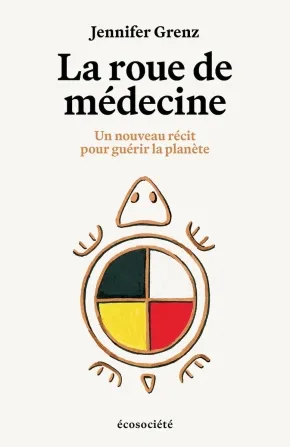
La roue de médecine: Un nouveau récit pour guérir la planète
$29.00
Format:
Paperback
Text Content Territories:
Indigenous Canadian; First Nations; Salish; Interior Salish; Nlaka'pamux (Thompson);
Reading Level: N/A
ISBN / Barcode: 9782898570674
Synopsis:
Synopsis:
Le récit inspirant d’une chercheuse et écologiste autochtone qui a cherché à réconcilier sa tête (science occidentale) et son cœur (vision du monde indigène) pour trouver une voie plus juste vers la guérison écologique.La roue de médecine raconte le voyage de réconciliation personnelle et écologique vécu par la chercheuse autochtone Jennifer Grenz dans son travail sur la restauration écologique. Elle montre qu’il est possible de créer des ponts entre les savoirs autochtones et occidentaux sans tomber, pour les populations autochtones elles-mêmes, dans le piège de l’assimilation par l’inclusion. Un récit qui démontre qu’il n’est pas nécessaire de se couper de ses valeurs, de sa spiritualité, de sa vie relationnelle et de son engagement envers la communauté, mais qu’on gagne au contraire à les placer au cœur de son métier. Éloquent, inspirant et dérangeant, ce bestseller enfin traduit en français jette les bases d’une écologie autochtone et nous rappelle qu’une multiplicité de visions du monde est nécessaire pour sauvegarder notre planète.
Educator Information
This book is available in English: Medicine Wheel for the Planet: A Journey toward Personal and Ecological Healing
Additional Information
Paperback
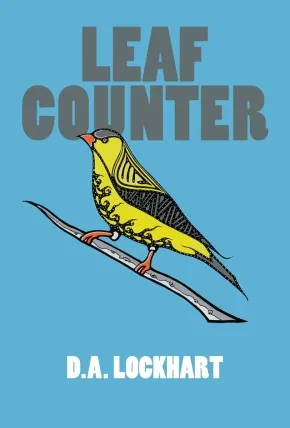
Leaf Counter
$24.95
Format:
Paperback
Text Content Territories:
Indigenous Canadian; First Nations; Lenape (Delaware);
Reading Level: N/A
ISBN / Barcode: 9781997580034
Synopsis:
Synopsis:
Flow into a new season in one of Canada’s most celebrated literary landscapes, with Leaf Counter. A lyric decolonial romp through the Ontario’s famed Prince Edward County, Aginjibagwesi (Spinus tristis) draws us through the poetics of the land and the struggles of the poet as decolonizer in this new epic border-crossing collection. Golden witness to the timelessness of land and spirits, Leaf Counter criss-crossed the lands around Ameliasburgh, its ghosts, heroes, and even the poets of Purdy’s A-Frame. Leaf Counter knows of sorrow, struggle, and wends a tale in a braided narrative as he scans "light and steeple” and sees timeless men at the centre and edges of the order of things, Simon Girty, Al Purdy, Charles Bukowski, and even Bret Hart, move and shift in time and place. Leaf Counter is our celestial, Lenape, winged guide of legend and myth. And through his spring enumeration of all things, we garner an understanding of the famed Canadian poet Al Purdy and the lands that he grew from. Witness the collapse of the old repressive order through the eyes of the poet and movements of the mighty little bird.
Additional Information
148 pages | 6.00" x 9.00" | Paperback
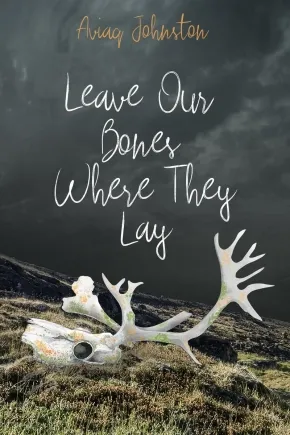
Leave Our Bones Where They Lay
$19.95
Format:
Paperback
Text Content Territories:
Indigenous Canadian; Inuit;
Reading Level: N/A
ISBN / Barcode: 9781772275896
Synopsis:
Synopsis:
Every solstice, Jupi—just as his father did before him, and his before him—must make a nearly impossible pilgrimage to light an oil lamp at the base of a remote cliff. There he must wait for Kipik, an ancient being who has bound Jupi’s family to a mammoth task: share a story every visit that appeases the fickle Kipik, or suffer unthinkable consequences.
For decades, Jupi has made the trek, growing grey and exhausted carrying this burden. Nearing the end of his life, Jupi knows he must name a successor, someone from his bloodline who can carry this weight and pass it on to future generations. But Jupi’s life has not been easy. His three children, one deceased, one incarcerated, one addicted, are not suitable successors. So Jupi must connect with a granddaughter he barely knows, whose language he barely speaks, and convince her to carry the weight of their family, perhaps their whole community, for the rest of her life.
This moving collection explores shifting definitions of what it means to be accountable to others, how family and community are defined, and how the spirits and demons of the past (both personal and legendary) are very much alive today.
Additional Information
136 pages | 6.00" x 9.00" | b&w illustrations | Paperback
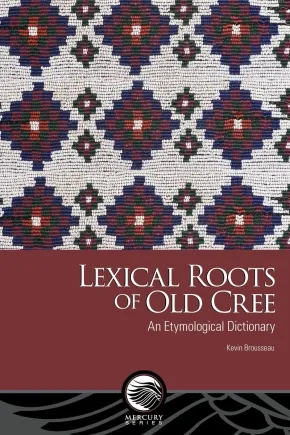
Lexical Roots of Old Cree: An Etymological Dictionary
$59.95
Format:
Paperback
Text Content Territories:
Indigenous Canadian; First Nations; Cree (Nehiyawak);
ISBN / Barcode: 9780776645490
Synopsis:
Synopsis:
Lexical Roots of Old Cree: An Etymological Dictionary is the result of over two decades of research on historical and contemporary Cree dialects. Built from extensive linguistic fieldwork with nearly a hundred fluent speakers and supported by lexical databases and textual corpora, it offers a detailed reconstruction of Old Cree roots and their evolution across dialects such as Moose Cree, Southern East Cree, Atikamekw, and Western Innu.
Lexical roots—the smallest meaningful units of words—are central to Cree’s polysynthetic structure, where words can function as entire sentences. By meticulously tracing these roots, this dictionary provides critical insights into how words were formed in Old Cree and how they continue to be structured in modern dialects.
Beyond linguistic reconstruction, this work addresses practical challenges in Cree lexicography, particularly those arising from orthographic variations and dialectal differences. It serves as a valuable resource for lexicographers, linguists, and community members engaged in language preservation and revitalization.
The research draws from historical manuscripts, early dictionaries, and oral traditions, ensuring a comprehensive and evidence-based approach to linguistic analysis. At a time of rapid linguistic erosion, this dictionary not only documents Cree’s rich lexical heritage but also supports ongoing efforts to sustain and strengthen the language for future generations. It stands as a testament to the knowledge generously shared by fluent speakers and to the enduring vitality of Cree linguistic traditions.
Additional Information
520 pages | 6" x 9" | Paperback
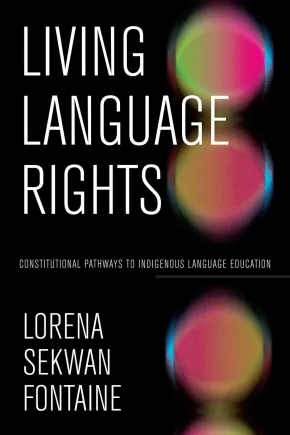
Living Language Rights: Constitutional Pathways to Indigenous Language Education
$27.95
Format:
Paperback
Text Content Territories:
Indigenous Canadian;
Reading Level: N/A
ISBN / Barcode: 9781772841145
Synopsis:
Synopsis:
Beyond Bilingualism
In Living Language Rights: Constitutional Pathways to Indigenous Language Education, Lorena Fontaine's ground-breaking work explores the constitutional foundations and growing recognition of Indigenous language rights in Canada. By documenting the history of First Nations' language transmission on the prairies, Fontaine demonstrates how Indigenous language rights are deeply embedded in both First Nations law and Canadian constitutional law. Equal parts personal and scholarly, Living Language Rights highlights the sacred responsibility within First Nations law to preserve and transmit language. Fontaine argues that language transmission is not only culturally significant, but also a constitutionally protected right that Canada has a duty to uphold-especially following decades of attempted linguistic genocide.
Focusing on education as the path to Indigenous language revitalization, she examines the current health of Indigenous languages and urges governments to act. Living Language Rights is a crucial read, filling an important void for anyone seeking to understand Indigenous rights, language revitalization, and Canadian constitutional law.
Reviews
"Fontaine’s interweaving of history and perspectives with the law make this a significant contribution to the field of language loss and revitalization. Living Language Rights is a “must read” for educators interested in Indigenous languages and their revitalization." - Marie Battiste, University of Saskatchewan
Educator Information
Table of Contents
List of Figures
Acknowledgements
Preface
Introduction: Foundations: First Nations Language Transmission
Chapter 1: Intercustomary Law: First Nations Language Transmission in the Prairies
Chapter 2: Linguistic Genocide: Canada's Educational System
Chapter 3: Canada's Constitution: First Nations Language Rights in Education
Chapter 4: International Law: Indigenous Peoples Language Rights in Education
Chapter 5: Indigenous Languages Act: Section 35 of Canada's Constitution Act, 1982
Conclusion
Appendix
Notes
Bibliography
Additional Information
264 pages | 6" x 9" | Paperback
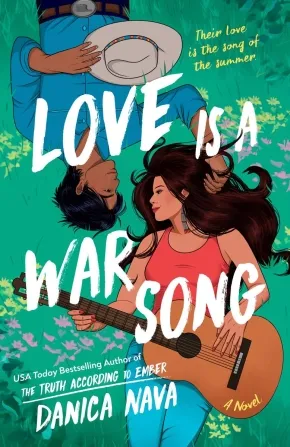
Love Is a War Song
$25.99
Format:
Paperback
Text Content Territories:
Indigenous American; Native American; Muscogee (Creek);
Reading Level: N/A
ISBN / Barcode: 9780593642627
Synopsis:
Synopsis:
A Muscogee pop star and a cowboy who couldn’t be more different come together to strike a deal in this new romantic comedy by Danica Nava, USA Today bestselling author of The Truth According to Ember.
Pop singer Avery Fox has become a national joke after posing scantily clad on the cover of Rolling Stone in a feather warbonnet. What was meant to be a statement of her success as a Native American singer has turned her into a social pariah and dubbed her a fake. With threats coming from every direction and her career at a standstill, she escapes to her estranged grandmother Lottie’s ranch in Oklahoma. Living on the rez is new to Avery—not only does she have to work in the blazing summer heat to earn her keep, but the man who runs Lottie’s horse ranch despises her and wants her gone.
Red Fox Ranch has been home to Lucas Iron Eyes since he was sixteen years old. He has lived by three rules to keep himself out of trouble: 1) preserve the culture, 2) respect the horses, and 3) stick to himself. When he is tasked with picking up Lottie’s granddaughter at the bus station, the last person he expected to see is the Avery Fox. Lucas can’t stand what she represents, but when he’s forced to work with her on the ranch, he can’t get her out of his sight—or his head. He reminds himself to keep to his rules, especially after he finds out the ranch is under threat of being shut down.
It’s clear Avery doesn’t belong here, but they form a tentative truce and make a deal: Avery will help raise funds to save the ranch, and in exchange, Lucas will show her what it really means to be an Indian. It’s purely transactional, absolutely no horsing around…but where’s the fun in that?
Reviews
"Artfully crafted and bursting with tension, Avery and Lucas’ story hits every beat with intention and ease. Nava delivers a sharp, funny, and deliciously slow-burning romance about two people learning to carve out their own space in the world. Love is a War Song is the book of the summer!”—Lyla Sage, New York Times bestselling author of Swift and Saddled
“A swoony love story that deftly explores identity, redemption, and the complexities of cancel culture. Danica Nava's sophomore novel is as thought provoking as it is funny and heart melting. It's a must read for all romance book lovers.”—Hannah Grace, #1 New York Times bestselling author of Daydream
"I devoured this within hours. I absolutely loved every page and how Avery overcame her struggles. My kingdom for Lucas. He was the most swoony MMC. The ending was so emotional and I was holding back tears. Sweet and sexy in the perfect package."—Nisha J Tuli, international bestselling author of Trial of the Sun Queen and Not Safe for Work
"Hilarious, sexy, and oh so addictive, Love is a War Song delivers the country-pop star mashup romance readers have been desperately waiting for! Danica Nava’s razor sharp wit and gift for storytelling never fail to make me laugh and swoon. Thanks to Danica Nava, I’m officially in my cowboy romance reading era, and I never want to leave! Between the dreamy western backdrop and pitch perfect enemies to lovers banter, Love is a War Song is a must read for fans of genre staples like Lyla Sage and Rebekah Weatherspoon."—Ellie Palmer, author of Four Weekends and a Funeral
“Danica Nava’s Love is A War Song is an at times hilarious yet moving story of redemption, love, and the importance of family and community. Fish out of water is one of my favorite tropes to read, and Nava executed it perfectly. I can’t wait to read what she writes next!”—Kristina Forest, USA Today bestselling author of The Love Lyric
Additional Information
336 pages | 5.18" x 8.00" | Paperback

La septième direction Plan de cours
$7.99
Artists:
Text Content Territories:
Indigenous American; Native American; Sioux; Lakota; Indigenous Canadian; First Nations; Sioux; Lakota;
ISBN / Barcode: 9781778540462
Synopsis:
Synopsis:
Un plan de lecon de l'enseignant pour approfondir le livre, La septième direction. Peut inclure des questions de compréhension, des activités de groupe, des amorces de conversation, des quiz, des activités d’arts du langage et des pages à colorier. Dans cette légende éclairante que nous raconte l’Aîné lakota Kevin Locke, Wak?á? T?á?ka (le Grand Esprit) a créé le monde entier en sept jours, gardant la création la plus précieuse pour la fin. Pour protéger cette précieuse création, Wak?á? T?á?ka devait la cacher dans un endroit où elle serait toujours en sécurité et a demandé à nos parents animaux de l’aider. Ensemble, ils ont trouvé l’endroit parfait. Quel endroit ont-ils choisi?
Educator Information
Recommended for use with students ages 7 to 10.
Find the student resource in French here: La septième direction: une légende de la création
This lesson plan is available in English: The Seventh Direction Teacher Lesson Plan.
Additional Information
25 pages | 8.15" x 9.53" | Paper Packet
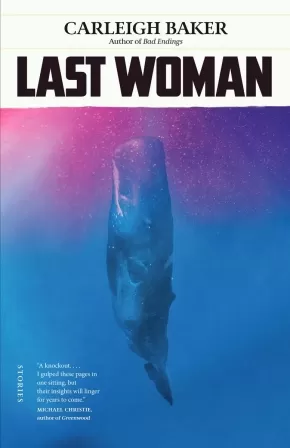
Last Woman: Stories
$24.95
Format:
Paperback
Text Content Territories:
Indigenous Canadian;
Reading Level: N/A
ISBN / Barcode: 9780771004148
Synopsis:
Synopsis:
From one of the country’s most celebrated new writers, a blistering collection of short fiction that is bracingly relevant, playfully irreverent, and absolutely unforgettable.
There’s a hole in the ozone layer. Are teenage girls to blame?
Floods and wildfires, toxic culture, billionaires in outer space, or a purse-related disaster while on mushrooms—in today’s hellscape world, there’s no shortage of things to worry about. Last Woman, the new collection of short fiction by award-winning author Carleigh Baker, wants you to know that you’re not alone. In these 13 brilliant new stories, Baker and her perfectly-drawn characters are here for you—in fact, they’re just as worried and weirded-out as everyone else.
A woman’s dream of poetic solitude turns out to be a recipe for loneliness. A retiree is convinced that his silence is the only thing that will prevent a deadly sinkhole. An emerging academic wakes up and chooses institutional violence. A young woman finds sisterhood in a strange fertility ritual, and an enigmatic empath is on a cleanse. Baker’s characters are both wildly misguided and a product of the misguided times in which we live. Through them we see our world askew and skewered—and, perhaps, we can begin to see it anew.
Carleigh Baker’s signature style is irreverent, but her heart is true—these stories delve into fear for the future, intergenerational misunderstandings, and the complexities of belonging with sharp wit and boundless empathy. With equal parts compassion and critique, she brings her clear-eyed attention to bear on our world, and the results are hilarious, heartbreaking, and startling in their freshness.
Reviews
“Carleigh Baker’s Last Woman is a knockout. These fifteen stories are probing contemplations on technology, the climate crisis, childhood, adulthood, parenthood, dreams, identity, creativity, and those staggering moments when the uncanny burbles up through the cracks of everyday experience. I gulped these pages in one sitting, but their insights will linger for years to come.”—Michael Christie, author of Greenwood
“Carleigh Baker’s Last Woman is a satirical, energetic look at our messed-up world. The stories in this collection ask original, surprising what-if questions, exploring disasters small and large, personal and public, and the past, present, and future of this planet—and beyond. I’m so impressed with Baker’s ability to craft such a range of voices, by turns funny and vulnerable and exuberant and idiosyncratic. These stories are inventive, a little weird, and very, very cool.”—Shashi Bhat, author of The Most Precious Substance on Earth
Additional Information
208 pages | 5.18" x 8.00" | Paperback

Les pensionnats indiens: Effets dévastateurs sur les peuples autochtones du Canada et appels à l'action de la Commission de vérité et réconciliation
$45.00
Format:
Paperback
Text Content Territories:
Indigenous Canadian; First Nations; Inuit; Métis;
ISBN / Barcode: 9781459419667
Synopsis:
Synopsis:
The award-winning Righting Canada's Wrongs series is now available in French for Immersion classrooms.
Canada’s residential school system for Indigenous children is now recognized as a grievous historic wrong committed against First Nations, Métis and Inuit peoples. Through historical photographs, documents and first-person narratives from people who survived residential schools, this book offers an account of the injustice of this period in Canadian history. It documents how official racism was confronted and finally acknowledged.
In 1857, the Gradual Civilization Act was passed in Canada with the aim of assimilating Indigenous people. In 1879, Prime Minister Sir John A. Macdonald commissioned a report that led to residential schools across Canada. First Nations and Inuit children were taken from their families and sent to residential schools where they were dressed in uniforms, their hair was cut, they were forbidden to speak their native language and they were often subjected to physical and psychological abuse. The schools were run by churches and funded by the federal government.
The last federally funded residential school closed in 1996. The horrors that many children endured at residential schools did not go away. It took decades for people to speak out, but with the support of the Assembly of First Nations and Inuit organizations, former residential school students took the federal government and the churches to court.
Their cases led to the Indian Residential Schools Settlement Agreement, the largest class-action settlement in Canadian history. In 2008, Prime Minister Harper formally apologized to former native residential school students for the atrocities they suffered and the role the government played in setting up the school system. The agreement included the Truth and Reconciliation Commission, which has worked to document the experience. More than five years after the TRC Report was released, there have been reports of unmarked graves of children being discovered at the site of former residential schools. This updated edition includes some of those findings and examines what has and what still has to be done in regards to the TRC Report’s Calls to Action.
Educator & Series Information
This French book is part of the series Redresser les torts du Canada (Righting Canada's Wrongs series).
Recommended for ages 13 to 18.
This book is available in English: Righting Canada's Wrongs: Residential Schools: The Devastating Impact on Canada's Indigenous Peoples and the Truth and Reconciliation Commission's Findings and Calls for Action
Additional Information
8.50" x 11.69" | 300 Photographs | Paperback
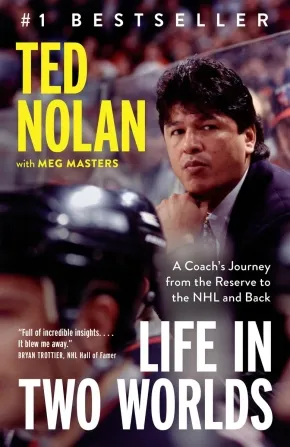
Life in Two Worlds: A Coach's Journey from the Reserve to the NHL and Back (PB)
$23.00
Format:
Paperback
Text Content Territories:
Indigenous Canadian; First Nations; Anishinaabeg; Ojibway; Ketegaunseebee (Garden River First Nation);
Reading Level: N/A
ISBN / Barcode: 9780735244979
Synopsis:
Synopsis:
In 1997 Ted Nolan won the Jack Adams Award for best coach in the NHL. But he wouldn’t work in pro hockey again for almost a decade. What happened?
Growing up on a First Nation reserve, young Ted Nolan built his own backyard hockey rink and wore skates many sizes too big. But poverty wasn’t his biggest challenge. Playing the game meant spending his life in two worlds: one in which he was loved and accepted and one where he was often told he didn’t belong.
Ted proved he had what it took, joining the Detroit Red Wings in 1978. But when his on-ice career ended, he discovered his true passion wasn’t playing; it was coaching. First with the Soo Greyhounds and then with the Buffalo Sabres, Ted produced astonishing results. After his initial year as head coach with the Sabres, the club was being called the “hardest working team in professional sports.” By his second, they had won their first Northeast Division title in sixteen years.
Yet, the Sabres failed to re-sign their much-loved, award-winning coach.
Life in Two Worlds chronicles those controversial years in Buffalo—and recounts how being shut out from the NHL left Ted frustrated, angry, and so vulnerable he almost destroyed his own life. It also tells of Ted’s inspiring recovery and his eventual return to a job he loved. But Life in Two Worlds is more than a story of succeeding against the odds. It’s an exploration of how a beloved sport can harbour subtle but devastating racism, of how a person can find purpose when opportunity and choice are stripped away, and of how focusing on what really matters can bring two worlds together.
Reviews
"Full of incredible insights into a tough life that Teddy’s perseverance turned into inspiration. It blew me away.”—Bryan Trottier, NHL Hall of Famer
“Ted’s beautiful memoir follows a trail of losses and the pain of getting well, and his stunning successes, lifting trophies, lifting lives. Ted was able to reach so many things, but his truth went beyond these things, and it’s the story of how he went beyond, to keep what was true in front of him that makes this book so enjoyable, and so important.”—Ron MacLean, CBC sportscaster and host of Hockey Night in Canada
“Ted Nolan’s story is truly remarkable. Ted persevered and overcame significant obstacles at a time when Indigenous people were not encouraged, applauded, or even wanted in elite hockey leagues. Ted broke barriers, battled racism, worked hard, and not only became an NHL player but also an elite junior, NHL, and international coach. Ted paved the way for many Indigenous youth to not only participate, but succeed in hockey arenas across North America and Europe as coaches and players.”—Phil Fontaine, former National Chief of the Assembly of First Nations
“Playing for Ted Nolan is one of my fondest memories. People called us “The Hardest Working Team in Hockey” and that doesn’t happen without a coach who can show each player their purpose and prove his belief in them. We all played beyond our own abilities for Ted. We led the NHL in penalty minutes and no team wanted to play us in our building. I respect Ted as a coach both on and off the ice, and this book gives a hint of why he inspires that in players and in people in general.”—Rob Ray, broadcaster and former NHLer
“Teddy was my favourite coach, mentor and friend. I love Ted Nolan. This book gives a good sense of what makes him so special.”—Brad May, former NHLer, Stanley Cup winner, and AT&T SportsNet analyst
“My father was so proud of Ted; he understood what he was going through. A story of perseverance, Life in Two Worlds is a great read for any generation."—Neil Sasakamoose, son of Fred Sasakamoose, the NHL’s first Treaty Indigenous player and bestselling author of Call Me Indian
Additional Information
336 pages | 5.11" x 7.97" | 8-page colour insert | Paperback

Little By Little: You Can Change the World
$22.95
Artists:
Format:
Paperback
Text Content Territories:
Indigenous Canadian; First Nations; Cree (Nehiyawak); Swampy Cree ; Shamattawa First Nation;
ISBN / Barcode: 9781774920985
Synopsis:
Synopsis:
The inspiring true story of how Indigenous activist Michael Redhead Champagne found his voice to create change in his community.
Michael might be young, but he’s got a big heart and a strong sense of right and wrong. He knows it’s right to help people when they need it—but what can he do when so many people need help?
When Michael finds out about an upcoming youth conference, he sees his chance. But when he gets to the conference, he’s the youngest person there! And the speaker on stage is saying things about his community that aren’t true. Will Michael be brave enough to use his voice to stand up for what he knows is right?
Little By Little is a beautifully illustrated graphic novel about how one person can spark change and inspire others.
Awards
- 2025 Forest of Reading
Reviews
“A gentle, uplifting, and inspiring story about a gentle, uplifting, and inspiring person. In this little book, Michael teaches us and our future generations that anyone can be a change-maker by using their voice.” — Rosanna Deerchild, poet and CBC Radio host
"Here’s a touching story about Michael Redhead Champagne that will inspire children to help others, even in the simplest of ways." - Debra H., Elementary School Teacher, Indigenous Books for Schools
Educator Information
Recommended for ages 9 to 12.
Fountas & Pinnell T
Lexile Framework for Reading HL560L
This book is included in the Indigenous Books for Schools database from the Association of Book Publishers of BC. It is recommended for Grades 4 to 6 for Career Education, English Language Arts, and Social Studies.
Themes: Community, Diversity and Inclusion, Relationships, Respect, and Social Justice
Additional Information
56 pages | 6.50" x 10.00" | Paperback
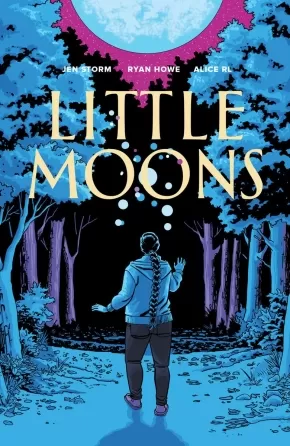
Little Moons
$22.95
Artists:
Format:
Paperback
Text Content Territories:
Indigenous Canadian; First Nations; Anishinaabeg; Ojibway;
ISBN / Barcode: 9781774921074
Synopsis:
Synopsis:
In this moving graphic novel, thirteen-year-old Reanna grieves the loss of her older sister. Can she find comfort through her family’s Ojibwe traditions?
It’s been a year since Reanna’s sister, Chelsea, went missing on her way home from school. Without any idea of what happened, Reanna and her family struggle to find closure.
Driven from their home by memories, Reanna’s mom moves to the big city. Left behind on the reserve, Reanna and her little brother go to live with their dad.
Reanna is hurt and angry that her mom has run away. She feels lonely, abandoned… but she is not alone. Lights turn on in empty rooms, and objects move without being touched.
There are little moons everywhere.
Reviews
"Little Moons has all the hallmarks of becoming a cherished companion for young hearts navigating the turbulent waters of grief and loss. This graphic novel not only offers solace but also illuminates the path toward healing. Little Moons gently guides readers through the darkest of nights, reminding them that even in moments of profound sadness, there is still light to be found."—Tasha Spillett, New York Times bestselling author
Educator Information
Recommended for ages 12 to 18.
Subjects, Themes, and Big Ideas: Death, Grief, Siblings, Paranormal, Graphic Novels, Socail Justice, MMIWG2S, Prejudice and Racism, Social Emotional Learning, Aspects of Indigenous Cultures, Smudging, Powwow, Spirituality and Ceremony, Regalia, Traditional Art, Contemporary Setting, Strong Female Characters.
Fountas & Pinnell Z+
Includes a note from the author on Mourning Traditions.
This book is included in the Indigenous Books for Schools database from the Association of Book Publishers of BC. It is recommended for Grades 6 to 12 for English Language Arts, Family Studies, Physical and Health Education, and Social Studies.
Additional Information
64 pages | 6.50" x 10.00" | Paperback

Liturgy of Savage No. 82
$20.00
Format:
Paperback
Text Content Territories:
Indigenous Canadian; First Nations; Innu (Montagnais-Naskapi);
ISBN / Barcode: 9781773860664
Synopsis:
Synopsis:
Originally from the community of Ekuanitshit (Mingan) in the Lower North Shore region of Quebec, Cousineau-Mollen was adopted at a very young age by an urban family as part of what is now known as the Sixties Scoop. Although Cousineau-Mollen did not grow up in an Indigenous community, her adoptive family maintained contact with her biological family, ensuring she remained connected to her culture and identity. Having faced adversity and rejection during her studies at Laval University due to her Indian Status, she has since worked to build and support community initiatives, through Aboriginal student associations and involvement in the Wolf Pack Street Patrol, for the Indigenous homeless people of Montreal. In The Liturgy of Savage No. 82, Cousineau-Mollen reclaims, honours, and makes space for herself and the rights of Indigenous women. A powerful and emotional poetry collection, The Liturgy of Savage No. 82 explores the realities facing Indigenous women in Canada and the emotional impact of homelessness, intergenerational trauma and systemic racism, all through a feminist lens as she considers the implications of femininity and identity in relation to the unceded land of her people.
Reviews
“Cousineau-Mollen’s poetry embodies resilience, and how the impact of colonization has affected Indigenous peoples, and First Nation women in particular.”—Shannon Webb-Campbell, Muskrat Magazine on Bréviaire du matricule 082 (Éditions Hannenorak, 2019)
"Originally published in French, Mollen’s Liturgy of Savage No. 82 is a deep and profound poetic exploration that examines themes such as colonization, residential schools, the Indian Act, feminism, and resistance. Mollen’s work is a reclaiming—through language and cultural resurgence—and requires recognition of both the oppressed and empowered experiences of an Indigenous woman in Canada. This edition also includes a glossary of language terms that invites the reader to experience even deeper understandings through the multidimensional expression of language. Cautions / Content Warnings: Some problematic language (e.g., “squaw”), and sexual content and themes." - Lori B., Indigenous Educator & Administrator, Indigenous Books for Schools
Educator Information
This book is included in the Indigenous Books for Schools database from the Association of Book Publishers of BC. It is recommended for Grades 10 to 12 for English Language Arts, Art, and Social Studies.
Content Warning: Sexual content and strong language.
Additional Information
72 pages | 5.50" x 8.00" | Paperback
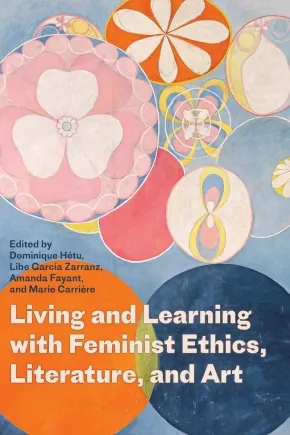
Living and Learning with Feminist Ethics, Literature, and Art
$39.99
Editors:
Format:
Paperback
Text Content Territories:
Indigenous Canadian;
Reading Level: N/A
ISBN / Barcode: 9781772127713
Synopsis:
Synopsis:
This transdisciplinary collection investigates relations of “living and learning with” as compelling forms of engagement and care between humans, nonhumans, and more-than-humans. Through academic and creative writings, contributors address the need for sustainable relationships between various feminist positions, focussing on Indigenous and Black knowledges, queer and trans artistic interventions, and anti-racist methodologies. They pursue crucial conversations on intersecting oppressions, intersubjectivities, voices, and positionalities. Rooted in feminist literary and artistic practices, the volume explores urgent ongoing transnational issues and will benefit scholars in literature, Indigenous studies, intercultural studies, and gender studies.
Contributors: Kim Anderson, Alexandre Baril, Sissel M. Bergh, Marie Carrière, Élise Couture-Grondin, Junie Désil, Amanda Fayant, Mylène Yannick Gamache, Libe García Zarranz, Dominique Hétu, Larissa Lai, Amina Lalor, Sheri Longboat, Brittany Luby, Stephanie Oliver, Anne Quéma, Veronika Schuchter, Erin Soros, Erin Wunker
Reviews
"This groundbreaking collection redefines feminist poetics, offering timely provocations and sophisticated insights. Engaging with critical university studies, Indigenous studies, trans studies, disability studies, and more, it explores ethical encounters and practices of care and reciprocity not just among humans, but beyond the human as well. The diverse yet thematically cohesive contributions highlight poetry’s role in addressing urgent cultural and political issues." - Sarah Dowling, University of Toronto
"Rarely has such an assortment of talented theorists and literary critics been collected to discuss feminist ethics. With essays arising from vigorous scholarly and artistic practices, the work will engage feminists, literary scholars, poets, activists, and scholars of gender and critical race theory." -Deanna Reder, Simon Fraser University
Additional Information
294 pages | 6.00" x 9.00" | Paperback
Sort By
Go To
of 6
 Our logo reflects the greater Nation we live within—Turtle Island (North America)—and the strength
and core of the Pacific Northwest Coast peoples—the Cedar Tree, known as the Tree of Life. We are
here to support the building of strong nations and help share Indigenous voices.
Our logo reflects the greater Nation we live within—Turtle Island (North America)—and the strength
and core of the Pacific Northwest Coast peoples—the Cedar Tree, known as the Tree of Life. We are
here to support the building of strong nations and help share Indigenous voices.


