

 Show Advanced Search Options
 Hide Advanced Search Options
Browse Books for Kids
961
-
975
of
2611 Results;
Sort By
Go To
of 175
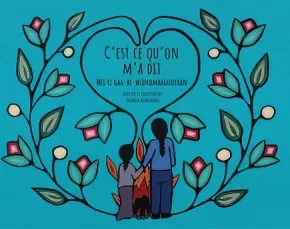


C'est ce qu'on m'a dit
$16.99
Artists:
Format:
Paperback
Text Content Territories:
Indigenous Canadian; First Nations; Anishinaabeg; Ojibway; Nipissing First Nation;
ISBN / Barcode: 9781989122785
Synopsis:
Synopsis:
On dit que quand les enseignements sont transmis d'une génération à l'autre, de bonnes choses peuvent arriver. La langue est apprise, les connaissances sont partagées et la culture est pratiquée. Dans cette histoire de préservation de la langue, l'auteure, illustratrice et enseignante de langue anishnaabemowin Juliana Armstrong met en lumière un certain nombre de mots anishnaabemowin avec leurs liens culturels transmis de ses ancêtres ojibwés. Connaître notre culture veut dire savoir qui on est. Quand on sait qui on est, on peut marcher dans la bonne voie.
Educator Information
Recommended for ages 6 to 8.
A teacher lesson plan is available: C'est ce qu'on m'a dit plan de cours
This book is also available in English: This Is What I've Been Told
Additional Information
40 pages | 11.00" x 8.50" | Paperback

Candy Bar War
 $18.00
Artists:
Format:
Paperback
ISBN / Barcode: 9781777122317
Synopsis:
Synopsis:
Do you know about the time that chocolate stopped? The time that KIDS gave up eating candy? Do you believe it?
This is a story about the coolest war in history. A war led by children and inspired by the candy bar. A war that began in the small Vancouver Island town of Ladysmith and travelled across Canada. A war that brought children and parents together in a war against price hikes on candy bars in 1947. A year that saw a group of children band together and boycott the chocolate bar.
Educator & Series Information
Part of the Awkward+Awesome children’s book series celebrating unlikely heroes and inner weirdos.
A fun book for children and adults to teach both the power of history and working together.
Based on true events.
Additional Information
34 Pages | 8" x 8" | Paperback
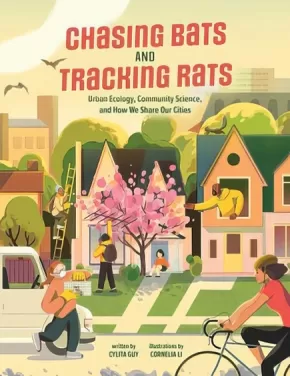
Chasing Bats and Tracking Rats: Urban Ecology, Community Science, and How We Share Our Cities
$14.95
Artists:
Format:
Paperback
ISBN / Barcode: 9781773215396
Synopsis:
Synopsis:
Gripping narrative non-fiction with STEM and social justice themes that proves cities can be surprisingly wild places—and why understanding urban nature matters.
What can city bees tell us about climate change? How are we changing coyote behavior? And what the heck is a science bike? Featuring the work of a diverse group of eleven scientists—herself included!—Dr. Cylita Guy shows how studying urban wildlife can help us make cities around the world healthier for all of their inhabitants. In the process, Guy reveals how social injustices like racism can affect not only how scientists study city wildlife, but also where urban critters are likelier to thrive. Sidebars include intriguing animal facts and the often-wacky tools used by urban ecologists, from a ratmobile to a bug vacuum. Cornelia Li’s engaging illustrations bring the scientists’ fieldwork adventures to life, while urban ecology challenges encourage readers to look for signs of wildlife in their own neighborhoods.
Educator Information
Recommended for ages 9 to 12
Themes: biology, environmental science & ecosystems, experiments & projects
Table of Contents
Introduction: Living in the Urban Jungle
Talk Like an Urban Ecologist: Key Terms
Chapter 1: Chasing Down Big Browns
How much do wildlife rely on city green spaces? Cylita Guy tracks bats in Toronto, Canada.
Chapter 2: Ratmobile to the Rescue
How do animals in cities affect human health? Kaylee Byers studies how rats move around Vancouver, Canada.
Chapter 3: Bees and Bug Vacuum
Why are cities a good place to study the impact of climate change on bees? Charlotte de Keyzer looks at what bees and the plants they pollinate can tell us about the effects of climate change in cities like Toronto, Canada.
Chapter 4: Backyard Bear Buffet
What happens when humans and wildlife in cities don’t get along? Jesse Popp gets to the bottom of human-bear conflict in Sudbury, Canada.
Chapter 5: Bold Coyote, Bashful Coyote
How are humans changing animal behavior in cities? Chris Schell studies coyote behavior in Utah and Washington, and looks at how human policies like redlining affect urban biodiversity.
Chapter 6: Microplastics, Major Problems
How does the pollution we create affect city animals? Rachel Giles wades into Toronto’s waterways to discover the impacts of pollution on invertebrates.
Chapter 7: Birdwatching Bias
What happens when citizen science doesn’t tell us the whole story? Deja Perkins asks how human bias can affect what we know about birds in cities like Durham, Chapel Hill, and Raleigh, North Carolina.
Chapter 8: A Bike to Beat the Heat
Why are greener cities better for people? Carly Ziter pedals around Madison, Wisconsin to track how trees cool cities.
Conclusion: But this is only the beginning!
Acknowledgments
Select Sources
Index
Additional Information
104 pages | 7.50" x 9.80" | Paperback
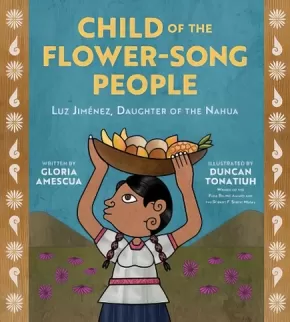
Child of the Flower-Song People
$23.99
Format:
Hardcover
Text Content Territories:
Indigenous Central American; Indigenous Peoples in Mexico; Nahuas; Aztec; Nahuas;
ISBN / Barcode: 9781419740206
Synopsis:
Synopsis:
Award-winning illustrator Duncan Tonatiuh brings to life debut author Gloria Amescua's lyrical biography of an indigenous Nahua woman from Mexico who taught and preserved her people's culture through modeling for famous artists
She was Luz Jiménez,
child of the flower-song people,
the powerful Aztec,
who called themselves Nahua—
who lost their land but who did not disappear.
As a young Nahua girl in Mexico during the early 1900s, Luz learned how to grind corn in a metate, to twist yarn with her toes, and to weave on a loom. By the fire at night, she listened to stories of her community’s joys, suffering, and survival, and wove them into her heart.
But when the Mexican Revolution came to her village, Luz and her family were forced to flee and start a new life. In Mexico City, Luz became a model for painters, sculptors, and photographers such as Diego Rivera, Jean Charlot, and Tina Modotti. These artists were interested in showing the true face of Mexico and not a European version. Through her work, Luz found a way to preserve her people's culture by sharing her native language, stories, and traditions. Soon, scholars came to learn from her.
This moving, beautifully illustrated biography tells the remarkable story of how model and teacher Luz Jiménez became “the soul of Mexico”—a living link between the indigenous Nahua and the rest of the world. Through her deep pride in her roots and her unshakeable spirit, the world came to recognize the beauty and strength of her people.
The book includes an author’s note, timeline, glossary, and bibliography.
Reviews
“Gloria Amescua narrates the amazing life of Luz Jiménez with lyrical beauty that echoes the very xochicuicatl—ancestral Nahua poetics—that Luz sought to preserve for her people. Child of the Flower-Song People deftly balances fascinating biographical moments with an earnest sense of social justice for the indigenous people of Mexico. Duncan Tonatiuh’s now famous codex-style art, drawn from his own Nahua heritage, makes the story and message even more poignant.” - David Bowles
"An important window into the ravages of colonialism and the plight of the Indigenous peoples of Mexico." - Kirkus Reviews
Educator Information
Recommended for ages 6 to 10
Additional Information
48 pages | 9.00" x 10.00" | Hardcover
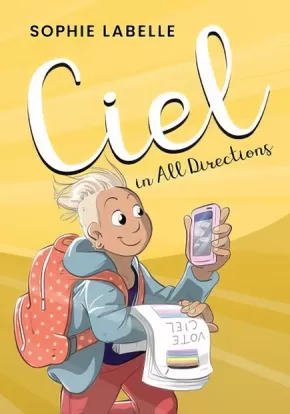
Ciel In All Directions
$11.95
Format:
Paperback
ISBN / Barcode: 9781772602036
Synopsis:
Synopsis:
Ciel may have settled into high school with their best friend Stephie and new buddy Liam, but life is anything but ordinary for this non-binary trans kid! Between an important science project for school and their ever more popular YouTube channel, Ciel and their friends find themselves involved in a campaign to represent the LGBT Alliance. Life is taking off in all directions!
Reviews
"An entertaining yet educational middle grade novel that represents a plethora of LGBTQ+ identities and experiences that many young people will be able to identify with regardless of their own gender and sexuality." — Rob Bittner, CM: Canadian Review of Materials, June 2021
“A bright and open story.”— Kirkus Reviews, July 2021
"A good addition to any middle grade collection desiring true-to-life stories of LGBTQ+ kids."— School Library Journal, August 2021
"Ciel’s energetic and eager voice, as well as their passion for life and appreciation for all types of people, shines through the pages...Bearing a sweet nostalgic air for school days, Labelle’s narrative revolves around relatable situations for readers, from science projects and school assignments to attempting to build and maintain a social circle while exploring one’s own self-expression and identities."— Booklist, September 2021
Educator & Series Information
Recommended for ages 9 to 12.
This is book number 2 in the Ciel series.
Additional Information
192 pages | 5.25" x 7.50" | Paperback
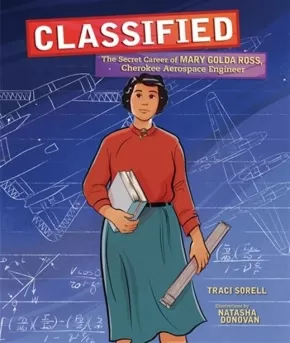
Classified: The Secret Career of Mary Golda Ross, Cherokee Aerospace Engineer
$30.50
Artists:
Format:
Hardcover
Text Content Territories:
Indigenous American; Native American; Cherokee;
ISBN / Barcode: 9781541579149
Synopsis:
Synopsis:
Mary Golda Ross designed classified airplanes and spacecraft as Lockheed Aircraft Corporation's first female engineer. Find out how her passion for math and the Cherokee values she was raised with shaped her life and work.
Cherokee author Traci Sorell and Métis illustrator Natasha Donovan trace Ross's journey from being the only girl in a high school math class to becoming a teacher to pursuing an engineering degree, joining the top-secret Skunk Works division of Lockheed, and being a mentor for Native Americans and young women interested in engineering. In addition, the narrative highlights Cherokee values including education, working cooperatively, remaining humble, and helping ensure equal opportunity and education for all.
Awards
- 2021 Junior Library Guild Selection winner
- 2021 Eureka! Children's Book Award Winner
- 2021 A Mighty Girl's Book fo the Year winner
- 2022 Rise: A Feminist Book Project List winner
- 2022 Cooperative Children's Book Centre Choices winner
Reviews
"Highlights the life and secret work of Cherokee aerospace engineer Mary Golda Ross.
As a teen in the 1920s, Mary Golda Ross loves 'puzzling out math equations' despite expectations of the times. At 16, she finds being the only girl in a college math class means working extra hard to prove herself to the boys who 'refused to sit next to' her. Guided by her Cherokee belief that 'gaining life skills in all areas' is important, Ross not only strives for better grades, she aims for loftier goals. Each step of the way—whether teaching high school, working for the Bureau of Indian Affairs, or helping solve aircraft design flaws during World War II— Ross is fueled by other Cherokee principles as well. Ultimately, her passion for math and her commitment to those deeply rooted values result in her selection to a 'supersecret work team' that promises to take her career, and the world, farther than ever before. Meticulously researched and subtly framed according to the Cherokee beliefs that piloted Ross, page-turning prose elevates this Indigenous hidden figure to her rightful place in history. In addition, bold, classic-comics–like illustrations and colors reminiscent of 1950s advertisements give an appropriately retro vibe. A stellar addition to the genre that will launch careers and inspire for generations, it deserves space alongside stories of other world leaders and innovators.
Liftoff. A biography that lands beyond the stars!"—starred, Kirkus Reviews
"Mary Golda Ross, born to Cherokee Nation–citizen parents, always excelled at math. Graduating from high school at 16 and college at 20, she became a math and science teacher. When WWII began, she was hired by Lockheed Aircraft, where she worked with engineers correcting a design flaw in P-381 fighter planes. Later, she was chosen as the only female in Lockheed's Skunk Works group (a top-secret program whose efforts are still mostly classified), designing spacecraft for NASA. Sorell's (Indian No More, 2019) succinct text emphasizes Ross' reliance on Cherokee values (gaining skills, working cooperatively, remaining humble, and ensuring equal opportunity for all), which played a defining role in her successes and influenced the mentoring work she chose in her retirement. Donovan's illustrations employ rich earth-tone colors and bold outlines, and often incorporate sequential storytelling techniques, enabling multiple scenes to appear in one spread. Appended with a time line, author's note, and resources, this biography makes a valuable addition to units on Indigenous individuals or women in STEM."—Booklist
Educator Information
Recommended for ages 7 to 11.
Lexile 940
Guided Reading Level: R
Keywords / Subjects: Narrative Nonfiction, Diverse Books, Feminism, #OwnVoices, Race & Ethnicity, Social Justice, Diversity, STEM, Space Science
Additional Information
32 pages | 9.25" x 11.00"
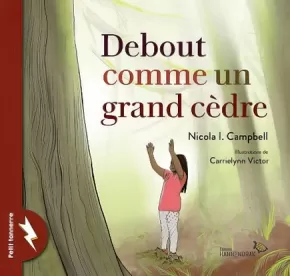
Debout comme un grand cedre
$19.95
Artists:
Format:
Hardcover
Text Content Territories:
Indigenous Canadian; First Nations; Salish; Coast Salish; Sto:lo; Interior Salish; Nlaka'pamux (Thompson);
ISBN / Barcode: 9782923926759
Synopsis:
Synopsis:
Quand vous faites une marche en nature, qui voyez-vous? Qu’entendez-vous?La conteuse Nicola I. Campbell donne sens aux mots « se tenir debout comme un grand cèdre » dans une touchante exploration au sein de la nature sauvage. On y apprend le nom des animaux en langues nle?kepmxcín et halq’emeylem ainsi que les enseignements qu’ils ont à nous offrir.Autrice de Shi-shi-etko et de La pirogue de Shin-chi, deux textes primés, Nicola I. Campbell nous offre ici un album pour enfants magnifiquement illustré par l’artiste Carrielynn Victor, dans une langue poétique qui nous invite à célébrer l’environnement, le développement durable et le sentiment d’appartenance à la terre.
Educator Information
Dès 6 ans
This book is available in English: Stand Like a Cedar
Additional Information
Hardcover
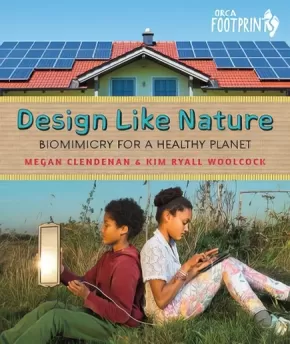
Design Like Nature: Biomimicry for a Healthy Planet
$21.95
Format:
Hardcover
ISBN / Barcode: 9781459824645
Synopsis:
Synopsis:
Did you know that lamps can be powered by glowing bacteria instead of electricity? That gloves designed like gecko feet let people climb straight up glass walls? Or that kids are finding ways to make compostable plastic out of banana peels? Biomimicry, the scientific term for when we learn from and copy nature, is a revolutionary way to look to nature for answers to environmental problems such as climate change.
In Design Like Nature young readers discover innovations and inventions inspired by the environment. Nature runs the entire planet with no waste and no pollution. Can humans learn to do this too? It's time to step outside and start designing like nature.
Educator & Series Information
Recommended for ages 9 to 12.
This book is part of the Orca Footprint series. Kids today inhabit a world full of complex—and often mystifying—environmental issues. Orca Footprints aim to help kids answer their questions about the state of the natural world with well-researched, simply-expressed information and powerful images. With topics such as food production, water, cycling and sustainable energy, these books will inspire kids to take action.
A free, downloadable scavenger hunt activity is available: Scavenger Hunt - Design Like Nature: Biomimicry for a Healthy Planet
Additional Information
48 pages | 8.00" x 9.50"
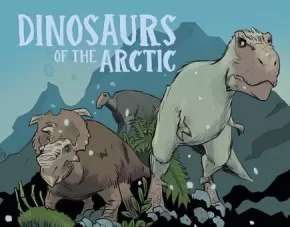
Dinosaurs of the Arctic - Nunavummi Reading Series
$16.95
Artists:
Format:
Hardcover
ISBN / Barcode: 9781774502655
Synopsis:
Synopsis:
Learn about dinosaurs that lived in the North!
This book gives interesting facts about the different types of dinosaurs and other ancient animals that lived in the Arctic long ago.
Educator & Series Information
This book is part of the Nunavummi Reading Series, a Nunavut-developed series that supports literacy learning while teaching readers about the people, traditions, and environment of the Canadian Arctic. It is a Level 11 book in the series.
Nunavummi Reading Series books have also been officially levelled using the Fountas & Pinnell Text Level Gradient™ Levelling System. This book's F&P Level is M.
Curriculum Connections: History; Science
Recommended for ages 6 - 8.
Additional Information
28 pages | 9.00" x 7.00" | Hardcover

Do You Know Where the Animals Live?: Discovering the Incredible Creatures All Around Us
$24.95
Format:
Hardcover
ISBN / Barcode: 9781771646598
Synopsis:
Synopsis:
From the New York Times-bestselling author of The Hidden Life of Trees comes a book for kids ages 8-12 about animals at home and around the world. Get ready to become an animal expert!
Perfect for STEM home-schooling, online learning, and outdoor education.
Have you ever wondered ….
Are worms afraid of the rain?
Do fish use farts to communicate?
Why do elephants stomp their feet?
Do animals dream? What do they dream about?
Do animals get scared, feel happy, or become excited like we do?
In this highly visual, fun, and interactive book, kids will get to know all sorts of animals, from birds and caterpillars in their own backyard, to grizzly bears in chilly Alaska, to puffer fish in the waters of Australia.
Through a mix of at-home activities, facts, stories, and pictures,kids will learn:
- How to spot animal homes and follow their movements
- How our actions impact animals and their ability to survive and thrive in nature
- About some of the wildest and most interesting creatures on Earth
This wonderful introduction to the animal kingdom features playful questions, fun quizzes, and activities that will help kids study animals in their own backyards—and make the world a better place for them.
Educator Information
Recommended for ages 8 to 12.
Guided Reading Level: R
An introduction to animals and their environments: A thoughtful, informative, and easy-to-understand approach to teaching kids where different animal species live, what they eat, how they interact with their families, how they communicate, and what they think and feel.
Additional Information
84 pages | 8.50" x 11.00" | Hardcover
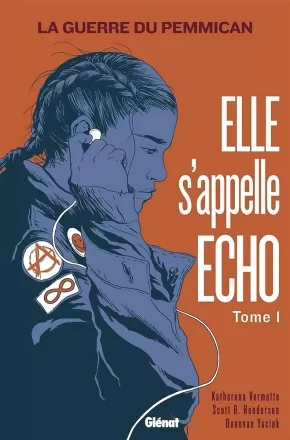
Elle s'appelle Echo Tome 1: La guerre du Pemmican
$19.95
Artists:
Format:
Hardcover
Text Content Territories:
Indigenous Canadian; Métis;
ISBN / Barcode: 9782924997260
Synopsis:
Synopsis:
Echo Desjardins est une métisse de 13 ans qui habite Winnipeg, au Manitoba. L'adolescente solitaire, qui vit loin de sa mère, a du mal à s'intégrer à sa nouvelle école. Un jour, lors d'un cours d'histoire donné par monsieur Bee sur la vie des autochtones au début du XIXe siècle, Echo se transporte dans le passé, jusqu'à devenir témoin privilégié de sa propre histoire, l'histoire méconnue des Métis du Canada.
Elle s'appelle Echo est une série à dimension humaine, qui à travers la recherche d'identité d'une jeune Métisse, permet de découvrir ces descendants d'Européens et Autochtones qui se sont battus, et sacrifiés, pour écrire une page importante de l'histoire du Canada.
Tome 1 : La guerre du Pemmican : Après avoir vu des Métis chasser des troupeaux de bisons et sympathisé avec Marie dans un camp de chasse, Echo découvre avec horreur la guerre sans merci que se livrent la Compagnie de la Baie d'Hudson et de la Compagnie du Nord-Ouest. Au fil des jours, elle comprend à quel point ses ancêtres en souffrent, et elle décide d'en savoir plus…
Educator & Series Information
Recommended for ages 12+.
This is the first book in the Girl Called Echo (Elle s'appelle Echo) series, which includes the following titles:
Elle s'appelle Echo Tome 1: La guerre du Pemmican
Elle s'appelle Echo Tome 2: La résistance de la rivière Rouge
Elle s'appelle Echo Tome 3: La résistance du Nord-Ouest
Elle s'appelle Echo Tome 4: L'ère des réserves routières
This book is available in English: Pemmican Wars
Additional Information
50 Pages | Hardcover
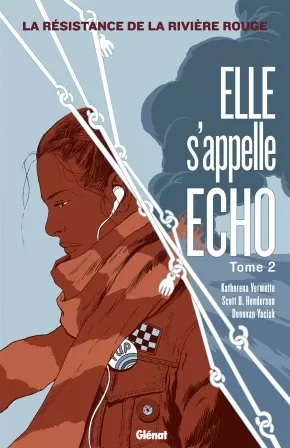
Elle s'appelle Echo Tome 2: La résistance de la rivière Rouge
$19.95
Artists:
Format:
Hardcover
Text Content Territories:
Indigenous Canadian; Métis;
ISBN / Barcode: 9782924997277
Synopsis:
Synopsis:
Echo Desjardins est une métisse de 13 ans qui habite Winnipeg, au Manitoba. L'adolescente solitaire, qui vit loin de sa mère, a du mal à s'intégrer à sa nouvelle école. Un jour, lors d'un cours d'histoire donné par monsieur Bee sur la vie des autochtones au début du XIXe siècle, Echo se transporte dans le passé, jusqu'à devenir témoin privilégié de sa propre histoire, l'histoire méconnue des Métis du Canada.
Elle s'appelle Echo est une série à dimension humaine, qui à travers la recherche d'identité d'une jeune Métisse, permet de découvrir ces descendants d'Européens et Autochtones qui se sont battus, et sacrifiés, pour écrire une page importante de l'histoire du Canada.
Tome 2 : La résistance de la rivière Rouge: Peu à peu, le quotidien d'Echo s'améliore. Sa mère est revenue vivre avec elle et elle commence à socialiser avec quelques élèves. Mais, lorsqu'elle retourne dans le passé, en 1869, elle surprend des arpenteurs venus mesurer les terres des Métis au nom du gouvernement canadien qui comptent les en priver. La résistance métisse s'organise. Ils sont prêts à prendre les armes. Echo a peur pour eux…
Educator & Series Information
Recommended for ages 12+.
This is the second book in the Girl Called Echo (Elle s'appelle Echo) series, which includes the following titles:
Elle s'appelle Echo Tome 1: La guerre du Pemmican
Elle s'appelle Echo Tome 2: La résistance de la rivière Rouge
Elle s'appelle Echo Tome 3: La résistance du Nord-Ouest
Elle s'appelle Echo Tome 4: L'ère des réserves routières
This book is available in English: Red River Resistance
Additional Information
50 Pages | Hardcover

Elvis, Me, and the Lemonade Stand Summer
$13.95
Format:
Paperback
Text Content Territories:
Indigenous Canadian; First Nations; Salish;
ISBN / Barcode: 9781770866157
Synopsis:
Synopsis:
It’s the summer of 1978 and most people think Elvis Presley has been dead for a year. But not eleven-year-old Truly Bateman – because she knows Elvis is alive and well and living in the Eagle Shores Trailer Park. Maybe no one ever thought to look for him on an Indigenous reserve on Vancouver Island.
It’s a busy summer for Truly. Though her mother is less of a mother than she ought to be, and spends her time drinking and smoking and working her way through new boyfriends, Truly is determined to raise as much money for herself as she can through her lemonade stand … and to prove that her cool new neighbour is the one and only King of Rock ‘n’ Roll. And when she can’t find motherly support in her own home, she finds sanctuary with Andy El, the Salish woman who runs the trailer park.
Awards
- Winner of the 2021 City of Victoria Children's Book Prize
Educator & Series Information
Recommended for ages 9-12 (middle-grade read).
Content Warning: Use of a term from the era of the book, "Indian," is used occasionally.
DCB Young Readers has created a teacher's guide for this work, which can be downloaded here: Teachers Guide - Elvis, Me and the Lemonade Stand Summer
This is the first book in the Elvis, Me, and the Eagle Shores Trailer Park series.
Additional Information
192 pages | 5.37" x 8.00"
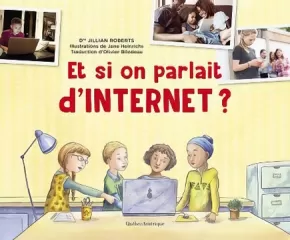
Et si on parlait des L'INTERNET ?
$19.95
Artists:
Format:
Hardcover
ISBN / Barcode: 9782764442463
Synopsis:
Synopsis:
Et si on parlait d’INTERNET ? aborde les principaux aspects de la sécurité en ligne en pensant spécialement à celle des enfants et explique clairement et simplement pourquoi il est important de fixer certaines limites en ligne comme on le fait dans la vie.
Educator & Series Information
La série Et si on parlait de... ? est une série de livres qui vise à familiariser les enfants avec des questions culturelles, sociales et environnementales complexes auxquelles ils ont pu être exposés. Le format questions et réponses du texte principal off re aux jeunes enfants des connaissances de base sur le sujet traité, tandis que les compléments d’information qui se trouvent dans les marges permettent aux parents et aux enfants plus âgés d’en apprendre davantage sur le sujet.
Recommended for ages 6 to 8.
This book is available in English: On the Internet: Our First Talk About Online Safety
Additional Information
32 pages | 8.50" x 10.00" | Translated by Olivier Bilodeau
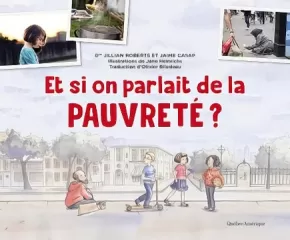
Et si on parlait des PAUVRETÉ ?
$19.95
Artists:
Format:
Hardcover
ISBN / Barcode: 9782764442432
Synopsis:
Synopsis:
Ce qui se passe à l’extérieur de chez nous peut être étrange et déroutant. Les questions que se pose un enfant qui voit une personne vivant dans la rue peuvent être le point de départ d’une importante conversation sur la pauvreté. Dans ce livre, la pédopsychologue Jillian Roberts et le responsable de la division de l’éducation de Google Jaime Casap guident une discussion sur ce sujet délicat avec franchise et simplicité.
Educator & Series Information
La série Et si on parlait de... ? est une série de livres qui vise à familiariser les enfants avec des questions culturelles, sociales et environnementales complexes auxquelles ils ont pu être exposés. Le format questions et réponses du texte principal off re aux jeunes enfants des connaissances de base sur le sujet traité, tandis que les compléments d’information qui se trouvent dans les marges permettent aux parents et aux enfants plus âgés d’en apprendre davantage sur le sujet.
Recommended for ages 6 to 8.
This book is available in English: On Our Street: Our First Talk About Poverty
Additional Information
32 pages | 8.50" x 10.00" | Translated by Olivier Bilodeau
Sort By
Go To
of 175
 Our logo reflects the greater Nation we live within—Turtle Island (North America)—and the strength
and core of the Pacific Northwest Coast peoples—the Cedar Tree, known as the Tree of Life. We are
here to support the building of strong nations and help share Indigenous voices.
Our logo reflects the greater Nation we live within—Turtle Island (North America)—and the strength
and core of the Pacific Northwest Coast peoples—the Cedar Tree, known as the Tree of Life. We are
here to support the building of strong nations and help share Indigenous voices.


