

 Show Advanced Search Options
 Hide Advanced Search Options
Browse Books for Kids
1
-
15
of
43 Results; (Kids Books Starting With "E")
Sort By
Go To
of 3


Elements of Indigenous Style: A Guide for Writing By and About Indigenous Peoples - 2nd Edition
$27.95
Editors:
Format:
Paperback
Text Content Territories:
Indigenous Canadian;
Reading Level: N/A
ISBN / Barcode: 9781550599459
Synopsis:
Synopsis:
The groundbreaking Indigenous style guide every writer needs.
The first published guide to common questions and issues of Indigenous style and process for those who work in words and other media is back in an updated new edition. This trusted resource offers crucial guidance to anyone who works in words or other media on how to work accurately, collaboratively, and ethically on projects involving Indigenous Peoples.
Editor Warren Cariou (Métis) and contributing editors Jordan Abel (Nisga’a), Lorena Fontaine (Cree-Anishinaabe), and Deanna Reder (Cree-Métis) continue the conversation started by the late Gregory Younging in his foundational first edition. This second conversation reflects changes in the publishing industry, Indigenous-led best practices, and society at large, including new chapters on author-editor relationships, identity and community affiliation, Two-Spirit and Indigiqueer identities, sensitivity reading, emerging issues in the digital world, and more.
This guide features:
- Twenty-two succinct style principles.
- Advice on culturally appropriate publishing practices, including how to collaborate with Indigenous Peoples, when and how to seek the advice of Elders, and how to respect Indigenous Oral Traditions and Traditional Knowledge.
- Terminology to use and to avoid.
- Advice on specific editing issues, such as biased language, capitalization, citation, accurately representing Indigenous languages, and quoting from historical sources and archives.
- Examples of projects that illustrate best practices.
Additional Information
208 pages | 5.50" x 7.50" | Paperback
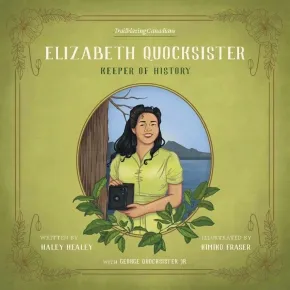
Elizabeth Quocksister: Keeper of History (PB)
$12.95
Artists:
Format:
Paperback
Text Content Territories:
Indigenous Canadian; First Nations; Kwakwaka'wakw (Kwakiutl); Da'naxda'xw Awaetlala;
ISBN / Barcode: 9781772034851
Synopsis:
Synopsis:
The uplifting true story of Elizabeth Quocksister, a strong Indigenous woman and community leader, who dedicated her life to protecting her language and cultural traditions.
Elizabeth Quocksister (1925–81) had many roles in her life. She was a cultural teacher, a community leader, a dancer, a nurse, a photographer, a residential school survivor, and a mother of ten. Born on the Da’naxda’xw Nation on Knight Inlet on the central coast of British Columbia, Elizabeth spoke fluent Kwak’wala and proudly celebrated her Kwakwaka’wakw culture at a time when the Canadian government actively discouraged Indigenous traditions and the speaking of Indigenous languages. She cared for community members in need and saved many children from the horrors of residential school. She chronicled the daily lives, important events, and changing times of her community through photography—preserving her people’s history and culture for future generations. This inspiring picture book is a beautiful tribute to a proud Indigenous woman whose name deserves to be well-known throughout her community and beyond.
Educator Information
Recommended for ages 4 to 8.
Additional Information
32 pages | 9.00" x 9.00" | Paperback
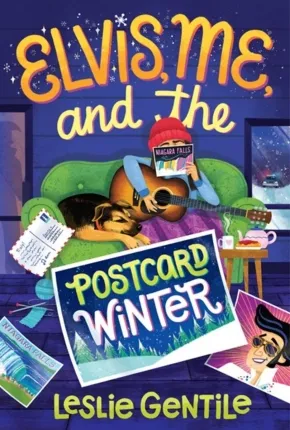
Elvis, Me, and the Postcard Winter
$14.95
Format:
Paperback
Text Content Territories:
Indigenous Canadian; First Nations; Salish;
ISBN / Barcode: 9781770867666
Synopsis:
Synopsis:
Guitar practice, Andy El’s birthday, her mom’s unexpected return — Truly has a lot to write to Elvis about this winter.
Vancouver Island, 1979. Winter rains have swept into Eagle Shores Trailer Park, and twelve-year-old Truly has settled in with Andy El, the Salish Elder who took her in after she was abandoned by her mom, Clarice. When Elvis, the thought-to-be-dead King of Rock ’n’ Roll and Truly’s postcard pen pal, gifts her a secondhand guitar, Truly’s growing love of music deepens her bond with her new family — now including Andy El’s nephew, Raymond, Truly’s new puppy, Gracie, and Andy El’s granddaughters, Agnes and Linda.
But Clarice shatters Truly’s world again when she unexpectedly returns, asking for a second chance at being a good mom. Can Clarice really change? Can Truly ever forgive her? If so, is she willing to give up her new life with Andy El to move back in with her mom?
Educator & Series Information
Recommended for ages 9 to 12.
This is the second book in the Elvis, Me and the Eagle Shores Trailer Park series.
Additional Information
200 pages | 5.37" x 8.00" | Paperback

Eagle Drums
$24.99
Format:
Hardcover
Text Content Territories:
Indigenous American; Alaska Native; Inupiat;
ISBN / Barcode: 9781250750655
Synopsis:
Synopsis:
A magical realistic middle-grade debut about the origin story of the Iñupiaq Messenger Feast, a Native Alaskan tradition.
As his family prepares for winter, a young, skilled hunter must travel up the mountain to collect obsidian for knapping—the same mountain where his two older brothers died.
When he reaches the mountaintop, he is immediately confronted by a terrifying eagle god named Savik. Savik gives the boy a choice: follow me or die like your brothers.
What comes next is a harrowing journey to the home of the eagle gods and unexpected lessons on the natural world, the past that shapes us, and the community that binds us.
Eagle Drums by Nasuġraq Rainey Hopson is part cultural folklore, part origin myth about the Messenger’s Feast – which is still celebrated in times of bounty among the Iñupiaq. It’s the story of how Iñupiaq people were given the gift of music, song, dance, community, and everlasting tradition.
Awards
- 2024 Newbery Honor Book
- 2024 American Indian Library Association Youth Literature Award
Reviews
“A soaring story of family and courage, culture and community, wonder and resilience.” — Cynthia Leitich Smith, anthologist of Ancestor Approved: Intertribal Stories for Kids
“An epic journey in every sense of the word, Eagle Drums is a new classic. Pinja welcomes the reader to travel with him on this treacherous quest and by the time his voyage is complete, you will grieve, struggle, and celebrate alongside him.” —Donna Barba Higuera, author of Newbery Medal winner The Last Cuentista
“Nasuġraq Rainey Hopson has accomplished something truly monumental. Through her impressive talents as a writer and artist, Rainey shares cultural teachings and, indeed, the art of storytelling with readers of all ages. Eagle Drums is a masterpiece!” —Angeline Boulley, author of the #1 New York Times bestseller Firekeeper's Daughter
Educator Information
Recommended for ages 8 to 12.
Additional Information
256 pages | 5.38" x 8.25" | Hardcover
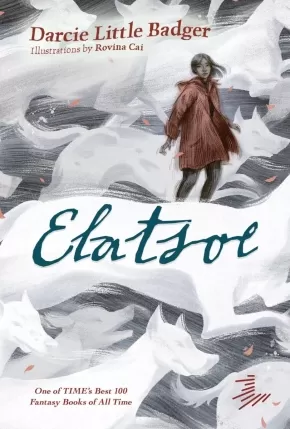
Elatsoe (PB)
$19.50
Artists:
Format:
Paperback
Text Content Territories:
Indigenous American; Native American; Apache; Lipan Apache Tribe of Texas;
ISBN / Barcode: 9781646142767
Synopsis:
Synopsis:
Imagine an America very similar to our own. It's got homework, best friends, and pistachio ice cream.
There are some differences. This America been shaped dramatically by the magic, monsters, knowledge, and legends of its peoples, those Indigenous and those not. Some of these forces are charmingly everyday, like the ability to make an orb of light appear or travel across the world through rings of fungi. But other forces are less charming and should never see the light of day.
Elatsoe lives in this slightly stranger America. She can raise the ghosts of dead animals, a skill passed down through generations of her Lipan Apache family. Her beloved cousin has just been murdered, in a town that wants no prying eyes. But she is going to do more than pry. The picture-perfect facade of Willowbee masks gruesome secrets, and she will rely on her wits, skills, and friends to tear off the mask and protect her family.
Awards
- TIME's Best 100 Fantasy Books of All Time
- NPR Best of the Year
- Locus Award Winner -- Best First Novel
- Shelf-Awareness Best of the year
Reviews
"Creative and meticulously plotted...a Lipan Apache Sookie Stackhouse for the teen set." — Shelf-Awareness
"Educates about settler colonialism while also entertaining with paranormal twists.... Groundbreaking...A brilliant, engaging debut" — Kirkus Reviews, starred review
"[A] refreshing voice. Indigenous stories, modern-day technology, and the supernatural successfully blend to build a fast-paced murder mystery." — Publishers Weekly, starred review
"Little Badger's stunning, haunting debut brings to the fantasy genre a fresh voice and perspective, weaving in folktales, omens, and urban legends of the protagonist's Lipan Apache culture." -- Booklist, starred review
Educator & Series Information
Recommended for ages 12+
Darcie Little Badger is an extraordinary debut talent in the world of speculative fiction. This is a book singular in feeling and beauty.
This book is part of the Elatsoe series.
Additional Information
368 pages | 5.50" x 8.25" | Paperback

Every Child Matters
$24.99
Format:
Hardcover
Text Content Territories:
Indigenous Canadian; First Nations; Inuit; Métis;
ISBN / Barcode: 9781778540165
Synopsis:
Synopsis:
Learn the meaning behind the phrase, ‘Every Child Matters.'
Orange Shirt Day founder, Phyllis Webstad, offers insights into this heartfelt movement.
Every Child Matters honours the history and resiliency of Indigenous Peoples on Turtle Island and moves us all forward on a path toward Truth and Reconciliation.
If you're a Residential School Survivor or an Intergenerational Survivor - you matter. For the children who didn't make it home - you matter. The child inside every one of us matters. Every Child Matters.
Reviews
"Every Child Matters speaks to all Indigenous Peoples - past and present - whose lives have been impacted by the residential school system. Phyllis and Karlene beautifully honour the unity, strength and resolve shared by Survivors, their families and their communities. Residential schools took our children and tried to break their vibrant spirits. With this book, the children of today can learn the truths of this history and how they can play a part in making sure every child matters." – Stephanie Scott, Executive Director of the National Center for Truth and Reconciliation
“…a brilliantly illustrated and meticulously written narrative. It is a must read.” - Chief Dr. Robert Joseph, Gwawaenuk, Elder, Reconciliation Canada
Educator Information
Recommended for ages 6 to 10.
Find the accompanying Teacher Lesson Plan resource HERE!
This book is available in French: Chaque enfant compte
Additional Information
44 pages | 8.50" x 11.00" | Hardcover
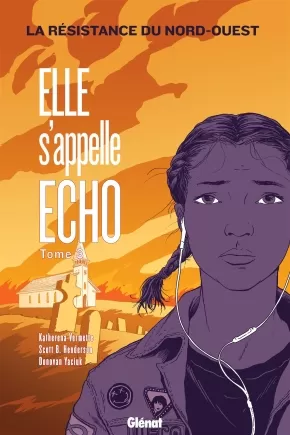
Elle s'appelle Echo Tome 3: La résistance du Nord-Ouest
$19.95
Artists:
Format:
Hardcover
Text Content Territories:
Indigenous Canadian; Métis;
ISBN / Barcode: 9782924997284
Synopsis:
Synopsis:
Echo Desjardins est une métisse de 13 ans qui habite Winnipeg, au Manitoba. L'adolescente solitaire, qui vit loin de sa mère, a du mal à s'intégrer à sa nouvelle école. Un jour, lors d'un cours d'histoire donné par monsieur Bee sur la vie des autochtones au début du XIXe siècle, Echo se transporte dans le passé, jusqu'à devenir témoin privilégié de sa propre histoire, l'histoire méconnue des Métis du Canada.
Elle s'appelle Echo est une série à dimension humaine, qui à travers la recherche d'identité d'une jeune Métisse, permet de découvrir ces descendants d'Européens et Autochtones qui se sont battus, et sacrifiés, pour écrire une page importante de l'histoire du Canada.
Tome 3 : La résistance du Nord-Ouest : Peu à peu, Écho s'intègre à sa nouvelle vie, mais lorsqu'elle retourne dans le passé de son peuple, elle découvre que 1885 est une ère de grands bouleversements. Les bisons ont disparu alors que les colons de l'Est arrivent quotidiennement. Les Métis font face à la faim et à l'incertitude alors que leur mode de vie traditionnel est menacé. Le gouvernement canadien ignore leurs pétitions, mais l'espoir renaît lorsque Louis Riel revient pour les aider…
Educator & Series Information
Recommended for ages 12+.
This is the third book in the Girl Called Echo (Elle s'appelle Echo) series, which includes the following titles:
Elle s'appelle Echo Tome 1: La guerre du Pemmican
Elle s'appelle Echo Tome 2: La résistance de la rivière Rouge
Elle s'appelle Echo Tome 3: La résistance du Nord-Ouest
Elle s'appelle Echo Tome 4: L'ère des réserves routières
This book is available in English: Northwest Resistance
Additional Information
50 Pages | Hardcover
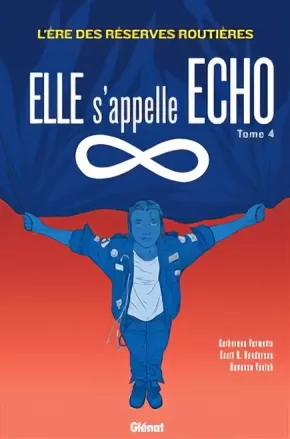
Elle s'appelle Echo Tome 4: L'ère des réserves routières
$19.95
Artists:
Format:
Hardcover
Text Content Territories:
Indigenous Canadian; Métis;
ISBN / Barcode: 9782924997291
Synopsis:
Synopsis:
Echo Desjardins est une métisse de 13 ans qui habite Winnipeg, au Manitoba. L'adolescente solitaire, qui vit loin de sa mère, a du mal à s'intégrer à sa nouvelle école. Un jour, lors d'un cours d'histoire donné par monsieur Bee sur la vie des autochtones au début du XIXe siècle, Echo se transporte dans le passé, jusqu'à devenir témoin privilégié de sa propre histoire, l'histoire méconnue des Métis du Canada.
Elle s'appelle Echo est une série à dimension humaine, qui à travers la recherche d'identité d'une jeune Métisse, permet de découvrir ces descendants d'Européens et Autochtones qui se sont battus, et sacrifiés, pour écrire une page importante de l'histoire du Canada.
Tome 4 : L'ère des réserves routières : Le dernier voyage dans le passé de son peuple a été une terrible épreuve pour Écho. Louis Riel a été exécuté et de nouvelles lois sapent les droits fonciers des Métis tandis que des spéculateurs fonciers sans scrupules en profitent. Echo puise alors dans la force et la résilience de ses ancêtres, forgées à travers les épreuves et les douleurs du passé, pour tenter de s'offrir un avenir triomphant.
Educator & Series Information
Recommended for ages 12+.
This is the fourth book in the Girl Called Echo (Elle s'appelle Echo) series, which includes the following titles:
Elle s'appelle Echo Tome 1: La guerre du Pemmican
Elle s'appelle Echo Tome 2: La résistance de la rivière Rouge
Elle s'appelle Echo Tome 3: La résistance du Nord-Ouest
Elle s'appelle Echo Tome 4: L'ère des réserves routières
This book is available in English: Road Allowance Era
Additional Information
50 Pages | Hardcover
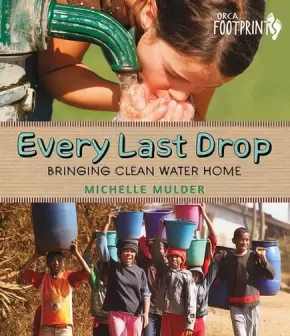
Every Last Drop: Bringing Clean Water Home
$14.95
Format:
Paperback
ISBN / Barcode: 9781459835108
Synopsis:
Synopsis:
In the developed world, if you want a drink of water you just turn on a tap or open a bottle. But for millions of families worldwide, finding clean water is a daily challenge, and kids are often the ones responsible for carrying water to their homes. Every Last Drop looks at why the world’s water resources are at risk and how communities around the world are finding innovative ways to quench their thirst and water their crops. Maybe you’re not ready to drink fog, as they do in Chile, or use water made from treated sewage, but you can get a low-flush toilet, plant a tree, protect a wetland or just take shorter showers. Every last drop counts!
Reviews
"This engaging book takes on the important task of explaining clean drinking water to middle school students...The writing style is a very accessible mixture of personal travel stories and interesting facts ..It can be hard to find good books on sustainability issues for middle school students. This well-written book will be a welcome addition to any classroom or library collection. It will support any research on water usage and will be popular with students interested in getting involved with environmental issues. Highly Recommended." — CM Magazine
"Mulder’s book will make readers stop and calculate...Lavishly illustrated with everything from woodcuts to photographs, the book is far from downbeat and scolding...Mulder writes with a clean, no-nonsense style...Informative, attractive and alarming—readers will think twice before leaving the water running as they brush their teeth." — Kirkus Reviews
Educator & Series Information
Recommended for ages 9 to 12.
This book is part of the Orca Footprints series. Kids today inhabit a world full of complex—and often mystifying—environmental issues. Orca Footprints aim to help kids answer their questions about the state of the natural world with well-researched, simply-expressed information and powerful images. With topics such as food production, water, cycling and sustainable energy, these books will inspire kids to take action.
Additional Information
48 pages | 8.00" x 9.50" | Paperback
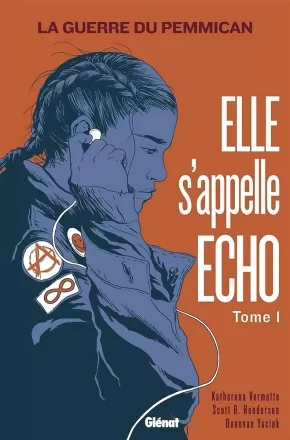
Elle s'appelle Echo Tome 1: La guerre du Pemmican
$19.95
Artists:
Format:
Hardcover
Text Content Territories:
Indigenous Canadian; Métis;
ISBN / Barcode: 9782924997260
Synopsis:
Synopsis:
Echo Desjardins est une métisse de 13 ans qui habite Winnipeg, au Manitoba. L'adolescente solitaire, qui vit loin de sa mère, a du mal à s'intégrer à sa nouvelle école. Un jour, lors d'un cours d'histoire donné par monsieur Bee sur la vie des autochtones au début du XIXe siècle, Echo se transporte dans le passé, jusqu'à devenir témoin privilégié de sa propre histoire, l'histoire méconnue des Métis du Canada.
Elle s'appelle Echo est une série à dimension humaine, qui à travers la recherche d'identité d'une jeune Métisse, permet de découvrir ces descendants d'Européens et Autochtones qui se sont battus, et sacrifiés, pour écrire une page importante de l'histoire du Canada.
Tome 1 : La guerre du Pemmican : Après avoir vu des Métis chasser des troupeaux de bisons et sympathisé avec Marie dans un camp de chasse, Echo découvre avec horreur la guerre sans merci que se livrent la Compagnie de la Baie d'Hudson et de la Compagnie du Nord-Ouest. Au fil des jours, elle comprend à quel point ses ancêtres en souffrent, et elle décide d'en savoir plus…
Educator & Series Information
Recommended for ages 12+.
This is the first book in the Girl Called Echo (Elle s'appelle Echo) series, which includes the following titles:
Elle s'appelle Echo Tome 1: La guerre du Pemmican
Elle s'appelle Echo Tome 2: La résistance de la rivière Rouge
Elle s'appelle Echo Tome 3: La résistance du Nord-Ouest
Elle s'appelle Echo Tome 4: L'ère des réserves routières
This book is available in English: Pemmican Wars
Additional Information
50 Pages | Hardcover
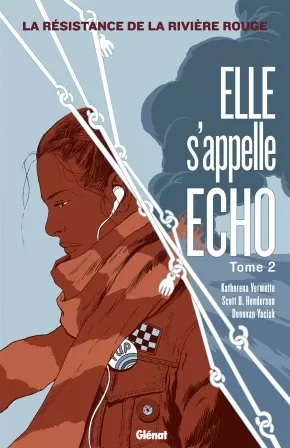
Elle s'appelle Echo Tome 2: La résistance de la rivière Rouge
$19.95
Artists:
Format:
Hardcover
Text Content Territories:
Indigenous Canadian; Métis;
ISBN / Barcode: 9782924997277
Synopsis:
Synopsis:
Echo Desjardins est une métisse de 13 ans qui habite Winnipeg, au Manitoba. L'adolescente solitaire, qui vit loin de sa mère, a du mal à s'intégrer à sa nouvelle école. Un jour, lors d'un cours d'histoire donné par monsieur Bee sur la vie des autochtones au début du XIXe siècle, Echo se transporte dans le passé, jusqu'à devenir témoin privilégié de sa propre histoire, l'histoire méconnue des Métis du Canada.
Elle s'appelle Echo est une série à dimension humaine, qui à travers la recherche d'identité d'une jeune Métisse, permet de découvrir ces descendants d'Européens et Autochtones qui se sont battus, et sacrifiés, pour écrire une page importante de l'histoire du Canada.
Tome 2 : La résistance de la rivière Rouge: Peu à peu, le quotidien d'Echo s'améliore. Sa mère est revenue vivre avec elle et elle commence à socialiser avec quelques élèves. Mais, lorsqu'elle retourne dans le passé, en 1869, elle surprend des arpenteurs venus mesurer les terres des Métis au nom du gouvernement canadien qui comptent les en priver. La résistance métisse s'organise. Ils sont prêts à prendre les armes. Echo a peur pour eux…
Educator & Series Information
Recommended for ages 12+.
This is the second book in the Girl Called Echo (Elle s'appelle Echo) series, which includes the following titles:
Elle s'appelle Echo Tome 1: La guerre du Pemmican
Elle s'appelle Echo Tome 2: La résistance de la rivière Rouge
Elle s'appelle Echo Tome 3: La résistance du Nord-Ouest
Elle s'appelle Echo Tome 4: L'ère des réserves routières
This book is available in English: Red River Resistance
Additional Information
50 Pages | Hardcover

Elvis, Me, and the Lemonade Stand Summer
$13.95
Format:
Paperback
Text Content Territories:
Indigenous Canadian; First Nations; Salish;
ISBN / Barcode: 9781770866157
Synopsis:
Synopsis:
It’s the summer of 1978 and most people think Elvis Presley has been dead for a year. But not eleven-year-old Truly Bateman – because she knows Elvis is alive and well and living in the Eagle Shores Trailer Park. Maybe no one ever thought to look for him on an Indigenous reserve on Vancouver Island.
It’s a busy summer for Truly. Though her mother is less of a mother than she ought to be, and spends her time drinking and smoking and working her way through new boyfriends, Truly is determined to raise as much money for herself as she can through her lemonade stand … and to prove that her cool new neighbour is the one and only King of Rock ‘n’ Roll. And when she can’t find motherly support in her own home, she finds sanctuary with Andy El, the Salish woman who runs the trailer park.
Awards
- Winner of the 2021 City of Victoria Children's Book Prize
Educator & Series Information
Recommended for ages 9-12 (middle-grade read).
Content Warning: Use of a term from the era of the book, "Indian," is used occasionally.
DCB Young Readers has created a teacher's guide for this work, which can be downloaded here: Teachers Guide - Elvis, Me and the Lemonade Stand Summer
This is the first book in the Elvis, Me, and the Eagle Shores Trailer Park series.
Additional Information
192 pages | 5.37" x 8.00"
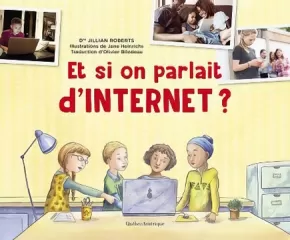
Et si on parlait des L'INTERNET ?
$19.95
Artists:
Format:
Hardcover
ISBN / Barcode: 9782764442463
Synopsis:
Synopsis:
Et si on parlait d’INTERNET ? aborde les principaux aspects de la sécurité en ligne en pensant spécialement à celle des enfants et explique clairement et simplement pourquoi il est important de fixer certaines limites en ligne comme on le fait dans la vie.
Educator & Series Information
La série Et si on parlait de... ? est une série de livres qui vise à familiariser les enfants avec des questions culturelles, sociales et environnementales complexes auxquelles ils ont pu être exposés. Le format questions et réponses du texte principal off re aux jeunes enfants des connaissances de base sur le sujet traité, tandis que les compléments d’information qui se trouvent dans les marges permettent aux parents et aux enfants plus âgés d’en apprendre davantage sur le sujet.
Recommended for ages 6 to 8.
This book is available in English: On the Internet: Our First Talk About Online Safety
Additional Information
32 pages | 8.50" x 10.00" | Translated by Olivier Bilodeau
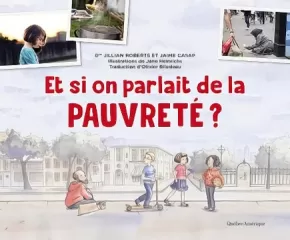
Et si on parlait des PAUVRETÉ ?
$19.95
Artists:
Format:
Hardcover
ISBN / Barcode: 9782764442432
Synopsis:
Synopsis:
Ce qui se passe à l’extérieur de chez nous peut être étrange et déroutant. Les questions que se pose un enfant qui voit une personne vivant dans la rue peuvent être le point de départ d’une importante conversation sur la pauvreté. Dans ce livre, la pédopsychologue Jillian Roberts et le responsable de la division de l’éducation de Google Jaime Casap guident une discussion sur ce sujet délicat avec franchise et simplicité.
Educator & Series Information
La série Et si on parlait de... ? est une série de livres qui vise à familiariser les enfants avec des questions culturelles, sociales et environnementales complexes auxquelles ils ont pu être exposés. Le format questions et réponses du texte principal off re aux jeunes enfants des connaissances de base sur le sujet traité, tandis que les compléments d’information qui se trouvent dans les marges permettent aux parents et aux enfants plus âgés d’en apprendre davantage sur le sujet.
Recommended for ages 6 to 8.
This book is available in English: On Our Street: Our First Talk About Poverty
Additional Information
32 pages | 8.50" x 10.00" | Translated by Olivier Bilodeau
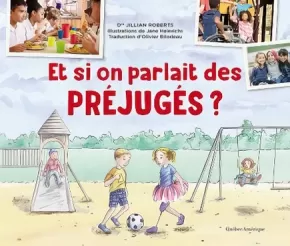
Et si on parlait des PRÉJUGÉS ?
$19.95
Artists:
Format:
Hardcover
ISBN / Barcode: 9782764442494
Synopsis:
Synopsis:
Et si on parlait des PRÉJUGÉS ? traite, sous forme de conversation, les différents types de discrimination dont les jeunes sont témoins. La pédopsychologue Jillian Roberts explique ce que sont les préjugés, pourquoi ils n’ont pas leur place et comment s’y opposer. Le livre donne aussi des pistes aux enfants pour les aider à promouvoir l’inclusion et l’acceptation dans le monde qui les entoure.
Educator & Series Information
La série Et si on parlait de... ? est une série de livres qui vise à familiariser les enfants avec des questions culturelles, sociales et environnementales complexes auxquelles ils ont pu être exposés. Le format questions et réponses du texte principal off re aux jeunes enfants des connaissances de base sur le sujet traité, tandis que les compléments d’information qui se trouvent dans les marges permettent aux parents et aux enfants plus âgés d’en apprendre davantage sur le sujet.
Recommended for ages 6 to 8.
This book is available in English: On the Playground: Our First Talk About Prejudice
Additional Information
32 pages | 8.50" x 10.00" | Translated by Olivier Bilodeau
Sort By
Go To
of 3
 Our logo reflects the greater Nation we live within—Turtle Island (North America)—and the strength
and core of the Pacific Northwest Coast peoples—the Cedar Tree, known as the Tree of Life. We are
here to support the building of strong nations and help share Indigenous voices.
Our logo reflects the greater Nation we live within—Turtle Island (North America)—and the strength
and core of the Pacific Northwest Coast peoples—the Cedar Tree, known as the Tree of Life. We are
here to support the building of strong nations and help share Indigenous voices.


