

 Show Advanced Search Options
 Hide Advanced Search Options
Browse Books for Adults
31
-
45
of
1928 Results;
Sort By
Go To
of 129
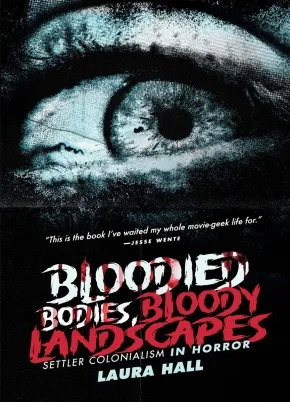

Bloodied Bodies, Bloody Landscapes: Settler Colonialism in Horror
$32.95
Format:
Paperback
Text Content Territories:
Indigenous;
Grade Levels: University/College;
ISBN / Barcode: 9781779400802
Synopsis:
Synopsis:
Turning a lens on the dark legacy of colonialism in horror film, from Scream to Halloween and beyond.
Horror films, more than any other genre, offer a chilling glimpse—like peering through a creaky attic door—into the brutality of settler colonial violence. While Indigenous peoples continue to struggle against colonization, white settler narratives consistently position them as a threat, depicting the Indigenous Other as an ever-present menace, lurking on the fringes of “civilized” society. Indigenous inclusion or exclusion in horror films tells a larger story about myths, fears, and anxieties that have endured for centuries.
Bloodied Bodies, Bloody Landscapes traces connections between Indigenous representations, gender, and sexuality within iconic horror classics like The Texas Chainsaw Massacre and Friday the 13th. The savage killer, the romantic and doomed Indian, the feral “mad woman”—no trope or archetype escapes the shadowy influence of settler colonialism. In the end, horror both disrupts and uncovers colonial violence—only to bury its victims once more.
Reviews
“This is the book I’ve waited my whole movie-geek life for.”— Jesse Wente
“Bloody Bodies, Bloody Landscapes is a must read for anyone consuming horror media. Laura Hall masterfully dissects the ways in which settler-colonialism is at the core of sexism, racism, sanism, and white supremacy, and how we see those systems of oppression at work in historical and contemporary horror.”— Jessica Johns
“Expertly foregrounding the most overlooked horror in this film genre—settler colonialism—Bloodies Bodies, Bloody Landscapes is deadly.”— Christine Sy
"Bloodied Bodies, Bloody Landscapes is brilliant scholarship that pinpoints the ugly truth about the treatment of Indigenous people in horror cinema. But Hall is doing much more than examining tropes of mysticism, savagery, and settler colonialism-as savior in horror; she is directing our attention to the recuperative power of certain portrayals, thereby reminding us that an anticolonial lens can produce whole and full human stories—even scary ones.”— Robin R. Means Coleman, author of The Black Guy Dies First: Black Horror from Fodder to Oscar
Educator Information
Table of Contents
Introduction
Chapter 1. They’re Here! Settler Colonialism and the Horror Film
Chapter 2. The Bloodsucking Brady Bunch: Gender, the Family and Settler Colonial Horrors
Chapter 3. We All go A Little Mad Sometimes!
Chapter 4. Cowboys in the Antarctic: Settler Colonialism and Nature in Horror
Chapter 5. Jason Voorhees Does a Land Acknowledgement: Indigeneity Lurking in the Woods
Conclusion
Sources
Additional Information
288 pages | 6.02" x 9.01" | Paperback
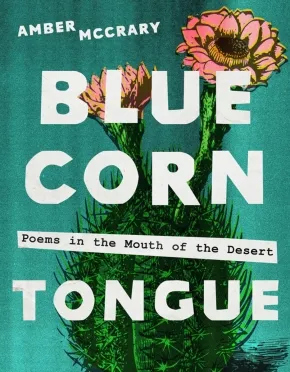

Blue Corn Tongue: Poems in the Mouth of the Desert
$21.95
Format:
Paperback
Reading Level: N/A
ISBN / Barcode: 9780816554300
Synopsis:
Synopsis:
Blue Corn Tongue is a like mixtape from a thirty-something Diné punk girl. It offers poetry about love, friendship, environmental destruction, and language loss.
Reviews
“This collection describes a life woven together through the topography of the land examining elements of language, love, and family. There is a distinct point of view that encompasses the dialectical nature of belonging. Traveling alongside the poet in tender and sometimes funny moments, I found myself wanting to share these poems with friends.”—Naomi Ortiz, author of Rituals for Climate Change
“McCrary’s collection is one that only she could write. It is a mixtape from a thirty-something Diné punk girl with tracks about love and friendship, but also environmental destruction and language loss.”—Casandra López, author of Brother Bullet
“Blue Corn Tongue: Poems in the Mouth of the Desert is a wonder of a book full of ‘Weaving words with nostalgic tongues, heirloom futures and circular knowledge.’ Multilingual, expansive, and courageously written, these poems are an ecosystem of love and place that moves the reader through a sensory landscape of frank emotion and complex beauty. Lovers ‘maized through the rooms’ of a boarding school exhibit ‘familiar as grandma’s tortillas ‘in one poem and inhabit a space where ‘desert honey pulsates’ in another. Both strikingly original and deeply rooted, this book is a marvel to behold.”—Laura Da’, author of Instruments of the True Measure
“In the middle of the desert, a woman holds a poem. And a river begins to flow. McCray’s stunning poems tell the story of the seed, the root, and the inevitable flower. Anchored in the question ‘How does language open?’ this experimental, brave, and intimate book is a must-read.”—Margarita Pintado Burgos, author of Ojo en Celo / Eye in Heat
“Equal parts tender and defiant, McCrary’s Blue Corn Tongue laps up landscape and love alike. Propelled by a moving sensuousness, this collection reframes relations between poet, lover, relatives, and the history binding them. Through striking visuals, rich carnality, and the occasional unexpected laugh, McCrary’s work celebrates and challenges what it means to dream and desire from within O’odham Jeweḍ and Dinétah.”—Oscar Mancinas, author of To Live and Die in El Valle
“Amber McCrary is a poet of generational talent who has written a masterful work of staggering beauty. One cannot help but read and reread Blue Corn Tongue with a sense of awe and gratitude for having witnessed, for having been gifted with a poetry that does the important work of documenting and honoring the narratives of her rich culture. I am holding something important in my hands, in this time. I am going to be holding this book close to the heart for years to come because it means that much to me.”—Truong Tran, author of Book of the Other
“In Amber McCrary’s poems, the deserts are rich with sweet honey. This sumptuous debut celebrates Indigenous love, the Navajo language, corn kernels grinding on the tongue—lush life upon life. Blue Corn Tongue teaches me to indulge in intimacy, to find it essential, even as it is haunted by loss. I am thankful for this collection, which insists on remaining abundant and unashamed.”—Erin Marie Lynch, author of Removal Acts
"Filled with stylistically innovative poems that embody place and emerge from ‘the mouth of deserts,’ Blue Corn Tongue carries both ‘generational grief’ and reclamation. McCrary’s poetry claims the Diné language and a vibrant matrilineal power through a ‘kin kind of tongue.’ These intimate poems are filled with lush, tactile images and populated with beings and beliefs that have survived colonization. Over and over, they celebrate ‘something laws cannot govern.’”—Kimberly Blaeser, author of Ancient Light and Wisconsin poet laureate, 2015–16
Additional Information
96 pages | 7.00" x 9.00" | 4 Maps | Paperback
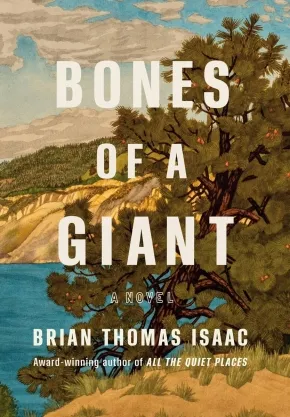
Bones of a Giant
$35.00
Format:
Hardcover
Text Content Territories:
Indigenous Canadian; First Nations; Salish; Interior Salish; Syilx (Okanagan);
Reading Level: N/A
ISBN / Barcode: 9781039011779
Synopsis:
Synopsis:
From the award-winning, bestselling author of All the Quiet Places, comes Brian Thomas Isaac's highly anticipated, haunting and tender return to the Okanagan Indian Reserve and a teenager's struggle to become a man in a world of racism and hardship.
Summer, 1968. For the first time since his big brother, Eddie, disappeared two years earlier—either a runaway or dead by his own hand—sixteen-year-old Lewis Toma has shaken off some of his grief. His mother, Grace, and her friend Isabel have gone south to the United States to pick fruit to earn the cash Grace needs to put a bathroom and running water into the three-room shack they share on the reserve, leaving Lewis to spend the summer with his cousins, his Uncle Ned and his Aunt Jean in the new house they’ve built on their farm along the Salmon River. Their warm family life is almost enough to counter the pressures he feels as a boy trying to become a man in a place where responsible adult men like his uncle are largely absent, broken by residential school and racism. Everywhere he looks, women are left to carry the load, sometimes with kindness, but often with the bitterness, anger and ferocity of his own mother, who kicked Lewis’s lowlife father, Jimmy, to the curb long ago.
Lewis has vowed never to be like his father—but an encounter with a predatory older woman tests him and he suffers the consequences. Worse, his dad is back in town and scheming on how to use the Indian Act to steal the land Lewis and his mom have been living on. And then, at summer's end, more shocking revelations shake the family, unleashing a deadly force of anger and frustration.
With so many traps laid around him, how will Lewis find a path to a different future?
Reviews
"A compelling novel, honest and compassionate, haunted by the past. Towards the end of the book, I tried to slow down, not wanting the story to end, but it wasn’t possible."—Mary Lawson, bestselling author of A Town Called Solace
"Brian Thomas Isaac reinforces his place as one of Canada’s most engaging novelists with the tender troubling coming-of-age story of Lewis, a 16-year-old growing up on the Okanagan Reserve. He’s a boy who sees and feels everything with intensity—the joy of swimming in a river, the cruelty of a racist neighbour, the complexity of his mother’s love, the sensations of his first deep kiss, the injustices of the Indian Act, which keeps turning his family’s life upside down. I couldn’t put Bones of a Giant down, wondering to the end if Lewis is just too sweet and vulnerable for the mean world around him."—Carol Off, award-winning author of At a Loss for Words
"Bones of a Giant has good bones. Isaac is a masterful storyteller with an observant eye for nature and a deep compassion for his characters. I loved this book."—Thomas Wharton, bestselling author of The Book of Rain
"A clear-eyed love story to both a people and a place. Brian Thomas Isaac is a vital voice."—David Bergen, award-winning author of Here the Dark
Additional Information
320 pages | 6.25" x 9.00" | Hardcover
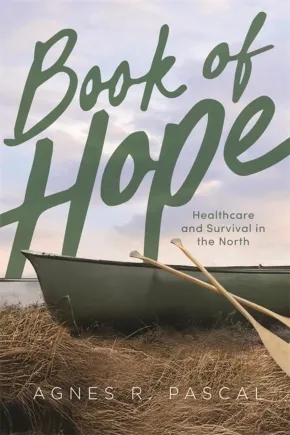
Book of Hope: Healthcare and Survival in the North
$29.00
Format:
Paperback
Text Content Territories:
Indigenous Canadian;
ISBN / Barcode: 9781773637365
Synopsis:
Synopsis:
Firsthand narratives from Northern and Indigenous cancer survivors and caregivers offer compassionate advice and insightful analysis about healthcare in rural northern communities.
A cancer diagnosis can be life changing for anyone, bringing new physical and emotional realities, changed relationships, and often frustration when dealing with healthcare systems. But living north of sixty means dealing with a higher level of healthcare inequity. Agnes Pascal compiles firsthand narratives from Northern and Indigenous cancer survivors and caregivers that illuminate the unique challenges of healthcare accessibility in the North.
In this rare volume, more than thirty voices offer compassionate advice and insightful analysis born from experience. With courage and dignity, they discuss fear, grief, and death; the logistics of medical travel for treatment; Indigenous and Western medicine; structural determinants of health, including industrial pollution and environmental racism; and the impacts of residential schools and “Indian hospitals” on northern communities. In these pages people share that hope comes from building healing communities.
This book is for people with cancer and their caregivers; health policy makers and advocates; scholars and practitioners of healthcare, Indigenous governance, or environmental racism; and anyone interested grassroots, community-based peer support.
Reviews
“This book is a chorus of bravery, one every health practitioner should read so they can understand that as devastating as a cancer diagnosis is to the patient, it also affects the patient’s family, extended family and community. Thankfully, there is hope once diagnosed and the stories from these survivors is a testimony to the power of compassion, technology, teamwork, follow up and after care. I am in awe of the humility, courage, insight and gratitude in every story here. Mahsi cho.”- Richard Van Camp, author of Gather: Richard Van Camp on the Joy of Storytelling
“Prioritizing the voices of northern and Indigenous cancer patients, especially those from small communities, is critical for ensuring positive change within the Northwest Territories healthcare system. The inner strength of patients and the insights they share, are a gift to us all. ”- Stephanie Irlbacher-Fox, scientific director at Hotıì ts’eeda
Additional Information
192 pages | 6.00" x 9.00" | 30 Contributor Photos | Paperback
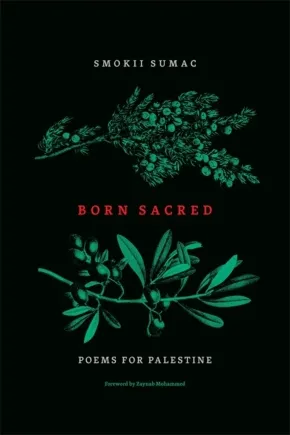
Born Sacred: Poems for Palestine
$27.00
Format:
Paperback
Text Content Territories:
Indigenous;
Reading Level: N/A
ISBN / Barcode: 9781773637259
Synopsis:
Synopsis:
A journalistic poetry collection reflecting on Palestinian and Indigenous solidarities, genocides, life, and liberation.
In October 2023, upon witnessing the escalation of Palestinian genocide, Ktunaxa poet Smokii Sumac began writing poems reflecting on the stories of Palestinians in Gaza who were risking their lives to share news of the genocide of Palestinian culture, literature, and life. These 100 poems offer a witnessing of the escalation of colonial violence, both current and historical, across oceans, lands, cultures, and people, and the reckoning one has in the face of a genocide.
Vulnerable, eloquent, compassionate, and enduring, Born Sacred is an in-time reflection honouring the shared histories of Indigenous Peoples of North America and of the people in Palestine. Sumac offers this collection as a small piece of life dedicated to Palestinians and resounds the collective call for solidarity in our shared liberation.
Reviews
"Born Sacred: Poems for Palestine is a profound work of grace and solidarity, rooted in a hard-earned understanding of colonialism’s insatiable appetite. What Smokii Sumac has done, over the course of 100 searing, open-hearted poems, is give voice to the immeasurable grief of bearing witness to genocide – the overwhelming magnitude of it, colliding with a knowledge that this has happened before, that there is an age-old methodology to the act of endless taking. I am so grateful for this work, for this beautiful, honest reminder that, whatever power empires wield, we have what it can never take. We have one another."— Omar El Akkad, author of What Strange Paradise
"The succinct starkness of Smokii Sumac’s offerings are an X-Ray to the grief and absurdity of our times. This dangerous dichotomy of trying to live one’s everyday life while holding the tragedy of everyday loss is profoundly captured in each stanza."— Catherine Hernandez, author and screenwriter of Scarborough
"This collection is the antidote to the silence and cowardice of millions, and the medicine for those who watched the first recorded genocide unfold and needed to be seen and witnessed. Creating room for collective grief, Smokii Sumac shows us the responsibility and power of the poet to face the blank page in the here and now and the necessity for words to remain as a testimony to history. Born Sacred is an essential work in the fight for collective liberation and a reminder that hope can be rooted in allyship." — Rayya Liebich, author of Min Hayati
"I am always drawn to the constellational consciousness that permeates so many Asian refugee, Indigenous, and Black literary and cultural works. This constellational consciousness, the culturally-informed relational view of life and solidarity in struggle, is vital in Smokii Sumac’s collection. In both form and content, the poems shatter dominating linear and compartmentalizing interpretations of the world with constellating stanzas, voices, and experiences that reveal the intertwined histories and presents of colonial harm and Indigenous survivance."— Maral Aguilera-Moradipour, assistant professor, Asian refugee literatures and cultures, SFU
Additional Information
160 pages | 5.50" x 8.50" | Paperback
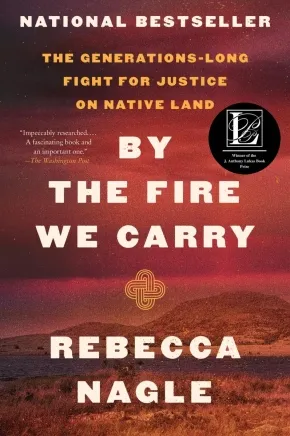
By the Fire We Carry: The Generations-Long Fight for Justice on Native Land (PB)
$24.99
Format:
Paperback
Text Content Territories:
Indigenous American; Native American; Cherokee; Cherokee Nation (Cherokee Nation of Oklahoma);
Reading Level: N/A
ISBN / Barcode: 9780063112056
Synopsis:
Synopsis:
A powerful work of reportage and American history that braids the story of the forced removal of Native Americans onto treaty lands in the nation’s earliest days, and a small-town murder in the ‘90s that led to a Supreme Court ruling reaffirming Native rights to that land over a century later.
Before 2020, American Indian reservations made up roughly 55 million acres of land in the United States. Nearly 200 million acres are reserved for National Forests—in the emergence of this great nation, our government set aside more land for trees than for Indigenous peoples. That changed on July 9, 2020, when a high-profile Supreme Court case—which originated with a small-town murder two decades earlier—affirmed the reservation of Muscogee Nation. The ruling resulted in the largest restoration of tribal land in U.S. history, merely because the Court chose to follow the law.
In the 1830s Muscogee people were rounded by the US military at gunpoint and forced into exile halfway across the continent. At the time, they were promised this new land would be theirs for as long as the grass grew and the waters ran. But that promise was not kept. When Oklahoma was create on top of their land, the new state claimed their reservation no longer existed. Over a century later, when a Muscogee citizen was sentenced to death for murdering another Muscogee citizen, his defense attorneys argued the murder occurred on the reservation of his tribe, and therefore Oklahoma didn’t have the jurisdiction to execute him. Oklahoma argued that reservation no longer existed. In the summer of 2020, the Supreme Court said: no more; a ruling that would ultimately underpin multiple reservations covering half the land in Oklahoma, including Nagle’s own Cherokee Nation.
Here Rebecca Nagle tells the story of the generations-long fight for tribal land and sovereignty in Eastern Oklahoma. By chronicling both the contemporary legal battle and historic acts of Indigenous resistance, By the Fire We Carry stands as a landmark work of American history. The story it tells exposes both the wrongs that our nation has committed in its long history of greed, corruption and lawlessness, and the Native battle for the right to be here that has shaped our country.
Awards
- Winner of the J. Anthony Lukas Book Prize
Reviews
“Part legal page-turner, part her own compelling family saga, and part eloquent lament for the horrific way our nation has treated Native Americans over the centuries, Rebecca Nagle’s By the Fire We Carry has also given us something exceedingly rare—a story about Native Americans in the Supreme Court in which the good guys actually win.” — Adam Cohen, author of Supreme Inequality
“Nagle gracefully carries readers back and forth through time, explaining the history of the Five Tribes before and after the Trail of Tears, the evolution of U.S. policy toward Native Americans, and the unique peculiarities of Indian law…. She is just as careful to elucidate the technicalities of court procedure, helping readers understand how a death-row appeal on jurisdictional grounds led to `the largest restoration of Indigenous land in US history.’ The legal arcana are dense, but Nagle’s writing is not. With restrained passion she exposes one injustice after another…. Gripping, infuriating, and illuminating—a valuable corrective to our national ignorance.” — Kirkus, starred review
Educator Information
By the Fire We Carry is hard-hitting American history that expands on the nation's story. It tells of the treatment of Native Americans, their removal and displacement, and the genocide committed against them by the US government from their viewpoint.
Additional Information
352 pages | 5.31" x 8" | Paperback
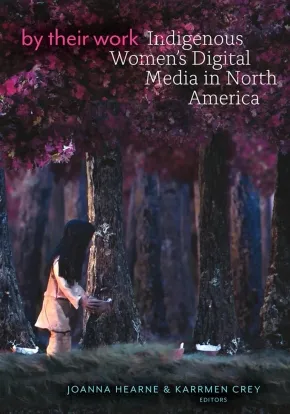
By Their Work: Indigenous Women's Digital Media in North America
$41.99
Editors:
Format:
Paperback
Text Content Territories:
Indigenous American; Indigenous Canadian;
Reading Level: N/A
ISBN / Barcode: 9781517919061
Synopsis:
Synopsis:
A first-of-its-kind collection to transform our understanding of digital media from Indigenous women creators
Indigenous women form a vital force in digital media production now and have over the past several decades—in fact, nearly three quarters of the projects at the 2017 imagineNATIVE Film and Media Arts Festival were created by women. By Their Work highlights the prismatic nature of Indigenous women’s digital media, connecting the digital arts with their creative labor and adaptive activism.
Joanna Hearne and Karrmen Crey bring together a collection of essays and interviews to highlight the voices of powerful and important media makers, from Indigenous video game creators to animators to social media influencers and from theorists of early Indigenous digital media to current practitioners, including trans and nonbinary creators often left out of public narratives about the digital. Creating a space to hear critical voices on Indigenous media history, theory, and production, the contributors share stories, genealogies, and practices behind Indigenous women’s power and presence in the digital world.
Focusing on the history of digital media as a whole, this collection presents a compelling case for Indigenous women’s crucial roles across the history of digital forms and platforms. In doing so, By Their Work transforms digital Indigenous studies in the twenty-first century.
Contributors: Nanobah Becker; Reilley Bishop-Stall, McGill U; Meagan Byrne; Tawny Trottier Cale; Dana Claxton; Crystal Harrison Collin; Elizabeth Day; Kristin L. Dowell, Florida State U; Miranda Due; Heid E. Erdrich; Marcella Ernest, U of New Mexico; Marisa Erven; David Gaertner, U of British Columbia; Carol Geddes; Faye Ginsburg, New York U; Patuk N. Glenn; Lisa Jackson; Jacqueline Land, William Jewell College; Jason Edward Lewis, Concordia University, Montreal; Joshua D. Miner, U of Kansas; Salma Monani, Gettysburg College; Jas M. Morgan, Simon Fraser U; Archer Pechawis, York U; Mikhel Proulx, Queen’s U Canada; Ryan Rice; Jolene Rickard, Cornell U; Channette Romero, U of Georgia; Wendi Sierra, Texas Christian U; Skawennati.
Additional Information
344 pages | 7" x 10" | Paperback
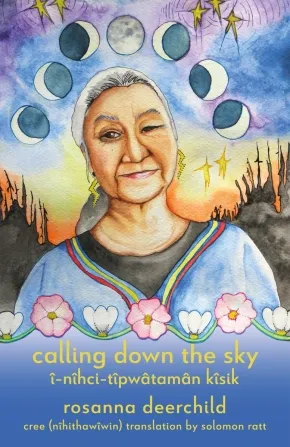
Calling Down the Sky: Tenth Anniversary Edition
$24.95
Text Content Territories:
Indigenous Canadian; Métis; Inuit; First Nations;
ISBN / Barcode: 9781552455159
Synopsis:
Synopsis:
A tenth anniversary bilingual edition in English and Cree of Rosanna Deerchild’s stunning collection about the intergenerational impacts of the Canadian residential school system.
you want me to
share my story
ok then
here it is
here in the unwritten
here in the broken lines
of my body that can never forget
In Calling Down the Sky, poet Rosanna Deerchild viscerally evokes her mother’s experience within the residential school system, the Canadian government’s system of violently removing Indigenous children from their homes, families, and languages in an explicit attempt to destroy Indigenous cultures and identities. With precise and intricate poetry, Deerchild weaves together the story of her mother’s childhood and Deerchild’s memories of her mother: her love of country music, her attempts to talk about what happened to her, how tightly she braided her daughter’s hair on the first day of school. In doing so, Deerchild illustrates the disruptive and devastating impacts of the residential school system on generations of families while also celebrating the life and culture of her mother and other survivors.
Published for the first time in a bilingual edition of Cree and English, in time for the tenth anniversary of the original publication, Calling Down the Sky is an intimate and gorgeously evoked reckoning with a horrifying part of North American history.
Reviews
“Rosanna Deerchild’s poems roll off the tongue as easy as old country songs. With her deft hand, Deerchild finely tunes every word and weaves them together as intimately as she braids her girls’ hair. Together, these poems create a story that sings with beautiful tension, amazing resilience, and love as big as the sky." - Katherena Vermette, Métis Writer
"The poetry collection, called calling down the sky, describes personal experiences with the residential school system in the 1950s and the generational effects it had." - CBC
"This poetry collection is fierce, raw and candid. It is also visceral, intricate and, above all, illuminating. By recounting her mother’s residential school experience in a powerfully poetic narrative, Deerchild expertly illustrates the heartbreaking trauma of that tragic saga and how it complicates relationships over generations. By beautifully and elaborately exploring those relationships and that devastating history, she finds and celebrates the resilient and hopeful spirit that many residential school survivors, like her mother, have managed to retain in the face of horror and torment. As a result, calling down the sky is an essential read in understanding the true modern history of this land and in honouring the people who survived it.” - Waubgeshig Rice
Educator Information
Bilingual: English and Cree
Additional Information
96 pages | 5.50" x 8.50"
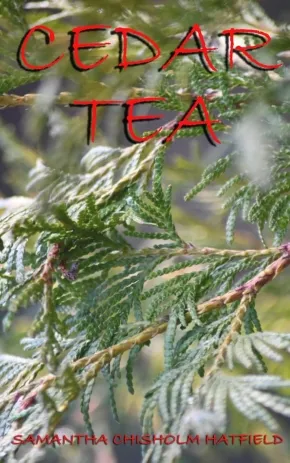
Cedar Tea
$24.99
Format:
Paperback
Text Content Territories:
Indigenous American; Native American;
Reading Level: N/A
ISBN / Barcode: 979-8332412875
Synopsis:
Synopsis:
Cedar Tea is a heartwarming anthology of poems and short stories designed to offer comfort, healing, and emotional clarity to those in need. Inspired by the soothing properties of traditional Pacific Northwest Cedar Tea, this collection serves as a trusted companion, providing wisdom, peace, and solace for anyone navigating life's challenges.
Whether you’re seeking emotional support during a difficult time or simply need a gentle reminder that you're not alone, Cedar Tea provides a comforting embrace through its powerful words. Each piece is a reminder that healing is possible and that you belong to a greater, compassionate whole.
Ideal for readers who seek peace, clarity, and emotional healing, Cedar Tea is an essential read for those looking to restore balance and perspective. Order your copy today and experience the healing power of storytelling, one page at a time.
Additional Information
126 Pages | 5 x 0.29 x 8 inches | Paperback
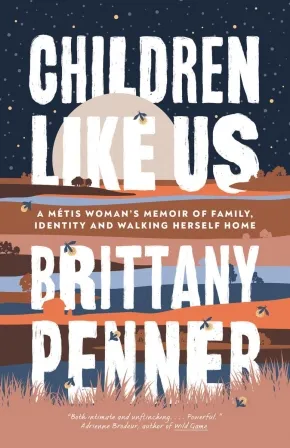
Children Like Us: A Métis Woman's Memoir of Family, Identity and Walking Herself Home
$26.00
Format:
Paperback
Text Content Territories:
Indigenous Canadian; Métis;
Reading Level: N/A
ISBN / Barcode: 9780385688000
Synopsis:
Synopsis:
A Métis girl is adopted by a Mennonite family in this breathtaking memoir about family lost and found—for those who loved From the Ashes and Educated.
By the time Brittany Penner is seven years old, she has loved and lost twenty-one foster siblings who have come into her family and left—all of them Indigenous like her. "When will it be my turn?" she asks her mother time and time again. "When will I be taken away?" You won't be, she is told. You're adopted. You're here to stay. You're the lucky one.
On the day of her birth in 1989, near the end of the Sixties Scoop, Brittany was relinquished into the care of the government and adopted by a white Mennonite family in a small prairie town. Her name and where she came from are hidden from her; all she is told is that she is Métis. Her childhood is shaped by church, family, service and silence. Her family is continuously shifting as siblings arrive and depart, one by one. She knows that to stay, she has to force herself into the mold created for her. She must be obedient. Quiet. Good. No matter what.
Whenever she looks in the mirror, she searches her features, wondering if they've been passed down to her by her biological mother. She thinks, if she can find her mother, she'll find all the answers she's looking for. As Brittany moves into adulthood, she will uncover answers—but they will be more tangled than she could have imagined.
Children Like Us asks difficult questions about family, identity, belonging and cultural continuity. What happens when you find what you're looking for, but it can't offer you everything you need? How do you reckon with the truth of your own story when you've always been told you're lucky and should be grateful? What does it mean to belong when you feel torn between cultures? And how does a person learn to hold the pain and the grief, as well as the triumphs, the joys and the beauty, allowing none to eclipse the others?
Reviews
"Children Like Us is a luminous memoir about identity, loss and belonging. Adopted at birth by a white Mennonite family, Brittany Penner grows up straddling two worlds—one she knows and one that remains just out of reach. As she pieces together her origins, she reckons with the complexities of family, love and cultural displacement. Both intimate and unflinching, Children Like Us is a powerful exploration of what it means to know where you come from—and what it costs when that knowledge is withheld." —Adrienne Brodeur, nationally bestselling author of Wild Game
"An absolutely mesmerizing debut. It was a privilege to bear witness to Brittany Penner's story about intergenerational trauma, identity, and belonging. The kinds of complicated grief we so often experience in life are born out of the complexity of human relationships and our fierce ability to both hurt and heal one another. Penner explores this truth deftly, with wisdom, compassion and grace. I hope everyone reads this book." —Claire Bidwell Smith, author of The Rules of Inheritance
Additional Information
384 pages | 5.62" x 8.25" | Paperback
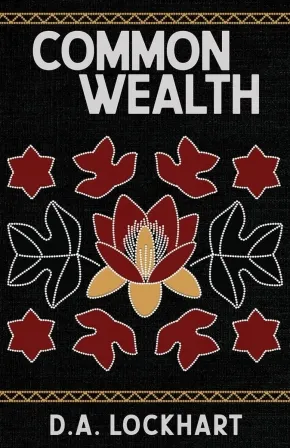
Commonwealth
$19.00
Format:
Paperback
Text Content Territories:
Indigenous American; Native American; Lenape (Delaware);
Reading Level: N/A
ISBN / Barcode: 9781928120483
Synopsis:
Synopsis:
Commonwealth is a profound lyrical meditation on the pre- and post-colonial migrations of the Lenape population throughout the American Midwest, from the watershed of Weli Sipu (the Ohio River) in the Commonwealth of Kentucky to Indiana and beyond. This is a book that transcribes the languages of rivers, highways, rail lines, and buffalo traces. It seeks—or is pushed toward—destinations that are always over the horizon. It is about the fluidity of space and time, and the tangibility of history. As the Lenape journey ever northward and westward, they both create and are created by a collective body of stories: stories of belonging and exclusion, of freedom and confinement, of aspirations and hard truths. Commonwealth explores the ways landscape and people inform one another, and does so in a way that is as clear as a broad Ohio sky.
Additional Information
116 pages | 5.50" x 8.50" | Paperback
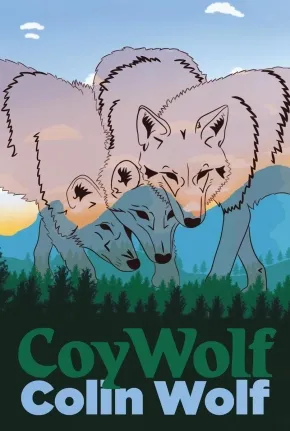
CoyWolf
$18.95
Format:
Paperback
Text Content Territories:
Indigenous Canadian; Métis;
Reading Level: N/A
ISBN / Barcode: 9780369105738
Synopsis:
Synopsis:
Isidor, a half-coyote, half-wolf coywolf, has always struggled to find his place as a half-breed. After the untimely death of his mother, he leaves his community to roam across prairies, forests, and mountains, sharing stories in his search for kinship and belonging. But as Sharp-Tooths are increasingly policed, tagged, or killed to make way for insatiable human expansion, Isidor and his pack are forced to make impossible decisions. Do they retreat to better their chances of survival, or risk everything by joining a resistance of rogue animals to protect what’s left of their homeland?
In this gripping drama, Colin Wolf weaves a powerful allegory through the lives of animals, paralleling the displacement of Métis people and the enduring struggle for Indigenous land rights on Turtle Island. CoyWolf is a hopepunk thriller and a roadmap for young revolutionaries navigating the realities of resistance, doing your best, and learning the wisdom of those who have walked the path before.
Additional Information
112 pages | 5.12" x 7.62" | Paperback
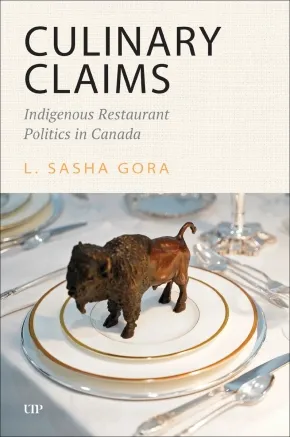
Culinary Claims: Indigenous Restaurant Politics in Canada
$34.95
Format:
Paperback
Text Content Territories:
Indigenous Canadian;
Reading Level: N/A
ISBN / Barcode: 9781487544751
Synopsis:
Synopsis:
Culinary Claims explores the complex relationships between wild plants and introduced animals, Indigenous foodways, and Canadian regulations. Blending food studies with environmental history, the book examines how cuisines reflect social and political issues related to cultural representation, restaurants, and food sovereignty.
L. Sasha Gora chronicles the rise of Indigenous restaurants and their influence on Canadian food culture, engaging with questions about how shifts in appetite reflect broader shifts in imaginations of local environments and identities. Drawing on a diverse range of sources – from recipes and menus to artworks and television shows – the book discusses both historical and contemporary representations of Indigenous foodways and how they are changing amid the relocalization of food systems.
Culinary Claims tells a new story of settler colonialism and Indigenous resistance, emphasizing the critical role that restaurants play in Canada’s cultural landscape. It investigates how food shapes our understanding of place and the politics that underpin this relationship. Ultimately, the book asks, What insights can historians gain from restaurants – and their legacies – as reflections of Indigenous and settler negotiations over cultural claims to land?
Educator Information
Subjects: Business; History / Canadian History; History / Business & Economic History; Food Studies / Food in History; Indigenous Studies / Indigenous History
Table of Contents
List of Illustrations
Preface
Introduction: You Are Welcome
1. Agricultural Flagpoles
2. From Trains to Tundra
3. Restaurants and Representation
4. An Edible Exhibition
5. One Address, Three Restaurants
6. A Meal for a Chief
7. Culinary Resurgence
8. Seal Tartare
9. Where the Beaver and Buffalo Roam
10. Salmon and the F-Word
Conclusion: The North
Acknowledgements
Notes
Bibliography
Index
Additional Information
392 pages | 6.00" x 9.00" | 34 illustrations | Paperback
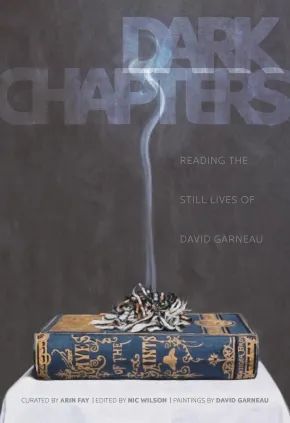
Dark Chapters: Reading the Still Lives of David Garneau
$32.95
Artists:
Editors:
● Arin Fay
Format:
Paperback
Text Content Territories:
Indigenous Canadian; Métis;
ISBN / Barcode: 9781779400536
Synopsis:
Synopsis:
A singular collection of responses to the still life paintings of acclaimed artist David Garneau
Dark Chapters brings together 17 poets, fiction writers, curators, and critics to engage with the works of David Garneau, the Governor General’s Award-winning Métis artist. Featuring paintings from Garneau’s still life series “Dark Chapters” alongside poetry, fiction, critical analysis, and autotheory, the book includes contributions from Fred Wah, Paul Seesequasis, Jesse Wente, Lillian Allen, Billy-Ray Belcourt, Larissa Lai, Susan Musgrave, and more.
A nod to the Reports of Truth and Reconciliation Commission, in which Justice Murray Sinclair describes the residential school system as “one of the darkest, most troubling chapters in our nation’s history,” Garneau’s still life paintings combine common objects (books, bones, teacups, mirrors) and less familiar ones (a Métis sash, a stone hammer, a braid of sweetgrass) to reflect the complexity of contemporary Indigenous experiences. Provocative titles like “Métis in the Academy” and “Smudge Before Reading” invite consideration of the mixed influences and loyalties faced by Indigenous students and scholars. Other paintings explore colonialism, vertical and lateral violence, Christian influence on traditional knowledge, and museum treatment of Indigenous belongings.
Rooted in Garneau’s life-long engagement at the intersections of visual art and writing, Dark Chapters presents a multifaceted reflection on the work of an inimitable, unparalleled artist.
Includes contributions from Arin Fay, Billy-Ray Belcourt, Cecily Nicholson, David Howes, Dick Averns, Fred Wah, Jeff Derksen, Jesse Wente, John G. Hampton, Larissa Lai, Lillian Allen, Paul Seesequasis, Peter Morin, Rita Bouvier, Susan Musgrave, Tarene Thomas, and Trevor Herriot.
Reviews
“A smart collection of art and essays, Dark Chapters activates deep conversations about art, resistance, and sovereignty. Visiting with paintings by Métis artist David Garneau, seventeen poets, curators, and thinkers offer complex provocations that trouble and activate new forms of communities and relationships.” —Dr. Carmen Robertson, Canada Research Chair in North American Indigenous Visual and Material Culture
“Provocative, probing, and precarious, Dark Chapters pairs the poetic, literary, political, and critical responses of seventeen authors with the deceptively uncluttered yet gravid and combustible still lifes of David Garneau. This collection of pictures and words undertakes a necessary examination of the uncanny oppositions and disquieting literal and symbolic inversions that signify and animate the Indigenous history of Canada.” —Bonnie Devine
“Dark Chapters is a lesson in relationality and innovation. Built through conversations between Garneau’s work and artists/writers, the intergenerational contributors to this book come together in relation to Garneau and his still lives to explore the important contribution the artist has made to Canadian, Indigenous, and International art.” —Erin Sutherland
Educator Information
Table of Contents
Foreword
Nic Wilson
Still Life
John G. Hampton
Stone and Rock: I Have Failed You
Peter Morin
Wander Carried
Cecily Nicholson
On Kinship
Paul Seesequasis
Learning from Indigenous Academic Solidarity
Jeff Derksen
Knock Knock
Lillian Allen
Unsettling the Colonial Gaze
Trevor Herriot
Smudge Before Reading and The Land Does Not Forget
Tarene Thomas
Confession (after David Garneau) by Rita Bouvier
Fuse and Formal and Informal Education
Jesse Wente
The Problem with Pleasure
Billy-Ray Belcourt
Métis Realism: On the Materiality of Smoke and Relationality of Rocks
David Howes
Allies (after Hsieh and Montano)
Larissa Lai
Ally Tear Reliquary
Arin Fay
Understanding Attempted Enlightening: Between Language as Power…and Light as Life
Dick Averns
Spine
Fred Wah
The Resting Heartbeat of a Wounded Bird
Susan Musgrave
Gallery
About the Artist
About the Curator
About the Editor
About the Contributors
List of Artworks
Index
Additional Information
160 pages | 6.50" x 9.50" | 58 colour illustrations | Paperback
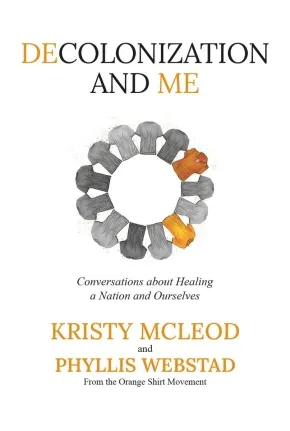
Decolonization and Me: Conversations about Healing a Nation and Ourselves
$30.99
Text Content Territories:
Indigenous Canadian; First Nations; Salish; Interior Salish; Secwepemc (Shuswap); Stswecem'c Xgat'tem; Métis;
Reading Level: N/A
ISBN / Barcode: 9781778540684
Synopsis:
Synopsis:
This book invites readers to step into a space of reflection on your personal relationship with truth, reconciliation, and Orange Shirt Day.
Written in response to the increase of residential school denialism, Phyllis Webstad and Kristy McLeod have collaborated to create a book that encourages readers to face their own biases. This book challenges readers through a series of sensitive conversations that explore decolonization, Indigenization, healing, and every person’s individual responsibility to truth and reconciliation. Centered around the Orange Shirt Day movement, and a National Day for Truth and Reconciliation, these conversations encourage readers to unpack and reckon with denialism, biases, privilege, and the journey forward, on both a personal and national level.
Within each chapter, Phyllis Webstad draws on her decade of experience (sharing her Orange Shirt Story on a global level and advocating for the rights of Indigenous Peoples) to offer insights on these topics and stories from her personal journey, which co-author and Métis scholar, Kristy McLeod, helps readers to further navigate. Each section includes real denialist comments taken from social media and Kristy's analysis and response to them. Through empathy-driven truth-telling, this book offers an opportunity to witness, reflect, heal, and be intentional about the seeds we hope to plant for the future, together.
Additional Information
350 pages | 5.70" x 8.25" | Hardcover
Sort By
Go To
of 129
 Our logo reflects the greater Nation we live within—Turtle Island (North America)—and the strength
and core of the Pacific Northwest Coast peoples—the Cedar Tree, known as the Tree of Life. We are
here to support the building of strong nations and help share Indigenous voices.
Our logo reflects the greater Nation we live within—Turtle Island (North America)—and the strength
and core of the Pacific Northwest Coast peoples—the Cedar Tree, known as the Tree of Life. We are
here to support the building of strong nations and help share Indigenous voices.


