

 Show Advanced Search Options
 Hide Advanced Search Options
Browse Books for Kids
1036
-
1050
of
2611 Results;
Sort By
Go To
of 175
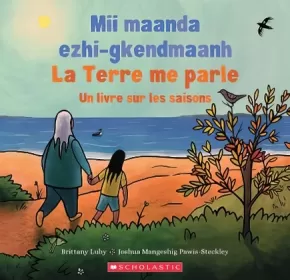


Mii maanda ezhi-gkendmaanh / La Terre me parle: Un livre sur les saisons
$14.99
Format:
Paperback
Text Content Territories:
Indigenous Canadian; First Nations; Anishinaabeg; Ojibway;
ISBN / Barcode: 9781443189446
Synopsis:
Synopsis:
Comment sais-tu quelle est la saison? Quand les bleuets mûrs tombent et que le sable brûle, comprends-tu que c’est l’été? Quand le carouge à épaulettes s’envole, comprends-tu que c’est l’automne? Arrête-toi une minute et regarde autour de toi : la nature nous parle. La Terre mère nous prévient de chaque changement et de chacune de ses étapes. Que ce soit à l’aide de la lumière matinale du Soleil ou de la Lune perchée haut dans le ciel, il y a de nombreux moyens de savoir à quelle saison nous sommes. Il suffit de s’arrêter, de regarder et d’écouter. Chaque saison raconte une histoire.
Cette histoire poétique, écrite en Ojibwé et accompagnée d’une traduction française, décrit le parcours d’une petite-fille et de sa grand-mère alors qu’elles se promènent au cours des saisons. Les illustrations fascinantes et le texte lyrique encouragent les lecteurs à se connecter à la Terre et à l’écouter. Elle a beaucoup de choses à dire.
Educator Information
Recommended for ages 4 to 8.
Dual-language: French and Ojibwe
This book is also available in English and Anishinaabemowin: Mii maanda ezhi-gkendmaanh / This Is How I Know.
Additional Information
8.49" x 8.76"

Mii maanda ezhi-gkendmaanh / This Is How I Know
$19.99
Format:
Hardcover
Text Content Territories:
Indigenous Canadian; First Nations; Anishinaabeg;
ISBN / Barcode: 9781773063263
Synopsis:
Synopsis:
Niibing, dgwaagig, bboong, mnookmig dbaadjigaade maanpii mzin'igning / A Book about the Seasons.
An Anishinaabe child and her grandmother explore the natural wonders of each season in this lyrical, bilingual story-poem.
In this lyrical story-poem, written in Anishinaabemowin and English, a child and grandmother explore their surroundings, taking pleasure in the familiar sights that each new season brings.
We accompany them through warm summer days full of wildflowers, bees and blueberries, then fall, when bears feast before hibernation and forest mushrooms are ripe for harvest. Winter mornings begin in darkness as deer, mice and other animals search for food, while spring brings green shoots poking through melting snow and the chirping of peepers.
Brittany Luby and Joshua Mangeshig Pawis-Steckley have created a book inspired by childhood memories of time spent with Knowledge Keepers, observing and living in relationship with the natural world in the place they call home — the northern reaches of Anishinaabewaking, around the Great Lakes.
Alvin Ted Corbiere and Alan Corbiere, father and son, are the Anishinaabe translators of this work.
Awards
- 2022 Indigenous Voices Award for a published work in an Indigenous language
Educator Information
Recommended for ages 3 to 7.
Correlates to the Common Core State Standards in English Language Arts:
CCSS.ELA-LITERACY.RL.2.1
Ask and answer such questions as who, what, where, when, why, and how to demonstrate understanding of key details in a text.
CCSS.ELA-LITERACY.RL.2.2
Recount stories, including fables and folktales from diverse cultures, and determine their central message, lesson, or moral.
CCSS.ELA-LITERACY.RL.K.6
With prompting and support, name the author and illustrator of a story and define the role of each in telling the story.
CCSS.ELA-LITERACY.RL.1.4
Identify words and phrases in stories or poems that suggest feelings or appeal to the senses.
CCSS.ELA-LITERACY.RL.2.5
Describe the overall structure of a story, including describing how the beginning introduces the story and the ending concludes the action.
How do you know the seasons? Do you know it's summer when blueberries fall readily and the sand is hot enough to sting? Do you know fall by the red-winged blackbird taking his leave? Take a minute and look around — nature is speaking to us. Changes are happening, and Mother Earth is letting us know at every step of the way. Whether it's the sun's bright morning light, or the white moon sitting high in the sky, there are many ways to know what time of the year it is. All we need to do is stop, look, and listen, because each season tells us a story!
This book is also available in French and Ojibwe: Mii maanda ezhi-gkendmaanh / La Terre me parle: Un livre sur les saisons
Additional Information
44 pages | 8.75" x 8.50"

Mino-te-mah-ti-zee-win, A Good Way of Life Colouring Book
$14.95
Artists:
Format:
Paperback
Text Content Territories:
Indigenous Canadian;
Grade Levels: Kindergarten; 1;
ISBN / Barcode: 9781927849705
Synopsis:
Synopsis:
The National Indigenous Diabetes Association (NIDA) envisions diabetes-free communities. Their mission is to lead the promotion of healthy environments and to prevent and manage diabetes by working together with people, communities, and organizations. NIDA Elders partnered with Kayla Perry, registered dietitian with the Diabetes Integration Project, and the Manitoba First Nations Education Resource Centre (MFNERC) to present this colouring book, which features some traditional plants and animals (Our Relations) from our Elders’ territories and the lands in between.
The purpose of this colouring book is to provide an easy-to-read, visual resource with practical guidance that children and caregivers can use to learn about nutritional information from traditional foods and plants. This resource also shares some teachings and stories attached to these medicines. Traditional foods are plants or animals that are indigenous to the land, meaning they existed naturally on the land before settlers arrived. Food in the form of these plants, fruits, vegetables, or animals is a gift.
NIDA would like to acknowledge that the work for this project took place in the traditional territories of the Dakota, Anishinaabe, Cree, Ojibwe-Cree, and Dene Peoples, and the homeland of the Red River Métis Nation.
Educator Information
Recommended by the publisher for grades 1 and under.
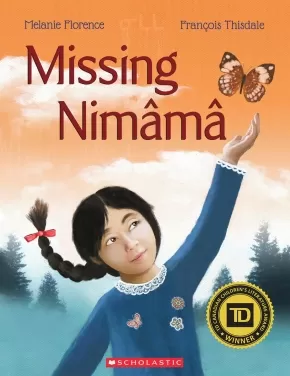
Missing Nimâmâ
$8.99
Artists:
Format:
Hardcover
Text Content Territories:
Indigenous Canadian; First Nations; Cree (Nehiyawak);
ISBN / Barcode: 9781039708181
Synopsis:
Synopsis:
A beautiful, transcendent story of a mother-daughter connection that persists through tragedy and across time.
Kateri is a young Cree girl, growing up in the care of her grandmother. We see her reaching important milestones: her first day of school, first dance, first date, wedding, first child. Her mother is absent, but not gone, watching her child growing up without her.
Told in alternating voices of child and mother, Missing Nimâmâ is a story of love, loss, and acceptance, showing the human side of a national tragedy. Dreamlike illustrations by François Thisdale enrich Kateri’s emotional journey. An afterword by the author provides a simple, age-appropriate context for young readers. Includes Cree words and glossary.
Reviews
"A free-verse intergenerational story of separation, loss, and daughter-mother connection amid the ongoing crisis of missing First Nations girls and women. . . On each page, Cree author Florence presents two narratives: Kateri's and her missing nimâmâ's. By juxtaposing the daughter's and mother's thoughts and feelings in complementary verse, Florence provides them the opportunity to experience life together from their respective points of view and to talk to each other from a distance. Thisdale's soft-edged, wistful artwork enriches the heartfelt story, strongly capturing the passage of time and Kateri's emotional journey. An afterword is appended, offering simple and relevant information as well as statistics of missing and murdered indigenous girls and women; together with the story, it should help to begin a conversation with young readers. A solid debut picture book that works as a record of voices that are usually unheard, ignored, and forgotten." — Kirkus Reviews
"A touching story related from the point of view of a missing indigenous woman as she watches her daughter grow up without her."— Quill and Quire
Awards
- TD Canadian Children's Literature Award Winner
Educator Information
This is a picture book best suited for more mature readers, as it deals with mature themes and subject matter. It's best used for a read-aloud due to its subject matter and theme of loss. This book is not recommended as an independent read for younger ages.
Additional Information
32 pages | 8.50" x 11.00"

Moonshot: The Indigenous Comics Collection Volume 1
$22.95
Artists:
Editors:
Format:
Paperback
Text Content Territories:
Indigenous Canadian;
ISBN / Barcode: 9781774503690
Synopsis:
Synopsis:
MOONSHOT: The Indigenous Comics Collection brings together dozens of creators from North America to contribute comic book stories showcasing the rich heritage and identity of indigenous storytelling. From traditional stories to exciting new visions of the future, this collection presents some of the finest comic book and graphic novel work on the continent.
Educator & Series Information
Inhabit Education Books is proud to distribute this important collection of Indigenous comic stories, originally published by Alternate History Comics. Moonshot has been published under Avani, an imprint featuring titles that extend beyond the Canadian North, giving readers the opportunity to explore cultures and stories from all over Canada and around the world.
Ages 12+
This is volume 1 in the series.
Additional Information
176 pages | 6.50" x 10.25" | colour illustrations

My Heart Fills With Happiness / Nijiikendam
$19.95
Artists:
Format:
Hardcover
Text Content Territories:
Indigenous Canadian; First Nations; Anishinaabeg;
ISBN / Barcode: 9781459825390
Synopsis:
Synopsis:
The sun on your face. The smell of warm bannock baking in the oven. Holding the hand of someone you love. What fills your heart with happiness? This beautiful board book, with illustrations from celebrated artist Julie Flett, serves as a reminder for little ones and adults alike to reflect on and cherish the moments in life that bring us joy.
International speaker and award-winning author Monique Gray Smith wrote My Heart Fills With Happiness to support the wellness of Indigenous children and families and to encourage young children to reflect on what makes them happy.
Reviews
"My Heart Fills With Happiness is a story that focuses on supporting the wellness of Indigenous children and families, encouraging them to reflect on what makes them happy. The story looks at happy memories that readers can connect to and serves as a reminder to reflect and cherish the moments in life that bring us joy." —The Dalai Lama Center
Educator Information
Recommended for ages 3 to 5.
This is the dual-language English and Anishinaabemowin hardcover edition.
This book is also available in an English-only board book format: My Heart Fills With Happiness
This book is also available in English and Plains Cree: My Heart Fills With Happiness / Ni Sâkaskineh Mîyawâten Niteh Ohcih
This book is available in French: J'ai le coeur rempli de bonheur
Additional Information
26 pages | 8.00" x 8.00"
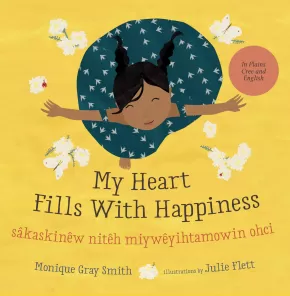
My Heart Fills With Happiness / sâkaskinêw nitêh miywêyihtamowin ohci
$19.95
Artists:
Format:
Hardcover
Text Content Territories:
Indigenous Canadian; First Nations; Cree (Nehiyawak);
ISBN / Barcode: 9781459831872
Synopsis:
Synopsis:
The sun on your face. The smell of warm bannock baking in the oven. Holding the hand of someone you love. What fills your heart with happiness? This beautiful book, with illustrations from celebrated artist Julie Flett, serves as a reminder for little ones and adults alike to reflect on and cherish the moments in life that bring us joy.
International speaker and award-winning author Monique Gray Smith wrote My Heart Fills with Happiness to support the wellness of Indigenous children and families, and to encourage young children to reflect on what makes them happy.
Reviews
"My Heart Fills With Happiness is a story that focuses on supporting the wellness of Indigenous children and families, encouraging them to reflect on what makes them happy. The story looks at happy memories that readers can connect to and serves as a reminder to reflect and cherish the moments in life that bring us joy." - The Dalai Lama Center
Educator Information
This paperback book is a dual-language (English and Plains Cree) edition of the board book My Heart Fills With Happiness.
This book is also available in English and Anishinaabemowin: My Heart Fills With Happiness / Nijiikendam
This book is also available in French: J'ai le coeur rempli de bonheur.
Recommended for Grades K-2 for the following subject areas: English Language Arts, Indigenous Language, Social Studies.
Additional Information
24 pages | 8.00" x 8.00" | Translated by Mary Collins.

My Indian
$16.95
Format:
Paperback
Text Content Territories:
Indigenous Canadian; First Nations; Beothuk; Mi'kmaq;
ISBN / Barcode: 9781550818789
Synopsis:
Synopsis:
In 1822, William Epps Cormack sought the expertise of a guide who could lead him across Newfoundland in search of the last remaining Beothuk camps on the island. In his journals, Cormack refers to his guide only as “My Indian.”
Now, almost two hundred years later, Mi’sel Joe and Sheila O’Neill reclaim the story of Sylvester Joe, the Mi’kmaq guide engaged by Cormack. In a remarkable feat of historical fiction, My Indian follows Sylvester Joe from his birth (in what is now known as Miawpukek First Nation) and early life in his community to his journey across the island with Cormack. But will Sylvester Joe lead Cormack to the Beothuk, or will he protect the Beothuk and lead his colonial explorer away?
In rewriting the narrative of Cormack’s journey from the perspective of his Mi’kmaq guide, My Indian reclaims Sylvester Joe’s identity.
Educator & Series Information
Recommended for ages 12 to 14.
Recommended for ages 12 to 14.
This is the first book in the My Indian series.
Additional Information
176 pages | 5.25" x 8.00" | b&w illustrations
176 pages | 5.25" x 8.00" | b&w illustrations

Name Your Mountain
$12.95
Format:
Paperback
Text Content Territories:
Indigenous American; Native American; Choctaw;
ISBN / Barcode: 9781939053206
Synopsis:
Synopsis:
Name Your Mountain continues the exciting No Name Series as the high school basketball team matures and faces new challenges. When the all American Indian team in Trust Your Name enters a national-level tournament, the team travels to big cities and has new experiences, but all is not well. Choctaw Bobby Byington and his new friend, Creek shooting guard Eddie, are torn between struggles on the court and painful episodes back home. With the door of adulthood looming, Coach Robison urges his players to choose the path they want to climb and to "never hesitate--never give up--in your struggle to reach the top."
Reviews
“Refreshingly, the book normalizes male characters’ close friendships and displays of emotion, tying into Tim Tingle’s (Choctaw) mountain metaphor: We encounter challenges every day, but they do not need to be climbed alone. The text uses basketball to emphasize the importance of teamwork both on and off the court. An engaging sports-infused mystery for reluctant readers.”— Kirkus Reviews
“Name Your Mountain continues the story of a Choctaw teenager and his tight-knit basketball team; they help each other through tough games and tougher issues, including parents with alcohol problems and vengeful criminals. Full of action and easy to read, this novel reveals the power of friendships and of careful observations.”— Foreword Reviews
Educator & Series Information
This is the fifth book in the No Name series, which is part of the PathFinders series. The PathFinders series of Hi-Lo (high interest, low readability) novels offers the following features:
• Indigenous teen protagonists
• Age appropriate plots
• 2.5 – 4.5 Reading Level
• Contemporary and historical fiction
• Indigenous authors
The PathFinders series is from an American publisher. Therefore, Indigenous terminology in the PathFinders books is not the same as Canadian Indigenous terminology. This prompts a useful teaching moment for educators in discussing appropriate terminology use in Canada. The recommended ages for books in the PathFinders series are 12-16.
Additional Information
168 pages | 4.50" x 7.00"
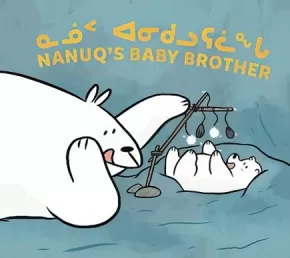
Nanuq's Baby Brother (English/Inuktitut) (4 in stock, in Reprint)
$14.95
Artists:
Format:
Paperback
Text Content Territories:
Indigenous Canadian; Inuit;
Grade Levels: Preschool; Kindergarten;
ISBN / Barcode: 9781774502679
Synopsis:
Synopsis:
Nanuq is so excited when she finds out she is going to be a big sister! She thinks about all the fun things she will do with her new sibling. But when her baby brother is born, he cries all the time. Her parents are so busy with the baby, they don’t have time for her anymore. Nanuq feels lonely. Is this really what being a big sister is like? See how Nanuq’s friends help her understand that there are good things about being a big sister, too.
Educator & Series Information
This is an Arvaaq Book. Books in this series are intended for infants and very young children and are designed to help children develop physical, social, emotional, cognitive, and language skills.
Recommended Ages: 3 - 5
Dual-Language: English and Inuktitut
Additional Information
44 pages | 8.00" x 9.00" | Paperback
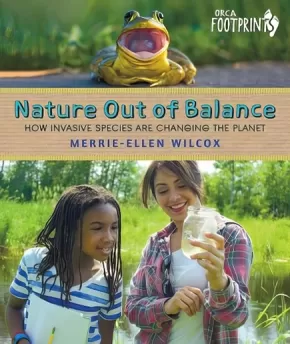
Nature Out of Balance: How Invasive Species Are Changing the Planet
$19.95
Format:
Hardcover
ISBN / Barcode: 9781459823952
Synopsis:
Synopsis:
Plants, animals, insects and fish are moving in. Invasive species threaten local ecosystems and the planet’s biodiversity, but are they all as bad as we think they are? In Nature Out of Balance: How Invasive Species Are Changing the Planet author Merrie-Ellen Wilcox profiles all-star invasive species around the world, starting in her own neighbourhood, and warns that humans are the most invasive species of all. We find out how and why species become invasive, what we can do to stop their spread and whether it’s time to think differently about invasive species that are here to stay.
Reviews
“A well-written volume on a distinctly important topic for youngsters to be aware of as they grow into their role of guardians of the ecosystems. Highly Recommended.” — CM: Canadian Review of Materials
“The balance of hope against the potentially stressful subject leaves readers informed and energized rather than defeated. Handy and lucid, this slim volume makes an important topic digestible.” — Kirkus Reviews
“A high-quality introduction to a topic not often covered in books for middle graders.” — School Library Journal
Educator & Series Information
This book is part of the Orca Footprint series. Kids today inhabit a world full of complex—and often mystifying—environmental issues. Orca Footprints aim to help kids answer their questions about the state of the natural world with well-researched, simply-expressed information and powerful images. With topics such as food production, water, cycling and sustainable energy, these books will inspire kids to take action.
In Nature Out of Balance, we find out how and why species become invasive and practical tips about what we can do to stop their spread.
Globalization means that new invasive species are being found around the world every day, threatening the biodiversity of our neighborhoods, cities, countries and the planet as a whole.
The author has studied ecological restoration and examines invasive species starting in her own backyard.
This book offers a unique perspective on invasive species and how it might be time to rethink how we coexist with them.
Invasive species are often described as the most overlooked environmental threat in the world (in the US they cause $120 billion a year in damage, in BC alone they cost farmers $50 million a year).
Recommended for ages 9 to 12
Additional Information
48 pages | 8.00" x 9.50"
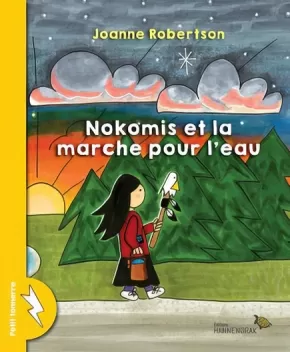
Nokomis et la marche pour l'eau
$19.95
Artists:
Format:
Hardcover
Text Content Territories:
Indigenous Canadian; First Nations; Anishinaabeg; Ojibway;
ISBN / Barcode: 9782923926971
Synopsis:
Synopsis:
L’album raconte l’histoire d’une grand-mère (Nokomis) ojibwé qui, par amour pour l’eau (Nibi), entreprend une longue marche afin de sensibiliser les gens à l’urgence de protéger nibi pour les générations à venir et pour assurer la préservation de la vie sur Terre. Accompagnée de femmes, d’hommes et d’adolescents, elle a entrepris une marche vers les Grands Lacs, les quatre nappes d’eau salée que sont les océans et le Lac Supérieur. Nombre d’embuches ont jalonné ses marches, mais les traces que laisse Josephine-Ba Mandamin nous invitent tous à prendre une part de responsabilité pour la préservation de l’eau, source de vie, et la protection de la planète.L’histoire que raconte et illustre Joanne Robertson est basée sur celle de Nokomis Josephine-ba Mandamin qui a amorcé cette marche pour l’eau en avril 2003. Originaire de la communauté de Wikwemikong de l’île de Manitoulin, Josephine a inspiré de nombreuses autres marches ailleurs dans le monde. En 2015, elle aurait fait jusqu’à 4 500 000 pas!
Educator Information
This book is available in English: The Water Walker
This book is available in a dual-language format (Anishinaabemowin (Ojibwe) and English): Nibi Emosaawdang / The Water Walker
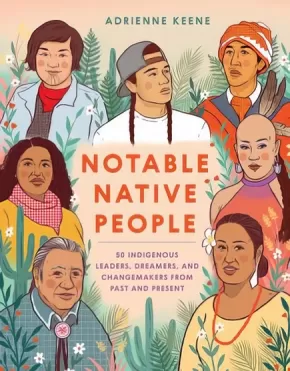
Notable Native People: 50 Indigenous Leaders, Dreamers, and Changemakers from Past and Present
$24.99
Artists:
Format:
Hardcover
Text Content Territories:
Indigenous American; Alaska Native; Native American; Indigenous Hawaiian;
ISBN / Barcode: 9781984857941
Synopsis:
Synopsis:
An accessible and educational illustrated book profiling 50 notable American Indian, Alaska Native, and Native Hawaiian people, from NBA star Kyrie Irving of the Standing Rock Lakota to Wilma Mankiller, the first female principal chief of the Cherokee Nation
Celebrate the lives, stories, and contributions of Indigenous artists, activists, scientists, athletes, and other changemakers in this beautifully illustrated collection. From luminaries of the past, like nineteenth-century sculptor Edmonia Lewis—the first Black and Native American female artist to achieve international fame—to contemporary figures like linguist jessie little doe baird, who revived the Wampanoag language, Notable Native People highlights the vital impact Indigenous dreamers and leaders have made on the world.
This powerful and informative collection also offers accessible primers on important Indigenous issues, from the legacy of colonialism and cultural appropriation to food sovereignty, land and water rights, and more. An indispensable read for people of all backgrounds seeking to learn about Native American heritage, histories, and cultures, Notable Native People will educate and inspire readers of all ages.
Additional Information
144 pages | 7.26" x 9.29" | Hardcover
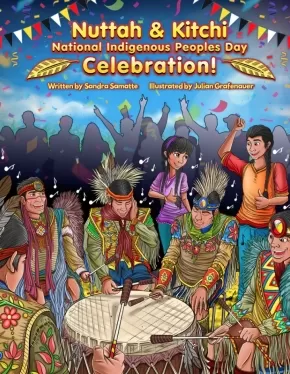
Nuttah & Kitchi National Indigenous Peoples Day Celebration
$14.99
Artists:
Format:
Paperback
Text Content Territories:
Indigenous Canadian; First Nations; Inuit; Métis;
ISBN / Barcode: 9780993937194
Synopsis:
Synopsis:
Nuttah and Kitchi National Indigenous Peoples Day Celebration is written by Sandra Samatte, Ojibwe - Saulteaux - from Skownan First Nation Treaty 2 Territory and illustrated by Julian Grafenauer, Ojibwe from Rolling River First Nation.
Come celebrate and explore with Nuttah and Kitchi on June 21st, the first day of summer as they experience all the exciting fun-filled activities and events that take place on National Indigenous Peoples Day.
Educator Information
Recommended for grades 2 to 5.
A companion activity book is available: Nuttah & Kitchi National Indigenous Peoples Day Celebration Activity Book: Indigenous Teachings and Fun Activities for Everyone
Additional Information
32 Pages | Paperback

Nuttah & Kitchi National Indigenous Peoples Day Celebration Activity Book
$9.95
Artists:
Format:
Paperback
Text Content Territories:
Indigenous Canadian; First Nations; Inuit; Métis;
ISBN / Barcode: 9781990297007
Synopsis:
Synopsis:
Companion book to Nuttah and Kitchi National Indigenous Peoples Day Celebration, featuring Indigenous Teachings and Fun Activities for Everyone!
Both resources are written by Sandra Samatte, Ojibwe - Saulteaux - from Skownan First Nation Treaty 2 Territory and illustrated by Julian Grafenauer, Ojibwe from Rolling River First Nation. Come celebrate and explore with Nuttah and Kitchi on June 21st, the first day of summer as they experience all the exciting fun-filled activities and events that take place on National Indigenous Peoples Day.
Educator Information
Recommended for grades 2 to 5.
Find the companion book here: Nuttah & Kitchi National Indigenous Peoples Day Celebration
Additional Information
32 Pages | Paperback
Sort By
Go To
of 175
 Our logo reflects the greater Nation we live within—Turtle Island (North America)—and the strength
and core of the Pacific Northwest Coast peoples—the Cedar Tree, known as the Tree of Life. We are
here to support the building of strong nations and help share Indigenous voices.
Our logo reflects the greater Nation we live within—Turtle Island (North America)—and the strength
and core of the Pacific Northwest Coast peoples—the Cedar Tree, known as the Tree of Life. We are
here to support the building of strong nations and help share Indigenous voices.


