

Browse Books for Adults
 Show Advanced Search Options
 Hide Advanced Search Options


Synopsis:
Daring and vulnerable, this is the highly anticipated new collection from Griffin Poetry Prize winner Billy-Ray Belcourt.
In The Idea of An Entire Life, Belcourt delivers an intimate examination of twenty-first-century anguish, love, queerness, and political possibility. Through lyric verse, sonnets, fieldnotes, and fragments, the poems, sometimes heart-breaking, sometimes slyly humorous, are always finely crafted, putting to use the autobiographical and philosophical style that has come to define Belcourt’s body of work. By its close, the collection makes the urgent argument that we are each our own little statues of grief and awe.
Reviews
"To read Billy-Ray Belcourt’s The Idea of An Enitre Life is to experience genre as a place between landscapes, but also beyond them: horizon as 'line break,' infrastructure as 'wound,' 'an image of a forest someone else/was supposed to know by heart.' These poems are achingly beautiful. Belcourt writes what’s already broken, breaking in real-time, 'in order to repair it.' How this new form might arrive, 'miraculously' but also diligently, an act of recuperation and courage that’s on-going, 'meandering' but also (always) 'incomplete,' becomes what happens when we read."—Bhanu Kapil
Additional Information
96 pages | 5.00" x 7.50" | Hardcover
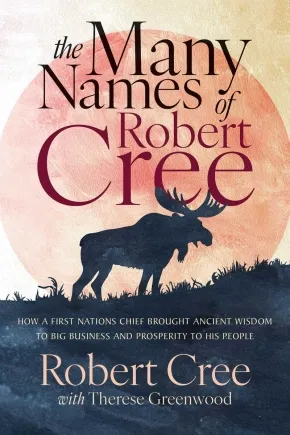
Synopsis:
A vital account of the life and many names of Robert Cree, and his plan for a peaceful, sincere, and just path to reconciliation in an angry and chaotic world.
His mother called him “Bobby Mountain.” Elders called him “Great Man.” His people called him “Chief.” Oil men called him “Mr. Cree.” But the government called him “Number 53.” Robert Cree was all of these while facing his people’s oppressors and freeing the ghosts of tortured spirits.
The Many Names of Robert Cree is his first-person account of survival in a brutally racist residential school system designed to erase traditional Indigenous culture, language, and knowledge. It is also the story of an epic life of struggle and healing, as Cree takes the wisdom of his ancestors and a message of reconciliation to the halls of government and to industry boardrooms.
In the storytelling tradition of his people, Cree recounts his early years in the bush, his captivity at a residential school, his struggles with addiction, his political awakening as one of Canada’s youngest First Nation Chiefs, and the rising Indigenous activism of the late 20th and early 21st centuries. He also recounts the oil industry’s arrival on his poverty-stricken reserve and the ensuing struggle to balance economic opportunity with environmental challenges.
Throughout, Cree’s leadership is rooted in his unshakable commitment to the sacred traditional teachings of his people. His beliefs give him the strength to focus on hope, dignity, and building a better future for his community. Now a respected Elder and spiritual leader, Cree champions forgiveness as a powerful force that can bring healing and transformation for all.
Additional Information
264 pages | 6" x 9" | Paperback
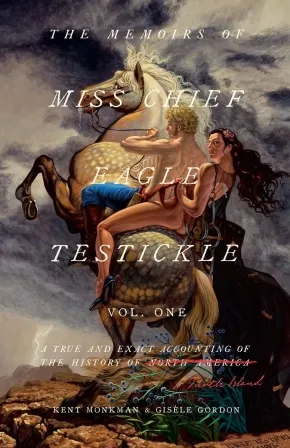
Synopsis:
From global art superstar Kent Monkman and his long-time collaborator Gisèle Gordon, a transformational work of true stories and imagined history that will remake readers’ understanding of the land called North America.
For decades, the singular and provocative paintings by Cree artist Kent Monkman have featured a recurring character—an alter ego of sorts, a shape-shifting, time-travelling elemental being named Miss Chief Eagle Testickle. Though we have glimpsed her across the years in films and on countless canvases, it is finally time to hear her story, in her own words. And, in doing so, to hear the whole history of Turtle Island anew. The Memoirs of Miss Chief Eagle Testickle: A True and Exact Accounting of the History of Turtle Island is a genre-demolishing work of genius, the imagined history of a legendary figure through which profound truths emerge—a deeply Cree and gloriously queer understanding of our shared world, its past, its present, and its possibilities.
Volume One, which covers the period from the creation of the universe to the confederation of Canada, follows Miss Chief as she moves through time, from a complex lived experience of Cree cosmology to the arrival of European settlers, many of whom will be familiar to students of history. An open-hearted being, she tries to live among those settlers, and guide them to a deeper understanding of the interconnectedness of all beings and the world itself. As their numbers grow, though, so does conflict, and Miss Chief begins to understand that the challenges posed by the hordes of newly arrived Europeans will mean ever greater danger for her, her people, and, by extension, all of the world she cherishes.
Blending history, fiction, and memoir in bold new ways, The Memoirs of Miss Chief Eagle Testickle are unlike anything published before. And in their power to reshape our shared understanding, they promise to change the way we see everything that lies ahead.
Reviews
"Long a persona stalking the paintings of provocative Cree artist Kent Monkman, Miss Chief Eagle Testickle steps off the canvas to tell her own story—and that of the Indigenous peoples of Turtle Island—in a two volume collaboration with Gisèle Gordon. Lavishly illustrated with Monkman’s paintings, The Memoirs of Miss Chief Eagle Testickle is at once (and seamlessly) a unique story of an even more unique deity, an exposition of nêhiyaw (Cree) beliefs and a primer in nêhiyawêwin (Cree Language), and a deeply researched history of contact, colonization, and resurgence. A full-blown remediation of the politically-charged and erotic world of Monkman’s paintings, these books educate, inspire, entertain, and leave the reader breathless."—Steve Collis, 2024 VMI Betsy Warland Between Genres Award judge
Additional Information
264 pages | 6.51" x 9.99"" | Full-colour art throughout | Paperback
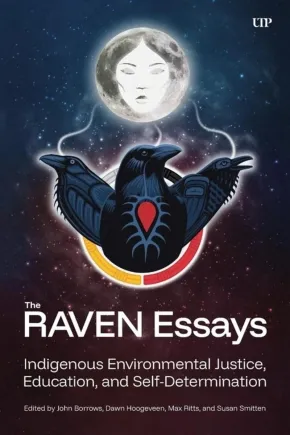
Synopsis:
Named after the Respecting Aboriginal Values and Environmental Needs (RAVEN) nonprofit organization, The RAVEN Essays is an anthology that celebrates a decade of prize-winning student essays. Since 2012, RAVEN has awarded an annual essay prize to honour students who champion the vital importance of Indigenous rights and self-determination, both in Canada and globally. The essays featured in this collection highlight exceptional student work while reflecting on the evolving relationship between Indigenous politics and academia. From issues like fishing rights and the Trans Mountain Pipeline to challenges of sexism and conservation policy, these essays capture a transformative period in Indigenous struggles, offering insights that resonate far beyond the Canadian settler state.
The anthology also includes contributions from prominent scholars such as Glen Coulthard, Dara Culhane, Michael Fabris, Sarah Hunt, and Heather Dorries. Five complementary essays explore various aspects of structural change, institutional constraints, and broader commitments to Indigenous knowledge within university settings. Aimed at readers in Indigenous law, environmental studies, anthropology, and geography, The RAVEN Essays is a book created by students for students, and by academics for the academy.
Together, the contributors reflect on the powerful formation and enactment of Indigenous law, environmental stewardship, place-based knowledge, pedagogy, and literacy – both within the academy and in the broader community, across land, water, and culture.
This collection celebrates emerging scholars in Indigenous studies, featuring student essays that explore Indigenous justice, ethics, and environmental justice, while highlighting a decade of collaboration with RAVEN, a legal defence organization.
Educator Information
Chapters
Educator Information
306 pages | 6.00" x 9.00" | 11 Illustrations | Paperback
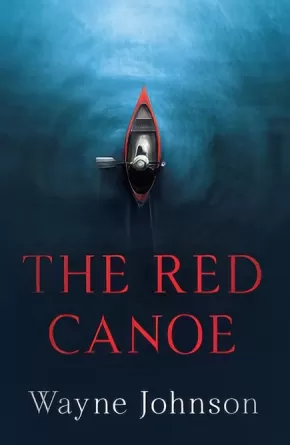
Synopsis:
Buck, government name Michael Fineday, Ojibwe name Miskwa’ doden (Red Deer) is on the brink of suicide. He has just been served divorce papers by his wife Naomi, who is fed up with his savior complex and the danger it often attracts to their door. Living on the border of Shakopee Mdewakanton Sioux Community reservation, Buck makes a living as a boatbuilder and carpenter. He spends his days alone, trying to win the trust of a feral cat…until a semi-feral girl shows up, fascinated by the canoe Buck is building.
Lucy, Ojibwe name Gage’ bineh, (Everlasting Bird), lives in a trailer alone with her father, a local policeman struggling with PTSD which is compounded by the loss of Lucy’s mother. Just barely fifteen she has lived with a lifetime of abuse, while knowing that if she ever spoke out, her father would bear the consequences.
Buck senses Lucy is in trouble and doesn't hesitate to come to her defense. On the foundation of their shared Ojibwe heritage, they trace Lucy’s abuse to a ring that extends farther than either of them ever imagined, while building a bond even sturdier than Buck’s canoe.
Series Information
This is book 1 in the Buck Fineday series.
Additional Information
400 pages | 5.13" x 7.78" | Paperback

Synopsis:
Indigenomics in action-moving beyond Indian Act economics towards Indigenous economic sovereignty
In this groundbreaking new work, Carol Anne Hilton, author of the bestselling Indigenomics, explores the phenomenon of growing Indigenous economic power and sovereignty, achieved despite monumental historic injustices.
The Indigenous economy in Canada is on track to exceed $100 billion. Yet full Indigenous participation at the economic table is still fundamentally lacking, due in large part to the inherently colonial and racist policies of the Indian Act. Hilton deconstructs these systemic barriers and maps an ethical way forward based on radical inclusion and Indigenomics in action.
Coverage includes:
- The far-reaching social and moral consequences of Indian Act economics-a tool used to legislate away Indigenous rights and jurisdiction with the express purpose of erasing First Nations
- The true cost of maintaining the status quo, from perpetuating inequality and cycles of Indigenous poverty, to lost opportunities for value-creation in Indigenous and settler economies
- Twenty-five transformative trends driving Indigenous economic growth.
Required reading for Indigenous organizations, Nations, and allies; business leaders and investors; lawyers and policymakers; governments at all levels; and everyone interested in reconciliation, decolonization, and building a just, prosperous, and inclusive society.
Reviews
"Hilton's work reaffirms the significance of relationship economics. Her words clearly illustrate that Indigenomics is the path for the future. As we move through the portal of this time, knowing that pandemics change our world, let's walk through to a path of restorative economics, founded on land, spirit, and the reality of Mother Earth's wealth, which is our responsibility to acknowledge and respect. The time of Keynesian economic analysis has passed, along with the empire. The time of cooperation is here." -Winona LaDuke, executive director, Honor the Earth Carol Anne
"Hilton mounts a convincing case that the rigidity of the Indian Act has put the rest of Canada in a static status-quo headspace that sees Indigenous Peoples as taken care of; meaning they don't see how adept they are in their economic empowerment as they consistently score in the open net." -Bill Gallagher, resource strategist
"A dynamic pathway to equitable Indigenous economic liberation and advancement." -Ruth Mojeed Ramirez, Chief Equity Officer, The Inclusion Project
"A comprehensively insightful guide for advancing Indigenous economic growth and inclusion." -Vinod Rajasekaran, CEO, Future of Good
"An essential primer for those seeking to understand and celebrate the economic rebirth of Indigenous communities." -Ken Coates, professor emeritus, University of Saskatchewan
Educator Information
The Indigenous economy is surging, but full Indigenous economic participation is still lacking, thwarted by the colonial and racist policies of Canada’s Indian Act. The Rise of Indigenous Economic Power deconstructs these historic and systemic barriers and presents an ethical response based on Indigenomics in action.
Additional Information
264 pages | 6.00" x 9.00" | 5 b&w illustrations | Paperback
Synopsis:
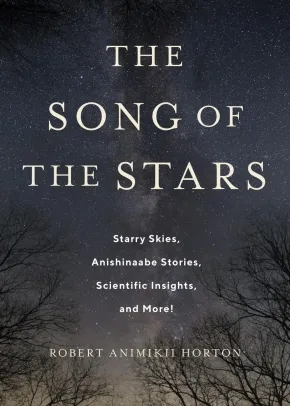
Since the earliest days of human memory, countless generations have turned their eyes to the skies in wonder, drawing patterns, understanding the stars’ connection to cycles and events, and carrying their stories and teachings forward to subsequent generations.
The Song of the Stars offers a unique journey through the skies, linking us to generations of ancestors who marvelled at the same stars we still gaze upon today. The book brings together Anishinaabe cultural teachings about the cosmos and the Anishinaabemowin language with scientific insights to demonstrate how both viewpoints can help us foster deeper and more meaningful relationships to the Earth and the cosmos. Robert Animikii Horton, Anishinaabemowin educator, proves that this dual perspective can be a source of awe and wonder, inspiring in us a love of both language and science.
Demonstrating how Anishinaabe cultural teachings and scientific insights can complement one another and need not be irreconcilable opposites, The Song of the Stars provides a combination of perspectives that cultivates a deeper understanding of the vast mystery surrounding our place in the universe.
Educator Information
Contents
1. In Awe of the Awe-Inspiring
2. Aki: The Earth
3. Giizis: The Sun
4. Gichi-giizis: The Solar Eclipse
5. Naawakwe: Solar Noon
6. Ma’iingan Omiikana: The Sun’s Ecliptic
7. Aadwaa’amoog: Orion’s Belt
8. Waawaate: The Northern Lights (Aurora Borealis)
9. Jiibay Miikana: The Milky Way
10. Gookomisinaan Dibiki-giizis: The Moon
11. Gaagige-giizhig: The Universe
12. Anang: Star
13. Ojiig Anang: Fisher Star
14. Ojiig: The Big Dipper
15. Gichi-Ogimaa Anang: Vega
16. Gaa-bibooniked: The Wintermaker
17. Maang: The Little Dipper
18. Bagonegiizhig: The Pleiades
19. Moonz: Pegasus
20. Onwaajige Anang: Halley’s Comet
21. Madoodiswan: Corona Borealis
22. Ma’iingan: Canis Major
23. Nanaboozhoo: Scorpius
24. Waaban Anang: The Morning Star
25. Biidaaban, Waaban, Zaagajiwens, & Mooka’am: The Process of Sunrise
26. Mishibizhiw: Leo, Cancer, and Hydra
27. Gaa-madoodood: Hercules
28. Bangishin Anang: Falling Star
29. Binesi: Cygnus
30. Mishiginebig: Draco
31. Ikwe Anang: Venus
32. Directions and More
Additional Information
120 pages | 6.00" x 9.00" | Hardcover
Synopsis:
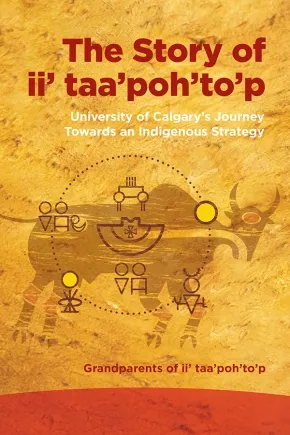
A dynamic framework for the development of an Indigenous strategy that shares the engaging story of ii’taa’poh’to’p at the University of Calgary.
The University of Calgary’s Indigenous strategy, ii’taa’poh’to’p, lays the path for a journey of transformation and renewal for truth and reconciliation through ways of knowing, doing, connecting, and being.
The Story of ii’ taa’poh’to’p is the story of the creation of the University of Calgary’s Indigenous Strategy. The result of an enlightening process of relationship building and deep learning and listening, it required the intentional and careful creation of parallel paths for institutional and Indigenous frameworks to create the strategy. Authentic conversations occurred in the ethical space between the parallel paths, allowing for increased understanding of differences and similarities between cultures.
This book captures powerful and emotional stories that emphasize the importance of reconciliation and decolonizing organizations. It demonstrates that trusting relationships can be developed between Indigenous and non-Indigenous relatives and lays out a dynamic framework and approach for the development of an Indigenous strategy.
The Grandparents of ii’ taa’poh’to’p welcome readers to learn from their experience. They share insightful lessons about the importance of being relational; honouring ways of knowing and doing from other cultures; developing generational strategies that persist over time; understanding the impacts of fear; and making assumptions about people’s prior knowledge. They discuss how relationship building through deep listening across cultures is essential to the development of an Indigenous strategy. The Story of ii’ taa’poh’to’p is essential reading for all those interested in the development of an Indigenous strategy in the pursuit of truth and reconciliation.
Educator Information
About the Authors: The Grandparents of ii ’taa’poh’to’p are a collective of leaders from diverse cultural backgrounds and experiences who guided the development of the Indigenous strategy at the University of Calgary.
Additional Information
176 pages | 6.00" x 9.00" | Paperback
Synopsis:
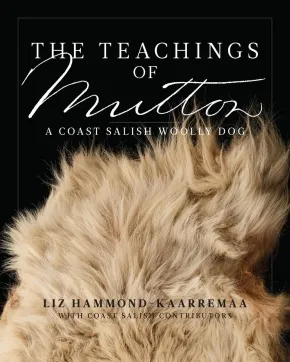
The pelt of a dog named “Mutton” languished in a drawer at the Smithsonian for 150 years until it was discovered, almost accidentally, by an amateur archivist. This book tells Mutton's story and explores what it can teach us about Coast Salish Woolly Dogs and their cultural significance.
Until now, there has been very little written about the enigmatic Coast Salish Woolly Dog, or sqʷəmey̓ in the Hul'q'umi'num language. According to Indigenous Oral Histories of the Pacific Northwest, this small dog was bred for thousands of years for its woolly fibres, which were woven into traditional blankets, robes and regalia. Although the dogs were carefully protected by Coast Salish peoples, by the 1900s, the Woolly Dog had become so rare it is now considered extinct.
Co-authored with weavers, Knowledge Keepers, and Elders, The Teachings of Mutton interweaves perspectives from Musqueam, Squamish, Stó:lō, Suquamish, Cowichan, Katzie, Snuneymuxw, and Skokomish cultures with narratives of science, post-contact history, and the lasting and devastating impacts of colonization. Binding it all together is Mutton's story—a tale of research, reawakening, and resurgence.
Reviews
“What a compelling story, reflecting a way of life, practical knowledge, artistry and change in the Pacific Northwest! Mutton, the domesticated woolly dog, represents so much more than a museum collection or a source of weaving material. Generations of breeding, learning and sharing, caring and trading are mirrored in the discovery of his pelt in a drawer at the Smithsonian. Liz Hammond-Kaarremaa and her respected Salishan co-authors and Knowledge Keepers have brought Mutton into the present, and in doing so, have given us a new and unique perspective on the complex history of this region and on the meaning of Truth and Reconciliation. The book is clearly and thoughtfully written, and supplemented with excellent illustrations. It is a ‘must read’ for anyone wishing to know more about weaving arts, dog breeds, Indigenous cultures and/or history in northwestern North America.” — Nancy J. Turner, Distinguished Professor Emerita, University of Victoria
“Conscientious and accessible, The Teachings of Mutton weaves a charming and informative history, walking through the discovery of his pelt in a museum drawer to the modern science that reveals the shape of this dog’s life. Highlighting and correcting generations of non-Indigenous misinterpretation, the intertwined histories provided by Salish knowledge keepers reveal the nuanced Indigenous sciences of dog husbandry, spinning, weaving, and the cultural significance of Woolly Dogs while telling a lively story.” — Kathryn Bunn-Marcuse, PhD, curator of Northwest Native art and director of the Bill Holm Center for
Additional Information
264 pages | 8.00" x 10.00"
Synopsis:
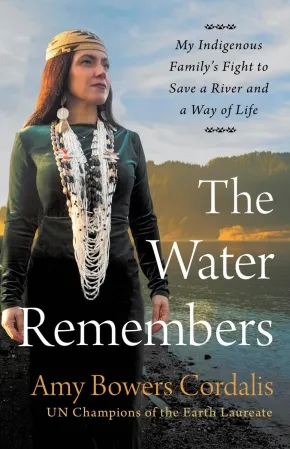
A moving multigenerational memoir of Indigenous resistance, environmental justice, and a Yurok family's fight to protect their legacy and the Klamath River.
For the members of a Northern California tribe, salmon are the lifeblood of the people—a vital source of food, income, and cultural identity. When a catastrophic fish kill devastates the river, Amy Bowers Cordalis is propelled into action, reigniting her family's 170-year battle against the U.S. government.
In a moving and engrossing blend of memoir and history, Cordalis propels readers through generations of her family’s struggle, where she learns that the fight for survival is not only about fishing—it’s about protecting a way of life and the right of a species and river to exist. Her great-uncle's landmark Supreme Court case reaffirming her Nation’s rights to land, water, fish, and sovereignty, her great-grandmother’s defiant resistance during the Salmon Wars, and her family's ongoing battles against government overreach shape the deep commitment to justice that drives Cordalis forward.
When the source of the fish kill is revealed, Cordalis steps up as General Counsel for the Yurok Tribe to hold powerful corporate interests accountable, and to spearhead the largest river restoration project in history. The Water Remembers is a testament to the enduring power of Indigenous knowledge, family legacy, and the determination to ensure that future generations remember what it means to live in balance with the earth.
Reviews
"A powerful interweaving of memory, history, and activism, The Water Remembers is a lyrical and uncompromising account of Amy Bowers Cordalis’s fight to protect the Klamath River and the sovereignty of the Yurok Nation. Told through a Yurok storytelling lens, this book traverses ancestral knowledge, ecological devastation, and legal resistance, revealing the sacred bond between people and river. Bowers Cordalis, an attorney and lifelong fisherwoman, writes with the clarity of lived experience and the heart of a riverkeeper. This is a vital work of Indigenous resurgence and environmental justice, brimming with spirit, truth, and unstoppable resolve."—Terese Marie Mailhot, author of Heart Berries
"The Water Remembers is a powerful, poetic testament to Indigenous resilience and reverence for the natural world. Amy Bowers Cordalis weaves history, activism, and sacred connection into a compelling narrative of communities fighting to protect what is most vital. This book is not just a call to action; it’s a song of survival and restoration."—Leah Thomas, environmental educator and author of The Intersectional Environmentalist
Additional Information
288 pages | 6.00" x 9.25" | Hardcover
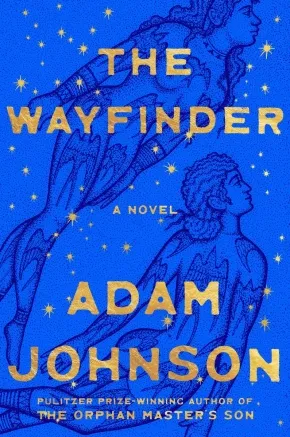
Synopsis:
A historical epic about a girl from a remote Tongan island who becomes her people's queen.
Talking corpses, poetic parrots, and a fan that wafts the breath of life—this is the world young Kōrero finds herself thrust into when a mysterious visitor lands on her island, a place so remote its inhabitants have forgotten the word for stranger. Her people are desperate and on the brink of starvation, and the wayward stranger offers them an impossible choice: they can remain in the only home they’ve ever known and await the uncertainty to come, or Kōrero can join him and venture into unfamiliar waters, guided by only the night sky and his assurance of a bountiful future in the Kingdom of Tonga. What Kōrero and her people don’t know is that the promised refuge is no utopia—instead, Tonga is an empire at war and on the verge of collapse, a place where brains are regularly liberated from skulls and souls get trapped in coconuts with some frequency.
The perils of Tonga are compounded by a royal feud: loyalties are shifting, graves are being opened, and everyone lives in fear of a jellyfish tattoo. Here, survival can rest on a perfectly performed dance or the acceptance of a cup of kava. Together, the stranger and Kōrero embark upon an epic voyage—one that will deliver them either to salvation or to the depths of the Pacific.
Evoking the grandeur of Wolf Hall and the splendor of Shōgun, the Pulitzer Prize–winning novelist Adam Johnson conjures oral history, restores the natural world, and locates what’s best in humanity. Toweringly ambitious and breathtakingly immersive, The Wayfinder is an instant, timeless classic.
Reviews
“A powerful and original epic . . . Deadly politics, tragic romance and dangerous sea journeys keep the drama at a spirited boil.”—The New York Times
“[An] epic-scale historical adventure from Pulitzer Prize winner Adam Johnson . . . Johnson paints a rich tale of nature, politics, and tradition . . . It's a unique, spellbinding saga that drew us into an elaborate world.”—Apple's Best of the Month
“Expansive in scope, historically detailed, and totally enthralling . . . Johnson's monumental research into the history, legacy, and imprint of the Polynesian culture is evident in the meticulous detail of his narrative—which is about much more than his characters, whose vibrancy demands acknowledgement, and his gorgeous landscape descriptions . . . Part bildungsroman, part historical exploration, this novel is a study of the many islands in the South Pacific, their power struggles, abuses of power, and the perseverance to survive.”—Booklist (starred review)
"Epic historical fiction with a twist of magical realism, The Wayfinder follows a Tongan royal family facing political upheaval and a community on a distant island facing starvation. It is a dual timeline with multiple viewpoints that makes you feel totally immersed in the story." — Goodreads Review, Shannon
Additional Information
736 pages | 6.00" x 9.00" | Hardcover
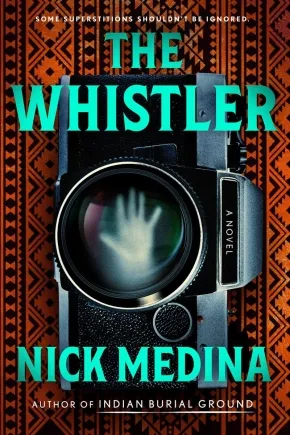
Synopsis:
A young man is haunted by a mythological specter bent on stealing everything he loves in this unsettling horror from the author of Indian Burial Ground and Sisters of the Lost Nation.
For fear of summoning evil spirits, Native superstition says you should never, ever whistle at night.
Henry Hotard was on the verge of fame, gaining a following and traction with his eerie ghost-hunting videos. Then his dreams came to a screeching halt. Now, he's learning to navigate a new life in a wheelchair, back on the reservation where he grew up, relying on his grandparents’ care while he recovers.
And he’s being haunted.
His girlfriend, Jade, insists he just needs time to adjust to his new reality as a quadriplegic, that it’s his traumatized mind playing tricks on him, but Henry knows better. As the specter haunting him creeps closer each night, Henry battles to find a way to endure, to rid himself of the horror stalking him. Worried that this dread might plague him forever, he realizes the only way to exile his phantom is by confronting his troubled past and going back to the events that led to his injury.
It all started when he whistled at night....
Additional Information
368 pages | 6.26" x 9.27" | Hardcover
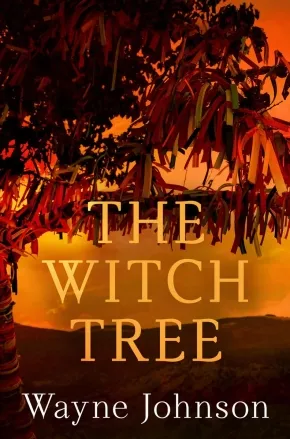
Synopsis:
In this gripping prequel to The Red Canoe, Buck navigates family, trauma and star-crossed romance in his search to track down his wayward brother.
In this prequel to 2022's The Red Canoe, Buck, aka Michael Fineday, aka Red Deer is on his way to track down his wayward brother in the Twin Cities, when he's trapped in a snowstorm and rescued by Sally, a girl who is fighting her own demons. Though intrigued by Sally, most of Buck's time is spent trying to unravel his family’s involvement with an elaborate racket which has recently gotten his cousin Ruben and his half-brother Bear killed.
Eli, Buck’s surviving brother, is up to his neck in the racket that involves insurance fraud and stolen vehicles, and unwilling to tell Buck the truth. The racketeer’s kingpin thinks Eli has something they want—which is both his death warrant and his salvation. The problem is, Eli doesn’t know exactly what the something is or how to find it; his only clue is a phrase in Anishinaabe language Ruben scrawled on the wall of his room before he was killed, and it's up to Buck to track it down.
Meanwhile, Sally and Buck grow closer through the shared wounds of their difficult pasts; and Buck teaches her some Ashinaabe language and cultural practices. Strangely, all roads—both Sally's and Buck's—lead to the Witch Tree, an important spiritual reservoir in Native American religion, and where he is forced to face the many facets of his own identity and find a way for them both to heal.
Series Information
This is book 2 in the Buck Fineday series.
Additional Information
400 pages | 5.13" x 7.75" | Paperback
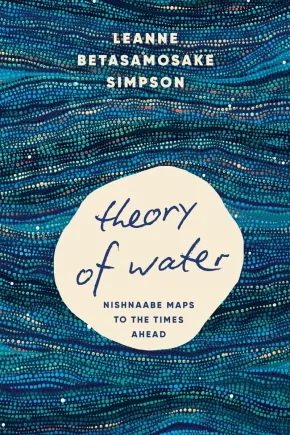
Synopsis:
Acclaimed Nishnaabeg writer Leanne Betasamosake Simpson takes a revolutionary look at that most elemental force, water, and suggests a powerful path for the future.
A genre-bending exploration of that most elemental force-water-through Indigenous storytelling, personal memory, and the work of influential artists and writers.
For many years, Leanne Betasamosake Simpson took solace in skiing--in all kinds of weather, on all kinds of snow across all kinds of terrain, often following the trail beside a beloved creek near her home. Recently, as she skied on this path against the backdrop of uncertainty, environmental devastation, rising authoritarianism and ongoing social injustice, her mind turned to the water in the creek and an elemental question: What might it mean to truly listen to water? To know water? To exist with and alongside water?
So began a quest to understand her people's historical, cultural, and ongoing interactions with water in all its forms (ice, snow, rain, perspiration, breath). Pulling together these threads, Leanne began to see how a "Theory of Water" might suggest a radical rethinking of relationships between beings and forces in the world today. In this inventive work, Simpson draws on Nishnaabeg origin stories while artfully weaving the work of influential writers and artists alongside her personal memories and experience--and in doing so, reimagines water as a catalyst for radical transformation, capable of birthing a new world.
Theory of Water is a resonant exploration of an intricate, multi-layered relationship with the most abundant element on our planet--one that, as Simpson eloquently shows, is shaping our present even as it demands a radical rethinking of how we might achieve a just future.
Additional Information
224 pages | 5.50" x 8.25" | Hardcover

Synopsis:
One young woman’s relentless quest to become the first Cherokee astronaut will irrevocably alter the fates of the people she loves most in this tour de force of a debut about ambition, belonging, and family.
My mother took my sister and me, and she drove through the night to a place she felt a claim to, a place on earth she thought we might be safe. I stopped asking questions. I picked little glass pieces from my sister’s hair. I watched the moon.
Steph Harper is on the run. When she was five, her mother fled an abusive husband—with Steph and her younger sister in tow—to Cherokee Nation, where she hoped they might finally belong. In response, Steph sets her sights as far away from Oklahoma as she can get, vowing that she will let nothing get in the way of pursuing the rigorous physical and academic training she knows she will need to be accepted by NASA, and ultimately, to go to the moon.
Spanning three decades and several continents, To the Moon and Back encompasses Steph’s turbulent journey, along with the multifaceted and intertwined lives of the three women closest to her: her sister Kayla, an artist who goes on to become an Indigenous social media influencer, and whose determination to appear good takes her life to unexpected places; Steph’s college girlfriend Della Owens, who strives to reclaim her identity as an adult after being removed from her Cherokee family through a challenge to the Indian Child Welfare Act; and Hannah, Steph and Kayla’s mother, who has held up her family’s tribal history as a beacon of inspiration to her children, all the while keeping her own past a secret.
In Steph’s certainty that only her ambition can save her, she will stretch her bonds with each of these women to the point of breaking, at once betraying their love and generosity, and forcing them to reconsider their own deepest desires in her shadow. Told through an intricately woven tapestry of narrative, To the Moon and Back is an astounding and expansive novel of mothers and daughters, love and sacrifice, alienation and heartbreak, terror and wonder. At its core, it is the story of the extraordinary lengths to which one woman will go to find space for herself.
Reviews
“A story of decisions; right, wrong and everything in between, To the Moon and Back explores love and ambition and all its complicated messiness. With characters so perfectly rendered that you’ll want to hug them or give them a shake, Eliana Rampage explores what it means to belong in this immersive and exciting debut.” — Amanda Peters, author of The Berry Pickers (winner of the Carnegie Medal for Excellence)
“A soaring masterpiece that mixes the terror, care, betrayal, and death-defying love of family with deliciously abject lesbian drama and the beautifully self-destructive doggedness of possessing a singular dream. Every character in this novel will stay with you forever. I love this book.” —Casey Plett, award-winning author of A Dream of a Woma—
“A John Irving-esque tragicomic saga… This author is as ambitious as her protagonist: There are three novels worth of material here, all good. The moon or bust!” —Kirkus Review (starred review)
Additional Information
448 pages | 6.00" x 9.00" | Paperback
 Our logo reflects the greater Nation we live within—Turtle Island (North America)—and the strength
and core of the Pacific Northwest Coast peoples—the Cedar Tree, known as the Tree of Life. We are
here to support the building of strong nations and help share Indigenous voices.
Our logo reflects the greater Nation we live within—Turtle Island (North America)—and the strength
and core of the Pacific Northwest Coast peoples—the Cedar Tree, known as the Tree of Life. We are
here to support the building of strong nations and help share Indigenous voices.


