

 Show Advanced Search Options
 Hide Advanced Search Options
Browse Books for Adults
121
-
135
of
1928 Results;
Sort By
Go To
of 129
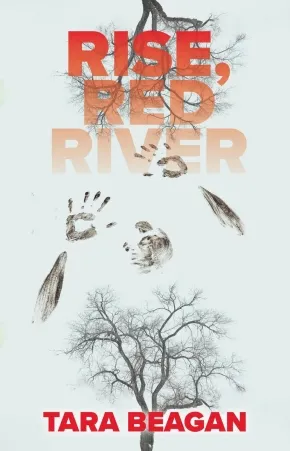


Rise, Red River
$18.95
Format:
Paperback
Text Content Territories:
Indigenous Canadian; First Nations; Anishinaabeg;
Reading Level: N/A
ISBN / Barcode: 9780369105486
Synopsis:
Synopsis:
“The map of the land is in our blood.”
A woman trawls the bottom of a riverbed with a makeshift plough, hoping to dislodge something—anything. The world has drastically changed: rivers run dry, rampant bushfires leave little left to burn. Still she persists searching for the stories of her loved ones, maybe even her own. She is not alone—an ancestor watches nearby. This desolate landscape is about to unearth its long-held secrets.
Inspired by the grassroots organization Drag the Red, which searches for evidence of missing Indigenous women, girls, and 2 Spirit people in the Red River of Treaty One Territory, this ethereal and engrossing drama is a profound offering to those who persevere in spite of sorrow. Told in Anishinaabemowin, English, and French, Tara Beagan’s prophetic play draws a direct connection between the treatment of Indigenous peoples and the abuse inflicted on the land. Fluid and majestic like the river itself, Rise, Red River is an invocation, a revelation, and a call to action.
Educator Information
Told in Anishinaabemowin, English, and French.
Additional Information
112 pages | 5.37" x 8.38" | Paperback
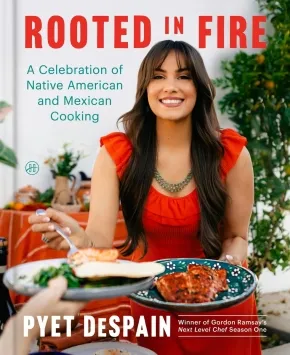
Rooted in Fire: A Celebration of Native American and Mexican Cooking
$43.50
Format:
Hardcover
Reading Level: N/A
ISBN / Barcode: 9780063304079
Synopsis:
Synopsis:
Next Level Chef winner Pyet De Spain celebrates her Mexican and Native American heritage in this collection of mouthwatering recipes, a vibrant fusion that ties us to the land and to one another.
Star chef Pyet DeSpain rose to prominence as the first winner of Gordon Ramsey’s Fox television show Next Level Chef. Now, in her debut cookbook, she shares the joy of cooking fueled by her burning passion for Native American and Mexican American cuisine. Rooted in Fire: A Celebration of Native American and Mexican Cooking is a tribute to her dual heritage—a gorgeously crafted celebration of the diversity of food and the stories, traditions, culture, and profound philosophies of Indigenous people that season each meal.
Pyet shows you how to incorporate a delicious range of key ingredients—from venison, dandelion greens, to sunchokes, bison, and native berries—into more than sixty fusion dishes. Family and friends will be excited to gather around the table to enjoy sweet and savory food such as:
- Three Sisters Salad
- Bison and Sweet Corn Soup
- Fry Bread
- Mexican Chocolate & Mezcal Cake
- Corn Silk and Honey Tea
- Wojapi BBQ Sauce
In addition to her inventive and palate pleasing recipes, Pyet invites home cooks to honor the seasons on our beautiful Earth and connect with essential foodways. “This is more than just a cookbook,” Pyet writes. “It’s giving a voice to Indigenous people, while also highlighting the fusion of my two cultures with fire and purpose.”
Reviews
"Pyet's talent is evident in every recipe in this book. The way she weaves her heritage into her dishes is extraordinary and I've seen it every day since the first time I tasted her work on Next Level Chef. Trust me, you're in for an absolute treat." — Gordon Ramsay
Pyet’s Rooted in Fire beautifully honors her Prairie Band of Potawatomi and Mexican heritage through food storytelling that is both personal and powerful. Her voice is heartfelt, her vision and dedication are clear, and her talent within the Indigenous food movement is undeniable. I’m so proud to see her shining as a modern-day Indigenous food warrior—this book marks an important chapter in her growing legacy." — Sean Sherman, Founder of The Sioux Chef/NATIFS.org and Author of The Sioux Chef’s Indigenous Kitchen and Turtle Island
Additional Information
288 pages | 7.38" x 9.12" | 128 four color food photographs | Hardcover
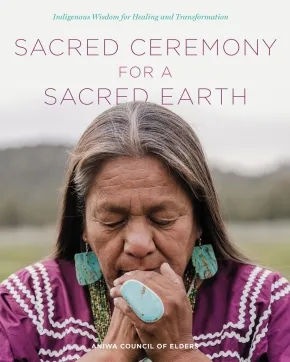
Sacred Ceremony for a Sacred Earth: Indigenous Wisdom for Healing and Transformation
$52.99
Format:
Hardcover
Text Content Territories:
Indigenous;
Reading Level: N/A
ISBN / Barcode: 9780760392126
Synopsis:
Synopsis:
For the first time, over a dozen respected Indigenous elders from around the world have united to share their timeless wisdom beyond their lands and lineages.
Aniwa’s Council of Elders includes some of the globe’s most renowned Indigenous Wisdom Keepers. In a time fraught with ecological, social, political, and mental health crises, they share a mission to unite people of all races, colors, and creeds to promote healing and a deeper reciprocal relationship with our planet. Sacred Ceremony for a Sacred Earth brings together their profound teachings, stories, sacred ceremonies, and healing practices, amplifying the voices of Indigenous healers from diverse traditions.
In their worldview, we are all children of Mother Earth, destined to return to her embrace. This extraordinary book serves as a guiding light, beckoning humanity back to ancestral wisdom and restoring forgotten bonds with nature and self through ceremonies and practices.
Embark on a journey of self-discovery, unveiling the purpose of your soul and reclaiming your intrinsic relationship with Mother Earth, through ancient practices such as:
- Use of Feathers to Bless Yourself and Relieve Pain
- Pagamento for Trees
- Hopi Message of Comfort to Say Good-Bye to Loved Ones Who Have Passed
- Practices for Conscious Conception
- Create a Spiritual House for Your Inner Child
- The Feagaiga (Sacred Promise or Covenant) with Mother Earth
- Connect with Your Ancestors
Sacred Ceremony for a Sacred Earth calls upon us to awaken and rekindle the flame of connection with our roots and the natural world. Let the eternal wisdom of elders guide you toward healing, growth, and a profound reconnection with nature.
Reviews
"An essential guide to begin understanding culture, nature, and yourself."—Oona Chaplin, actress
"Beautifully and profusely illustrated throughout with full color photography of indigenous people, rituals, events, Sacred Ceremony for a Sacred Earth is informative, fascinating, insightful, and unreservedly recommended."—Midwest Book Review
Educator Information
Discover rituals and wisdom from Indigenous communities across the globe that, until now, have only been passed down orally and taught within closed circles.
Additional Information
224 pages | 8.30" x 10.25" | Hardcover
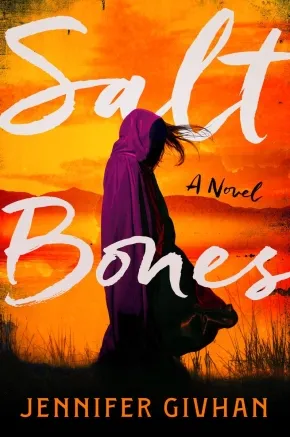
Salt Bones: A Novel
$38.00
Format:
Hardcover
Text Content Territories:
Indigenous;
Reading Level: N/A
ISBN / Barcode: 9780316581523
Synopsis:
Synopsis:
For fans of Silvia Moreno-Garcia’s Mexican Gothic and Ramona Emerson’s Shutter: a gripping retelling of Persephone and Demeter in the Mexicali borderlands
At the edge of the Salton Sea, in the blistering borderlands, something is out hunting. . .
Malamar Veracruz has never left the dust-choked town of El Valle. Here, Mal has done her best to build a good life: She’s raised two children, worked hard, and tried to forget the painful, unexplained disappearance of her sister, Elena. When another local girl goes missing, Mal plunges into a fresh yet familiar nightmare. As a desperate Mal hunts for answers, her search becomes increasingly tangled with inscrutable visions of a horse-headed woman, a local legend who Mal feels compelled to follow. Mal’s perspective is joined by the voices of her two daughters, all three of whom must work to uncover the truth about the missing girls in their community before it's too late.
Combining elements of Latina and Indigenous culture, family drama, mystery, horror, and magical realism in a spellbinding mix, Salt Bones lays bare the realities of environmental catastrophe, family secrets, and the unrelenting bond between mothers and daughters.
Reviews
“Salt Bones is an intense, lyrical journey of twisted family ties, long kept secrets, and haunted women— in short, it’s a wonder.”—Erika T. Wurth, author of White Horse
“Visceral and compelling, Jennifer Givhan’s Salt Bones beautifully explores the dark complexities of mother-daughter relationships. Satisfyingly saturated with mystery and mythology, Salt Bones is a book that stays with you. Readers will be haunted long after the final page.”—Erin E. Adams, author of Jackal
“In a world of Mexicali myth and post-industrial ruin, a mother-daughter bond drives an engaging thriller about missing and murdered women. Jennifer Givhan's Salt Bones is the perfect blend of political horror and other-worldly nightmares.”—Deborah Jackson Taffa, author of Whiskey Tender
“A beautifully woven tale of three strong women and the family ties that support, and those that strangle. Rooted in myth, this emotionally powerful magical realist mystery has an atmosphere so thick and richly drawn you’d swear you can taste the grit of dust on your tongue. Masterful."—Ann Dávila Cardinal, author of We Need No Wings and The Storyteller’s Death
“A poetic mystery deftly carved from the sinews of our flawed humanity. Salt Bones’ Mal may mean ‘bad,’ but she is as good as a protagonist gets. Magical and messy, fierce but flawed, tough yet tender, you’ll find yourself rooting for her from the first page to the last, and you will not forget her story.”—Rudy Ruiz, author of The Border Between U
“As haunting as it is gorgeous, Salt Bones is a mystery about monsters who lurk among us—and something even fiercer: motherlove. With threads of horror, folklore, and mythology, Jennifer Givhan weaves together an obsession-worthy story so gripping and intoxicating it’s impossible to shake.”—Megan Co
Additional Information
384 pages | 6.00" x 9.25" | Hardcover
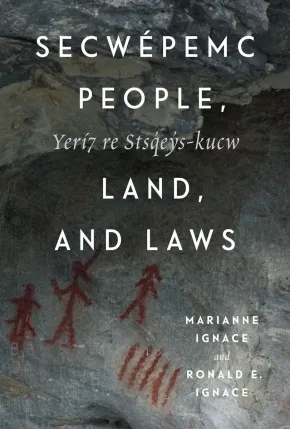
Secwépemc People, Land, and Laws: Yerí7 re Stsq'ey's-kucw (PB)
$39.95
Format:
Paperback
Text Content Territories:
Indigenous Canadian; First Nations; Salish; Interior Salish; Secwepemc (Shuswap);
Reading Level: N/A
ISBN / Barcode: 9780228026358
Synopsis:
Synopsis:
Secwépemc People, Land, and Laws is a journey through the 10,000-year history of the Interior Plateau nation in British Columbia. Told through the lens of past and present Indigenous storytellers, this volume details how a homeland has shaped Secwépemc existence while the Secwépemc have in turn shaped their homeland. Marianne Ignace and Ronald Ignace, with contributions from ethnobotanist Nancy Turner, archaeologist Mike Rousseau, and geographer Ken Favrholdt, compellingly weave together Secwépemc narratives about ancestors’ deeds. They demonstrate how these stories are the manifestation of Indigenous laws (stsq?ey?) for social and moral conduct among humans and all sentient beings on the land, and for social and political relations within the nation and with outsiders. Breathing new life into stories about past transformations, the authors place these narratives in dialogue with written historical sources and knowledge from archaeology, ethnography, linguistics, earth science, and ethnobiology. In addition to a wealth of detail about Secwépemc land stewardship, the social and political order, and spiritual concepts and relations embedded in the Indigenous language, the book shows how between the mid-1800s and the 1920s the Secwépemc people resisted devastating oppression and the theft of their land, and fought to retain political autonomy while tenaciously maintaining a connection with their homeland, ancestors, and laws. An exemplary work in collaboration, Secwépemc People, Land, and Laws points to the ways in which Indigenous laws and traditions can guide present and future social and political process among the Secwépemc and with settler society.
Reviews
"This text is not only impressive and powerful for the sheer depth in which it introduces and documents Secwépemc history, enduring laws, language, and relationships to land, but also in the ways in which Secwépemc voices, past and present, are represented and foregrounded throughout." - Transmotion
"Secwépemc People, Land, and Laws will not only become known as the Secwépemc encyclopedia, it also sets the new gold standard for Indigenous scholarship. I will treasure this book as a family heirloom, but I will also be using it to teach Indigenous studies research methods and Indigenous history and to provide an aspirational example of what Indigenous community-engaged, decolonized scholarship can look like. And for this I am deeply indebted to the Ignaces for their lifetime of work." - Sarah Nickel, McColl Magazine
"A masterful and definitive story of an ancient culture that continues to thrive despite years of colonial oppression." - BC Studies
Additional Information
640 pages | 6.25" x 9.25" | Paperback
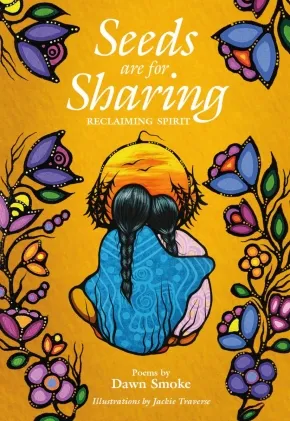
Seeds are for Sharing: Reclaiming Spirit
$20.99
Artists:
Format:
Paperback
Text Content Territories:
Indigenous Canadian; First Nations; Anishinaabeg; Ojibway; Haudenosaunee (Iroquois); Kanyen'keha:ka (Mohawk);
Reading Level: N/A
ISBN / Barcode: 9781778540592
Synopsis:
Synopsis:
"Never let anything or anyone stop you from following where your Spirit says it belongs. . ."
Spirit exists in everything on Mother Earth. If we are open to it, Spirit may guide us through even the darkest of moments.
In this genre-defying blend of poetry and story, Ojibway and Mohawk Elder Dawn Smoke shares all that lives within her heart, mind, and soul. As a young girl confronted with the anger and pain of being scooped from her birth family, Dawn bravely discovers her truth and a path towards healing. She is unwavering in her honesty, a protector of Mother Earth, and a fierce advocate against the oppression of Indigenous people.
Reclaiming what was taken is not an easy feat, yet in doing so, Dawn illuminates the Spirit all around us. This striking memoir, told in spoken word, speaks to the devastating realities of colonization and radiates with the resilience found within culture and community.
Additional Information
120 pages | 5.50" x 8.00" | Paperback
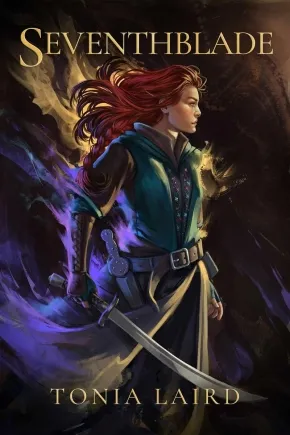
Seventhblade
$24.95
Format:
Paperback
Text Content Territories:
Indigenous;
Reading Level: N/A
ISBN / Barcode: 9781770418073
Synopsis:
Synopsis:
For readers of N.K. Jemisin and Rebecca Roanhorse, a fast-paced, anti-colonial action-adventure fantasy that explores twisted power dynamics and the effects of settler colonialism
After the murder of T’Rayles’s adopted son, the infamous warrior and daughter of the Indigenous Ibinnas returns to the colonized city of Seventhblade, ready to tear the streets asunder in search of her son’s killer. T’Rayles must lean into the dangerous power of her inherited sword and ally herself with questionable forces, including the Broken Fangs, an alliance her mother founded, now fallen into greed and corruption, and the immortal Elraiche, a powerful and manipulative deity exiled from a faraway land. Navigating the power shifts in a colonized city on the edge and contending with a deadly new power emerging from within, T’Rayles must risk everything to find the answers, and the justice, she so desperately desires.
Loaded with complex characters and intricately staged action, and set in a fragmented, fascinating world of dangerous magics and cryptic gods, Seventhblade is a masterful new fantasy adventure from a bright, emerging Indigenous voice.
Reviews
“Tonia [Laird] is a powerhouse.” — Katherena Vermette, award-winning author of The Break and The Strangers
“Tonia Laird tells a gripping story of grief, magic, and revenge while exploring the impact of generational trauma on a colonized people. At times brutal, nuanced, and compassionate, Laird writes with confidence and gives us a fantastic hero in T’Rayles.” — Trick Weekes, author of The Palace Job
“At its core, Seventhblade is a story of a mother’s love, her need for justice, and the discovery of her roots. Drawing on her Indigenous heritage, Tonia Laird weaves the tale of T’Rayles, a half-soul with a mysterious past, set in a world where gods roam freely. Deftly written with intricate worldbuilding and vivid characters, Seventhblade is fantasy at its finest ... and I need a sequel!” — Allison Pang, writer of the Abby Sinclair urban fantasy series
Additional Information
376 pages | 5.50" x 8.50" | Paperback
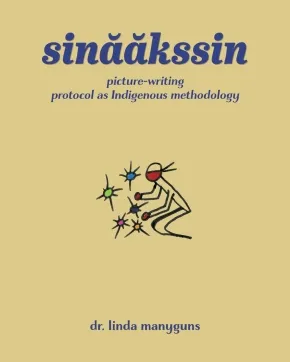
sinaakssin: picture-writing protocol as Indigenous methodology
$65.20
Text Content Territories:
Indigenous Canadian; First Nations; Blackfoot Confederacy (Siksikaitsitapi); Siksika (Blackfoot);
Reading Level: N/A
ISBN / Barcode: 9781038340313
Synopsis:
Synopsis:
sinăăkssin is grounded in cultural practice and insists on writing about research from an Indigenous perspective, focusing on the theme of Indigenous communication methods and emphasizing that culture is alive and capable of influencing research in a good way.
active applications are guided by traditional protocol and informed by symbolic methodologies from the old ways, animating and disrupting the research process to open a respectful bridge that enables the Okaki otapi'ksi to modify the housing crisis depicted in storied form. the symbolic/storied housing replication challenges the tenets of research by creating unique, culturally informed housing models designed to promote building strong families.
critical to the application of Indigenous research methodologies process, Indigenous communications methods are a significant, forgotten part of Indigenous knowledge that has not been explored as an Indigenous research method. Using Indigenous symbols as communication tools for research and applying Indigenous protocols bring people respectfully together. that respect enables the contribution of ancient knowledges to correct the current misalignment in society with Indigenous ways of living.
sinăăkssin is a purposive application of humility and humbleness. written in lowercase, it resists conforming to colonial forms of writing and helps distinguish authentic Indigenous knowledge. this book's perspective is relevant to each Indigenous studies courses or teachings about Indigenous cultures, demonstrating the marvelous opportunities we can develop by using some of the oldest communication tools to juxtaposition Indigenous and non-indigenous interfaces.
Additional Information
Paperback
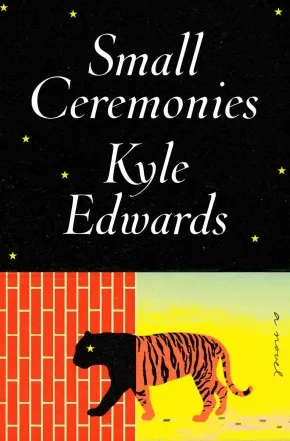
Small Ceremonies: A Novel
$32.00
Format:
Hardcover
Text Content Territories:
Indigenous Canadian;
Reading Level: N/A
ISBN / Barcode: 9780771025617
Synopsis:
Synopsis:
Part coming-of-age novel, part searing examination of a community finding itself, Small Ceremonies is a tantalizing and heartbreaking debut.
“I fear for our friendship, for the day it will end, wondering when that day will be . . .”
Tomahawk Shields (a.k.a. Tommy) and Clinton Whiteway are on the cusp of adulthood, imagining a future rife with possibility and greatness. The two friends play for their high school’s poor-performing hockey team, the Tigers, who learn at the start of the new season that the league wants them out. Their annual goal is now more important than ever: to win their first game in years and break the curse.
As we follow these two Indigenous boys over the course of a year, we are given a panoptic view of Tommy and Clinton’s Winnipeg, where a university student with grand ambitions chooses to bottle her anger when confronted with numerous micro- (and not so micro-) aggressions; an ex-convict must choose between protecting or exploiting his younger brother as he’s dragged deeper into the city’s criminal underbelly; a lonely rink attendant is haunted by the memory of a past lover and contemplates rekindling this old flame; and an aspiring journalist does everything she can to uncover why the league is threatening to remove the Tigers. These are a sampling of the chorus of voices that depicts a community filled with individuals searching for purpose, leading them all to one fateful and tragic night.
Ferociously piercing the heart of an Indigenous city, Kyle Edwards's sparkling debut is a heartbreaking yet humour-flecked portrayal of navigating identity and place, trauma and recovery, and growing up in a land that doesn't love you.
Awards
- 2025 Governor General's Literary Award for Fiction
Reviews
“The geographical and familial landscape of the ironically named Whiteway clan yields a subtle and fascinating portrait of growing up Native in Manitoba. The understatement underscores the intensity and contradictions of outgrowing your home and self. This is a truly fine novel.”—Percival Everett, author of James
“Small Ceremonies dropped my jaw with the glittering precision of its detail, and the life-affirming humanity of its characters. Kyle Edwards knows this world of frozen hockey rinks and fishing shacks just as intimately as he knows the warm and broken hearts of this Winnipeg community that he writes about. I haven’t been this excited about a debut in years.”—Michael Christie, author of Greenwood
"Small Ceremonies flattens the grass for us all. A power play of wit, grit, and generational spirit, phenom Kyle Edwards has you rooting for the Tigers when few will. With its scars, scores, and hard-won triumphs, this polyphony of neechies carries us through overtime into glory. A dignified, accomplished, and suave figure-eight of a novel."—Cody Caetano, author of Half-Bads in White Regalia
"In this compelling, multi-voiced first novel, Kyle Edwards carries us north to the landscape of Winnipeg, Manitoba, and into the geography of youth itself. This book—bracing, kaleidoscopic—made me relive those gritty, tender, fragile years before you are fully grown, when you still believe you can do both—stay rooted and fly free."—Danzy Senna, author of Caucasia and Colored Television
"Such a chorus of compelling voices here! I would find myself growing attached to one character only to find the next equally engaging. Edwards is, at once, bracingly honest about and deeply tender towards everyone in this novel. A stunning debut."—Aimee Bender, author of The Butterfly Lampshade
Additional Information
368 pages | 5.50" x 8.25" | Hardcover
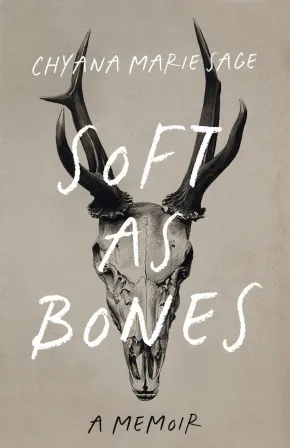
Soft as Bones: A Memoir
$26.99
Format:
Paperback
Text Content Territories:
Indigenous Canadian; Métis; First Nations; Cree (Nehiyawak);
Reading Level: N/A
ISBN / Barcode: 9781487013028
Synopsis:
Synopsis:
A poetic memoir as intricately woven as a dreamcatcher about overcoming the pain of generational trauma with the power of traditional healing.
In her deeply affecting memoir, Soft as Bones, Chyana Marie Sage shares the pain of growing up with her father: a crack dealer who went to prison for molesting her older sister. She details the shame and guilt she carried for years after her family's trauma as she went from one dysfunctional relationship to another, from one illegal drug to another. In revisiting her family's history and weaving in the perspectives of her mother and sisters, Chyana examines the legacy of generational abuse, which began with her father's father, who was forcibly removed from his family by the residential schools and Sixties Scoops programs.Yet hers is also a story of hope, as it was the traditions of her people that saved her life. In candid, incisive, and delicate prose, Chyana braids personal narrative with Cree stories and ceremonies, all as a means of healing one small piece of the mosaic that makes up the dark past of colonialism shared by Indigenous people throughout Turtle Island.
Reviews
"Chyana Marie Sage's writing is a gift that gleams with all of its teeth and skin and soft parts of the earth ... A stunning new voice that pushes the boundaries of form, whose stories swirl across time like sweetgrass braids, like tendrils of smoke." — Kinsale Drake, author of The Sky Was Once a Dark Blanket
"A searing, poetic memoir filled with resilience and strength ... for anyone on a journey of reconciling the pain of the past with the hopes for the next generations." — Dallas Goldtooth, writer, actor, and community organizer
"Chyana Marie Sage writes with an unflinching emotional clarity, lyrical prose, and a wisdom well beyond her years." — Tanya Talaga, author of The Knowing
"Soft as Bones moves like a river across vast territories of recovery and reckoning: it moves powerfully and runs deep, with prose that carries many worlds on its shoulders ... Chyana Marie Sage is a truth-teller, and she has given us an incredible gift." — Leslie Jamison, author of Splinters
Additional Information
296 pages | 5.50" x 8.50" | Paperback

Something for the Dark
$19.95
Format:
Paperback
Text Content Territories:
Indigenous Canadian; First Nations; Cree (Nehiyawak);
Reading Level: N/A
ISBN / Barcode: 9781779400888
Synopsis:
Synopsis:
Something for the Dark centres Indigenous knowledge to probe the limits of what we know, confront the unknown, and reckon with our place in the world.
Randy Lundy’s newest collection of poetry—the final in a trilogy that began with Blackbird Song and continued with Field Notes for the Self—turns the poem to our relationships with the land, animals, and people, showing how our failures to see and live by the personhood of all other beings in the world, human and non-, leads inevitably to heartbreak.
As Lundy’s poems accumulate like snow on cedar, his recounting of experiences that transcend language invites the reader to bend their understanding and notice what was once unseen—how a red-winged blackbird clings to a swaying reed, how mist rises after rainfall, how dogs keen and howl, how fingers taste bitter after lighting sage, how hunger smarts, how liquor burns, and how the pain survivors carry is not merely their own.
Reviews
“Such longing! ‘These days I wrestle no angels. I wrestle / with words. And no one is saved.’ writes Randy Lundy. In Something for the Dark, he presents tâpwêwina—truths drawn from the hand dealt and the life lived. ‘Nothing is hidden,’ he suggests, if we take the time to observe from a distance and wait in silence.” — Rita Bouvier, author of a beautiful rebellion
Additional Information
96 pages | 5.51" x 8.50" | Paperback
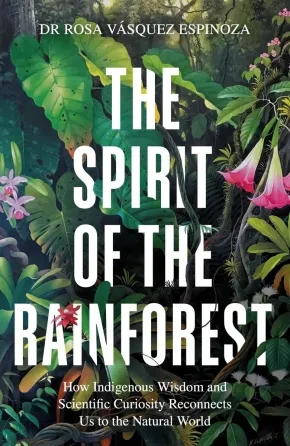
Spirit of the Rainforest: How Indigenous Wisdom and Scientific Curiosity Reconnects Us to the Natural World
$34.99
Format:
Hardcover
Text Content Territories:
Indigenous South American;
Reading Level: N/A
ISBN / Barcode: 9781856755566
Synopsis:
Synopsis:
A competing title to the bestselling Braiding Sweetgrass - a fascinating insight into the Amazon rainforest from scientist and peruivan-born explorer Dr Rosa Espinoza.
Before you step into the jungle, there are a few things you need to know...
Join scientist Dr Rosa Vasquez Espinoza as she uncovers one of the most unexplored regions on the planet.
Dr Rosa is no stranger to the Amazon. Growing up with the rainforest as her back garden, she learnt the lessons of the rainforest from her grandmother, a native healer in natural medicine. She went on to pursue a classical education in science, gaining a PhD in the US, but has always been pulled back to the heart of the Amazon. As a leading biologist in her field, Rosa continues to explore the region through a unique blend of scientific inquiry and ancient insight.
In this debut, you'll learn about Dr Rosa's journeys in the Amazon: her treacherous encounters with a boiling river, her conservation work with stingless bees, her experience of taking ayahuasca as a natural psychedelic - and all the amazing biodiversity of the rainforest.
At the heart of Rosa's expedition is her passion to combine science with the indigenous knowledge of the Amazon. She shares her experience of learning from the indigenous communities that she visits, and shows what they have to teach us - stretching beyond the realm scientific knowledge. Here Rosa learns the most important lessons in how to reconnect to the natural world - and, in turn, will teach us to do the same.
In this book, Rosa celebrates the richness of Amazonian culture, the wonders of biodiversity, and the enduring spiritual connections between humanity and the natural world.
Additional Information
336 pages | 6.45" x 9.65" | Hardcover
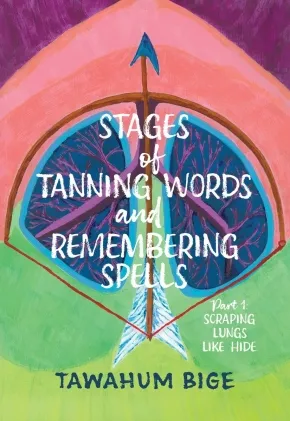
Stages of Tanning Words and Remembering Spells: Part 1: Scraping Lungs Like Hide
$19.95
Format:
Paperback
Text Content Territories:
Indigenous Canadian; First Nations; Dene; Denesuline (Chipewyan); Lutsel K'e Dene First Nation ;
Reading Level: N/A
ISBN / Barcode: 9780889714601
Synopsis:
Synopsis:
In their second poetry collection, Tawahum Bige explores belonging and voice of a Two-Spirit Dene youth.
These poems are a stark plunge—an answer to how voice emerges for a young Two Spirit growing up in so-called “Surrey, BC,” far from his Łutselk'e Dene territories. The fundamental thrum in which vocal cords produce sound to whisper, cry, holler and laugh—these inner workings are made corporeal through moments of growth from childhood to young adulthood to show how the seeds sprouted for someone who needed to learn to express to find their path.
Additional Information
96 pages | 5.50" x 8.00" | 25 colour and b&w photographs | Paperback
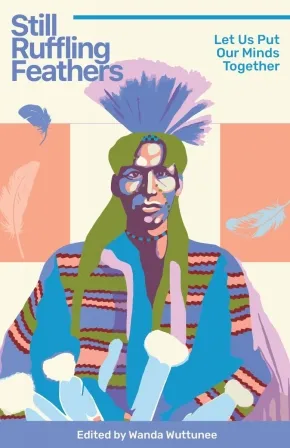
Still Ruffling Feathers: Let Us Put Our Minds Together
$24.95
Format:
Paperback
Text Content Territories:
Indigenous Canadian; First Nations; Cree (Nehiyawak); Plains Cree; Red Pheasant Cree Nation;
Reading Level: N/A
ISBN / Barcode: 9781772841183
Synopsis:
Synopsis:
Revisiting the political activism of WIC Wuttunee
William (Bill) Wuttunee was a trailblazing lawyer, a courageous native rights activist; and one of the architects of the process for the Truth and Reconciliation Commission. His 1971 book, Ruffled Feathers: Indians in Canadian Society, decried conditions on reserves and pressed for integration-on Indigenous peoples' own terms-supporting many of the aims of the Trudeau government's 1969 "White Paper." Though controversial at the time, Wuttunee's arguments were rooted in a foundational belief in the strengths of his people and a steadfast rejection of victimhood. In the fifty years that have followed its publication, Ruffled Feathers has been largely forgotten, though ideas that Wuttunee put forth-ending the Indian Act and the reserve system-continue to find space within contemporary Canadian political discourse.
In this volume, editor Wanda Wuttunee gathers a diverse cohort of scholars to engage with her father's ideas and offer their own perspectives on the opportunities and challenges facing Indigenous peoples in Canada, then and now. Favouring discourse over conclusions, Still Ruffling Feathers leads the reader to a nuanced understanding of the ongoing conversations and unresolved issues stemming from the Indian Act and invites us to envision miyo-pimâtisiwin, "the good life."
Reviews"
"Still Ruffling Feathers explores an important area of modern history on Indigenous leadership. The thoughts and ideas expressed by William Wuttunee still have resonance today." - Dr. Brian Caillou, University of Calgary
Educator Information
Table of Contents
Brotherhood by William I.C. Wuttunee
Acknowledgements
Contributors
Introduction by Wakchan (Wanda Wuttunee), Red Pheasant Cree Nation, Saskatchewan
Chapter 1. Reflections on a Legacy--An Eagle Eye Perspective by Wakchan (Wanda Wuttunee), Red Pheasant Cree Nation, Saskatchewan
Chapter 2. Still Ruffling Feathers Too--More than 50 Years Later by Makookins (Xakiji (Chief) Lee Crowchild), Tsuut'ina Nation, Alberta
Chapter 3. William Wuttunee--Ruffling Feathers in "Indian" Time and Space by Thohahoken (Michael Doxtater), Mohawk Turtle Clan Family of Satekariwate, Ontario
Chapter 4. Learning to Straighten Our Ruffled Feathers: An Education by Askîy Pihêsiw (Robert Falcon Ouelette), Red Pheasant Cree Nation, Saskatchewan
Chapter 5. Ruffled Feathers: A Critical Assessment by Bush Doctor (Peter Kulchyski), Bissett, Manitoba
Chapter 6. Final Thoughts--Debating Our Future, Coming to One Mind by David Newhouse, Onandaga, Six Nations of the Grand River, Ontario.
Appendix A: Excerpts from Ruffled Feathers (1971) by William I.C. Wuttunee
Appendix B. Selected Poetry of William I. C. Wuttunee
Appendix C. Discussion Questions Bibliography
Additional Information
204 pages | 5.50" x 8.50" | Paperback
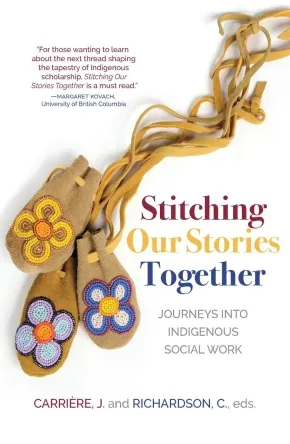
Stitching Our Stories Together: Journeys into Indigenous Social Work
$34.95
Editors:
Format:
Paperback
Text Content Territories:
Indigenous Canadian;
Reading Level: N/A
ISBN / Barcode: 9781779400574
Synopsis:
Synopsis:
A collection of graduate research by Indigenous social work scholars.
Stitching Our Stories Together showcases emerging scholars who, by centering their own nations, communities, and individual realities, demonstrate how Indigenous knowledges can challenge settler ideas and myths around pan-Indigeneity.
This collection is bookended with reflections from the scholars’ thesis supervisors, who describe their philosophy of mentoring and supporting students through an Indigenous lens, and how their pedagogies embrace the significance of relationality in Indigenous worldviews.
Stitching Our Stories Together points toward a future where Indigenous ways of knowing and being take their rightful place in spaces of higher learning and social work practice—a necessary intervention in a discipline that has historically been complicit in colonialist harm.
Reviews
“For those wanting to learn about the next thread shaping the tapestry of Indigenous scholarship, Stitching Our Stories Together is a must read.” —Margaret Kovach, University of British Columbia
“These teachings of Indigenous ways of knowing and being, written by Indigenous graduate students who share their ideas, stories, and life experiences, open the door for new ways of doing within academia, within social work practice, and within broader society.” —Dr. Sheri M. McConnell, Memorial University
“The profound and transformative impact of Indigenous senior scholars uplifting Indigenous graduate students pursuing thesis research is truly remarkable...The intergenerational exchange of knowledge and support creates a powerful legacy, ensuring that the voices and perspectives of Indigenous scholars continue to flourish and inspire future generations.” —Dr. Amanda LaVallee
Educator Information
Table of Contents
Acknowledgements xi
Introduction by Catherine Richardson and Jeannine Carrièrexiii
1. Supervision and Mentoring: Beyond the Destination 1
Jeannine Carrière and Catherine Richardson
PART ONE. EMBEDDING CHILD WELFARE RESEARCH INTO INDIGENOUS METHODOLOGIES
2. Researching Culturally Informed Approaches: Supporting Indigenous Youth Aging Out of Ministry Care 25
Robert Mahikwa
3. A Métis Grandmother’s Knowledge: Stories of Grandmother Teachings and Métis Child Welfare in British Columbia 45
Shelley Lafrance
4. An Inquiry Into the Stories of Indigenous Fathers and Their Paths Into Fatherhood: A Narrative Analysis Conducted With Kwakwaka’wakw Fathers 71
Tanille Johnston
PART TWO. ARTS-BASED KNOWLEDGES AND PRACTICES
5. centring stories by urban indigiqueers/trans/two-spirit people and indigenous women: on practices of decolonization, collective care, and self-care 91
mel lefebvre
6. Stitching Ourselves Back Together: Urban Indigenous Women’s Experience of Reconnecting with Identity through Beadwork 123
Shawna Bowler
7. Reconstituting Indigenous Identities through Portraiture and Storytelling: Reclaiming Representation for Indigenous Women and Two-Spirit People 145
Juliet Mackie
PART THREE. INDIGENOUS BODIES AND MEANING MAKING
8. Dancing My Way Home: Cultural Reclamation Through the Embodiment of the Michif Language 167
Victoria May
9. Researching Through miyo ohpikinâwasowin (Good Child-Rearing): A Framework for Knowledge Emergence and Transmission 203
Lindsay DuPré
10. Fat Bodies in Space: Explorations of an Alternate Narrative 219
N. Katie Webb
Conclusion by Jeannine Carrière and Catherine Richardson239
Epilogue 253
Contributors 257
Additional Information
336 pages | 6.00" x 9.00" | Paperback
Sort By
Go To
of 129
 Our logo reflects the greater Nation we live within—Turtle Island (North America)—and the strength
and core of the Pacific Northwest Coast peoples—the Cedar Tree, known as the Tree of Life. We are
here to support the building of strong nations and help share Indigenous voices.
Our logo reflects the greater Nation we live within—Turtle Island (North America)—and the strength
and core of the Pacific Northwest Coast peoples—the Cedar Tree, known as the Tree of Life. We are
here to support the building of strong nations and help share Indigenous voices.


