

 Show Advanced Search Options
 Hide Advanced Search Options
Browse Books for Kids
856
-
870
of
2611 Results;
Sort By
Go To
of 175
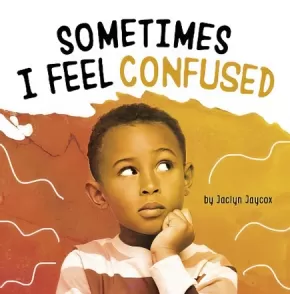
Sometimes I Feel Confused
$10.99
Format:
Paperback
ISBN / Barcode: 9781666326116
Synopsis:
Synopsis:
What does it mean to be confused? Confusion may not make us feel good, but it's an emotion everybody has! Children will learn how to identify when they are confused and ways to manage their feelings. Large, vivid photos help illustrate what confusion looks like. A mindfulness activity will give kids an opportunity to explore their feelings.
Educator & Series Information
Recommended for ages 5 to 8.
This book is part of the Name Your Emotions series.
Additional Information
24 pages | 8.00" x 8.00" | Paperback

Sometimes I Feel Excited
$10.99
Format:
Paperback
ISBN / Barcode: 9781666325874
Synopsis:
Synopsis:
What does it mean to be excited? Everyone feels excited sometimes! Children will learn how to identify when they are excited and ways to manage their feelings. Large, vivid photos help illustrate what excitement looks like. A mindfulness activity will give kids an opportunity to explore their feelings.
Educator & Series Information
Recommended for ages 5 to 8.
This book is part of the Name Your Emotions series.
Additional Information
24 pages | 8.00" x 8.00" | Paperback
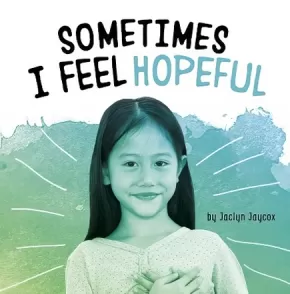
Sometimes I Feel Hopeful
$10.99
Format:
Paperback
ISBN / Barcode: 9781666325959
Synopsis:
Synopsis:
What does it mean to be hopeful? Feeling hopeful is an emotion everybody has! Children will learn how to identify when they are hopeful and ways to manage their feelings. Large, vivid photos help illustrate what hopefulness looks like. A mindfulness activity will give kids an opportunity to explore their feelings.
Educator & Series Information
Recommended for ages 5 to 8.
This book is part of the Name Your Emotions series.
Additional Information
24 pages | 8.00" x 8.00" | Paperback
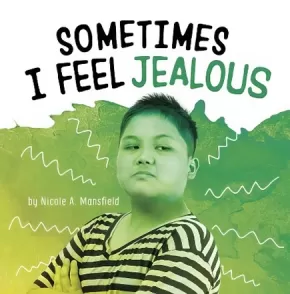
Sometimes I Feel Jealous
$10.99
Format:
Paperback
ISBN / Barcode: 9781666325478
Synopsis:
Synopsis:
What does it mean to be jealous? Jealousy may not make us feel good, but it's an emotion everybody has! Children will learn how to identify when they are jealous and ways to manage their feelings. Large, vivid photos help illustrate what jealousy looks like. A mindfulness activity will give kids an opportunity to explore their feelings.
Educator & Series Information
Recommended for ages 5 to 8.
This book is part of the Name Your Emotions series.
Additional Information
24 pages | 8.00" x 8.00" | Paperback
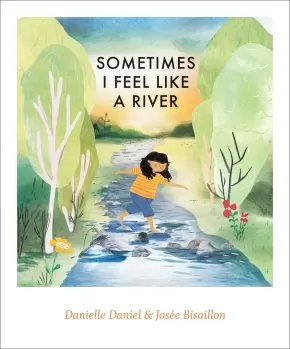


Sometimes I Feel Like a River
$19.99
Artists:
Format:
Hardcover
Text Content Territories:
Indigenous Canadian;
ISBN / Barcode: 9781773066950
Synopsis:
Synopsis:
Following the huge success of Sometimes I Feel Like a Fox, this companion book is a lyrical celebration of our relationship to the natural world.
In each of twelve short poems, a child tells us how or why they feel like the sun, a river, a mountain, a cloud, the rain, a forest and more. Their deeply felt connections and identification with these wonders point to how much we are all part of the natural world. Each poem comes to life through vivid, playful illustrations that show the children immersed in their surroundings. The book serves as a gentle call to action — to notice, appreciate, preserve and protect our environment, while delighting in all its beauty.
A mindfulness activity — A Mindful Walk or Roll — invites young readers to use their senses to experience their surroundings to the fullest. Includes a brief author’s note that highlights our connections to the natural world.
Educator & Series Information Information
Recommended for ages 3 to 6
This book is part of the Sometimes I Feel Like series.
Key Text Features
- author’s note
- illustrations
- poems
- procedural text
Correlates to the Common Core State Standards in English Language Arts:
CCSS.ELA-LITERACY.RL.K.5
Recognize common types of texts (e.g., storybooks, poems).
CCSS.ELA-LITERACY.RL.1.2
Retell stories, including key details, and demonstrate understanding of their central message or lesson.
CCSS.ELA-LITERACY.RL.1.4
Identify words and phrases in stories or poems that suggest feelings or appeal to the senses.
Additional Information
32 pages | 8.25" x 10.00" | Hardcover
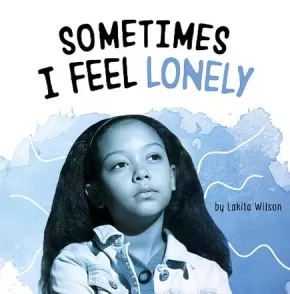
Sometimes I Feel Lonely
$10.99
Format:
Paperback
ISBN / Barcode: 9781666326031
Synopsis:
Synopsis:
What does it mean to be lonely? Loneliness may not make us feel good, but it's an emotion everybody has! Children will learn how to identify when they are lonely and ways to manage their feelings. Large, vivid photos help illustrate what loneliness looks like. A mindfulness activity will give kids an opportunity to explore their feelings.
Educator & Series Information
Recommended for ages 5 to 8.
This book is part of the Name Your Emotions series.
Additional Information
24 pages | 8.00" x 8.00" | Paperback
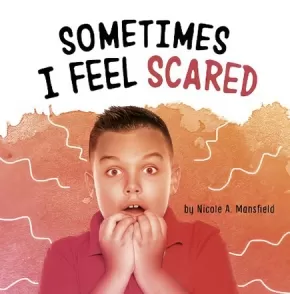
Sometimes I Feel Scared
$10.99
Format:
Paperback
ISBN / Barcode: 9781666326192
Synopsis:
Synopsis:
What does it mean to be scared? Being scared may not make us feel good, but it's an emotion everybody has! Children will learn how to identify when they are scared and ways to manage their feelings. Large, vivid photos help illustrate what being scared looks like. A mindfulness activity will give kids an opportunity to explore their feelings.
Educator & Series Information
Recommended for ages 5 to 8.
This book is part of the Name Your Emotions series.
Additional Information
24 pages | 8.00" x 8.00" | Paperback

Spencer and Gary Help Their Elders
$15.95
Artists:
Text Content Territories:
Indigenous Canadian; Inuit;
ISBN / Barcode: 9781774505816
Synopsis:
Synopsis:
Spencer the Siksik can’t wait for the first snowfall. He is going to build a snow fort with Gary the Snow Goose!
When Spencer’s mom tells him he must first shovel his grandma’s steps, he doesn’t understand why she has to ruin his fun. He just wants to play outside! But when Spencer sees that his grandma and her neighbours can’t leave their houses, he remembers what his mom taught him about taking care of Elders in his community.
Follow along as Spencer learns the importance of one of the eight guiding Inuit Qaujimajatuqangit principles: serving others. Explore more books in the Spencer the Siksik series to see how Spencer and his friend Gary learn about the other principles!
Educator & Series Information
Recommended for ages 6 to 8.
This book is part of a series that teaches children about Inuit Qaujimajatuqangit principles, or "IQ" principles, which are a set of communal laws that focus on the ways one is expected to behave. Inuit Qaujimajatuqangit literally translates to "that which Inuit have always known to be true." This book teaches the IQ principle of serving others.
Additional Information
40 pages | 9.50" x 10.50" | Paperback

Spencer the Siksik Solves a Problem
$14.95
Artists:
Format:
Paperback
Text Content Territories:
Indigenous Canadian; Inuit;
ISBN / Barcode: 9781774505601
Synopsis:
Synopsis:
Spencer is stuck inside on a boring rainy day. As he plays on his tablet, he becomes frustrated trying to hold it upright. He asks his parents for a tablet holder, but they explain that it is not something Spencer needs. He understands, but he still has to find a way to hold the tablet without being uncomfortable. Then, Spencer remembers what his grandmother told him about being innovative and resourceful. What will Spencer create to solve his problem?
Educator & Series Information
Recommended for ages 6 to 8.
This book is part of a series that teaches children Inuit Qaujimajatuqangit principles, or "IQ" principles, which are a set of communal laws that focus on the ways one is expected to behave. Inuit Qaujimajatuqangit literally translates to "that which Inuit have always known to be true." This book teaches children about the Inuit Qaujimajatuqangit principle of qanuqtuurniq, being innovative and resourceful.
This title encourages creativity and using what you have to solve problems.
Additional Information
32 pages | 9.50" x 10.50" | Paperback
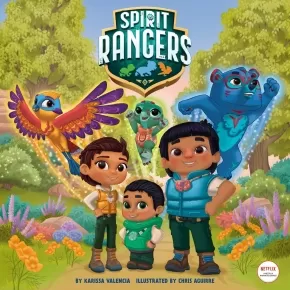
Spirit Rangers
$23.49
Artists:
Format:
Hardcover
Text Content Territories:
Indigenous American; Native American; Chumash; Salish; Coast Salish; Cowlitz;
ISBN / Barcode: 9780593570241
Synopsis:
Synopsis:
A beautifully illustrated hardcover storybook introducing kids to the characters of Netflix’s preschool show Spirit Rangers!
It’s opening day at Xus National Park in Southern California, and Kodi, Summer, and Eddy Skycedar’s first day as Junior Park Rangers! But when a mysterious storm threatens to close the park, the siblings must put their heads together to save the day.
Educator Information
Recommended for ages 3 to 7.
Kids ages 3 to 7 will love this hardcover storybook full of beautiful illustrations featuring the amazing characters from Netflix’s newest preschool show Spirit Rangers!
Created by Samala Chumash descendent, Karissa Valencia, Spirit Rangers is a fantasy-adventure preschool series following Native American sibling trio Kodiak, Summer and Eddy Skycedar, who have a shared secret—they’re Spirit Rangers! Spirit Rangers protect every crook, cranny and critter of Spirit Park. With the blessing of the Chumash and Cowlitz tribes, we’ll join the Skycedar kids on their amazing adventures with spirits inspired by Indigenous stories.
Additional Information
32 pages | 10.30" x 10.30" | Hardcover
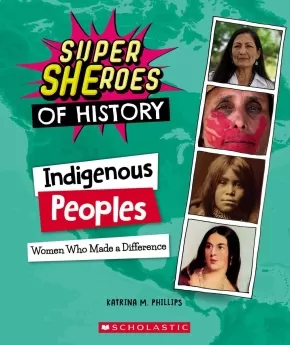
Super SHEroes of History: Women Who Made a Difference (Indigenous Peoples)
$9.99
Format:
Paperback
Text Content Territories:
Indigenous American; Indigenous Canadian;
ISBN / Barcode: 9781338840742
Synopsis:
Synopsis:
Meet the Super SHEroes of History, the women who have shaped history and society since ancient times.
Indigenous women were prominent members of their communities long before Europeans reached North America. When the newcomers arrived, they played a key role in holding their communities together in the face of social turmoil. Some joined male warriors to fight European settlement, while others such as Nanyehi/Nancy Ward argued that the two peoples could coexist peacefully. Indigenous women led political and legal fights to preserve their traditional rights throughout the 20th century and still do so today. Some became active campaigners in numerous causes, especially in the struggle to protect sacred lands from construction. This book tells their stories and describes their vital contributions.
Educator Information
Recommended for ages 8 to 12.
Additional Information
48 pages | 7.12" x 8.37" | Paperback
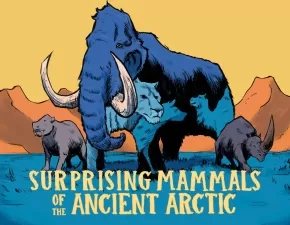
Surprising Mammals of the Ancient Arctic - Nunavummi Reading Series
$22.95
Artists:
Format:
Hardcover
ISBN / Barcode: 9781774505489
Synopsis:
Synopsis:
Explore the ancient Arctic and the incredible creatures that lived there in this fact-filled, colourful read!
What kinds of animals used to live in the Arctic? You might not think of camels, elephants, and lions as Arctic animals, but the ancestors of these animals once roamed the North long ago. As a follow-up to our Ancient Arctic Mammals book, this book features mammals you wouldn’t expect to find in the Arctic. Learn all about these surprising ancient Arctic mammals!
The thrilling and mysterious world of the ancient Arctic is brought to life with dynamic, action-packed illustrations of larger-than-life creatures.
Educator & Series Information
Recommended for ages 7 to 9.
This book is part of the Nunavummi Reading Series, a Nunavut-developed series that supports literacy learning while teaching readers about the people, traditions, and environment of the Canadian Arctic. It is a Level 13 book in the series.
Nunavummi Reading Series books have also been officially levelled using the Fountas & Pinnell Text Level Gradient™ Levelling System. This book's F&P Level is O.
Additional Information
36 pages | 9.00" x 7.00" | Hardcover
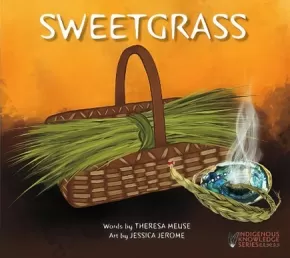
Sweetgrass
$12.95
Artists:
Format:
Paperback
Text Content Territories:
Indigenous Canadian; First Nations; Mi'kmaq;
ISBN / Barcode: 9781771089333
Synopsis:
Synopsis:
A modern story of traditional Indigenous knowledge that follows a young boy and his Auntie as they gather and braid sweetgrass, one of the four sacred medicines.
It's early July, and for Matthew and his Auntie that means one thing: time to go sweetgrass picking. This year, Matthew's younger cousin Warren is coming along, and it will be his first time visiting the shoreline where the sweetgrass grows.
With Auntie's traditional Mi'kmaw knowledge and Matthew's gentle guidance, Warren learns about the many uses for sweetgrass—as traditional medicine, a sacred offering, a smudging ingredient—and the importance of not picking more than he needs. Once the trio is back at Auntie's house, she shows the boys how to clean and braid the grass.
From the duo behind the bestsellers The Gathering and The Sharing Circle, this heartfelt story about the gifts we receive from Mother Earth and how to gather them respectfully offers thoughtful insight into a treasured Mi'kmaw tradition.
Sweetgrass grows in wet meadows, low prairies, and the edges of sloughs and marshes. It grows from Labrador to Alaska, south to New Jersey, Indiana, Iowa, New Mexico, and Arizona. Widely used by North American Indigenous Peoples from many different Nations, it is also considered one of the "four sacred medicines" by many Plains Indians.
Educator & Series Information
Recommended for ages 4 to 7.
This book is part of the Indigenous Knowledge Series.
This book is available in French: Foin d'odeur
Additional Information
32 pages | 9.00" x 8.00" | Paperback

Swift Fox All Along (PB)
$10.99
Format:
Paperback
Text Content Territories:
Indigenous Canadian; First Nations; Mi'kmaq;
ISBN / Barcode: 9781773214474
Synopsis:
Synopsis:
What does it mean to be Mi’kmaq? And if Swift Fox can’t find the answer, will she ever feel like part of her family?
When Swift Fox’s father picks her up to go visit her aunties, uncles, and cousins, her belly is already full of butterflies. And when he tells her that today is the day that she’ll learn how to be Mi’kmaq, the butterflies grow even bigger. Though her father reassures her that Mi’kmaq is who she is from her eyes to her toes, Swift Fox doesn’t understand what that means. Her family welcomes her with smiles and hugs, but when it’s time to smudge and everyone else knows how, Swift Fox feels even more like she doesn’t belong.
Then she meets her cousin Sully and realizes that she’s not the only one who’s unsure—and she may even be the one to teach him something about what being Mi’kmaq means. Based on the author’s own experience, with striking illustrations by Maya McKibbin, Swift Fox All Along is a poignant story about identity and belonging that is at once personal and universally resonant.
Reviews
“A touching and universal narrative . . . This title should definitely be added to any list of recommended children’s books focused on Indigenous life, family, tradition, feelings, anxiety, fear and self-regulation. Swift Fox All Along is also brimming with cross-curricular applications for school use, including incorporation with science, social studies, history, language, and mental health. Highly Recommended.” — CM Reviews
“Highlights the importance of connections to culture and self.” — Kirkus Reviews, 07/28/20
"This is a straightforward tale of a girl finding her way into a culture that is her heritage, yet new to her. As such, it works effectively. This may suit libraries in need of more modern Native picture books with child appeal.” — School Library Journal, 08/20
Educator Information
Recommended for ages 4 to 7.
Own voices: Illustrator Maya McKibbin is a two-spirited Yaqui, Ojibwe and Irish. Author Rebecca Thomas is an award-winning Mi’kmaw poet. The story is deeply personal. Rebecca is of mixed heritage and grew up off-reserve and was 6 years old before she began getting to know her father. Her dad himself attended a residential school and had lost connection with his culture and language. This was something regained later with wider visits to his home community and wanted to share with his children.
Important themes: the Indigenous story is full of universal themes including family, connection, identity and self-acceptance.
This book is available in French: Wowgwis de la tête aux pieds
Additional Information
36 pages | 9.00" x 10.25" | Paperback
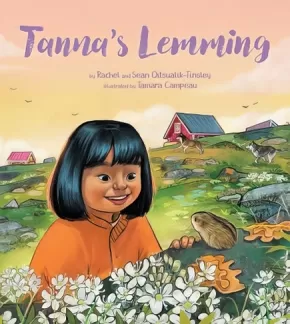
Tanna's Lemming
$18.95
Artists:
Format:
Hardcover
Text Content Territories:
Indigenous Canadian; Inuit;
ISBN / Barcode: 9781772274233
Synopsis:
Synopsis:
“Stories have hearts, just like people. And the heart of this story is true, even if the things said or done have been switched around a bit.”
In this follow-up to the critically acclaimed Tanna’s Owl, Tanna finds a small, grey lemming, far too cute to turn over to the scientist who has sent the children out to gather lemmings for his research. Instead, Tanna deems Fluffi to be a family member and attempts to raise the lemming in her home. But when the lemming strays from its cozy bed behind the stove and into Tanna’s mother’s things, Tanna is forced to consider whether she has really done what is best for Fluffi. Is it possible to treat something poorly by trying to treat it well?
Educator & Series Information
Recommended for ages 6 to 8.
This book is part of the Tanna's Animals series.
Additional Information
32 pages | 9.00" x 10.00" | Hardcover
Sort By
Go To
of 175
 Our logo reflects the greater Nation we live within—Turtle Island (North America)—and the strength
and core of the Pacific Northwest Coast peoples—the Cedar Tree, known as the Tree of Life. We are
here to support the building of strong nations and help share Indigenous voices.
Our logo reflects the greater Nation we live within—Turtle Island (North America)—and the strength
and core of the Pacific Northwest Coast peoples—the Cedar Tree, known as the Tree of Life. We are
here to support the building of strong nations and help share Indigenous voices.


