


Plains Cree
31
-
41
of
41 Results;
Sort By
Go To
of 3
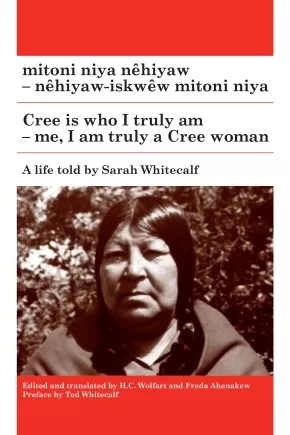


mitoni niya nêhiyaw / Cree is who I truly am: nêhiyaw-iskwêw mitoni niya / me, I am truly a Cree woman
$29.95
Editors:
Format:
Paperback
Text Content Territories:
Indigenous Canadian; First Nations; Cree (Nehiyawak);
Grade Levels: University/College;
ISBN / Barcode: 9780887559426
Synopsis:
Synopsis:
Strong women dominate these reminiscences: the grandmother taught the girl whose mother refused to let her go to school, and the life-changing events they witnessed range from the ravages of the influenza epidemic of 1918–20 and murder committed in a jealous rage to the abduction of a young woman by underground spirits who on her release grant her healing powers.
A highly personal document, these memoirs are altogether exceptional in recounting the thoughts and feelings of a Cree woman as she copes with the challenges of reserve life but also, in a key chapter, with her loneliness while tending a relative’s children in a place far away from home – and, apparently just as debilitating, away from the company of other women. Her experiences and reactions throw fresh light on the lives lived by Plains Cree women on the Canadian prairies over much of the twentieth century.
The late Sarah Whitecalf (1919–1991) spoke Cree exclusively, spending most of her life at Nakiwacîhk / Sweetgrass Reserve on the North Saskatchewan River. This is where Leonard Bloomfield was told his Sacred Stories of the Sweet Grass Cree in 1925 and where a decade later David Mandelbaum apprenticed himself to Kâ-miyokîsihkwêw / Fineday, the step-grandfather in whose family Sarah Whitecalf grew up.
In presenting a Cree woman’s view of her world, the texts in this volume directly reflect the spoken word: Sarah Whitecalf’s memoirs are here printed in Cree exactly as she recorded them, with a close English translation on the facing page. They constitute an autobiography of great personal authority and rare authenticity.
Educator Information
Table of Contents
PART I Becoming a Cree woman
Ch. 1—êkosi nikî-pê-ay-itâcihonân / This has been our way of life
Ch. 2—êkosi nikî-tâs-ôy-ohpikihikawin / This is the way I was raised
Ch. 3—mêh-mêskoc nikî-pimohtahikawin / I was taken back and forth
Ch. 4—miton ê-kî-pê-na-nêhiyaw-ôhpikihikawiyân / I was truly raised as a Cree woman
PART II Being a Cree woman
Ch. 5—êwak ôm ê-kî-ay-itâcimisot awa nikâwiy / This is my mother’s own story
Ch. 6—iyikohk ê-kî-sôhkêpayik anima nipahtâkêwin / So horrible was that murder
Ch. 7—ê-nipahi-kâh-kaskêyihtamân / I was desperately lonesome
Ch. 8—pikw êkwa niya / Now I had to take charge
PART III The spiritual life
Ch. 9—ê-sîkâwîhcikêhk / Observing the mourning ritual
Ch. 10—manitow kâ-matwêhikêt / Where the spirits drum (I)
Ch. 11—manitow kâ-matwêhikêt / Where the spirits drum (II)
Ch. 12—manitow kâ-matwêhikêt / Where the spirits drum (III)
Additional Information
366 pages | 6.50" x 9.75"
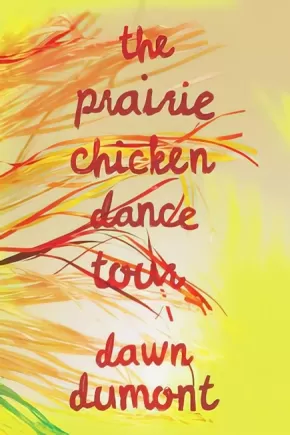
The Prairie Chicken Dance Tour
$24.95
Format:
Paperback
Text Content Territories:
Indigenous Canadian;
Reading Level: N/A
ISBN / Barcode: 9781988298870
Synopsis:
Synopsis:
The hilarious story of an unlikely group of Indigenous dancers who find themselves thrown together on a performance tour of Europe.
The Tour is all prepared. The Prairie Chicken dance troupe is all set for a fifteen-day trek through Europe, performing at festivals and cultural events. But then the performers all come down with the flu. And John Greyeyes, a retired cowboy who hasn't danced in fifteen years, finds himself abruptly thrust into the position of leading a hastily-assembled group of replacement dancers.
A group of expert dancers they are not. There's a middle-aged woman with advanced arthritis, her nineteen-year-old niece who is far more interested in flirtations than pow-wow, and an enigmatic man from the U.S. -- all being chased by Nadine, the organizer of the original tour who is determined to be a part of the action, and the handsome man she picked up in a gas-station bathroom. They're all looking to John, who has never left the continent, to guide them through a world that he knows nothing about. As the gang makes its way from one stop to another, absolutely nothing goes as planned and the tour becomes a string of madcap adventures.
The Prairie Chicken Dance Tour is loosely based -- like, hospital-gown loose -- on the true story of a group of Indigenous dancers who left Saskatchewan and toured through Europe in the 1970s. Dawn Dumont brings her signature razor-sharp wit and impeccable comedic timing to this hilarious, warm, and wildly entertaining novel.
Additional Information
300 pages | 6.00" x 9.00" | Paperback
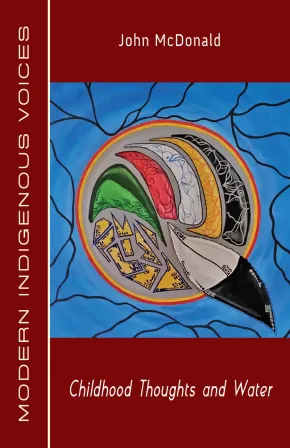
Childhood Thoughts and Water
$16.95
Format:
Paperback
Text Content Territories:
Indigenous Canadian; First Nations; Cree (Nehiyawak); Plains Cree; Muskeg Lake Cree Nation; Métis;
Grade Levels: 12; University/College;
ISBN / Barcode: 9781772311198
Synopsis:
Synopsis:
Childhood Thoughts and Water is a collection of Beat Poetry, Spoken Word, Performance Art and Lyrical Verse. This is a work which journeys into the memories and events of an Urban Indigenous warrior's struggles to reconnect with a language and culture that is seemingly always almost out of reach. The common theme of reconnecting with nature and with water is interspersed with the imagery of childhood recollections and anecdotes about life and love, aspirations and defeats, and the desire to achieve greatness in spite of the obstacles and barriers inherent in a life lived on the fringes, in the shadows and on the streets, in the spotlight and behind the backstage curtain.
Educator & Series Information
This book is part of the Modern Indigenous Voices series.
Additional Information
80 pages | 5.50" x 8.50" | Paperback
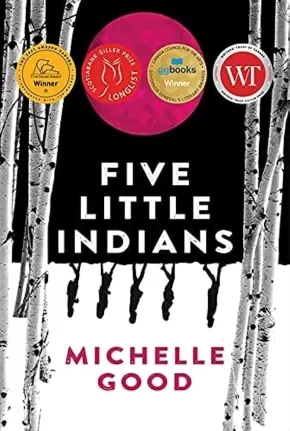
Five Little Indians
$22.99
Format:
Paperback
Text Content Territories:
Indigenous Canadian;
Reading Level: N/A
ISBN / Barcode: 9781443459181
Synopsis:
Synopsis:
Taken from their families when they are very small and sent to a remote, church-run residential school, Kenny, Lucy, Clara, Howie and Maisie are barely out of childhood when they are finally released after years of detention.
Alone and without any skills, support or families, the teens find their way to the seedy and foreign world of Downtown Eastside Vancouver, where they cling together, striving to find a place of safety and belonging in a world that doesn’t want them. The paths of the five friends cross and crisscross over the decades as they struggle to overcome, or at least forget, the trauma they endured during their years at the Mission.
Fuelled by rage and furious with God, Clara finds her way into the dangerous, highly charged world of the American Indian Movement. Maisie internalizes her pain and continually places herself in dangerous situations. Famous for his daring escapes from the school, Kenny can’t stop running and moves restlessly from job to job—through fishing grounds, orchards and logging camps—trying to outrun his memories and his addiction. Lucy finds peace in motherhood and nurtures a secret compulsive disorder as she waits for Kenny to return to the life they once hoped to share together. After almost beating one of his tormentors to death, Howie serves time in prison, then tries once again to re-enter society and begin life anew.
With compassion and insight, Five Little Indians chronicles the desperate quest of these residential school survivors to come to terms with their past and, ultimately, find a way forward.
Awards
- Amazon Canada First Novel Award
- 2020 Governor General's Literary Award for English-language fiction
- 2022 Canada Reads Winner
Educator Information
Winner of the 2018 HarperCollins/UBC Price for Best New Fiction, Michelle Good's Five Little Indians is told from alternating points of view of five former residential school students as they struggle to survive in 1960s Vancouver.
Additional Information
304 pages | 6.00" x 9.00"
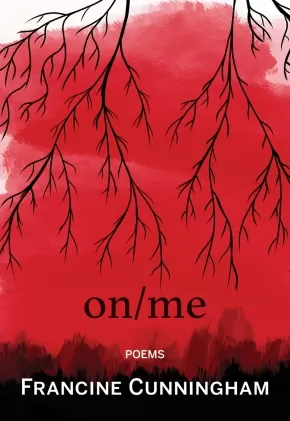
On/Me
$18.00
Format:
Paperback
Text Content Territories:
Indigenous Canadian; First Nations; Cree (Nehiyawak); Plains Cree; Saddle Lake Cree Nation ;
ISBN / Barcode: 9781773860169
Synopsis:
Synopsis:
Francine Cunningham lives with constant reminders that she doesn't fit the desired expectations of the world: she is a white-passing, city-raised Indigenous woman with mental illness who has lost her mother. In her debut poetry collection ON/ME, Cunningham explores, with keen attention and poise, what it means to be forced to exist within the margins. Cunningham does not hold back: she holds a lens to residential schools, intergenerational trauma, Indigenous Peoples forcibly sent to sanatoriums, systemic racism and mental illness, and translates these topics into lived experiences that are nuanced, emotional, funny and heartbreaking all at once. ON/ME is an encyclopedia of Cunningham, who shares some of her most sacred moments with the hope to spark a conversation that needs to be had.
Educator Information
Recommended in the Canadian Indigenous Books for Schools 2020/2021 resource list for grades 8 to 12 in the areas of English Language Arts and Social Studies.
Caution: mature subject matter.
Additional Information
96 pages | 8.00" x 5.50"
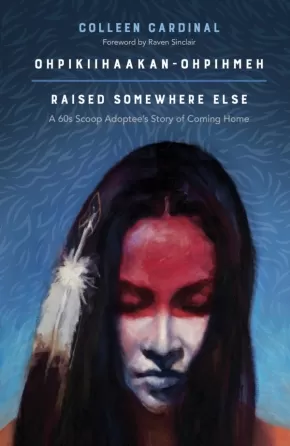
Ohpikiihaakan-ohpihmeh — Raised Somewhere Else: A 60s Scoop Adoptee's Story of Coming Home
$20.00
Format:
Paperback
Text Content Territories:
Indigenous Canadian; First Nations; Cree (Nehiyawak); Plains Cree;
ISBN / Barcode: 9781773630205
Synopsis:
Synopsis:
During the 60s Scoop, over 20,000 Indigenous children in Canada were removed from their biological families, lands and culture and trafficked across provinces, borders and overseas to be raised in non-Indigenous households.
Ohpikiihaakan-ohpihmeh — Raised Somewhere Else delves into the personal and provocative narrative of Colleen Cardinal’s journey growing up in a non- Indigenous household as a 60s Scoop adoptee. Cardinal speaks frankly and intimately about instances of violence and abuse throughout her life, but this book is not a story of tragedy. It is a story of empowerment, reclamation and, ultimately, personal reconciliation. It is a form of Indigenous resistance through truth-telling, a story that informs the narrative on missing and murdered Indigenous women, colonial violence, racism and the Indigenous child welfare system.
Reviews
“With Canadians slowly awakening to the reality of the 60s Scoop and its ongoing repercussions, Cardinal’s inspiring work here is essential reading and will be an integral resource for generations to come.” — Waubgeshig Rice, author of Legacy
“Offers a window through which readers can see why cultural suppression is such a dark chapter in Canada’s history.” — Winnipeg Free Press
“I highly recommend reading this story for anyone interested in learning more about the Sixties Scoop and understanding what’s really happening under the stereotypes put on many Indigenous by those who do not truly understand.” — All Booked
Educator Information
The Canadian Indigenous Books for Schools list recommends this resource for Grades 10-12 for English Language Arts.
Additional Information
214 pages | 6.00" x 9.00" | Foreward by Raven Sinclair
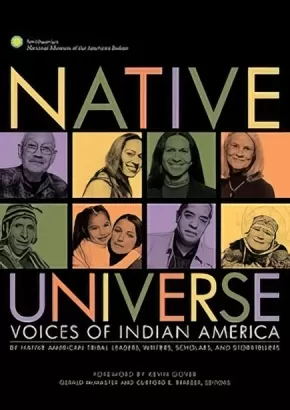
Native Universe: Voices of Indian America
$25.00
Format:
Paperback
Text Content Territories:
Indigenous American; Native American;
ISBN / Barcode: 9781426203350
Synopsis:
Synopsis:
This gorgeous volume draws from the vast archives of the National Museum of the American Indian and the voices of some of the most prominent Native American scholars, writers, activists and tribal leaders. More than 300 full-color illustrations depict the artistry and culture of our hemisphere’s diverse indigenous peoples. With its insightful, firsthand prose, the book is a reminder that the ancient philosophies and folkways are just as valuable and relevant in today’s world as they were generations ago.
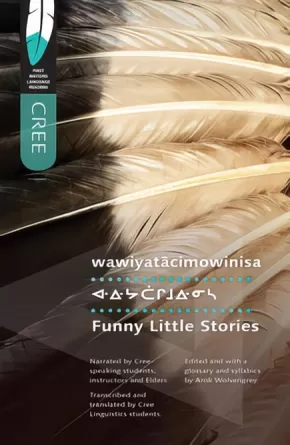
Funny Little Stories / wawiyatacimowinisa (1 in stock, in reprint)
$12.95
Editors:
Format:
Paperback
Text Content Territories:
Indigenous Canadian; First Nations; Cree (Nehiyawak); Plains Cree; Swampy Cree ; Woodland Cree;
ISBN / Barcode: 9780889771857
Synopsis:
Synopsis:
This is the first in a series of readers in the First Nations languages of the prairie provinces meant for language learners and language users. The stories in this volume come from a variety of sources, all being narrated or written by fluent speakers of Cree, whether students or instructors of the Cree language or Elders. Funny Little Stories is a collection of nine stories representing the Plains Cree, Woods Cree, and Swampy Cree dialects, with a pronunciation guide and a Cree-to-English glossary.
Students and Elders come together in this volume to offer samples of three distinct genres of Cree storytelling: word play, humorous accounts of life experiences, and traditional stories about Wisahkecahk, the trickster-hero.
Each story is illustrated and is presented in both Standard Roman Orthography and syllabics, with English translation.
Educator & Series Information
Funny Little Stories is part of the First Nations Language Readers series. With a mix of traditional and new stories, each First Nations Language Reader introduces an Indigenous language and demonstrates how each language is used today. The University of Regina Press’s long-term goal is to publish all 60+ Indigenous languages of Canada.
Additional Information
110 pages | 5.50" x 8.50" | Narrated by Cree-speaking students, instructors, and Elders | Transcribed and Translated by Cree Linguistics Students | Edited and with a glossary and syllabics by Arok Wolvengrey
Authenticity Note: Because of the contribution of Indigenous Peoples, such as Cree-speaking Elders, to this work on Cree storytelling, it has received the Authentic Indigenous Text label.
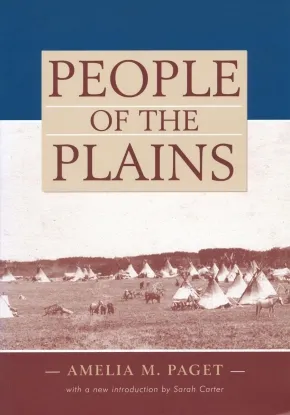
People of the Plains
$14.95
Format:
Paperback
Text Content Territories:
Indigenous Canadian; First Nations; Anishinaabeg; Ojibway; Saulteaux; Cree (Nehiyawak); Plains Cree; Métis;
ISBN / Barcode: 9780889771598
Synopsis:
Synopsis:
Amelia McLean Paget was born in 1867 at Fort Simpson, In what is now the Northwest Territories. Her father, William McLean, was a Scot involved in the fur trade and her mother, Helen Murray, belonged to an illustrious Métis famly which had been active in the fur trade for generations. Amelia's life spanned some of the most tumultuous events in the West, including the disappearance of the buffalo, the North-West Resistance, and the establishment of the reserve system. She had a more sympathetic appreciation of Aboriginal culture than is to found in many of her contemporaries. In People of the Plains (first published in 1909), she records her observations of the customs, beliefs, and lifestyles of the Plains Cree and Saulteaux among whom she lived. She died in Ottawa in 1922.
Additional Information
78 pages | 6.75" x 9.75" | Paperback
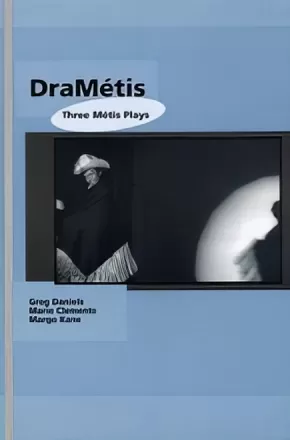
DraMétis: Three Métis Plays
$19.95
Format:
Paperback
Text Content Territories:
Indigenous Canadian; Métis;
ISBN / Barcode: 9780919441941
Synopsis:
Synopsis:
DraMétis is the first anthology to focus on the emerging discipline of Métis drama. The pieces have all been previously produced and highlight the diversity of Métis drama being written and performed in Canada.
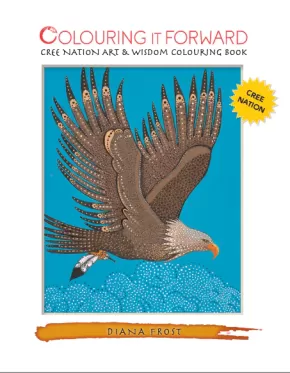
Colouring it Forward - Cree Nation Art & Wisdom Colouring Book - 3rd Edition (2 in stock, Out of Print)
$26.00
Format:
Paperback
Text Content Territories:
Indigenous Canadian; First Nations; Cree (Nehiyawak);
ISBN / Barcode: 18-DF-003-1
Synopsis:
Synopsis:
This is the 3rd Edition of our Cree coloring book with some new coloring sheets for adults and children. Read the wisdom pieces shared by Cree elder John Sinclair which introduce the teachings he received from his forefathers. Colour the beautiful artwork by Cree artists Delree Dumont.
Every book purchased will provide royalties to the artist and elder as well as a donation to Kani Kanichihk, a Cree organization for their cultural revitalization and community work.
Additional Information
118 Pages | 8.5" x 11" | 3rd Edition
Sort By
Go To
of 3
 Our logo reflects the greater Nation we live within—Turtle Island (North America)—and the strength
and core of the Pacific Northwest Coast peoples—the Cedar Tree, known as the Tree of Life. We are
here to support the building of strong nations and help share Indigenous voices.
Our logo reflects the greater Nation we live within—Turtle Island (North America)—and the strength
and core of the Pacific Northwest Coast peoples—the Cedar Tree, known as the Tree of Life. We are
here to support the building of strong nations and help share Indigenous voices.


