


Award-Winning
1
-
15
of
83 Results;
Sort By
Go To
of 6
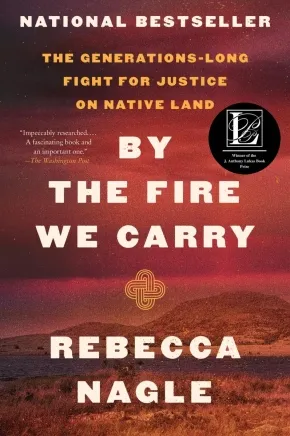

By the Fire We Carry: The Generations-Long Fight for Justice on Native Land (PB)
$24.99
Format:
Paperback
Text Content Territories:
Indigenous American; Native American; Cherokee; Cherokee Nation (Cherokee Nation of Oklahoma);
Reading Level: N/A
ISBN / Barcode: 9780063112056
Synopsis:
Synopsis:
A powerful work of reportage and American history that braids the story of the forced removal of Native Americans onto treaty lands in the nation’s earliest days, and a small-town murder in the ‘90s that led to a Supreme Court ruling reaffirming Native rights to that land over a century later.
Before 2020, American Indian reservations made up roughly 55 million acres of land in the United States. Nearly 200 million acres are reserved for National Forests—in the emergence of this great nation, our government set aside more land for trees than for Indigenous peoples. That changed on July 9, 2020, when a high-profile Supreme Court case—which originated with a small-town murder two decades earlier—affirmed the reservation of Muscogee Nation. The ruling resulted in the largest restoration of tribal land in U.S. history, merely because the Court chose to follow the law.
In the 1830s Muscogee people were rounded by the US military at gunpoint and forced into exile halfway across the continent. At the time, they were promised this new land would be theirs for as long as the grass grew and the waters ran. But that promise was not kept. When Oklahoma was create on top of their land, the new state claimed their reservation no longer existed. Over a century later, when a Muscogee citizen was sentenced to death for murdering another Muscogee citizen, his defense attorneys argued the murder occurred on the reservation of his tribe, and therefore Oklahoma didn’t have the jurisdiction to execute him. Oklahoma argued that reservation no longer existed. In the summer of 2020, the Supreme Court said: no more; a ruling that would ultimately underpin multiple reservations covering half the land in Oklahoma, including Nagle’s own Cherokee Nation.
Here Rebecca Nagle tells the story of the generations-long fight for tribal land and sovereignty in Eastern Oklahoma. By chronicling both the contemporary legal battle and historic acts of Indigenous resistance, By the Fire We Carry stands as a landmark work of American history. The story it tells exposes both the wrongs that our nation has committed in its long history of greed, corruption and lawlessness, and the Native battle for the right to be here that has shaped our country.
Awards
- Winner of the J. Anthony Lukas Book Prize
Reviews
“Part legal page-turner, part her own compelling family saga, and part eloquent lament for the horrific way our nation has treated Native Americans over the centuries, Rebecca Nagle’s By the Fire We Carry has also given us something exceedingly rare—a story about Native Americans in the Supreme Court in which the good guys actually win.” — Adam Cohen, author of Supreme Inequality
“Nagle gracefully carries readers back and forth through time, explaining the history of the Five Tribes before and after the Trail of Tears, the evolution of U.S. policy toward Native Americans, and the unique peculiarities of Indian law…. She is just as careful to elucidate the technicalities of court procedure, helping readers understand how a death-row appeal on jurisdictional grounds led to `the largest restoration of Indigenous land in US history.’ The legal arcana are dense, but Nagle’s writing is not. With restrained passion she exposes one injustice after another…. Gripping, infuriating, and illuminating—a valuable corrective to our national ignorance.” — Kirkus, starred review
Educator Information
By the Fire We Carry is hard-hitting American history that expands on the nation's story. It tells of the treatment of Native Americans, their removal and displacement, and the genocide committed against them by the US government from their viewpoint.
Additional Information
352 pages | 5.31" x 8" | Paperback
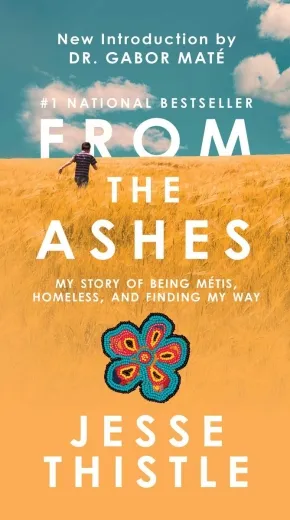

From the Ashes: My Story of Being Métis, Homeless, and Finding My Way (PB)
$13.99
Format:
Paperback
Text Content Territories:
Indigenous Canadian; First Nations; Cree (Nehiyawak); Métis;
Reading Level: N/A
ISBN / Barcode: 9781668213728
Synopsis:
Synopsis:
In this extraordinary and inspiring debut memoir, Jesse Thistle, once a high school dropout and now a rising Indigenous scholar, chronicles his life on the streets and how he overcame trauma and addiction to discover the truth about who he is.
If I can just make it to the next minute... then I might have a chance to live; I might have a chance to be something more than just a struggling crackhead.
From the Ashes is a remarkable memoir about hope and resilience, and a revelatory look into the life of a Métis-Cree man who refused to give up.
Abandoned by his parents as a toddler, Jesse Thistle briefly found himself in the foster-care system with his two brothers, cut off from all they had known. Eventually the children landed in the home of their paternal grandparents, but their tough-love attitudes meant conflicts became commonplace. And the ghost of Jesse’s drug-addicted father haunted the halls of the house and the memories of every family member. Struggling, Jesse succumbed to a self-destructive cycle of drug and alcohol addiction and petty crime, spending more than a decade on and off the streets, often homeless. One day, he finally realized he would die unless he turned his life around.
In this heartwarming and heartbreaking memoir, Jesse Thistle writes honestly and fearlessly about his painful experiences with abuse, uncovering the truth about his parents, and how he found his way back into the circle of his Indigenous culture and family through education.
An eloquent exploration of what it means to live in a world surrounded by prejudice and racism and to be cast adrift, From the Ashes is, in the end, about how love and support can help one find happiness despite the odds.
Awards
- 2020 Indigenous Voices Awards Winner for Published Prose in English
- Winner, Kobo Emerging Writer Prize Nonfiction
- Winner, High Plains Book Awards
- An Indigo Book of the Year
Reviews
“From the Ashes hits you like a punch in the gut. It’s an unflinching, heartrending and beautifully written story of survival against seemingly impossible odds. But it’s also a book that should make you furious. Thistle paints a vivid portrait of a country seemingly incapable of doing right by Indigenous youth or by those struggling with homelessness, addiction and intergenerational trauma. That he survived to tell this story is truly a miracle. Still, one question haunts me after finishing this powerful and devastating book: How do we ensure that the next generation isn’t forced to navigate a broken system that takes their lives for granted and fails them at every turn? My greatest hope, then, is that From the Ashes will be the wakeup call Canada needs.” — IAN MOSBY, historian and author of Food Will Win the War
Educator Information
Caution: Deals with mature subject matter.
Additional Information
368 pages | 6.00" x 9.00"
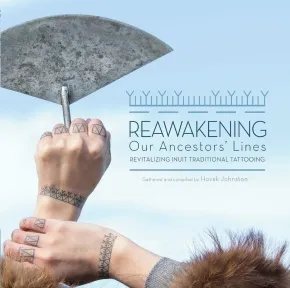
Reawakening Our Ancestors' Lines: Revitalizing Inuit Traditional Tattooing (PB)
$24.95
Format:
Paperback
Text Content Territories:
Indigenous Canadian; Inuit;
Reading Level: N/A
ISBN / Barcode: 9781772275698
Synopsis:
Synopsis:
For thousands of years, Inuit practiced the traditional art of tattooing. Created the ancient way, with bone needles and caribou sinew soaked in seal oil, sod, or soot, these tattoos were an important tradition for many Inuit women, symbols etched on their skin that connected them to their families and communities. But with the rise of missionaries and residential schools in the North, the tradition of tattooing was almost lost. In 2005, when Angela Hovak Johnston heard that the last Inuk woman tattooed in the old way had died, she set out to tattoo herself in tribute to this ancient custom and learn how to tattoo others. What was at first a personal quest became a project to bring the art of traditional tattooing back to Inuit women across Nunavut, starting with Johnston’s home community of Kugluktuk. Collected in this beautiful book are moving photos and stories from more than two dozen women who participated in Johnston’s project. Together, these women have united to bring to life an ancient tradition, reawakening their ancestors’ lines and sharing this knowledge with future generations.
Awards
- 2018 NorthWords Book Prize Winner
Reviews
"This gorgeous photographic essay on the Inuit Tattoo Revitalization Project is a deeply personal and affirming work about learning and preserving traditions-and reclaiming what residential schools tried to destroy."-School Library Journal
Additional Information
72 pages | 10.00" x 10.00" | Paperback
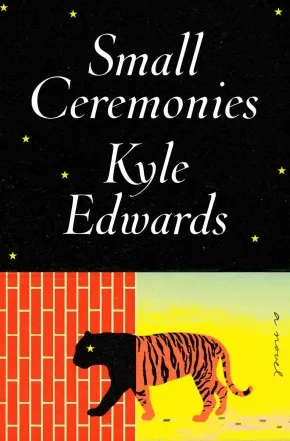
Small Ceremonies: A Novel
$32.00
Format:
Hardcover
Text Content Territories:
Indigenous Canadian;
Reading Level: N/A
ISBN / Barcode: 9780771025617
Synopsis:
Synopsis:
Part coming-of-age novel, part searing examination of a community finding itself, Small Ceremonies is a tantalizing and heartbreaking debut.
“I fear for our friendship, for the day it will end, wondering when that day will be . . .”
Tomahawk Shields (a.k.a. Tommy) and Clinton Whiteway are on the cusp of adulthood, imagining a future rife with possibility and greatness. The two friends play for their high school’s poor-performing hockey team, the Tigers, who learn at the start of the new season that the league wants them out. Their annual goal is now more important than ever: to win their first game in years and break the curse.
As we follow these two Indigenous boys over the course of a year, we are given a panoptic view of Tommy and Clinton’s Winnipeg, where a university student with grand ambitions chooses to bottle her anger when confronted with numerous micro- (and not so micro-) aggressions; an ex-convict must choose between protecting or exploiting his younger brother as he’s dragged deeper into the city’s criminal underbelly; a lonely rink attendant is haunted by the memory of a past lover and contemplates rekindling this old flame; and an aspiring journalist does everything she can to uncover why the league is threatening to remove the Tigers. These are a sampling of the chorus of voices that depicts a community filled with individuals searching for purpose, leading them all to one fateful and tragic night.
Ferociously piercing the heart of an Indigenous city, Kyle Edwards's sparkling debut is a heartbreaking yet humour-flecked portrayal of navigating identity and place, trauma and recovery, and growing up in a land that doesn't love you.
Awards
- 2025 Governor General's Literary Award for Fiction
Reviews
“The geographical and familial landscape of the ironically named Whiteway clan yields a subtle and fascinating portrait of growing up Native in Manitoba. The understatement underscores the intensity and contradictions of outgrowing your home and self. This is a truly fine novel.”—Percival Everett, author of James
“Small Ceremonies dropped my jaw with the glittering precision of its detail, and the life-affirming humanity of its characters. Kyle Edwards knows this world of frozen hockey rinks and fishing shacks just as intimately as he knows the warm and broken hearts of this Winnipeg community that he writes about. I haven’t been this excited about a debut in years.”—Michael Christie, author of Greenwood
"Small Ceremonies flattens the grass for us all. A power play of wit, grit, and generational spirit, phenom Kyle Edwards has you rooting for the Tigers when few will. With its scars, scores, and hard-won triumphs, this polyphony of neechies carries us through overtime into glory. A dignified, accomplished, and suave figure-eight of a novel."—Cody Caetano, author of Half-Bads in White Regalia
"In this compelling, multi-voiced first novel, Kyle Edwards carries us north to the landscape of Winnipeg, Manitoba, and into the geography of youth itself. This book—bracing, kaleidoscopic—made me relive those gritty, tender, fragile years before you are fully grown, when you still believe you can do both—stay rooted and fly free."—Danzy Senna, author of Caucasia and Colored Television
"Such a chorus of compelling voices here! I would find myself growing attached to one character only to find the next equally engaging. Edwards is, at once, bracingly honest about and deeply tender towards everyone in this novel. A stunning debut."—Aimee Bender, author of The Butterfly Lampshade
Additional Information
368 pages | 5.50" x 8.25" | Hardcover
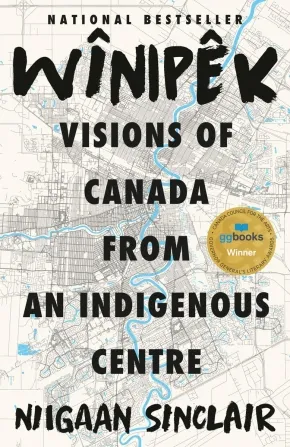
Wînipêk: Visions of Canada from an Indigenous Centre (PB)
$24.00
Format:
Paperback
Text Content Territories:
Indigenous Canadian; First Nations; Anishinaabeg;
Reading Level: N/A
ISBN / Barcode: 9780771099199
Synopsis:
Synopsis:
From ground zero of this country's most important project: reconciliation
Niigaan Sinclair has been called provocative, revolutionary, and one of this country's most influential thinkers on the issues impacting Indigenous cultures, communities, and reconciliation in Canada. In his debut collection of stories, observations, and thoughts about Winnipeg, the place he calls "ground zero" of Canada's future, read about the complex history and contributions of this place alongside the radical solutions to injustice and violence found here, presenting solutions for a country that has forgotten principles of treaty and inclusivity. It is here, in the place where Canada began—where the land, water, people, and animals meet— that a path "from the centre" is happening for all to see.
At a crucial and fragile moment in Canada's long history with Indigenous peoples, one of our most essential writers begins at the centre, capturing a web spanning centuries of community, art, and resistance.
Based on years' worth of columns, Niigaan Sinclair delivers a defining essay collection on the resilience of Indigenous peoples. Here, we meet the creators, leaders, and everyday people preserving the beauty of their heritage one day at a time. But we also meet the ugliest side of colonialism, the Indian Act, and the communities who suffer most from its atrocities.
Sinclair uses the story of Winnipeg to illuminate the reality of Indigenous life all over what is called Canada. This is a book that demands change and celebrates those fighting for it, that reminds us of what must be reconciled and holds accountable those who must do the work. It's a book that reminds us of the power that comes from loving a place, even as that place is violently taken away from you, and the magic of fighting your way back to it.
Awards
- Winner of the 2024 Governor General's Literary Award for Nonfiction.
Additional Information
384 pages | 5.14" x 7.92" | b&w photos throughout | Paperback

Becoming a Matriarch (PB)
$23.00
Format:
Paperback
Text Content Territories:
Indigenous Canadian; First Nations; Dene; Dane-zaa (Dunne-za);
Reading Level: N/A
ISBN / Barcode: 9780385697798
Synopsis:
Synopsis:
When matriarchs begin to disappear, there is a choice to either step into the places they left behind, or to craft a new space.
Helen Knott’s bestselling debut memoir, In My Own Moccasins, wowed reviewers, award juries, and readers alike with its profoundly honest and moving account of addiction, intergenerational trauma, resilience, and survival. Now, with her highly anticipated second book, Knott exceeds the highest of expectations with a chronicle of grief, love, and legacy. Having lost both her mom and grandmother in just over six months, forced to navigate the fine lines between matriarchy, martyrdom, and codependency, Knott realizes she must let go, not just of them, but of who she thought she was.
Woven into the pages are themes of mourning, sobriety through loss, and generational dreaming. Becoming a Matriarch is charted with poetic insights, sass, humour, and heart, taking the reader over the rivers and mountains of Dane Zaa territory in Northeastern British Columbia, along the cobbled streets of Antigua, Guatemala, and straight to the heart of what matriarchy truly means. This is a journey through pain, on the way to becoming.
Through writing, reflecting, and dreaming I found my way to the real lessons.
I found permission to become whoever I needed to be.
I found permission to live a life and not just endure it.
I found permission to belong deeply to myself.
I found permission to lay to rest the sorrow of the women before me and to cultivate joy for us in its place.
Awards
- 2024 BC Book Awards - The George Ryga Award for Social Awareness in Literature winner
Reviews
“In enchantingly vivid language and with a compelling narrative arc, Helen Knott’s new masterpiece is a memoir of grief and joy, loss and rediscovery, flight and return and, above all, a paean to the beautiful, eternal, soothing and all-encompassing power of matriarchy.” —Gabor Maté MD, author of The Myth of Normal: Trauma, Illness and Healing in a Toxic Culture
“Knott lays out that which all Indigenous women know and feel on a cellular level—we are only here because of the women, the matriarchs, the warriors, the survivors, the courageous ones, the fierce ones, the loving ones who came before us. Beautifully, tenderly Knott maps out for the reader the intrinsic way Indigenous women lift up, celebrate and support one another. Even when no one else does. We always have each other. We see each other. We are each other’s medicine. And there is no greater gift. These are the stories Indigenous women must tell—the journeys, reclamation and place of matriarchs. Present in Knott’s words are paths to reconciliation for everyone.” —Nahanni Fontaine, Member of the Legislative Assembly of Manitoba
“Becoming a Matriarch is a vivid, lyrical exploration of womanhood, loss, grief, and eventually, self-love, braided together with radiance and wisdom. Knott brilliantly uses memory as a tool for self-exploration and growth. The land, dreams and body are in constant communication: ‘My body knows the mountains and rivers and berry bushes that it comes from.’ Throughout the book you can’t help but ask yourself, what does it mean to come from strong women and still allow yourself space to be loved? Becoming a Matriarch teaches us that joy can exist inside the cracks of the most tumultuous times in our lives and love can still bloom if we let it.” —Chelene Knight, author of Dear Current Occupant and Junie
“Becoming a Matriarch is a feast of remarkable, colourful, deep and profoundly raw storytelling. Helen Knott is one of the greatest Indigenous literary artists of our time.” —Brandi Morin, author of Our Voice of Fire: A Memoir of a Warrior Rising
Additional Information
224 pages | 5.18" x 8.00" | Paperback

Curve!: Women Carvers on the Northwest Coast
$45.00
Artists:
Format:
Hardcover
Text Content Territories:
Indigenous Canadian; First Nations;
Reading Level: N/A
ISBN / Barcode: 9781773272542
Synopsis:
Synopsis:
An eighty-year overview of wood and argillite carving by Indigenous women artists on the Northwest Coast.
Though women of the Northwest Coast have long carved poles, canoes, panels, and masks, many of these artists have not become as well known outside their communities as their male counterparts. These artists are cherished within their communities for helping to keep traditional carving practices alive, and for maintaining the dances, songs, and ceremonies that are intertwined with visual art production. This book, and an associated exhibition at the Audain Art Museum, gathers a range of sculptural formats by Indigenous women in order to expand the discourse of carving in the region.
Both the exhibition and publication are co-curated by Dana Claxton, artist, filmmaker and head of the University of British Columbia's Department of Art History, Visual Art and Theory; and Dr. Curtis Collins, the AAM's Director & Chief Curator. Commentaries by Skeena Reece, Claxton, and Marika Swan, and interviews with artists Dale Campbell and Mary Anne Barkhouse are presented alongside more than one hundred artworks from public and private collections across North America, including several newly commissioned pieces.
Featured artists include:
- Ellen Neel (Kwakwaka'wakw, 1916-1966) - Freda Diesing (Haida, 1925-2002) - Doreen Jensen (Gitxsan, 1933-2009) - Susan Point (Musqueam, b. 1952) - Dale Campbell (Tahltan, b. 1954) - Marianne Nicolson (Kwakwaka'wakw, b. 1969) - Arlene Ness (Gitxsan, b. 1970s) - Melanie Russ (Haida, b. 1977) - Marika Swan (Nuu-chah-nulth, b. 1982) - Morgan Asoyuf (Ts'msyen, b. 1984) - Cori Savard (Haida, b. 1985) - Cherish Alexander (Gitwangak, b. 1987) - Stephanie Anderson (Wetsuwet'en, b. 1991) - Veronica Waechter (Gitxsan, b. 1995)
Awards
- Winner of the 2025 Bill Duthie Booksellers' Choice Award
Additional Information
160 pages | 9.20" x 1.10" | 120 colour photos | Hardcover

First Métis Man of Odesa
$18.95
Format:
Paperback
Text Content Territories:
Indigenous Canadian; Métis;
Reading Level: N/A
ISBN / Barcode: 9780369105127
Synopsis:
Synopsis:
Matt and Masha hit it off during a theatre research trip in Ukraine. At first they seem like opposites: Masha loves the sea, Matt loves mountains. Masha is Ukrainian, Matt is Métis. But the passionate spark ignited between them cannot be denied. Despite the improbabilities of a cross-continental relationship, a few fairy-tale visits overseas solidifies their bond. But when it seems distance could be the only obstacle in their path, a series of extreme circumstances put their commitment to the ultimate test.
Based on actual events, First Métis Man of Odesa is the extraordinary true story of a whirlwind romance that withstands a global pandemic, a surprise pregnancy, and the Russian invasion of Ukraine. Transcending the usual tropes of documentary theatre, this heartwarming how-we-got-together tale turns art of the here and now into a catalyst for action and a hopeful ode for a better future.
Awards
- 2024 Dora Mavor Moore Award for Outstanding New Play winner
Reviews
“A star-crossed, windswept, war-torn romcom that waltzes back and forth across the threshold that separates dreams from nightmares.” — Ben Waldman, Winnipeg Free Press
“Many of the best tales in the show are so deeply improbable, or so straightforwardly honest, that the plot lines could never have held up as fiction; but as the true stories they are, they triumph.” — Julia Peterson, Saskatoon StarPhoenix
“For all its full-blown drama, First Métis Man of Odesa retains a dreamy charm without ever letting go of the truth.”— Liane Faulder, Edmonton Journal
Additional Information
80 pages | 5.12" x 7.62" | Paperback
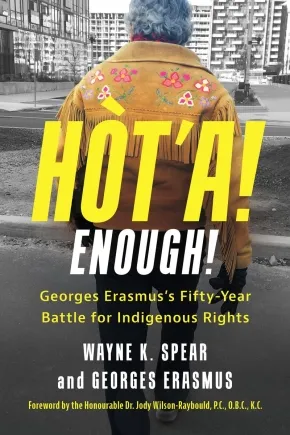
Hòt'a! Enough!: Georges Erasmus's Fifty-Year Battle for Indigenous Rights
$28.99
Format:
Paperback
Text Content Territories:
Indigenous Canadian; First Nations; Dene;
Reading Level: N/A
ISBN / Barcode: 9781459752900
Synopsis:
Synopsis:
The political life of Dene leader Georges Erasmus - a radical Native rights crusader widely regarded as one of the most important Indigenous leaders of the past fifty years.
For decades, Georges Erasmus led the fight for Indigenous rights. From the Berger Inquiry to the Canadian constitutional talks to the Oka Crisis, Georges was a significant figure in Canada's political landscape. In the 1990s, he led the Royal Commission on Aboriginal Peoples and afterward was chair and president of the Aboriginal Healing Foundation, around the time that Canada's residential school system became an ongoing frontpage story.
Georges's five-decade battle for Indigenous rights took him around the world and saw him sitting across the table from prime ministers and premiers. In the 1980s, when Georges was the National Chief of the Assembly of First Nations, he was referred to as the "Thirteenth Premier." This book tells the personal story of his life as a leading Indigenous figure, taking the reader inside some of Canada's biggest crises and challenges.
Awards
- 2025 Indigenous Voices Awards - Prose in English Award
Additional Information
320 pages | 6.00" x 9.00" | 57 b&w illustrations | Paperback

Métis Matriarchs: Agents of Transition
$34.95
Editors:
Format:
Paperback
Text Content Territories:
Indigenous Canadian; Métis;
Reading Level: N/A
ISBN / Barcode: 9781779400116
Synopsis:
Synopsis:
Explores the integral roles that Métis women assumed to ensure the survival of their communities during the fur trade era and onward
Métis Matriarchs examines the roles of prominent Métis women from across Western Canada from the late 19th to the mid-20th century, providing a rare glimpse into the everyday lives of these remarkable women who were recognized as Matriarchs and respected for their knowledge, expertise, and authority within their families and communities.
This edited collection provides an opportunity to learn about the significant contributions made by Métis women during a transitional period in Western Canadian history as the fur trade gave way to a more sedentary, industrialized, and agrarian economy. Challenging how we think about Western Canadian settlement processes that removed Indigenous peoples from the land, this collection of stories examines the ways Métis matriarchs responded to colonial and settler colonial interventions into their lives and livelihoods and ultimately ensured the cultural survival of their communities.
Awards
- 2025 Canadian Historical Association Indigenous History Book Prize
Reviews
“A nuanced account of the lives of Métis women and their vital roles as they helped guide their families and communities through generations of transitions.” —Michel Hogue, author of Metis and the Medicine Line
"This is a wonderful resource for Social Studies, as these stories help understand how changes in government, land, and economic systems have impacted Métis communities across Canada. Métis Matriarchs would also be a good fit for Family Studies, as it allows us to understand the importance of matriarchs in society, including family and community dynamics, and how those have shifted through time." - Shaniah H., K-12 Teacher, Indigenous Books for Schools
Educator Information
This book is included in the Indigenous Books for Schools database from the Association of Book Publishers of BC. It is recommended for Grades 10 to 12 for Family Studies and Social Studies.
Additional Information
336 pages | 5.00" x 8.00"| Paperback
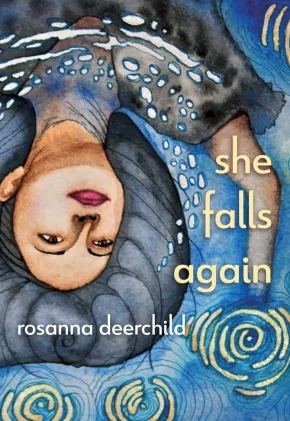
She Falls Again
$23.95
Format:
Paperback
Text Content Territories:
Indigenous Canadian; First Nations; Cree (Nehiyawak);
Reading Level: N/A
ISBN / Barcode: 9781552454879
Synopsis:
Synopsis:
The Sky Woman has returned to bring down the patriarchy!
This book is about a poet who may or may not be going crazy, who is just trying to survive in Winnipeg, where Indigenous people, especially women, are being disappeared. She is talking to a crow who may or may not be a trickster, and who brings a very important message: Sky Woman has returned, and she is ready to take down the patriarchy.
This is poetry, prose and dialogue about the rise and return of the matriarch. It’s a call to resistance, a manifesto to the female self.
Cree poet and broadcaster Rosanna Deerchild is an important voice for our time. Her poems – angry, funny, sad – demand a new world for Indigenous women.
Awards
- 2025 Indigenous Voices Awards - Poetry in English Award
Additional Information
96 pages | 5.00" x 8.00" | Paperback

The Baby Train
$24.95
Format:
Paperback
Reading Level: N/A
ISBN / Barcode: 9781773661681
Synopsis:
Synopsis:
Thrust into the foster care system from an early age, Apple moves from house to house on Prince Edward Island without finding a home until she's a teenager and taken in by a couple who never managed to have children themselves. When she falls pregnant, her foster parents are keen to raise the baby with Apple still in the house—to live as a family.
That opportunity is torn from Apple by members of the Catholic Church along with social workers and government officials. Their vicious practices take the babies of unwed mothers and give them to wealthy families in exchange for large "donations" to the church. Apple's beloved baby ends up with a rich couple in the U.S., and is lost to her.
The Baby Train traces her life in the aftermath of that loss, raising subsequent children, creating deep bonds of friendship with other women struggling against society's rigid norms, and carrying underneath it all an unending love for her firstborn child.
We also follow her baby's path, and watch his affluent, neglected childhood and then adulthood unfold. He never knows that his birth mother still yearns for him, still lights him birthday candles every year.
The shameful legacy of forced and coerced adoption in Eastern Canada is brought to life in this sweeping novel.
Awards
- 2025 PMC Indigenous Literature Award Winner
Educator Information
PEI's birth alert practice allowed hospitals or social workers to flag expectant parents whom they felt might put their newborns at risk. Generally, this practice targeted Indigenous and unwed women.
Additional Information
224 pages | 5.75" x 8.00" | Paperback

The Glass Lodge: 20th Anniversary Edition
$34.99
Format:
Hardcover
Text Content Territories:
Indigenous Canadian; First Nations; Cree (Nehiyawak); Métis;
Reading Level: N/A
ISBN / Barcode: 9781998273119
Synopsis:
Synopsis:
A new edition, revised and updated by the author, of John Brady McDonald’s acclaimed debut poetry collection
John Brady McDonald, MBSFA, a Nêhiyawak-Métis multidisciplinary artist and writer from Treaty Six Territory in Saskatchewan, Canada, is an award-winning author of multiple books who has presented at literary festivals around the world. Before all this, however, he was a young, urban Indigenous youth, struggling with addictions, the streets, and the pain and turmoil of intergenerational trauma as a residential school survivor and the child of residential school survivors.
These raw, lyrical poems are a glimpse of the birth of a poet, recklessly using language and words with abandon and without restraint. It is the poetry of an individual experimenting with the language, influenced by the works of Shakespeare and Jim Morrison, mixed with the teenage goth writing style of youth—the base metals from which a lifetime of words was forged.
Originally published by Kegedonce Press in 2004, The Glass Lodge was presented across Canada and the US at esteemed festivals. Chosen for the First Nations Communities Read program, it was also nominated for the Anskohk Aboriginal Book of the Year in 2005. Since that first edition went out of print a few years ago, McDonald has re-edited and restored the work. He also rediscovered many of the original, handwritten poems, which serve as illustrations in this new edition.
Reviews
"The Glass Lodge transcends all the cliches of the angst-ridden Urban Indian. McDonald's verse is a brilliant fusion of the brutality and hope that is inherent in the Aboriginal experience. I have never read poetry that so closely resembles my own experience as a First Nations man." - Darrell Dennis, Writer, Tales of an Urban Indian, Moccasin Flats
Additional Information
74 pages | 6.00" x 8.50" | Hardcover | 2nd Edition

The Summer of Bitter and Sweet (PB)
$19.99
Format:
Paperback
Text Content Territories:
Indigenous Canadian; Métis;
ISBN / Barcode: 9780063086173
Synopsis:
Synopsis:
In this complex and emotionally resonant novel about a Métis girl living on the Canadian prairies, debut author Jen Ferguson serves up a powerful story about rage, secrets, and all the spectrums that make up a person—and the sweetness that can still live alongside the bitterest truth.
Lou has enough confusion in front of her this summer. She’ll be working in her family’s ice-cream shack with her newly ex-boyfriend—whose kisses never made her feel desire, only discomfort—and her former best friend, King, who is back in their Canadian prairie town after disappearing three years ago without a word.
But when she gets a letter from her biological father—a man she hoped would stay behind bars for the rest of his life—Lou immediately knows that she cannot meet him, no matter how much he insists.
While King’s friendship makes Lou feel safer and warmer than she would have thought possible, when her family’s business comes under threat, she soon realizes that she can’t ignore her father forever.
Reviews
"Debut author Ferguson, who is Métis and White, touches on intergenerational family suffering at the hands of the state, mental health, substance abuse, racism, sexual harassment and assault, and missing and murdered Indigenous women—all with nuance and care. Heart-rending and healing; a winning blend that will leave readers satisfied."— Kirkus Reviews (starred review)
"Young adult readers can relate to the struggles Lou is facing as she navigates her transition from high school to college, and also use them as a conversation starter about race, identity, sexuality, dating, and friendship." — Horn Book (starred review)
"In a layered first-person portrayal of a young Indigenous woman navigating the edge of adulthood, Ferguson (who is Métis and white) tackles necessary issues—of identity and sexuality alongside colonialism, generational trauma, racism, physical and sexual assault, and substance reliance—through well-wrought, complicated characterizations and prose that sings with poetry." — Publishers Weekly (starred review)
"Ferguson’s frank and powerful debut opens readers’ eyes to the multiplicity of daily traumas faced by people of color, especially Indigenous women and girls. Ferguson, herself Michif/Métis and white, boldly writes on many challenging topics, including racism, physical violence, sexual identity, sexual assault, and teen alcohol use. Lou is complex, smart, and honest, and a narrator readers will trust, love, and learn from as she works to repair friendships and gain security for her treasured family." — Booklist (starred review)
Educator Information
Recommended for ages 13+
This book is part of the Heartdrum imprint centers a wide range of intertribal voices, visions, and stories while welcoming all young readers, with an emphasis on the present and future of Indian Country and on the strength of young Native heroes. In partnership with We Need Diverse Books.
Content Warnings for The Summer of Bitter and Sweet: discussion of sexual assault, instances of racism, instances of physical assault, instances of intimate partner abuse, discussions of drug use, discussions of under-aged alcohol use, instances of arson.
Additional Information
384 pages | 5.31" x 8.00" | Paperback
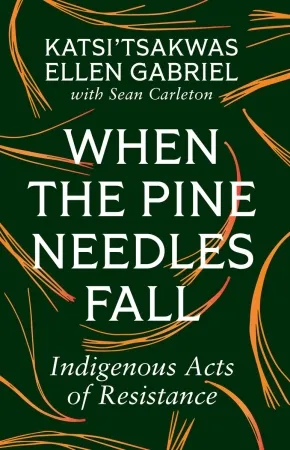
When the Pine Needles Fall: Indigenous Acts of Resistance
$32.95
Format:
Paperback
Text Content Territories:
Indigenous Canadian; First Nations; Haudenosaunee (Iroquois); Kanyen'keha:ka (Mohawk); Kanehsatà:ke; Kahnawà:ke ;
ISBN / Barcode: 9781771136501
Synopsis:
Synopsis:
There have been many things written about Canada’s violent siege of Kanehsatà:ke and Kahnawà:ke in the summer of 1990, but When the Pine Needles Fall: Indigenous Acts of Resistance is the first book from the perspective of Katsi’tsakwas Ellen Gabriel, who was the Kanien’kehá:ka (Mohawk) spokesperson during the siege. When the Pine Needles Fall, written in a conversational style by Gabriel with historian Sean Carleton, offers an intimate look at Gabriel’s life leading up to the 1990 siege, her experiences as spokesperson for her community, and her work since then as an Indigenous land defender, human rights activist, and feminist leader.
More than just the memoir of an extraordinary individual, When the Pine Needles Fall offers insight into Indigenous language, history, and philosophy, reflections on our relationship with the land, and calls to action against both colonialism and capitalism as we face the climate crisis. Gabriel’s hopes for a decolonial future make clear why protecting Indigenous homelands is vital not only for the survival of Indigenous peoples, but for all who live on this planet.
Awards
- 2025 Canadian Historical Association Indigenous History Book Prize
- 2025 Errol Sharpe Book Prize
- 2025 Wilson Institute Book Prize
Reviews
“When the Pine Needles Fall is a profound treatise and manifesto chronicling Haudenosaunee resistance to land theft by one of the most important Land Defenders of our time. Gabriel’s work is the book on Indigenous resistance I’ve been waiting for my whole life. It is a must-read for anyone concerned with the continuation of life on this planet.” — Leanne Betasamosake Simpson, co-author of “Rehearsals for Living”
“Katsi’tsakwas Ellen Gabriel’s words in When the Pine Needles Fall are gifts that serve as a beacon of light by igniting our hearts, minds, and spirits. Through her boundless wisdom grounded in healing work as a Land Defender on Turtle Island, she calls for fierce Indigenous resistance and radical global solidarity to put an end to root causes of oppression worldwide: capitalism, patriarchy, and settler colonialism. Gabriel reminds us that a more just, kind, and caring world—where all life is precious—is possible for the next seven generations, but only if we fight for it.” — Samir Shaheen-Hussain, MD, author of “Fighting for A Hand to Hold: Confronting Medical Colonialism against Indigenous Children in Canada”
“When the Pine Needles Fall is a remarkable and revelatory account of the 1990 siege of Kanehsatà:ke and Kahnawà:ke, when provincial, municipal, and national armed forces targeted these Mohawk communities. It is also one of the best first-hand accounts of Indigenous activism that I have ever read, relayed in moving and extraordinary form. An essential addition to contemporary First Nations history and the growing field of Indigenous Studies.” — Ned Blackhawk, Western Shoshone, author of “The Rediscovery of America: Native Peoples and the Unmaking of U.S. History”
“As a treatise on women and culture-based governance from a remarkable Haudenosaunee leader, When the Pine Needles Fall offers me hope and renewed energy. Through her life work, Ellen Gabriel demonstrates how to persevere, remain optimistic, and continue with creative and activist endeavours. The book effectively situates the ‘crisis’ within its centuries-long context, marking a tipping point for Canada while highlighting ongoing challenges. It also examines how mainstream narratives are constructed around Indigenous struggles, providing a comprehensive profile of Gabriel’s diverse contributions to Indigenous resistance and resurgence.” — Kim Anderson, author of“ Life Stages and Native Women: Memory, Teachings, and Story Medicine”
“Katsi’tsakwas Ellen Gabriel’s personal account of the 1990 siege of Kanehsatà:ke and Kahnawà:ke is a crucial contribution to our understanding of these dramatic events and of the political context of the time. Her lifetime dedication to the defence of Indigenous peoples and women’s rights is truly exemplary and constitutes an inspiration for generations to come.” — Bernard Duhaime, professor, Faculty of Political Science and Law, Université du Québec à Montréal
“In When the Pine Needles Fall, celebrated activist Katsi’tsakwas Ellen Gabriel gifts us with an expansive account of the 1990 siege of Kanehsatà:ke and Kahnawà:ke. This alone provides a captivating analysis of this seminal moment and its legacy within larger movements for Indigenous sovereignty on Turtle Island. But Gabriel, an artist, also paints the negative space, braiding her relationship to the land, Kanien’kehá:ka teachings, and the language with her tireless work against settler colonialism, extractive capitalism, and patriarchy. This essential book is an inspiring conversation reminding us that decolonization is world-building rooted in an ethics of relationality and care.” — Nazila Bettache, MD, MPH; assistant professor of medicine, Université de Montréal; social justice organizer and co-editor of “Reflections on Illness”
“I honour my sister whose words speak the truth. One of the most powerful quotes by Katsi’tsakwas is: ‘I’m a Kanien’kehá:ka woman who cares deeply about our land and I want a better future for the generations to come.’ Everything she speaks about in this book is directly connected to these words.” — Beverley Jacobs, CM, LLB, LLM, PhD; Kanien’kehá:ka, Bear Clan, Six Nations Grand River Territory; associate professor, Faculty of Law, University of Windsor
Educator Information
This book is included in the Indigenous Books for Schools database from the Association of Book Publishers of BC. It is recommended for Grades 11 and 12 for English Language Arts and Social Studies. The book's listing in the database provides this content warning: " Abuse, violence, residential schools, death."
Additional Information
280 pages | 5.50" x 8.50" | Paperback
Sort By
Go To
of 6
 Our logo reflects the greater Nation we live within—Turtle Island (North America)—and the strength
and core of the Pacific Northwest Coast peoples—the Cedar Tree, known as the Tree of Life. We are
here to support the building of strong nations and help share Indigenous voices.
Our logo reflects the greater Nation we live within—Turtle Island (North America)—and the strength
and core of the Pacific Northwest Coast peoples—the Cedar Tree, known as the Tree of Life. We are
here to support the building of strong nations and help share Indigenous voices.


