

 Show Advanced Search Options
 Hide Advanced Search Options
Browse Books for Kids
991
-
1005
of
2611 Results;
Sort By
Go To
of 175
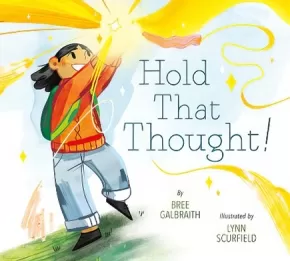

Hold That Thought!
$19.95
Artists:
Format:
Hardcover
ISBN / Barcode: 9781771472944
Synopsis:
Synopsis:
An inspiring look at how ideas form, grow, and connect us all
In the middle of the night, Finn wakes up with something buzzing around in their head. It isn’t heavy like a worry, it doesn’t swirl like fear, and it isn’t shaped like a question. It’s something more exciting—an idea!
The next day at school, Finn shares the idea with friends, who nurture it and help shape it into something even more fantastic. But not everyone is excited about Finn’s idea. When a bully knocks it to the ground, Finn begins to doubt the idea. And as Finn’s doubt grows, their idea shrinks. But just before the idea disappears, Finn realizes that it’s exactly as it should be! Confidence renewed, Finn shares the idea with more kids, who add their own thoughts until the idea flows—and even the bully becomes inspired to contribute.
Grounded in childhood curiosity and helmed by a gentle, inquiring main character, this story about the power of ideas fosters creativity, perseverance, inclusion, and a collaborative spirit.
Educator Information
Recommended for ages 4 to 8.
Models resilience and a growth mindset.
Vibrant, whimsical illustrations show a diverse and inclusive school setting.
Reflects themes of teamwork and bullying.
Curriculum Connections: Language Arts: Reading Comprehension; Social-Emotional Learning: Belonging and Contributing; Teamwork and Cooperation; Kindness; Character Education: Self-Confidence, Perseverance, Flexibility.
Reading Levels:
Grade: 3
Fountas & Pinnell: O
Lexile® Measure: AD610L
Common Core
RL.3, W.3, SL.3, L.3
Additional Information
32 pages | 10.00" x 9.00" | Hardcover
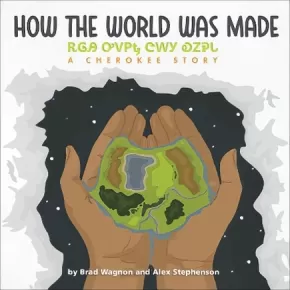

How the World Was Made
$18.95
Artists:
Format:
Paperback
Text Content Territories:
Indigenous American; Native American; Cherokee;
ISBN / Barcode: 9781939053374
Synopsis:
Synopsis:
This traditional Cherokee creation story takes place during a time when animals did many of the things that people can do. When the earth was young, the animals lived on a rock above it, and the earth was covered in water. The animals needed more room, but where could they find it?
This book retells the delightful Cherokee story of how the earth was created while teaching the invaluable lesson that even the smallest creature can make a difference.
Written in both Cherokee and English, the book will familiarize readers with the syllabary and the Cherokee language.
Educator Information
Recommended for ages 4 to 7.
When none of the animals can bring mud to the surface of the water to increase the size of the island, they turn to the wise Beaver for advice. Beaver tells them to give Water Beetle a try. Everyone thinks that Water Beetle is too small to help, but she proves that small can be powerful.
Features themes of bullying, determination, and perseverance.
This book is a traditional Cherokee creation story that is used to teach Cherokee values.
Additional Information
40 pages | 6.00" x 9.00" | Paperback

Humongous Fungus
$21.99
Artists:
Format:
Hardcover
ISBN / Barcode: 9780744033335
Synopsis:
Synopsis:
Inhabiting a whole kingdom of their own, fungi can be found in every ecosystem.
They carpet the forest floor, and hidden fungi decompose matter, feed plants, and affect how animals function.
Their beautiful mushrooms come in all colors, shapes, and sizes. Fungal stories include the greening of the Earth, when fungi helped plants first grow on land, and the mass destruction of crops through fungal disease. From the villains of the possible extinction of bananas to plastic-eating eco-warriors, there are more than 1.5 million fungus species, and a huge, unknown number of unnamed "dark" types. They affect other creatures, too, for example by helping break down food, or controlling their minds against their will.
Continuing from the gorgeous Under Your Feet, and touching on similar topics of conservation and the secret processes within ecosystems, this book of fabulous fungi will intrigue and amaze young readers.
Educator Information
Recommended for ages 7 to 9.
Additional Information
64 pages | 9.00" x 11.00" | Hardcover

Hunting by Stars: A Marrow Thieves Novel
$16.99
Format:
Paperback
Text Content Territories:
Indigenous Canadian; Métis;
ISBN / Barcode: 9780735269651
Synopsis:
Synopsis:
The thrilling follow-up to the bestselling, award-winning novel The Marrow Thieves, about a dystopian world where the Indigenous people of North America are being hunted for their bone marrow and ability to dream.
Years ago, when plagues and natural disasters killed millions of people, much of the world stopped dreaming. Without dreams, people are haunted, sick, mad, unable to rebuild. The government soon finds that the Indigenous people of North America have retained their dreams, an ability rumored to be housed in the very marrow of their bones. Soon, residential schools pop up—or are re-opened—across the land to bring in the dreamers and harvest their dreams.
Seventeen-year-old French lost his family to these schools and has spent the years since heading north with his new found family: a group of other dreamers, who, like him, are trying to build and thrive as a community. But then French wakes up in a pitch-black room, locked in and alone for the first time in years, and he knows immediately where he is—and what it will take to escape.
Meanwhile, out in the world, his found family searches for him and dodges new dangers—school Recruiters, a blood cult, even the land itself. When their paths finally collide, French must decide how far he is willing to go—and how many loved ones is he willing to betray—in order to survive. This engrossing, action-packed, deftly-drawn novel expands on the world of Cherie Dimaline’s award-winning The Marrow Thieves, and it will haunt readers long after they’ve turned the final page.
Reviews
"Lush, devastating, and hope-filled novel. . . . The action never lets up and is inextricably intertwined with the personal and community histories of the diverse characters who band together from various nations. Dimaline paints a nightmarish world that is too easy to imagine; it will haunt readers long after they turn the final page." ―Kirkus Reviews
"Dimaline has created vivid characters who propel a suspenseful and atmospheric story that boldly brings past, and ongoing, darkness to light." ―Booklist
"The brutal realities faced by French in the residential school will leave readers thinking about what Indigenous people endured in the residential schools of the past. The idea of storytelling and the importance of realizing that the past and present are interwoven is beautifully conveyed and will keep readers anxious for what comes next." ―School Library Journal
Educator & Series Information
Recommended for ages 12+
This book is available in French: Chasseurs d'étoiles
This book is part of the Marrow Thieves series.
Mature Content Warning: Hunting by Stars touches on physical and sexual violence.
Additional Information
408 pages | 5.50" x 8.25" | Paperback
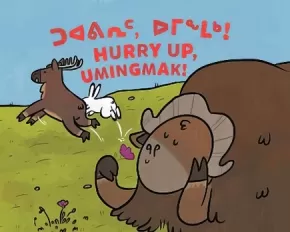
Hurry Up, Umingmak! (English/Inuktitut)
$14.95
Artists:
Format:
Paperback
Text Content Territories:
Indigenous Canadian; Inuit;
Grade Levels: Preschool; Kindergarten;
ISBN / Barcode: 9781774502624
Synopsis:
Synopsis:
Umingmak likes to move slowly, taking in her beautiful surroundings. But her friends like to move quickly. She can’t keep up with them! See how Umingmak and her friends work together to solve their problem. Will they be able to come up with a solution that everyone is happy with?
Educator & Series Information
Hurry Up, Umingmak! tells the story of a group of friends who solve a problem through consensus decision-making.
Recommended for ages 3 to 5.
This is an Arvaaq Book. Books in this series are intended for infants and very young children and are designed to help children develop physical, social, emotional, cognitive, and language skills.
Dual-language: English and Inuktitut
Additional Information
44 pages | 8.00" x 9.00" | Paperback
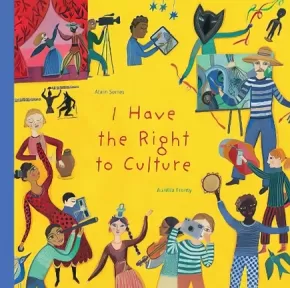
I Have the Right to Culture
$19.99
Artists:
Format:
Hardcover
ISBN / Barcode: 9781773064901
Synopsis:
Synopsis:
From the author and illustrator duo who created the award-winning I Have the Right to Be a Child and I Have the Right to Save My Planet comes this beautifully illustrated third book in the series.
I Have the Right to Culture explores a child’s right to be curious and to experience all of humanity’s shared knowledge, including music, art, dance and much more. When a child is born, they learn the language of their parents, they sing the songs of their grandparents and they eat the delicious food that their family prepares. They also start to wonder about the lives of other children who live far away. What languages do they speak? What songs do they sing? And what games do they play?
Every child has the right to learn about the world they live in, including its history and its inventions. Every child has the right to learn about artists, about writers, about potters and photographers and architects, about musicians and dancers and poets. All of humanity’s treasures are for sharing, and every child has the right to know about what has come before them! Children have the right to partake in culture as proclaimed in the United Nations Convention on the Rights of the Child.
Told from the perspective of a child, this colorful and vibrant book explores what it means to be a child who has the right to find beauty in their world.
Educator & Series Information
Recommended for ages 3 to 6.
This book is part of the I Have the Right series.
Correlates to the Common Core State Standards in English Language Arts:
CCSS.ELA-LITERACY.RI.K.1
With prompting and support, ask and answer questions about key details in a text.
CCSS.ELA-LITERACY.RI.K.6
Name the author and illustrator of a text and define the role of each in presenting the ideas or information in a text.
CCSS.ELA-LITERACY.RI.K.7
With prompting and support, describe the relationship between illustrations and the text in which they appear (e.g., what person, place, thing, or idea in the text an illustration depicts).
CCSS.ELA-LITERACY.RI.1.8
Identify the reasons an author gives to support points in a text.
Additional Information
48 pages | 10.00" x 10.00" | Hardcover
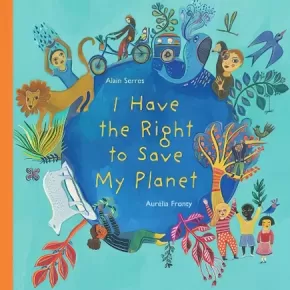
I Have the Right to Save My Planet
$19.95
Artists:
Format:
Hardcover
ISBN / Barcode: 9781773064871
Synopsis:
Synopsis:
This beautifully illustrated picture book is about a child’s right to advocate for the environment they live in.
All children have the right to learn about the world, to celebrate the water, air and sunshine, and to be curious about the animals and plants that live on our planet. All children also have the right to learn about endangered species, to be concerned about plastic in the ocean, and to understand what a changing climate means for our Earth.
Scientists tell us that every living thing is connected. When we cut down forests, we destroy animal habitats. When we throw plastic in the garbage, it never really goes away. When we spray pesticides on our fruit and vegetables, we poison the earth, animals and ourselves.
What can children do to help? All children can draw posters of endangered animals to raise awareness. All children can send a letter to the leader of their country, signed by every member of their family. All children can protest along with their parents. Children have the right to do all these things as proclaimed in the United Nations Convention on the Rights of the Child. All children have the right to try to help our Earth, in whatever ways they can.
Told from the perspective of a child, this colorful and vibrant book explores what it means to be a child who dreams of a beautiful future for their planet.
Educator & Series Information
Recommended for ages 4 to 7.
Part of the I Have the Right series.
Correlates to the Common Core State Standards in English Language Arts:
CCSS.ELA-LITERACY.RI.2.3
Describe the connection between a series of historical events, scientific ideas or concepts, or steps in technical procedures in a text.
CCSS.ELA-LITERACY.RI.3.2
Determine the main idea of a text; recount the key details and explain how they support the main idea.
CCSS.ELA-LITERACY.RI.3.3
Describe the relationship between a series of historical events, scientific ideas or concepts, or steps in technical procedures in a text, using language that pertains to time, sequence, and cause/effect.
CCSS.ELA-LITERACY.RI.2.6
Identify the main purpose of a text, including what the author wants to answer, explain, or describe.
CCSS.ELA-LITERACY.RI.1.8
Identify the reasons an author gives to support points in a text.
CCSS.ELA-LITERACY.RI.2.8
Describe how reasons support specific points the author makes in a text.
Additional Information
48 pages | 10.00" x 10.00"
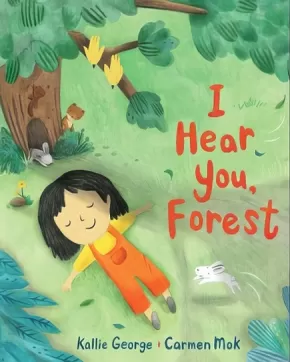
I Hear You, Forest
$22.95
Artists:
Format:
Hardcover
ISBN / Barcode: 9781771647366
Synopsis:
Synopsis:
Kids will look forward to their next nature walk after reading this playful yet calming book about wonderful forest sounds.
The forest has lots to say… if you listen.
When a child steps into the forest, her ears are open and her heart is too. She listens carefully and hears marvelous things. She hears the rustling of leaves sharing their secrets. She hears a beetle balancing on a branch. And the more she listens, the more she learns.
I Hear You, Forest is a perfect book for outdoor education, classroom learning and homeschooling, helping to teach:
- Empathy and connection with all living things
- Mindfulness and appreciation with the world around us
- That the forest is full of magical sounds—you just have to listen!
Reviews
“A whimsical tale of a child who listens hard in enjoying the woods. Every spread features onomatopoeic text that simulates the sounds of trees, leaves, animals, and other living things … A good reminder that a stroll through the woods should provide lots of opportunities to slow down and notice.” —Kirkus Reviews
Educator & Series Information
Recommended for ages 3 to 7
First book in the Sounds of Nature Series.
Additional Information
36 pages | 8.00" x 10.00" | Hardcover

I Lost My Talk (PB)
$13.95
Artists:
Format:
Paperback
Text Content Territories:
Indigenous Canadian; First Nations; Mi'kmaq;
ISBN / Barcode: 9781774710050
Synopsis:
Synopsis:
I lost my talk
The talk you took away
When I was a little girl
At Shubenacadie school.
One of Rita Joe's most influential poems, "I Lost My Talk" tells the revered Mi'kmaw Elder's childhood story of losing her language while a resident of the residential school in Shubenacadie, Nova Scotia. An often quoted piece in this era of truth and reconciliation, Joe's powerful words explore and celebrate the survival of Mi'kmaw culture and language despite its attempted eradication.
A companion book to the simultaneously published I'm Finding My Talk by Rebecca Thomas, I Lost My Talk is a necessary reminder of a dark chapter in Canada's history, a powerful reading experience, and an effective teaching tool for young readers of all cultures and backgrounds. Includes a biography of Rita Joe and striking colour illustrations by Mi'kmaw artist Pauline Young.
Reviews
"This picture book version of I Lost My Talk is best read with Rebecca Thomas’s I’m Finding My Talk. These haunting, evocative books bring an original approach to the exploration of Canadian residential schools in picture books. For readers and teachers who appreciate fact-based information, there is also “A Short History of Residential Schools” at the end of I Lost My Talk. Educators, librarians, and families will find their classrooms and book collections invaluably enriched by these books. They are real tools of truth and reconciliation; as such, they belong on every bookshelf in Canada and beyond." - CM Reviews
Educator Information
Recommended for ages 4 to 9.
This work features a short history of residential schools and information about the author.
Recommended in the Canadian Indigenous Books for Schools 2020/2021 resource list for grades 1-7 for English Language Arts.
Additional Information
32 pages | 8.00" x 10.00"
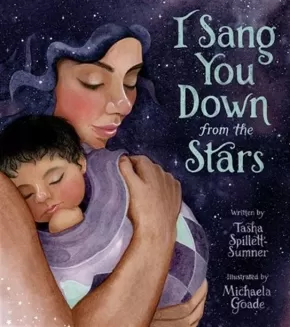
I Sang You Down from the Stars
$19.95
Artists:
Format:
Hardcover
Text Content Territories:
Indigenous Canadian;
Grade Levels: Preschool; Kindergarten;
ISBN / Barcode: 9781771474085
Synopsis:
Synopsis:
An Own Voices love letter from an Indigenous mother to her new baby, new from celebrated author Tasha Spillett-Sumner and 2021 Caldecott winning illustrator Michaela Goade
Drawing from Indigenous creation stories and traditional teachings and illustrated in dazzling watercolors, I Sang You Down from the Stars is a tribute to the bond between mother and child.
The narrator gathers gifts for a medicine bundle in anticipation of her baby’s birth; a fluffy white eagle plume, bunches of cedar and sage, a quilted star blanket, and a small stone from the river. When the baby arrives, the mother shares the bundle with her child and reveals the importance of each item inside. But when her family comes to meet the new arrival, she realizes the baby arrived with gifts of its own and that the baby is also a sacred bundle: a baby bundle.
Writing in simple, lyrical text, author Tasha Spillett-Sumner draws from her cultural heritage in order to celebrate Indigenous traditions and the universal nature of a mother’s love, with stunning art by the 2021 Caldecott medal winner for We Are Water Protectors, Michela Goade.
Reviews
"Gorgeous, shimmering, heartfelt." — Kirkus Reviews - STARRED REVIEW
"Gorgeous, shimmering, heartfelt." — Kirkus Reviews - STARRED REVIEW
"[Tasha] Spillet-Sumner's tender free-verse tribute to the joy of welcoming a new baby should resonate with any caregiver who has excitedly awaited a child's arrival... [Michaela] Goade's ethereal watercolor and mixed-media illustrations soar across the page, overflowing with gorgeous touches... I Sang You Down from the Stars will make a beautiful gift for an expecting family as well as a read-aloud to assure children they are loved." — Shelf Awareness
Educator & Series Information
Recommended for ages 2 to 5.
Recommended for ages 2 to 5.
Fountas & Pinnell Text Level Gradient: O
Lexile measure: AD640L
This book is available in French: Les étoiles m'ont chanté ton nom
Additional Information
32 pages | 9.00" x 10.25"
32 pages | 9.00" x 10.25"
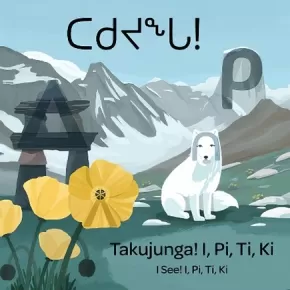
I See! I, Pi, Ti, Ki (English/Inuktitut) (BB) (1 in stock, In Reprint)
$14.95
Artists:
Format:
Board Book
Text Content Territories:
Indigenous Canadian; Inuit;
Grade Levels: Preschool; Kindergarten;
ISBN / Barcode: 9781774503683
Synopsis:
Synopsis:
What can you see? Practise your Inuktut sounds and find the hidden syllabics in the illustrations. Each page features an illustration of a word that begins with the hidden syllabic.
Educator & Series Information
Recommended for ages 3 to 5.
This is an Arvaaq Book. Books in this series are intended for infants and very young children and are designed to help children develop physical, social, emotional, cognitive, and language skills.
Dual-language: English and Inuktitut
Additional Information
16 pages | 8.50" x 8.50" | Board Book
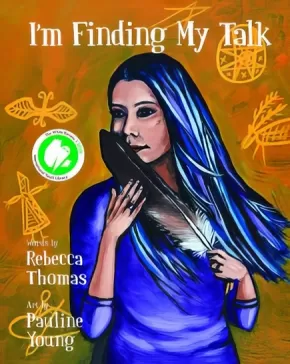
I'm Finding My Talk (PB)
$13.95
Artists:
Format:
Paperback
Text Content Territories:
Indigenous Canadian; First Nations; Mi'kmaq;
ISBN / Barcode: 9781774710067
Synopsis:
Synopsis:
I'm finding my talk
And it may take some time,
But I'm learning to speak
In a language that's mine.
A response to Rita Joe's iconic poem "I Lost My Talk," and published simultaneously with the new children's book edition illustrated by Pauline Young, comes a companion picture book by award-winning spoken-word artist and Mi'kmaw activist Rebecca Thomas. A second-generation residential school survivor, Thomas writes this response poem openly and honestly, reflecting on the process of working through the destructive effects of colonialism.
From sewing regalia to dancing at powow to learning traditional language, I'm Finding My Talk is about rediscovering her community, and finding culture. Features stunning, vibrant illustrations by Mi'kmaw artist Pauline Young.
Reviews
"Published as a companion to the picture book I Lost My Talk, featuring the famous poem by Rita Joe, both volumes explore the legacy of Canada’s residential schools. They feature vibrant illustrations by Pauline Young that bring the words alive with emotional nuance. This remarkable pair of books possesses the rare ability of being suited to readers of all ages: three to six-year-olds, the traditional intended audience of picture books, will be captivated by the bright, lively illustrations; elementary and middle school children will find their Social Studies curriculum enriched by experiencing these important concepts rendered creatively; teens and adults will gain insight and empathy by enjoying these beautiful poems." - CM Reviews
"[A]n honest reflection on the process of working through the destructive effects of colonialism by participating in cultural connections. This book offers the opportunity to show the journey one takes when rediscovering their community and culture." - The Dalai Lama Center
Educator Information
Recommended for ages 4 to 9.
Recommended in the Canadian Indigenous Books for Schools 2020/2021 resource list for grades 1-3 in the areas of Social Studies and Language Arts.
Former Halifax Poet Laureate and second-generation residential school survivor Rebecca Thomas writes honestly and powerfully in this companion piece to Rita Joe's I Lost My Talk. Includes vibrant illustrations from Mi'kmaw artist Pauline Young.
Additional Information
32 pages | 8.00" x 10.00"
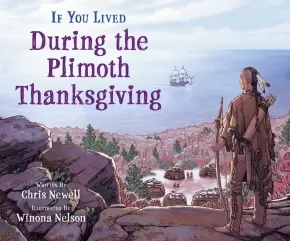
If You Lived During the Plimoth Thanksgiving
$11.99
Format:
Paperback
Text Content Territories:
Indigenous American; Native American; Wampanoag (Wôpanâak);
ISBN / Barcode: 9781338726367
Synopsis:
Synopsis:
What do you know about the thanksgiving feast at Plimoth?
What if you lived in a different time and place? What would you wear? What would you eat? How would your daily life be different?
Scholastic's If You Lived... series answers all of kids' most important questions about events in American history. With a question and answer format, kid-friendly artwork, and engaging information, this series is the perfect partner for the classroom and for history-loving readers.
What if you lived when the English colonists and the Wampanoag people shared a feast at Plimoth? What would you have worn? What would you have eaten? What was the true story of the feast that we now know as the first Thanksgiving and how did it become a national holiday?
Chris Newell answers all these questions and more in this comprehensive dive into the feast at Plimoth and the history leading up to it. Carefully crafted to explore both sides of this historical event, this book is a great choice for Thanksgiving units, and for teaching children about this popular holiday.
Reviews
"A welcome addition to the picture book history collection. ...The text does a remarkable job of giving larger context to the complexity of Indigenous life prior to colonization...This essential book should replace many established titles on the shelf." --School Library Journal (starred review)
"A measured corrective to pervasive myths about what is often referred to as the "first Thanksgiving." ...The lens Newell offers is a Native one, describing how the Wampanoag and other Native peoples received the English rather than the other way around. ...Essential." --Kirkus Reviews (starred review)
"A measured corrective to pervasive myths about what is often referred to as the "first Thanksgiving." ...The lens Newell offers is a Native one, describing how the Wampanoag and other Native peoples received the English rather than the other way around. ...Essential." --Kirkus Reviews (starred review)
Educator Information
Recommended for ages 7 to 10.
Additional Information
96 pages | 9.00" x 7.50" | Paperback

Indian Shoes
$8.50
Artists:
Format:
Paperback
Text Content Territories:
Indigenous American; Native American; Cherokee; Seminole;
ISBN / Barcode: 9780064421485
Synopsis:
Synopsis:
The beloved chapter book by New York Times bestselling author Cynthia Leitich Smith about the love and adventures shared by a Cherokee-Seminole boy and his Grampa now has brand-new illustrations! A perfect pick for new readers.
What do Indian shoes look like, anyway? Like beautiful beaded moccasins... or hightops with bright orange shoelaces?
Ray Halfmoon prefers hightops, but he gladly trades them for a nice pair of moccasins for his grampa. After all, it's Grampa Halfmoon who's always there to help Ray get in and out of scrapes—like the time they teamed up to pet sit for the whole block during a holiday blizzard!
Award-winning author Cynthia Leitich Smith writes with wit and candor about a boy and his grandfather, sharing all their love, joy, and humor.
Reviews
“The stories’ strength lies in their powerful, poignant evocation of a cross-generational bond and in the description of the simple pleasures two charming characters enjoy.” — ALA Booklist
“A very pleasing first-chapter book from its funny and tender opening salvo to its heartwarming closer.” — Kirkus Reviews
“Shoes is a good book for any elementary-aged reluctant reader, and a necessity for indigenous children everywhere.” — School Library Journal
“Indian Shoes is about belonging to family and community, helping neighbors, and sometimes feeling different but most times knowing who you are in the world.”— Multicultural Review
Educator Information
Recommended for ages 6 to 10.
Additional Information
80 pages | 5.12" x 7.62"
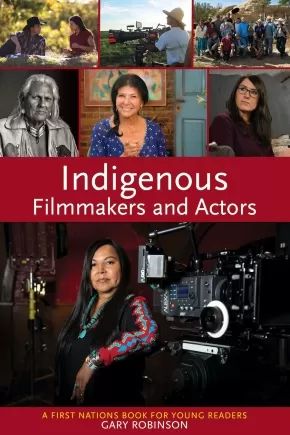
Indigenous Filmmakers and Actors
$10.95
Format:
Paperback
Text Content Territories:
Indigenous Canadian; Indigenous American;
ISBN / Barcode: 9781772601725
Synopsis:
Synopsis:
In these entertaining profiles, twelve Indigenous actors and filmmakers tell stories of the hard work and struggle that went into their careers. Overcoming prejudice and stereotypes in the film industry, fighting to make and promote films that demonstrate an honest portrayal of Indigenous life and heritage. Their stories show how there’s more to filmmaking than acting and directing, including writing, producing, editing, designing, and special effects.
Their accomplishments include acting in major blockbuster films and TV shows, directing prize-winning documentaries, running film programs, and starting a film festival to promote Indigenous voices. These twelve have stood on the shoulders of the Indigenous filmmakers who came before them, and are working to open doors for the next generation. They encourage young people to pursue their dream, and that their stories and ideas are valuable. Includes Tantoo Cardinal, Alanis Obomsawin, and Doreen Manuel.
Educator & Series Information
This book is part of the First Nations Series for Young Readers. Each book is a collection of biographies of First Nations, Métis, and Inuit women and men who are leaders in their fields of work, in their art, and in their communities.
Recommended for ages 9-14.
Subjects:
Language Arts
> Biography
Reflecting Diversity
> First Nations & Indigenous Peoples
Additional Information
128 pages | 6.00" x 9.00"
Sort By
Go To
of 175
 Our logo reflects the greater Nation we live within—Turtle Island (North America)—and the strength
and core of the Pacific Northwest Coast peoples—the Cedar Tree, known as the Tree of Life. We are
here to support the building of strong nations and help share Indigenous voices.
Our logo reflects the greater Nation we live within—Turtle Island (North America)—and the strength
and core of the Pacific Northwest Coast peoples—the Cedar Tree, known as the Tree of Life. We are
here to support the building of strong nations and help share Indigenous voices.


