


Environmental Awareness
106
-
120
of
129 Results;
Sort By
Go To
of 9
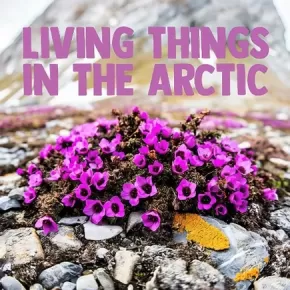

Living Things in the Arctic - Nunavummi Reading Series
$7.95
Format:
Paperback
ISBN / Barcode: 9780228702313
Synopsis:
Synopsis:
Learn about the plants and animals that live in the Arctic.
This book features some of the living things in the North, such as ravens and Arctic willow.
Educator & Series Information
This book is part of the Nunavummi Reading Series, a Nunavut-developed series that supports literacy learning while teaching readers about the people, traditions, and environment of the Canadian Arctic. It is a Level 4 book in the series.
Nunavummi Reading Series books have also been officially levelled using the Fountas & Pinnell Text Level Gradient™ Levelling System. This book's F&P Level is A.
Curriculum Connections: Language and literacy; Environmental awareness; Life systems
Recommended for ages 3-6.
Additional Information
12 pages | 7.00" x 7.00"
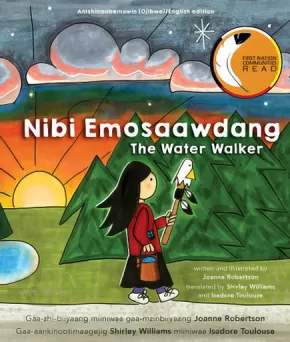

Nibi Emosaawdang / The Water Walker
$14.95
Artists:
Format:
Paperback
Text Content Territories:
Indigenous Canadian; First Nations; Anishinaabeg; Ojibway;
ISBN / Barcode: 9781772601008
Synopsis:
Synopsis:
The dual language edition, in Anishinaabemowin (Ojibwe) and English, of the award-winning story of a determined Ojibwe Nokomis (Grandmother) Josephine-ba Mandamin and her great love for Nibi (water). Nokomis walked to raise awareness of our need to protect Nibi for future generations, and for all life on the planet. She, along with other women, men, and youth, have walked around all the Great Lakes from the four salt waters, or oceans, to Lake Superior. The walks are full of challenges, and by her example Josephine-ba invites us all to take up our responsibility to protect our water, the giver of life, and to protect our planet for all generations.
Educator Information
This is the dual-language edition, in Anishinaabemowin (Ojibwe) and English, of The Water Walker.
Recommended for ages 6-9.
This dual-language edition contains a note on the book's translation into Anishinaabemowin by Shirley Williams -- a fellow water walker -- and Isadore Toulouse, both of whom are from Josephine-ba's home community of Wiikwemkoong Unceded First Nation. The translations draw special meaning from the fact that both Shirley and Nokomis were sent to residential school, where they were forbidden from speaking their language. Nokomis was able to read the translation before her passing, and took great joy in the fact that this book would now be shared in Anishinaabemowin.
This book is available in English: The Water Walker
This book is available in French in June 2021: Nokomis et la marche pour l'eau
Additional Information
40 pages | 8.50" x 7.00"
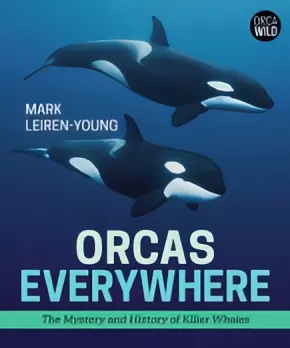
Orcas Everywhere: The Mystery and History of Killer Whales
$24.95
Format:
Hardcover
ISBN / Barcode: 9781459819986
Synopsis:
Synopsis:
Orcas are found in every ocean on the planet. But can they survive their relationship with humans? Orcas Everywhere looks at how humans around the world (Indigenous and non-Indigenous alike) related to orcas in the past, how we relate to them now and what we can do to keep cetacean communities alive and thriving. The book deals with science, philosophy, environmentalism and ethics in a kid-friendly and accessible way. Writer, filmmaker and orca activist Mark Leiren-Young takes us back to when killer whales were considered monsters and examines how humans went from using orcas for target practice to nearly loving them to death. If you know a young person who loves Free Willy or Finding Nemo, they will fall in love with these whales.
Educator & Series Information
Recommended for ages 9-12.
Some Indigenous content, but it is not the sole focus of this work.
This book is part of the Orca Wild series, which explores the lives of the creatures with whom we share the world and asks readers to consider the effects -- both positive and negative -- that humans have on vulnerable animal populations and habitats.
Additional Information
160 pages | 7.50" x 9.00"
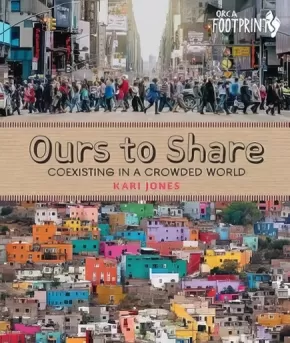
Ours to Share: Co-Existing in a Crowded World
$19.95
Format:
Hardcover
ISBN / Barcode: 9781459816343
Synopsis:
Synopsis:
There are almost eight billion people alive today. Having that many people in the world puts pressure on both social and natural resources, and we have to ask ourselves difficult questions like, What is our fair share? And how do we share more equitably? Ours to Share starts by giving an overview of human population growth, from the time when there were only a few hundred thousand people until now. The book goes on to examine some of the inequities that happen between people when natural and social resources are stressed and provides examples of people who have found innovative ways to share more equitably with their neighbors. The book also examines the impact our expanding population has had on other species. Finally, the book offers suggestions for actions kids can take to better the world from their own home, school and community.
Educator & Series Information
This book is part of the Orca Footprint series. Kids today inhabit a world full of complex—and often mystifying—environmental issues. Orca Footprints aim to help kids answer their questions about the state of the natural world with well-researched, simply-expressed information and powerful images. With topics such as food production, water, cycling and sustainable energy, these books will inspire kids to take action.
Recommended for ages 9 to 12.
Keywords: access to resources, loss of habitat, human rights, overpopulation, equality, community.
Additional Information
48 pages | 8.00" x 9.50"
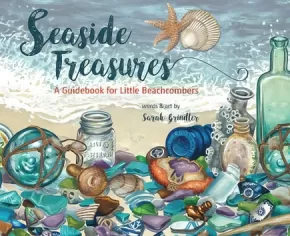
Seaside Treasures: A Guidebook for Little Beachcombers
$17.95
Artists:
Format:
Hardcover
ISBN / Barcode: 9781771087469
Synopsis:
Synopsis:
A day of beachcombing is a day filled with salty sea air, enchanting seashells, and exciting discoveries. The ocean holds so much beauty and adventure, and it leaves so many treasures on its shores. Let's explore these seaside treasures.
An essential sea glass–hunting handbook for kids. With helpful advice, like "make sure no one's home!" before taking a snail shell, and fascinating facts, like how sea glass is formed and where glass fishing floats come from, the gentle and flowing text invites young readers to explore and wonder about everything that washes up on the sand.
Author and illustrator Sarah Grindler's images are vivid and realistic, showing readers what to look for by the ocean—from purple sea urchin shells (that otters love to much on) to mussel shells, sand dollars, and every colour of sea glass—and encouraging all of us to imagine where those treasures may have come from. A beautiful keepsake as well as a practical guidebook for the young beachcomber.
Educator & Series Information
Recommended Ages: 4-8
This book is part of the Little Explorers Series.
Additional Information
32 pages | 8.00" x 6.50"

The Grizzly Mother
$23.00
Artists:
Format:
Hardcover
Text Content Territories:
Indigenous Canadian; First Nations; Gitxsan (Gitksan);
ISBN / Barcode: 9781553797760
Synopsis:
Synopsis:
An engaging look at how the animals, people, and seasons within an ecosystem are intertwined.
To the Gitxsan people of Northwestern British Columbia, the grizzly is an integral part of the natural landscape. Together, they share the land and forests that the Skeena River runs through, as well as the sockeye salmon within it. Follow mother bear as she teaches her cubs what they need in order to survive on their own.
The Mothers of Xsan series uses striking illustration and lyrical language to bring the poetry of the Xsan ecosystem to life.
Awards
- Animal Behavior Society's Outstanding Children's Book Award
- 2020 Manuela Dias Design and Illustration Awards, Children's Illustration winner
Educator & Series Information
Recommended for ages 9 - 12.
This is the second book in the Mother of Xsan series, which uses striking illustration and lyrical language to bring the poetry of the Xsan ecosystem to life.
Recommended in the "Canadian Indigenous Books for Schools 2019-2020" resource list as being useful for students in grades 2-5 in these subject areas: English Language Arts, Science, Social Studies.
Additional Information
32 pages | 6.50" x 10.00"
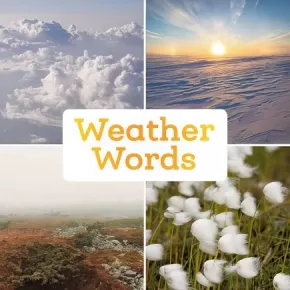
Weather Words - Nunavummi Reading Series
$7.95
Format:
Paperback
ISBN / Barcode: 9780228701934
Synopsis:
Synopsis:
What’s the weather like in Nunavut?
This book features simple nouns related to the weather. Beautiful photographs of Nunavut guide children to practise reading the single word on each page.
Educator & Series Information
This book is part of the Nunavummi Reading Series, a Nunavut-developed series that supports literacy learning while teaching readers about the people, traditions, and environment of the Canadian Arctic. It is a Level 3 book in the series.
Nunavummi Reading Series books have also been officially levelled using the Fountas & Pinnell Text Level Gradient™ Levelling System. This book's F&P Level is LB.
Curriculum Connections: Language and literacy; Environmental awareness
Recommended for ages 3-6.
Additional Information
12 pages | 7.00" x 7.00"
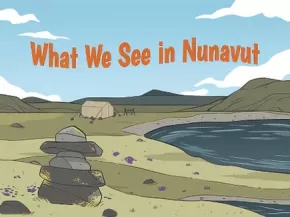
What We See in Nunavut - Nunavummi Reading Series
$7.95
Artists:
Format:
Paperback
Text Content Territories:
Indigenous Canadian; Inuit;
ISBN / Barcode: 9780228702139
Synopsis:
Synopsis:
There is a lot to see in Nunavut!
This book features words for different parts of the Arctic landscape. Beautiful illustrations guide children to practise reading the single word on each page.
Educator & Series Information
This book is part of the Nunavummi Reading Series, a Nunavut-developed series that supports literacy learning while teaching readers about the people, traditions, and environment of the Canadian Arctic. It is a Level 3 book in the series.
Nunavummi Reading Series books have also been officially levelled using the Fountas & Pinnell Text Level Gradient™ Levelling System. This book's F&P Level is LB.
Curriculum Connections: Language and literacy; Diversity; Indigenous perspectives; Environmental Awareness
Recommended for ages 3-6.
Additional Information
12 pages | 7.00" x 7.00"
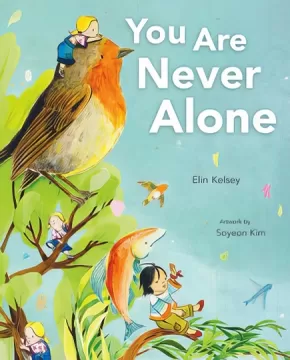
You Are Never Alone
$19.95
Artists:
Format:
Hardcover
ISBN / Barcode: 9781771473156
Synopsis:
Synopsis:
This picture book explores how humans are inextricably connected to nature. This book draws examples from the clouds and the cosmos, the seafloor and the surface of our skin, to show how we are never alone: we are always surrounded and supported by nature. Whether it’s gravity holding us tight; our lungs breathing oxygen synthesized by plants; the countless microorganisms that build our immunity; or the whales whose waste fertilizes the plankton that feed the fish we eat: nature touches every aspect of how we live.
Using lyrical text grounded in current science alongside detailed diorama art, this informational picture book presents the idea that we thrive through connections to the land and sea and sky, and togetherness is key to nature. It encourages inquiry-based learning, inviting readers to wonder, ask questions, observe the natural world, and engage with big ideas. An author’s note at the end offers more insight into the research behind the text.
Reviews
"it is all elegantly presented in soaring, vivid language...breathtakingly beautiful." — Kirkus Reviews - STARRED REVIEW
Educator Information
Curriculum Connections: Language Arts (Skills and Strategies); Science (Life Science, Animals, Environment, Biology, Life Systems)
This book evokes the interconnectedness of nature and is based on scientific research, with cross-curricular links to STEAM, inquiry-based learning, and more.
Reading Level: Grade 5
Fountas & Pinnell: S
Lexile Measure: 820L
Recommended for ages 4+
Additional Information
32 pages | 8.25" x 10.25" | full-colour illustrations, photographed 3D dioramas
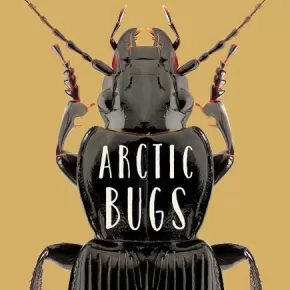
Arctic Bugs - Nunavummi Reading Series
$7.95
Format:
Paperback
Grade Levels: Preschool; Kindergarten;
ISBN / Barcode: 9781772668247
Synopsis:
Synopsis:
What kinds of bugs can survive in the Arctic?
This simple nature book teaches the names of different insects and arachnids that live in the North.
Educator Information
This book is part of the Nunavummi Reading Series, a Nunavut-developed series that supports literacy learning while teaching readers about the people, traditions, and environment of the Canadian Arctic. It is a Level 4 book in the series.
Nunavummi Reading Series books have also been officially levelled using the Fountas & Pinnell Text Level Gradient™ Levelling System. Arctic Bugs' F&P Level is A.
Curriculum Connections: Language and literacy; Environmental Awareness; Life systems
Recommended for ages 3-5.
Additional Information
8 pages | 8.00" x 8.00"
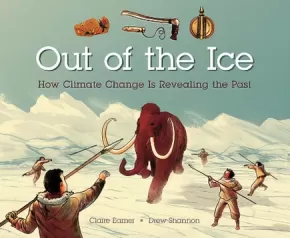
Out of the Ice: How Climate Change Is Revealing the Past
$18.99
Artists:
Format:
Hardcover
Text Content Territories:
Indigenous Canadian; First Nations;
ISBN / Barcode: 9781771387316
Synopsis:
Synopsis:
As climate change is warming our planet, the ice in Earth's cryosphere is melting --- from glaciers to mountaintop patches to permafrost. An unexpected result of this melting has been the discovery of artifacts that were long preserved in the ice's depths. Tools, clothing and, perhaps most remarkable, human bodies have been revealed at the edges the retreating ice. Examining these discoveries, along with traces of plants and animals also melting out of the ice, is the work of researchers in a brand-new scientific field called glacial archaeology. This one-of-a-kind introduction to the work of these researchers examines some of the fascinating artifacts that have been uncovered and the insights they provide into how our ancestors lived. It also describes the urgency of this work; as soon as these clues to the past become exposed to the elements, they begin to disintegrate.
Award-winning author Claire Eamer keeps the interest level high with her intriguing stories, organized into thirteen chapters. The accessible text is complemented by loads of eye-catching visuals, such as photos of actual artifacts and mummified remains, along with Drew Shannon's full-color illustrations. The table of contents, timeline, references, glossary and index enhance the book's classroom utility. This timely book is an excellent choice for updated lessons on the impacts of changes in the environment. Information here covers subjects ranging from science and technology to environmental studies to history and geography.
Additional Information
32 pages | 8.87" x 10.87"
The Northern Lights - Nunavummi Reading Series (1 in stock, Out of Print)
$8.95
Format:
Paperback
Text Content Territories:
Indigenous Canadian; First Nations; Inuit;
ISBN / Barcode: 9781772668711
Synopsis:
Synopsis:
Learn all about the northern lights!
This book is an introduction to the northern lights, what they look like, where they can be seen, what causes them, and traditional stories about them.
Educator Information
This book is part of the Nunavummi Reading Series, a Nunavut-developed series that supports literacy learning while teaching readers about the people, traditions, and environment of the Canadian Arctic. It is a Level 8 book in the series.
Nunavummi Reading Series books have also been officially levelled using the Fountas & Pinnell Text Level Gradient™ Levelling System. This book's F&P Level is G.
Curriculum Connections: Language and literacy; Indigenous perspectives; Diversity; History; Heritage; Environmental Awareness.
Recommended for ages 4-6.
Additional Information
20 pages | 8.00" x 8.00"
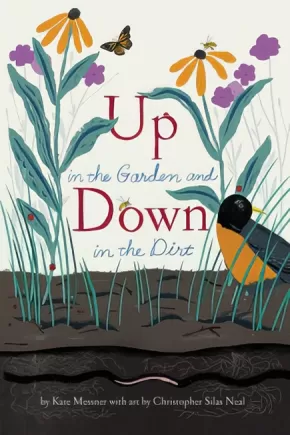
Up in the Garden and Down in the Dirt
$14.99
Artists:
Format:
Paperback
ISBN / Barcode: 9781452161365
Synopsis:
Synopsis:
This sweet exploration of the hidden world and many lives of a garden through the course of a year "could not be more lovely," according to the Washington Post. Up in the garden, the world is full of green—leaves and sprouts, growing vegetables, ripening fruit. But down in the dirt there is a busy world of earthworms digging, snakes hunting, skunks burrowing, and all the other animals that make a garden their home. In this exuberant and lyrical book, discover the wonders that lie hidden between stalks, under the shade of leaves...and down in the dirt.
Reviews
'Will have readers itching to get their hands dirty.' —The Baltimore Sun
'Enchanting. . . . A beautiful, informative addition to any collection.' —School Library Journal
Educator Information
Recommended for ages 5 to 8.
Additional Information
56 pages | 8.00" x 12.00" | Paperback
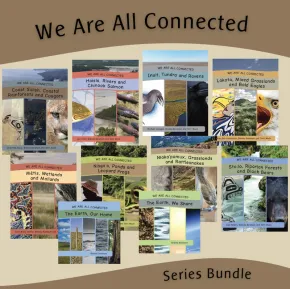
We Are All Connected Series Bundle
 $179.55 $199.50
Text Content Territories:
Indigenous Canadian; First Nations; Salish; Coast Salish; Sto:lo; Interior Salish; Nlaka'pamux (Thompson); Nisga'a; Haisla (Kitamaat); Sioux; Lakota; Inuit; Métis;
ISBN / Barcode: 9781771745963
Synopsis:
Synopsis:
“We Are All Connected” is a series that explores how we all live together in a shared balance upon Mother Earth. Each book explores a specific ecosystem with a focus on one animal and its adaptations for survival within that ecosystem. Indigenous interviewees, each living within the same area, have responded to strategic questions as to how their community interacts with the land, their traditional territory. Explore each text with a sense of inquiry in mind.
8 We Are All Connected Titles Coast Salish, Coastal Rainforests and Cougars Haisla, Rivers and Chinook Salmon Inuit, Tundra and Ravens Lakota, Mixed Grasslands and Bald Eagles Métis, Wetlands and Mallards Nisga'a, Ponds and Leopard Frogs Nlaka'pamux, Grasslands and Rattlesnakes Sto:lo, Riparian Forests and Black Bears Each title covers the following curricular areas. Traditional storytelling and artwork begin each title from the focus Indigenous territory. Science: Biodiversity, classification, life cycles, food chains, food webs and connections between living and non-living things are just some of the science concepts included in each book. Social Studies: Contemporary and historical Indigenous cultural knowledge flows throughout each book. Local land forms, gatherings, harvesting practices and government are some of the social studies concepts included in each book.
2 Foundation Titles The two foundational books provide deeper understanding of the content of the “We Are All Connected” titles. We Are All Connected: The Earth, Our Home- explores biomes, ecosystems and biodiversity. We Are All Connected: The Earth, We Share- explores the interconnectedness between living and non-living things. View: We Are All Connected Learning Intentions
Additional Information
ISBN: 9781771745963

Enough Water? A Guide to What We Have and How We Use It (2 in stock) - ON SALE
$7.95 $9.95
Format:
Paperback
ISBN / Barcode: 9781770858183
Synopsis:
Synopsis:
Children are aware that they should not waste water -- "turn off the tap when you brush your teeth", "take a quick shower". But do they understand why? And that they could do more?
In Enough Water? children will discover the reasons that water warrants concern. In simple text, the book explains the actual "cost" of the water that sustains their lifestyle. This "water footprint" is the amount of freshwater used to produce the goods and services they consume, including manufacturing, growing, harvesting, packaging, and shipping to market where they buy it. The human water footprint contributes to an irreversible loss of Earth's finite water supply.
Aimed at children, the clear info-graphics show how much water is used to make everyday things -- what they wear, what they eat, and so on. The examples will shock: 240 gallons of water (visually comparable to 240 ice cream containers!) to make a smartphone; 92.5 gallons to make a T-shirt and 2,100 for jeans; and 634 gallons to make a cheeseburger (no toppings). The water footprint of just one bottle of cola is equivalent to 350 bottles of water which if stacked on top of each other would reach the roof of a 25-story building.
Enough Water? introduces a cross-section of water issues, including personal and industrial consumption, pollution, irrigation, Earth's limited freshwater supply, and drought which affects all continents. The clever, easily understood info-graphics raise awareness of how our all-consuming lifestyle is literally made of water.
For home, school and the library, Enough Water? is essential for this generation of inquisitive children facing an uncertain future.
Educator Information
Recommended Ages: 9-12.
Introduction from Steve Conrad, the Associate Director of the Pacific Water Research Centre at Simon Fraser University in British Columbia. He is a content expert on assisting organizations, municipalities, and regional governments reach sustainability goals in energy, water demand and supply, greenhouse gas management, and operational efficiency.
Additional Information
72 pages | 9.00" x 9.00" | color infographics and photographs throughout, bibliography, glossary, index | Corporate Author: Editors at Firefly Books
Sort By
Go To
of 9
 Our logo reflects the greater Nation we live within—Turtle Island (North America)—and the strength
and core of the Pacific Northwest Coast peoples—the Cedar Tree, known as the Tree of Life. We are
here to support the building of strong nations and help share Indigenous voices.
Our logo reflects the greater Nation we live within—Turtle Island (North America)—and the strength
and core of the Pacific Northwest Coast peoples—the Cedar Tree, known as the Tree of Life. We are
here to support the building of strong nations and help share Indigenous voices.


