

Language


Synopsis:
A Snuneymuxw ethnobotany guide grounded in Indigenous knowledge and deep ancestral connection to the land.
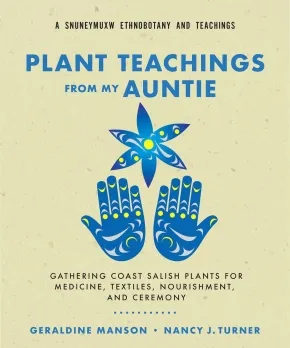
Plant Teachings from My Auntie: Gathering Coast Salish Plants for Medicine, Textiles, Nourishment, and Ceremony is a richly illustrated compendium of the many culturally significant wild foods and herbal remedies found in the traditional territory of the Snuneymuxw First Nation.
Each entry features plant descriptions complete with both their Hul'q'umi'num and botanical names, typical native habitat, and traditional uses. Particular attention is paid to the sacred Western Red Cedar or "tree of life." The book also offers a selection of healing recipes; tips for respectful, sustainable harvesting; ethical and responsible preparation techniques; and a guide to local gathering sites.
Snu'y'ulh refers to teachings handed down through generations. Snuneymuxw Elder and Knowledge Keeper Geraldine Manson, whose traditional name is C'tasi:a, draws on the sacred knowledge passed on to her by her "Auntie Ellen," Dr. Ellen White, also known as Kwulasulwut. Central to these learnings is the fundamental concept or protocol of honoring gifts from the land by gathering and preparing in ways that respect the history, culture, spirituality, and Indigenous knowledge associated with each species.
This powerful work is a rare treasure that will appeal to those seeking to foster greater cultural understanding and ecological responsibility while deepening their commitment to meaningful reconciliation.
Additional Information
96 pages | 9.00" x 7.50" | Paperback
Synopsis:
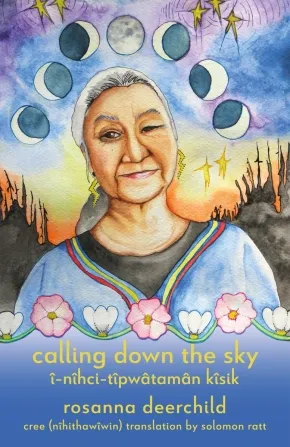
A tenth anniversary bilingual edition in English and Cree of Rosanna Deerchild’s stunning collection about the intergenerational impacts of the Canadian residential school system.
you want me to
share my story
ok then
here it is
here in the unwritten
here in the broken lines
of my body that can never forget
In Calling Down the Sky, poet Rosanna Deerchild viscerally evokes her mother’s experience within the residential school system, the Canadian government’s system of violently removing Indigenous children from their homes, families, and languages in an explicit attempt to destroy Indigenous cultures and identities. With precise and intricate poetry, Deerchild weaves together the story of her mother’s childhood and Deerchild’s memories of her mother: her love of country music, her attempts to talk about what happened to her, how tightly she braided her daughter’s hair on the first day of school. In doing so, Deerchild illustrates the disruptive and devastating impacts of the residential school system on generations of families while also celebrating the life and culture of her mother and other survivors.
Published for the first time in a bilingual edition of Cree and English, in time for the tenth anniversary of the original publication, Calling Down the Sky is an intimate and gorgeously evoked reckoning with a horrifying part of North American history.
Reviews
“Rosanna Deerchild’s poems roll off the tongue as easy as old country songs. With her deft hand, Deerchild finely tunes every word and weaves them together as intimately as she braids her girls’ hair. Together, these poems create a story that sings with beautiful tension, amazing resilience, and love as big as the sky." - Katherena Vermette, Métis Writer
"The poetry collection, called calling down the sky, describes personal experiences with the residential school system in the 1950s and the generational effects it had." - CBC
"This poetry collection is fierce, raw and candid. It is also visceral, intricate and, above all, illuminating. By recounting her mother’s residential school experience in a powerfully poetic narrative, Deerchild expertly illustrates the heartbreaking trauma of that tragic saga and how it complicates relationships over generations. By beautifully and elaborately exploring those relationships and that devastating history, she finds and celebrates the resilient and hopeful spirit that many residential school survivors, like her mother, have managed to retain in the face of horror and torment. As a result, calling down the sky is an essential read in understanding the true modern history of this land and in honouring the people who survived it.” - Waubgeshig Rice
Educator Information
Bilingual: English and Cree
Additional Information
96 pages | 5.50" x 8.50"

Synopsis:
The groundbreaking Indigenous style guide every writer needs.
The first published guide to common questions and issues of Indigenous style and process for those who work in words and other media is back in an updated new edition. This trusted resource offers crucial guidance to anyone who works in words or other media on how to work accurately, collaboratively, and ethically on projects involving Indigenous Peoples.
Editor Warren Cariou (Métis) and contributing editors Jordan Abel (Nisga’a), Lorena Fontaine (Cree-Anishinaabe), and Deanna Reder (Cree-Métis) continue the conversation started by the late Gregory Younging in his foundational first edition. This second conversation reflects changes in the publishing industry, Indigenous-led best practices, and society at large, including new chapters on author-editor relationships, identity and community affiliation, Two-Spirit and Indigiqueer identities, sensitivity reading, emerging issues in the digital world, and more.
This guide features:
- Twenty-two succinct style principles.
- Advice on culturally appropriate publishing practices, including how to collaborate with Indigenous Peoples, when and how to seek the advice of Elders, and how to respect Indigenous Oral Traditions and Traditional Knowledge.
- Terminology to use and to avoid.
- Advice on specific editing issues, such as biased language, capitalization, citation, accurately representing Indigenous languages, and quoting from historical sources and archives.
- Examples of projects that illustrate best practices.
Additional Information
208 pages | 5.50" x 7.50" | Paperback
Synopsis:
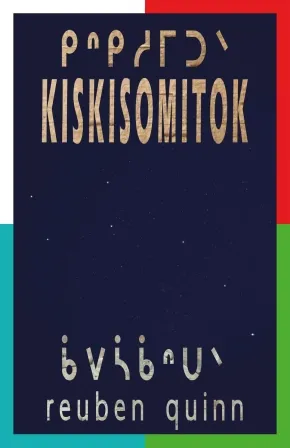
In ᑭᐢᑭᓱᒥᑐᐠ kiskisomitok: ᓀᐦᐃᔭᐤ to remind each and one other, nêhîyaw educator ᑳᐯᓵᑳᐢᑌᐠ reuben quinn uses the spirit marker writing system as a foundation for teaching ᓀᐦᐃᔭᐁᐧᐃᐧᐣ nêhîyawewin. The spirit marker writing system holds forty-four spirit markers and fourteen minor spirit markers. Some people call that system the star chart. Each spirit marker holds a law. These laws are meant to guide us in ways that support us in life. They are meant to guide us in ways of living well with the elements: fire, land, water, and air. The spirit markers remind us that these elements form the foundations of all relationships on earth.
Educator Information
In ᑭᐢᑭᓱᒥᑐᐠ kiskisomitok: ᓀᐦᐃᔭᐤ, reuben quinn uses the spirit marker writing system as a foundation for teaching ᓀᐦᐃᔭᐁᐧᐃᐧᐣ nêhîyawewin.
Additional Information
96 pages | 5.51" x 8.50" | Paperback
Synopsis:
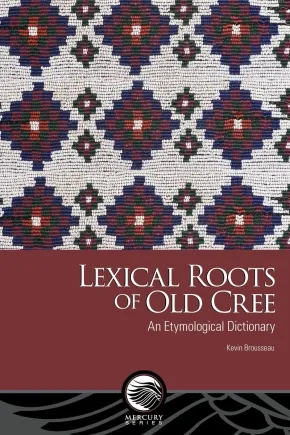
Lexical Roots of Old Cree: An Etymological Dictionary is the result of over two decades of research on historical and contemporary Cree dialects. Built from extensive linguistic fieldwork with nearly a hundred fluent speakers and supported by lexical databases and textual corpora, it offers a detailed reconstruction of Old Cree roots and their evolution across dialects such as Moose Cree, Southern East Cree, Atikamekw, and Western Innu.
Lexical roots—the smallest meaningful units of words—are central to Cree’s polysynthetic structure, where words can function as entire sentences. By meticulously tracing these roots, this dictionary provides critical insights into how words were formed in Old Cree and how they continue to be structured in modern dialects.
Beyond linguistic reconstruction, this work addresses practical challenges in Cree lexicography, particularly those arising from orthographic variations and dialectal differences. It serves as a valuable resource for lexicographers, linguists, and community members engaged in language preservation and revitalization.
The research draws from historical manuscripts, early dictionaries, and oral traditions, ensuring a comprehensive and evidence-based approach to linguistic analysis. At a time of rapid linguistic erosion, this dictionary not only documents Cree’s rich lexical heritage but also supports ongoing efforts to sustain and strengthen the language for future generations. It stands as a testament to the knowledge generously shared by fluent speakers and to the enduring vitality of Cree linguistic traditions.
Additional Information
520 pages | 6" x 9" | Paperback
Synopsis:
Beyond Bilingualism
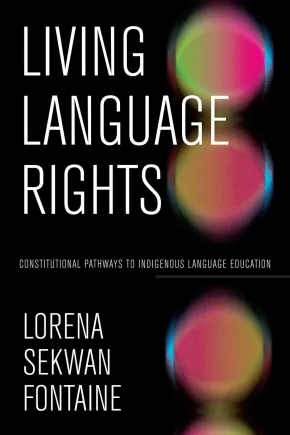
In Living Language Rights: Constitutional Pathways to Indigenous Language Education, Lorena Fontaine's ground-breaking work explores the constitutional foundations and growing recognition of Indigenous language rights in Canada. By documenting the history of First Nations' language transmission on the prairies, Fontaine demonstrates how Indigenous language rights are deeply embedded in both First Nations law and Canadian constitutional law. Equal parts personal and scholarly, Living Language Rights highlights the sacred responsibility within First Nations law to preserve and transmit language. Fontaine argues that language transmission is not only culturally significant, but also a constitutionally protected right that Canada has a duty to uphold-especially following decades of attempted linguistic genocide.
Focusing on education as the path to Indigenous language revitalization, she examines the current health of Indigenous languages and urges governments to act. Living Language Rights is a crucial read, filling an important void for anyone seeking to understand Indigenous rights, language revitalization, and Canadian constitutional law.
Reviews
"Fontaine’s interweaving of history and perspectives with the law make this a significant contribution to the field of language loss and revitalization. Living Language Rights is a “must read” for educators interested in Indigenous languages and their revitalization." - Marie Battiste, University of Saskatchewan
Educator Information
Table of Contents
List of Figures
Acknowledgements
Preface
Introduction: Foundations: First Nations Language Transmission
Chapter 1: Intercustomary Law: First Nations Language Transmission in the Prairies
Chapter 2: Linguistic Genocide: Canada's Educational System
Chapter 3: Canada's Constitution: First Nations Language Rights in Education
Chapter 4: International Law: Indigenous Peoples Language Rights in Education
Chapter 5: Indigenous Languages Act: Section 35 of Canada's Constitution Act, 1982
Conclusion
Appendix
Notes
Bibliography
Additional Information
264 pages | 6" x 9" | Paperback
Synopsis:
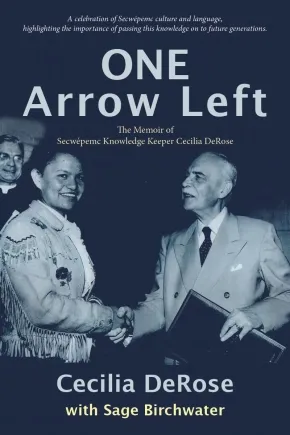
Secwépemc elder, matriarch and knowledge-keeper Cecilia DeRose presents her powerful, heartfelt and inspiring memoir of overcoming racism and adversity—One Arrow Left is a celebration of Secwépemc culture, language and the importance of passing on this knowledge to future generations.
Born in 1935 in the village of Esket, Cecilia DeRose was welcomed into a loving, supportive Secwepemc family. Growing up in an isolated meadow, Cecilia was the fourth of ten children, spending much of her early years caring for younger siblings. Ranch life was in their blood; Cecilia’s mother, Amelia Joe, was the progeny of a white ranch hand, Joe Smith, and her Secwepemc mother, Martha Williams; her father, Matthew Dick, was well-known in the Williams Lake rodeo circuit and played for the famous Alkali Braves hockey team. Navigating the complexities of being a mixed-race family, both within and outside of the Secwepemc community, would be a lifelong source of tension, which Cecilia handles with grace, tenacity and humour.
Like their parents before them, Cecilia and her siblings were sent to St. Joseph’s Mission residential school near Williams Lake. At seven years old she eagerly awaited her turn to join her older sister and brother at the mission, where she could escape the drudgery of washing diapers and caring for her younger siblings at home. Nothing could have prepared her for the cruelty of institutionalized life. Dreams of an education that might lead to a career as a teacher, lawyer, or journalist were dashed. Residential school was hell, and Cecilia was left with the scars to prove it.
In 1956, Cecilia married non-Indigenous ranch hand Lenny DeRose and lost her Indigenous status. Nevertheless, on the insistence of her father Matthew Dick, Cecilia remained true to her Secwepemc roots and traditions. She eventually regained her status and became an ambassador of Secwepemc language and cultural practices. As she raised her own six children, she took great care to bestow in them the cultural teachings of the Secwepemc identity. She eventually taught the Secwepemcstin language in the public-school system, fulfilling her dream of teaching and reinforcing her belief that “we have one arrow left in our quiver and that’s education—we must use it wisely.”
Today, Cecilia is recognized nationally as an Indigenous knowledge keeper. She has provided cross-cultural training for hospitals, courts, and law enforcement institutions, and shared her knowledge on projects ranging from ethnobotany research to culturally safe elder care. In 2018, she received the Indspire Award for Culture, Heritage and Spirituality. In 2024, she was honoured by Thompson Rivers University with a Doctor of Letter, honoris causa, for her indispensable contributions to language revitalization.
Reviews
"This memoir would make a valuable addition to high school libraries, offering students insight into historical and contemporary perspectives on Indigenous people, places, events, and their lasting impacts. The knowledge Dick DeRose gained through her lived experiences became a foundation for her work as a respected language and cultural teacher." - Debra H., Elementary School Teacher, Indigenous Books for Schools
Educator Information
This book is included in the Indigenous Books for Schools database from the Association of Book Publishers of BC. It is recommended for Grade 12 Social Studies.
Additional Information
224 pages | 6.00" x 9.00" | Paperback
Synopsis:
A Vital Resource to Preserve, Teach, and Live the Bush Cree Language
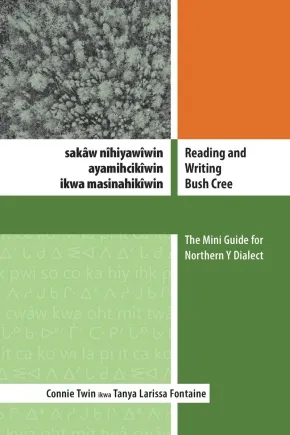
Reading and Writing Bush Cree is a heartfelt, practical, and approachable guide for fluent speakers and Cree language educators who want to learn to read and write sakâw nîhiyawîwin—Bush Cree, or the Northern Y dialect. Written by Connie Twin, a first-language speaker from Bigstone Cree Nation in northern Alberta, and Tanya Fontaine, a dedicated Cree language learner and educator, this book bridges oral fluency with written literacy to support language preservation and revitalization.
Through personal stories and cultural insight, the authors guide readers into the structure of Cree grammar and the use of Standard Roman Orthography (SRO). With clear examples of both fluent and full written forms, this book also sheds light on how Cree sounds are represented in writing and highlights important differences between Northern and Southern Y dialects.
This is more than a how-to book—it’s a call to keep sakâw nîhiyawîwin alive for future generations.
Features
- A first-language speaker’s perspective on learning to read and write Cree
- Focus onsakâw nîhiyawîwin (Bush Cree / Northern Y dialect)
- A step-by-step introduction to Standard Roman Orthography (SRO) and syllabics
- Need-to-know basics of Cree reading, writing, grammar, and Y dialect variation
Additional Information
116 pages | 6" x 9" | Paperback
Synopsis:
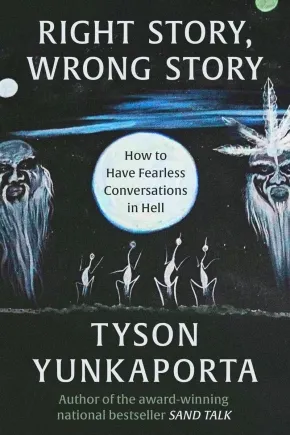
Continuing the work of the award-winning Sand Talk, Tyson Yunkaporta casts an Indigenous lens on contemporary society, challenging us to face conflict and embrace conversation to find our way onto the right track.
With Right Story, Wrong Story, Apalech Clan member Tyson Yunkaporta, from far north Queensland, tackles the divisions that prevent us from talking to one another. Yunkaporta invites us to confront life’s biggest questions and arms us with the tools we need to really listen, and to open our minds to change based upon our connections with others. He makes this point through discussions with a diverse range of people across social and political divides including:
- liberal economists
- memorization experts
- Frisian ecologists
- and Elders who are wood carvers, mathematicians, and storytellers.
Building upon the Indigenous tradition of “yarning” to weave our individual narratives into the great narrative that includes us all across any and all differences, Yunkaporta argues that story is at the heart of everything. But what is right or wrong story?
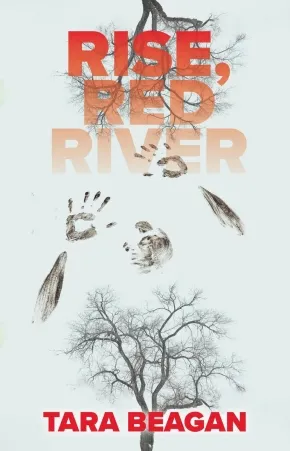
Synopsis:
“The map of the land is in our blood.”
A woman trawls the bottom of a riverbed with a makeshift plough, hoping to dislodge something—anything. The world has drastically changed: rivers run dry, rampant bushfires leave little left to burn. Still she persists searching for the stories of her loved ones, maybe even her own. She is not alone—an ancestor watches nearby. This desolate landscape is about to unearth its long-held secrets.
Inspired by the grassroots organization Drag the Red, which searches for evidence of missing Indigenous women, girls, and 2 Spirit people in the Red River of Treaty One Territory, this ethereal and engrossing drama is a profound offering to those who persevere in spite of sorrow. Told in Anishinaabemowin, English, and French, Tara Beagan’s prophetic play draws a direct connection between the treatment of Indigenous peoples and the abuse inflicted on the land. Fluid and majestic like the river itself, Rise, Red River is an invocation, a revelation, and a call to action.
Educator Information
Told in Anishinaabemowin, English, and French.
Additional Information
112 pages | 5.37" x 8.38" | Paperback
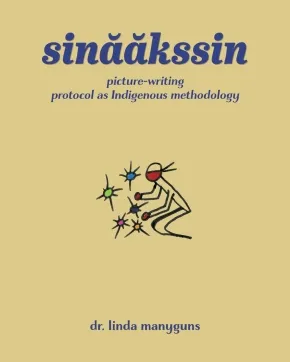
Synopsis:
sinăăkssin is grounded in cultural practice and insists on writing about research from an Indigenous perspective, focusing on the theme of Indigenous communication methods and emphasizing that culture is alive and capable of influencing research in a good way.
active applications are guided by traditional protocol and informed by symbolic methodologies from the old ways, animating and disrupting the research process to open a respectful bridge that enables the Okaki otapi'ksi to modify the housing crisis depicted in storied form. the symbolic/storied housing replication challenges the tenets of research by creating unique, culturally informed housing models designed to promote building strong families.
critical to the application of Indigenous research methodologies process, Indigenous communications methods are a significant, forgotten part of Indigenous knowledge that has not been explored as an Indigenous research method. Using Indigenous symbols as communication tools for research and applying Indigenous protocols bring people respectfully together. that respect enables the contribution of ancient knowledges to correct the current misalignment in society with Indigenous ways of living.
sinăăkssin is a purposive application of humility and humbleness. written in lowercase, it resists conforming to colonial forms of writing and helps distinguish authentic Indigenous knowledge. this book's perspective is relevant to each Indigenous studies courses or teachings about Indigenous cultures, demonstrating the marvelous opportunities we can develop by using some of the oldest communication tools to juxtaposition Indigenous and non-indigenous interfaces.
Additional Information
Paperback
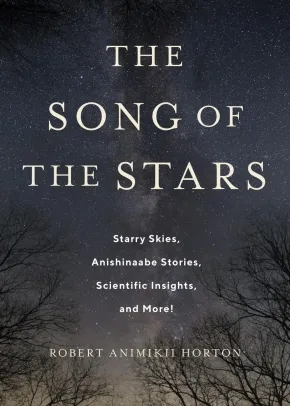
Synopsis:
Since the earliest days of human memory, countless generations have turned their eyes to the skies in wonder, drawing patterns, understanding the stars’ connection to cycles and events, and carrying their stories and teachings forward to subsequent generations.
The Song of the Stars offers a unique journey through the skies, linking us to generations of ancestors who marvelled at the same stars we still gaze upon today. The book brings together Anishinaabe cultural teachings about the cosmos and the Anishinaabemowin language with scientific insights to demonstrate how both viewpoints can help us foster deeper and more meaningful relationships to the Earth and the cosmos. Robert Animikii Horton, Anishinaabemowin educator, proves that this dual perspective can be a source of awe and wonder, inspiring in us a love of both language and science.
Demonstrating how Anishinaabe cultural teachings and scientific insights can complement one another and need not be irreconcilable opposites, The Song of the Stars provides a combination of perspectives that cultivates a deeper understanding of the vast mystery surrounding our place in the universe.
Educator Information
Contents
1. In Awe of the Awe-Inspiring
2. Aki: The Earth
3. Giizis: The Sun
4. Gichi-giizis: The Solar Eclipse
5. Naawakwe: Solar Noon
6. Ma’iingan Omiikana: The Sun’s Ecliptic
7. Aadwaa’amoog: Orion’s Belt
8. Waawaate: The Northern Lights (Aurora Borealis)
9. Jiibay Miikana: The Milky Way
10. Gookomisinaan Dibiki-giizis: The Moon
11. Gaagige-giizhig: The Universe
12. Anang: Star
13. Ojiig Anang: Fisher Star
14. Ojiig: The Big Dipper
15. Gichi-Ogimaa Anang: Vega
16. Gaa-bibooniked: The Wintermaker
17. Maang: The Little Dipper
18. Bagonegiizhig: The Pleiades
19. Moonz: Pegasus
20. Onwaajige Anang: Halley’s Comet
21. Madoodiswan: Corona Borealis
22. Ma’iingan: Canis Major
23. Nanaboozhoo: Scorpius
24. Waaban Anang: The Morning Star
25. Biidaaban, Waaban, Zaagajiwens, & Mooka’am: The Process of Sunrise
26. Mishibizhiw: Leo, Cancer, and Hydra
27. Gaa-madoodood: Hercules
28. Bangishin Anang: Falling Star
29. Binesi: Cygnus
30. Mishiginebig: Draco
31. Ikwe Anang: Venus
32. Directions and More
Additional Information
120 pages | 6.00" x 9.00" | Hardcover
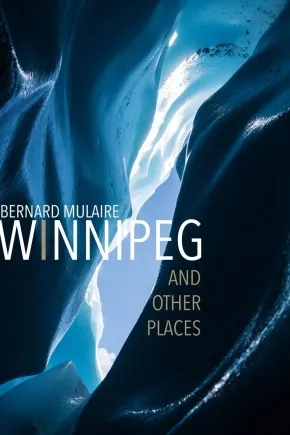
Synopsis:
Winnipeg and Other Places / Winnipeg et ailleurs is a back-to-back bilingual collection of short stories which read as sketches or snapshots of the author’s wanderings. Seen through the author’s subjective lenses, no two people have the same recollection of the past or of what just happened. Memory, loss, and longing are shaped by the author’s native Winnipeg and wherever else fate has taken him.
Educator Information
Bilingual: English and French.
Additional Information
75 pages | 3.00" x 5.00" | Paperback
Synopsis:
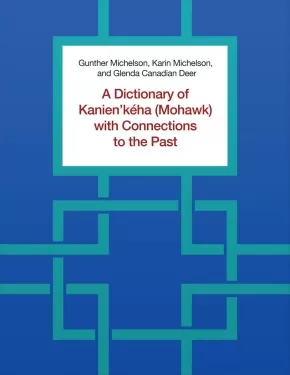
This dictionary provides a record of the Kanien’kéha (Mohawk) language as spoken by fluent first- and second-language speakers at the Kanien’kéha Mohawk Territory outside of Montreal, Canada.
The Kanien’kéha language has been written since the 1600s, and these dictionary entries include citations from published, archival, and informal writings from the seventeenth century onwards. These citations are a legacy of the substantial documents of missionary scholars and several informal vocabulary lists written by Kanien’kéha speakers, among others. The introduction to the dictionary provides a description of the organization and orthography of the historical works so that they can be used in the future by those studying and learning the language.
A Dictionary of Kanien’kéha (Mohawk) with Connections to the Past allows scholars and students to learn the meaning, composition, and etymology of words in a language known for its particularly complex word structure. The organization of the entries, according to noun and verb roots, highlights the remarkable potential and adaptability of the language to express traditional concepts, as well as innovations that have resulted from contact with other customs and languages that have become part of the contemporary culture of the Kanien’kehá:ka.
Additional Information
528 pages | 8.50" x 11.00" | 6 b&w illustrations, 18 b&w tables | Paperback
Synopsis:
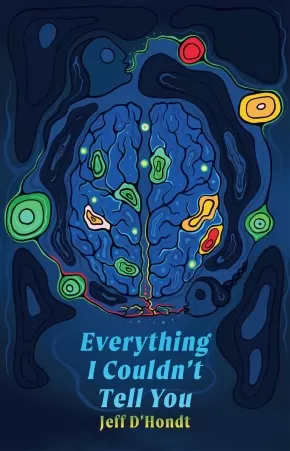
Revived from a coma after a traumatic event, Megan’s injuries leave her capable of great violence, forcing her desperate physician Cassandra to recruit Alison, an Indigenous clinician, as her consultant. Alison uses an innovative form of technologically enhanced expressive arts therapy to augment the rehabilitative effects of speaking Lenape, their shared (and almost extinct) language. However, this reminder of cultural expression and identity triggers Megan, putting herself into a life-threatening situation. With Megan’s safety in jeopardy, Alison must internalize a life-changing lesson to be able to save her: pain is often unjust, but it also reminds us that we’re alive.
Everything I Couldn’t Tell You is a potent reminder of the healing and rehabilitative power within Indigenous languages.
Reviews
“Science, music, art and language combine in the search of a healing prayer in [the] . . . mind-blowing, heart-wrenching Everything I Couldn’t Tell You.” — Life With More Cowbell
Additional Information
112 pages | 5.37" x 8.38"
 Our logo reflects the greater Nation we live within—Turtle Island (North America)—and the strength
and core of the Pacific Northwest Coast peoples—the Cedar Tree, known as the Tree of Life. We are
here to support the building of strong nations and help share Indigenous voices.
Our logo reflects the greater Nation we live within—Turtle Island (North America)—and the strength
and core of the Pacific Northwest Coast peoples—the Cedar Tree, known as the Tree of Life. We are
here to support the building of strong nations and help share Indigenous voices.


