


Canadian Indigenous Resource Lists - Secondary
1
-
15
of
349 Results;
Sort By
Go To
of 24
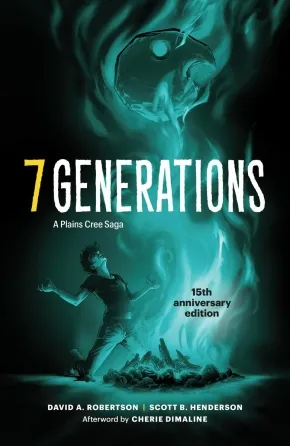


7 Generations: A Plains Cree Saga: 15th Anniversary Edition
$36.99
Artists:
Format: Paperback
Text Content Territories:
Indigenous Canadian; First Nations; Cree (Nehiyawak); Plains Cree;
ISBN / Barcode: 9781774920619
Synopsis:
Synopsis:
From the bestselling author of The Misewa Saga and When We Were Alone, comes 7 Generations: A Plains Cree Saga. This epic series of young adult graphic novels follows one Cree family over three centuries and seven generations.
Edwin, a Cree teenage boy, is struggling to feel connected to his family and his identity. From stories shared by his mother, Edwin learns about the history of his family, through the years of war, a smallpox epidemic, and residential schools, all the way through to the present and the conflicts Edwin faces in his own life.
Edwin must confront the past to heal in the present—but can his father, scarred by his own residential school experience, heal in time to help Edwin?
This special 15th anniversary edition brings together all four titles in the 7 Generations series, recoloured and relettered, with a preface from author David A. Robertson and an afterword from bestselling author Cherie Dimaline.
Educator Information
Recommended for ages 15 to 18.
Includes the stories in the 7 Generations series.
Stone introduces Edwin, a young man who must discover his family’s past if he is to have any future. Edwin learns of his ancestor Stone, a young Plains Cree man, who came of age in the early 19th century. When his older brother is tragically killed during a Blackfoot raid, Stone, the best shot and rider in his encampment, must overcome his grief to avenge his brother’s death.
In Scars, the story of White Cloud, Edwin's ancestor, is set against the smallpox epidemic of 1870-1871. After witnessing the death of his family one by one, White Cloud must summon the strength to find a new home and deliver himself from the terrible disease.
In Ends/Begins, readers learn about the story of Edwin’s father, and his experiences in a residential school. In 1964, two brothers are taken from the warm and loving care of their grandparents, and spirited away to a residential school. When older brother James discovers the anguish that his brother is living under, it leads to unspeakable tragedy.
In The Pact, the guilt and loss of James’s residential school experiences follow him into adulthood, and his life spirals out of control. Edwin, mired in his own pain, tries to navigate past the desolation of his fatherless childhood. As James tries to heal himself he begins to realize that, somehow, he must save his son’s life—as well as his own. When father and son finally meet, can they heal their shattered relationship, and themselves, or will it be too late?
Additional Information
144 pages | 6.50" x 10.00" | Paperback

Anishinaabek: The People and Nations
$17.95
Format: Paperback
Text Content Territories:
Indigenous Canadian; First Nations; Anishinaabeg;
ISBN / Barcode: 9781774565100
Synopsis:
Synopsis:
The Anishinaabek are a rich nation with teachings and practices passed down from generation to generation. Explore more about the people and nations through Anishinaabek author Jennifer Meness.
Reviews
"Anishinaabek: The People and Nations, written by Jennifer Meness of the Algonquins of Pikwàkanagàn First Nation, is part of the Indigenous Nations in North America nonfiction series. The author presents an Anishinaabe perspective on Canadian history, from early contact with Europeans to the Indian Act of 1876 and the residential school system, alongside an overview of traditional and contemporary Anishinaabe culture. Through Anishinaabemowin, role models, and narrative forms like Traditional Stories and testimonies, the book offers a multi-dimensional introduction to Anishinaabe life, past and present. A case study on the lack of clean drinking water in an Anishinaabe community highlights a critical social justice issue affecting many First Nations. Educators can use the book in full or by chapter to support lessons on Anishinaabe culture and language, Canadian history, and the legacy of residential schools. Both a learning tool and a prompt for reflection, the book fosters social awareness. A list of additional Anishinaabe resources is included at the end. Cautions / Content Warnings: Residential school abuse, 215 unmarked graves at former Kamloops Residential School, mental health challenges (depression and anxiety) and substance abuse." - Bonny-Lynn D., Elementary School Teacher, Indigenous Books for Schools
Educator & Series Information
This book is part of the Indigenous Nations in North America series.
This book is included in the Indigenous Books for Schools database from the Association of Book Publishers of BC. It is recommended for Grades 6 to 8 for Social Studies.
Additional Information
32 Pages | Paperback
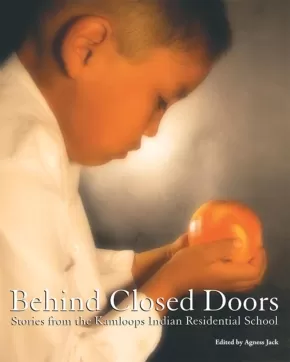
Behind Closed Doors: Stories from the Kamloops Indian Residential School
$32.95
Editors:
Format: Paperback
Text Content Territories:
Indigenous Canadian;
ISBN / Barcode: 9781926886770
Synopsis:
Synopsis:
Behind Closed Doors features written testimonials from thirty-two individuals who attended the Kamloops Indian Residential School. The school was one of many infamous residential schools that operated from 1893 to 1979. These storytellers give voice to the thousands as they remember and share with us their stolen time at the school; many stories are told through courageous tears.
Additional Information
202 pages | 11.50" x 8.00" | Paperback

Elements of Indigenous Style: A Guide for Writing By and About Indigenous Peoples - 2nd Edition
$27.95
Editors:
Format: Paperback
Text Content Territories:
Indigenous Canadian;
Reading Level: N/A
ISBN / Barcode: 9781550599459
Synopsis:
Synopsis:
The groundbreaking Indigenous style guide every writer needs.
The first published guide to common questions and issues of Indigenous style and process for those who work in words and other media is back in an updated new edition. This trusted resource offers crucial guidance to anyone who works in words or other media on how to work accurately, collaboratively, and ethically on projects involving Indigenous Peoples.
Editor Warren Cariou (Métis) and contributing editors Jordan Abel (Nisga’a), Lorena Fontaine (Cree-Anishinaabe), and Deanna Reder (Cree-Métis) continue the conversation started by the late Gregory Younging in his foundational first edition. This second conversation reflects changes in the publishing industry, Indigenous-led best practices, and society at large, including new chapters on author-editor relationships, identity and community affiliation, Two-Spirit and Indigiqueer identities, sensitivity reading, emerging issues in the digital world, and more.
This guide features:
- Twenty-two succinct style principles.
- Advice on culturally appropriate publishing practices, including how to collaborate with Indigenous Peoples, when and how to seek the advice of Elders, and how to respect Indigenous Oral Traditions and Traditional Knowledge.
- Terminology to use and to avoid.
- Advice on specific editing issues, such as biased language, capitalization, citation, accurately representing Indigenous languages, and quoting from historical sources and archives.
- Examples of projects that illustrate best practices.
Additional Information
208 pages | 5.50" x 7.50" | Paperback

La rafle des années 1960: et enfance volée aux jeunes Autochtones
$45.00
Format: Paperback
Text Content Territories:
Indigenous Canadian;
ISBN / Barcode: 9781459419902
Synopsis:
Synopsis:
The award-winning Righting Canada's Wrongs series is now available in French for Immersion classrooms!
Starting in 1951, Indigenous children in Canada were taken by social welfare agencies from their families and placed in the care of non-Indigenous families. These children grew up without their birth families, cultural roots, and language. Many tried to run away and some died in the attempt. The taking of the children is known as the Sixties Scoop, though the policies and practices started before the 1960s and lasted long after. Today, Indigenous children are shockingly over-represented in the child welfare system across Canada.
Indigenous communities organized and fought back for their children. In 1985, an official government report condemned the practice.
In the 1990s, lawsuits were filed against the governments who had supported taking the children. In 2018 and 2019, Alberta, Saskatchewan and Manitoba apologized for their roles. In 2020, the Canadian government agreed to a settlement for survivors of the Scoop.
Through hundreds of photos and primary documents, readers meet many survivors of the Scoop. They learn how Indigenous communities fought back to save their children and won, and how Indigenous communities across Canada are working towards healing today.
Reviews
“The Sixties Scoop and the Stolen Lives of Indigenous Children embraces complexity in the history it tells, which is further enhanced by the inclusion of first-hand accounts from survivors of the Scoop. Their stories provide a plurality of experiences, adding additional nuance to the book… It is timely and well-researched, an excellent resource for teachers, librarians, and parents interested in educating young people about the harms these policies had – and continue to have – on Indigenous communities, as well as the continued overrepresentation of Indigenous children in care.” — Quill & Quire
Educator & Series Information
Recommended for ages 13 to 18.
This French book is part of the series Redresser les torts du Canada (Righting Canada's Wrongs series in French).
This book is available in English: Righting Canada's Wrongs: The Sixties Scoop and the Stolen Lives of Indigenous Children
This title is included in the Indigenous Books for Schools database from the Association of Book Publishers of BC as a recommended resource for Grades 10 to 12 for Family Studies, Social Studies, and Career Education.
Additional Information
8.50" x 11.69" | 300 Photographs | Paperback
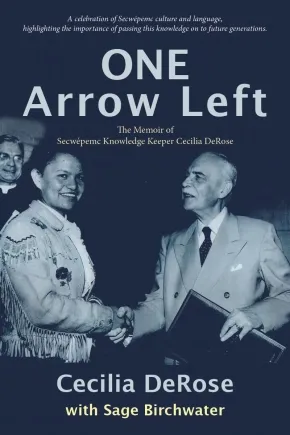
One Arrow Left: The Memoir of Secwepemc Knowledge Keeper
$26.00
Format: Paperback
Grade Levels: 12; University/College;
ISBN / Barcode: 9781773861586
Synopsis:
Synopsis:
Secwépemc elder, matriarch and knowledge-keeper Cecilia DeRose presents her powerful, heartfelt and inspiring memoir of overcoming racism and adversity—One Arrow Left is a celebration of Secwépemc culture, language and the importance of passing on this knowledge to future generations.
Born in 1935 in the village of Esket, Cecilia DeRose was welcomed into a loving, supportive Secwepemc family. Growing up in an isolated meadow, Cecilia was the fourth of ten children, spending much of her early years caring for younger siblings. Ranch life was in their blood; Cecilia’s mother, Amelia Joe, was the progeny of a white ranch hand, Joe Smith, and her Secwepemc mother, Martha Williams; her father, Matthew Dick, was well-known in the Williams Lake rodeo circuit and played for the famous Alkali Braves hockey team. Navigating the complexities of being a mixed-race family, both within and outside of the Secwepemc community, would be a lifelong source of tension, which Cecilia handles with grace, tenacity and humour.
Like their parents before them, Cecilia and her siblings were sent to St. Joseph’s Mission residential school near Williams Lake. At seven years old she eagerly awaited her turn to join her older sister and brother at the mission, where she could escape the drudgery of washing diapers and caring for her younger siblings at home. Nothing could have prepared her for the cruelty of institutionalized life. Dreams of an education that might lead to a career as a teacher, lawyer, or journalist were dashed. Residential school was hell, and Cecilia was left with the scars to prove it.
In 1956, Cecilia married non-Indigenous ranch hand Lenny DeRose and lost her Indigenous status. Nevertheless, on the insistence of her father Matthew Dick, Cecilia remained true to her Secwepemc roots and traditions. She eventually regained her status and became an ambassador of Secwepemc language and cultural practices. As she raised her own six children, she took great care to bestow in them the cultural teachings of the Secwepemc identity. She eventually taught the Secwepemcstin language in the public-school system, fulfilling her dream of teaching and reinforcing her belief that “we have one arrow left in our quiver and that’s education—we must use it wisely.”
Today, Cecilia is recognized nationally as an Indigenous knowledge keeper. She has provided cross-cultural training for hospitals, courts, and law enforcement institutions, and shared her knowledge on projects ranging from ethnobotany research to culturally safe elder care. In 2018, she received the Indspire Award for Culture, Heritage and Spirituality. In 2024, she was honoured by Thompson Rivers University with a Doctor of Letter, honoris causa, for her indispensable contributions to language revitalization.
Reviews
"This memoir would make a valuable addition to high school libraries, offering students insight into historical and contemporary perspectives on Indigenous people, places, events, and their lasting impacts. The knowledge Dick DeRose gained through her lived experiences became a foundation for her work as a respected language and cultural teacher." - Debra H., Elementary School Teacher, Indigenous Books for Schools
Educator Information
This book is included in the Indigenous Books for Schools database from the Association of Book Publishers of BC. It is recommended for Grade 12 Social Studies.
Additional Information
224 pages | 6.00" x 9.00" | Paperback
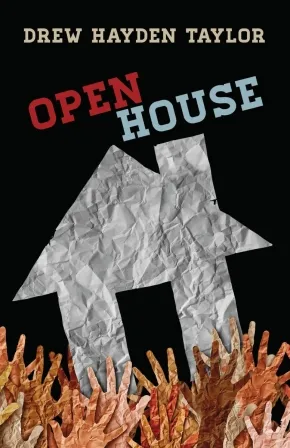
Open House
$18.95
Format: Paperback
Text Content Territories:
Indigenous Canadian;
ISBN / Barcode: 9781772016567
Synopsis:
Synopsis:
Hoping to snag their perfect home in a red-hot housing market, an African Canadian man, a Chinese Canadian man, and a Jewish/Indigenous lesbian couple show up to an open house run by a white settler real estate agent. Each potential buyer feels most deserving of the prize. When a police incident outside traps them together in the house, debate erupts over which of their cultures has faced the most discrimination and exclusion. Passions run high and opinions clash. With wry humour, Open House deftly navigates current conversations about oppression, colonization, and middle-class aspirations.
Reviews
"This play connects well with Social Studies curriculum, as it allows us to understand the impact of negative comments, actions, and perceptions that continue to occur in society today. Open House encourages discussions about gender, identity, race, and colonization, allowing students to gain perspective and awareness." - Shaniah H., K-12 Teacher, Indigenous Books for Schools
Educator Information
This book is included in the Indigenous Books for Schools database from the Association of Book Publishers of BC. It is recommended for 11 and 12 for Drama and Social Studies.
Additional Information
5.82" x 8.26" | Paperback
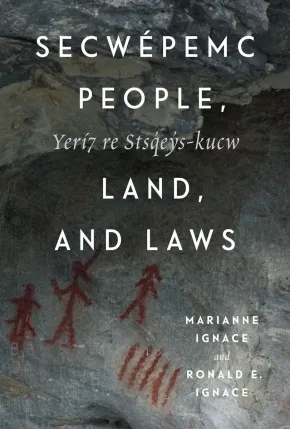
Secwépemc People, Land, and Laws: Yerí7 re Stsq'ey's-kucw (PB)
$39.95
Format: Paperback
Text Content Territories:
Indigenous Canadian; First Nations; Salish; Interior Salish; Secwepemc (Shuswap);
Reading Level: N/A
ISBN / Barcode: 9780228026358
Synopsis:
Synopsis:
Secwépemc People, Land, and Laws is a journey through the 10,000-year history of the Interior Plateau nation in British Columbia. Told through the lens of past and present Indigenous storytellers, this volume details how a homeland has shaped Secwépemc existence while the Secwépemc have in turn shaped their homeland. Marianne Ignace and Ronald Ignace, with contributions from ethnobotanist Nancy Turner, archaeologist Mike Rousseau, and geographer Ken Favrholdt, compellingly weave together Secwépemc narratives about ancestors’ deeds. They demonstrate how these stories are the manifestation of Indigenous laws (stsq?ey?) for social and moral conduct among humans and all sentient beings on the land, and for social and political relations within the nation and with outsiders. Breathing new life into stories about past transformations, the authors place these narratives in dialogue with written historical sources and knowledge from archaeology, ethnography, linguistics, earth science, and ethnobiology. In addition to a wealth of detail about Secwépemc land stewardship, the social and political order, and spiritual concepts and relations embedded in the Indigenous language, the book shows how between the mid-1800s and the 1920s the Secwépemc people resisted devastating oppression and the theft of their land, and fought to retain political autonomy while tenaciously maintaining a connection with their homeland, ancestors, and laws. An exemplary work in collaboration, Secwépemc People, Land, and Laws points to the ways in which Indigenous laws and traditions can guide present and future social and political process among the Secwépemc and with settler society.
Reviews
"This text is not only impressive and powerful for the sheer depth in which it introduces and documents Secwépemc history, enduring laws, language, and relationships to land, but also in the ways in which Secwépemc voices, past and present, are represented and foregrounded throughout." - Transmotion
"Secwépemc People, Land, and Laws will not only become known as the Secwépemc encyclopedia, it also sets the new gold standard for Indigenous scholarship. I will treasure this book as a family heirloom, but I will also be using it to teach Indigenous studies research methods and Indigenous history and to provide an aspirational example of what Indigenous community-engaged, decolonized scholarship can look like. And for this I am deeply indebted to the Ignaces for their lifetime of work." - Sarah Nickel, McColl Magazine
"A masterful and definitive story of an ancient culture that continues to thrive despite years of colonial oppression." - BC Studies
Additional Information
640 pages | 6.25" x 9.25" | Paperback
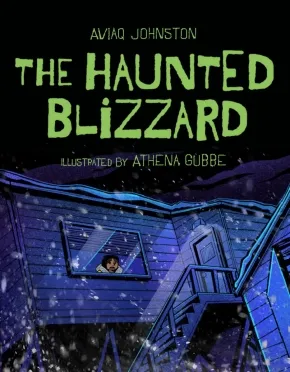
The Haunted Blizzard
$22.95
Artists:
Format: Hardcover
Text Content Territories:
Indigenous Canadian; Inuit;
ISBN / Barcode: 9781772275605
Synopsis:
Synopsis:
A teenage girl walks home in a burgeoning blizzard, happy to have an unexpected snow day. Ignoring an Elder’s warning about the terror the blizzard holds, she finds herself alone in her home with an unseen presence stalking and tormenting her. What does it want? And will she survive?
Reviews
"Aviaq Johnston’s graphic novel The Haunted Blizzard draws readers into a chilling tale of mystery and unease. The story follows a young girl, Nita, sent home when school closes due to a blizzard. Along the way, her grandmother warns her the storm is filled with dark forces, but Nita brushes off the caution and continues home alone. As the storm rages, Nita soon realizes she should have heeded her grandmother’s words—something sinister is lurking in the blizzard. Johnston blends suspense with cultural wisdom in this gripping, forty-page story that leaves readers on edge and eager for more." - Debra H., Elementary School Teacher, Indigenous Books for Schools
Educator Information
Recommended for ages 12 to 18.
This title is included in the Indigenous Books for Schools database from the Association of Book Publishers of BC. It's recommended for Grades 8 to 12 for Art, Drama, and English Language Arts.
Additional Information
40 pages | 7.00" x 9.00" | Hardcover
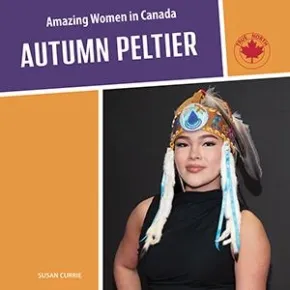
Autumn Peltier
$15.95
Format: Paperback
Text Content Territories:
Indigenous Canadian; First Nations; Anishinaabeg; Wiikwemkoong Unceded Territory;
ISBN / Barcode: 9781774566718
Synopsis:
Synopsis:
Only 19 years old, Autumn Peltier has achieved so much by advocating for her community. Discover more about her advocacy for Indigenous peoples and clean water.
Reviews
"Autumn Peltier tells the inspiring story of a young Indigenous woman who has devoted her life to protecting water and advocating for clean, safe water on reserves across Canada. Her great-aunt, Josephine Mandamin, was a respected water protector and served as the Chief Water Commissioner for the Anishinabek Nation. Inspired by her aunt, Autumn recognized the importance of water at a young age and, at just 13 years old, addressed the United Nations for the first time. When Josephine passed away, Autumn—only 15 years old—was named the new Chief Water Commissioner. As a young Indigenous leader, Autumn Peltier is a powerful role model who continues to make a meaningful impact. This book would make an excellent read-aloud in the classroom." - Debra H., Elementary School Teacher, Indigenous Books for Schools
Educator Information
Juvenile Nonfiction.
This book is included in the Indigenous Books for Schools database from the Association of Book Publishers of BC. It is recommended for Grades 4 to 8 for Social Studies, Science, Physical and Health Education, and Career Education.
Additional Information
24 Pages
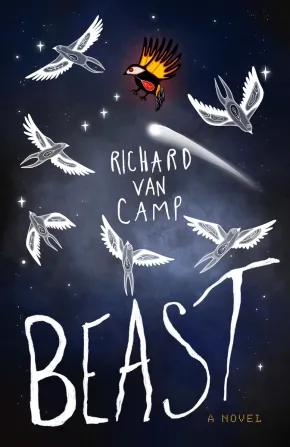
Beast: A Novel
$24.95
Format: Paperback
Text Content Territories:
Indigenous Canadian; First Nations; Dene; Denesuline (Chipewyan); Tlicho (Dogrib); Cree (Nehiyawak); Métis;
ISBN / Barcode: 9781771624145
Synopsis:
Synopsis:
Returning to his favourite setting of Fort Simmer, Northwest Territories, Richard Van Camp brings his exuberant style to a captivating teen novel that blends the supernatural with 1980s-era nostalgia to reflect on friendship, tradition and forgiveness.
For as long as Lawson can remember, his life in a small Northwest Territories town has revolved around “the Treaty” between the Dogrib and the Chipewyan, set down centuries ago to prevent the return of bloody warfare between the two peoples.
On the Dogrib side, Lawson and his family have done their best to keep the pact alive with the neighbouring Cranes, a family with ancestral ties to a revered Chipewyan war chief. But even as Lawson and his father dutifully tidy the Cranes’ property as an act of respect, their counterparts offer little more than scowls and derision in return, despite the fact that both families are responsible for protecting the treaty.
Worse still, it seems that one of the Cranes’ boys is doing all he can to revive the old conflict: Silver, fresh out of jail, has placed himself in the service of a cruel, ghoulish spirit bent on destroying the peace. Now it's up to Isaiah Valentine, a Cree Grass Dancer, Shari Burns, a Metis psychic, and Lawson Sauron, a Dogrib Yabati—or protector—to face what Silver Cranes has called back.
This latest feat of storytelling magic by celebrated author Richard Van Camp blends sharply observed realism and hair-raising horror as it plays out against a 1980s-era backdrop replete with Platinum Blonde songs and episodes of Degrassi Junior High. Unfolding in the fictional town of Fort Simmer—the setting of previous Van Camp stories—Beast delivers a gripping, spirited tale that pits the powers of tradition against the pull of a vengeful past.
Reviews
"Beast opens conversations about culture, traditions, and supernatural beings, allowing us to understand the importance of community, finding our purpose/gifts, and supporting one another in community. Beast covers topics such as grief, intention setting, and the importance of culture and traditions in Indigenous communities." - Shaniah H., K-12 Teacher, Indigenous Books for Schools
Educator Information
Young adult fiction.
This book is included in the Indigenous Books for Schools database from the Association of Book Publishers of BC. It is recommended for Grades 8 to 12 for English Language Arts.
Content Warning: Violence, fighting, horror, and suspense.
Additional Information
312 pages | 5.50" x 8.50" | Paperback
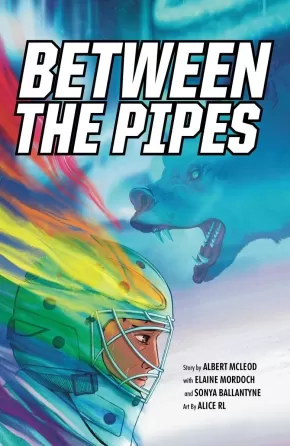
Between the Pipes
$21.95
Artists:
Format: Paperback
Text Content Territories:
Indigenous Canadian; First Nations; Cree (Nehiyawak);
ISBN / Barcode: 9781774921043
Synopsis:
Synopsis:
In this engrossing graphic novel, teen hockey player Chase learns more about himself and his identity in the face of prejudice and homophobia.
Thirteen-year-old Chase’s life and identity should be simple. He’s the goalie for his hockey team, the Eagles. He’s a friend to Kevin and Jade. He's Kookum's youngest grandchild. He’s a boy. He should like girls.
But it’s not that simple. Chase doesn’t like girls the way that the other boys do. It’s scary being so different from his peers. Scarier still is the feeling that his teammates can tell who he is—and that they hate him for it. If he pretends hard enough, maybe he can hide the truth.
Real strength and change can’t come from a place of shame. Chase’s dreams are troubled by visions of a bear spirit, and the more he tries to hide, the more everything falls apart. With the help of an Elder, and a Two-Spirit mentor, can Chase find the strength to be proud of who he is?
Between the Pipes explores toxic masculinity in hockey through the experiences of an Indigenous teen.
Reviews
“Highlights the importance of community and cultural connection as roots for embracing one’s identity.” — Kirkus Reviews
“The authors deftly confront multiple layers of intolerance exacerbated by toxic masculinity. Ojibwe artist RL uses saturated full color (with well-placed, empowering rainbows) to capture Chase’s self-empowering journey. The result is a compelling, hope-giving antidote against potential at-risk suicide among 2-Spirit/Indigenous LGBTQQIA+ youth.” — Booklist
“This hopeful...story offers valuable insight into Chase’s experience as a gay, Indigenous teen. Hockey and identity collide in this affirming graphic novel about recognizing and valuing one’s authentic self.” — School Library Journal
Educator Information
Recommended for ages 12 - 18.
Reading Level: Fountas & Pinnell Y
This book is included in the Indigenous Books for Schools database from the Association of Book Publishers of BC. It is recommended for Grades 6 to 9 for Career Education, English Language Arts, Physical and Health Education, and Social Studies.
Caution: Bullying and homophobia.
Additional Information
56 pages | 6.50" x 10.00" | Paperback
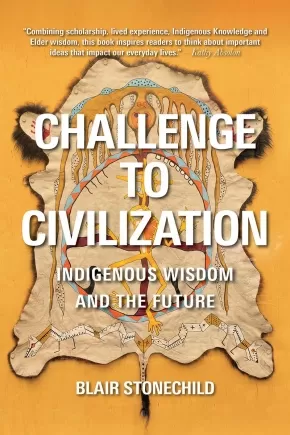
Challenge to Civilization: Indigenous Wisdom and the Future
$29.95
Format: Paperback
Text Content Territories:
Indigenous;
ISBN / Barcode: 9780889779815
Synopsis:
Synopsis:
Rediscovering, valuing, and embracing Indigenous spirituality and wisdom is critical for humanity to survive in the future.
Civilization is a western, Eurocentric construct borne from a distrust of nature, a desire to endlessly exploit it and profit from it. Despite being a relatively recent development, civilization’s inherent logic has resulted in over-population, inequality, poverty, misery, war, and climate change and now threatens humanity’s very survival. How can humanity expect to survive if it continues to look for solutions from the very structures and ideologies that have brought it to the brink of extinction?
In this final book of his trilogy, Dr. Blair Stonechild deftly illustrates how Indigenous spirituality, wisdom, and land-based knowledge is critical to human survival in the face of environmental destruction and human-induced climate change. Reinterpreting world history from an Indigenous perspective, Stonechild’s solution to this unfolding catastrophe is “ecolization,” a state in which humans recognize they are not the central purpose of creation and a way of existing harmoniously with the natural and spiritual worlds.
Beautifully written, urgent, and critical, Challenge to Civilization reminds us that it is not Earth that is in danger of extinction, but ourselves, and Indigenous spiritual wisdom can be the guiding light through what will otherwise be humanity’s final, ever-darkening days.
Reviews
"Stonechild examines the history of Eurocentric knowledge and how it does not comport with Indigenous wisdom. The narrow, individualistic definitions of “civilized” imposed by Western philosophy, academia, and ontology have shaped our world, with lasting consequences. By undervaluing Indigenous wisdom, inextricably tied to the Land, humans have developed a fear of nature, creating a potentially irreparable rift that can only be bridged by recognizing how disconnected humans have become from their place in the natural world. Stonechild warns this is a time of reckoning where our survival on this planet and the balance of nature cannot be restored unless humans redefine knowledge and what it means to be civilized." - Stacey M., High School Teacher, Indigenous Books for Schools
Educator Information
This book is included in the Indigenous Books for Schools database from the Association of Book Publishers of BC. It is recommended for Grades 10 to 12 for English Language Arts, Science, Social Studies, and Technology.
Additional Information
184 pages | 6.00" x 9.00" | Paperback
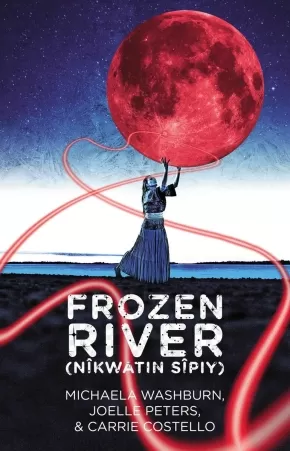
Frozen River (nîkwatin sîpiy)
$18.95
Format: Paperback
Text Content Territories:
Indigenous Canadian; First Nations; Anishinaabeg; Ojibway; Cree (Nehiyawak); Métis;
ISBN / Barcode: 9780369104892
Synopsis:
Synopsis:
Exploring reconciliation and connection through a story that spans seven generations, Frozen River (nîkwatin sîpiy) tells the story of two eleven-year-olds through the eyes of Grandmother Moon. Eilidh and Wâpam are born under the same blood moon, but Eilidh was born in Scotland and Wâpam in Kihci-Manito kâ ayapit, now known as Manitoba. After sailing across the ocean in hopes of a more prosperous life, Eilidh meets Wâpam deep in the forest, and the two become instant friends. Coming from vastly different worlds, Eilidh and Wâpam decide to teach each other about their ways of life. But when a sacred promise between them is broken, the relationship among cultures becomes jeopardized for generations to come.
Frozen River (nîkwatin sîpiy) shows audiences that an openness to learn from those who have protected and honoured the waterways for centuries can lead to healing and reconciliation.
Awards
- 2021 Sharon Enkin Plays for Young People Award winner
Reviews
"The show’s script cleverly makes important issues digestible for young audiences."— Van City Vince
"Frozen River (nîkwatin sîpiy) is a three-act play that explores colonization and reconciliation over seven generations through the friendship story of two eleven-year-old girls, one Swampy Cree and one Scottish, who are born under the same blood moon. The play is narrated by Grandmother Moon, who follows their friendship and that of their descendants. This is an exploration of the differences between their cultures, the openness and understanding that are needed to truly understand and appreciate those differences, and the importance of mending broken promises. Throughout the play, many cultural practices and traditions of the Swampy Cree are shared, as well as their language. The book includes a set of language notes for readers that provide both definitions and phonetic pronunciations." - Anna A., High School Teacher & Indigenous Education Teacher Mentor, Indigenous Books for Schools
Educator Information
Recommended for ages 8 to 14 by the publisher.
This resource is included in the Indigenous Books for Schools database from the Association of Book Publishers of BC. It is recommended for Grades 10 to 12 for Drama, English Language Arts, and Social Studies.
Additional Information
88 pages | 5.37" x 8.38" | Paperback
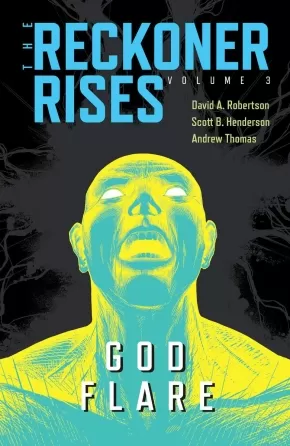
God Flare
$23.00
Artists:
Format: Paperback
Text Content Territories:
Indigenous Canadian;
ISBN / Barcode: 9781774920442
Synopsis:
Synopsis:
Eva and Cole are back just in time to face Mihko’s latest threat: the terrifying results of human experimentation.
Cole and Eva are reunited once more. A new terror looms as Mihko Laboratories latest human experiments are about to be unleashed. Cole is on the long road to recovery, but he’s still struggling with survivor’s guilt. He must stay focused as he, Eva, and their friends prepare for the final showdown with Mihko.
After the events of Version Control, Brady’s mind is fractured, and he can’t distinguish between what really happened and what Mikho made him believe. Eva and Cole may have to face this terrifying threat without him. It’s a grim prospect, but a new discovery might just change everything: God Flare.
Will Brady recover enough to join the fight? Can Cole come to terms with his abilities in spite of his PTSD? And will God Flare help even the odds against Mihko?
Reviews
"The art style is realistic and gritty, reflecting the serious and dystopian tone of the story. Colors are dark and muted, actions are clear, and special effects of the supernatural pop off the page, a marked contrast to more normal backgrounds and objects.” — Youth Services Book Review
"In this graphic novel, Cole, Eva, and their friends confront the organization that imposed mind control upon them. Interwoven into the story is Cole’s struggle to overcome his past childhood trauma. Identity, the strength of friendships, acts of resistance, the importance of cultural safety, and supernatural elements are explored within the novel. Students who appreciate science fiction and fantasy will find this graphic storytelling, along with Scott B. Henderson’s artwork, engaging. The dialogue reflects the authentic voices of Indigenous youth Educators should handle this book with care, as some of its language may be considered unsuitable for the classroom. For a complete understanding of the plot, it is recommended that this book be read sequentially after the first two volumes. Cautions / Content Warnings: Coarse language, smoking, and graphic violence." - Stacey M., High School Teacher, Indigenous Books for Schools
Educator & Series Information
Recommended for grades 8 to 12.
This book is part of the graphic novel series, The Reckoner Rises, a continuation of The Reckoner trilogy. It is Book 3 in the series.
This book is included in the Indigenous Books for Schools database from the Association of Book Publishers of BC. It is recommended for Grades 10 to 12 for English Language Arts and Social Studies.
Cautions: This work contains strong, coarse language, smoking, and depictions of graphic violence.
Additional Information
72 pages | 6.50" x 10.00" | Paperback
Sort By
Go To
of 24
 Our logo reflects the greater Nation we live within—Turtle Island (North America)—and the strength
and core of the Pacific Northwest Coast peoples—the Cedar Tree, known as the Tree of Life. We are
here to support the building of strong nations and help share Indigenous voices.
Our logo reflects the greater Nation we live within—Turtle Island (North America)—and the strength
and core of the Pacific Northwest Coast peoples—the Cedar Tree, known as the Tree of Life. We are
here to support the building of strong nations and help share Indigenous voices.


