

Qinuisaarniq
Qinuisaarniq (“resiliency”) is a program created to educate Nunavummiut about the history and impacts of residential schools, policies of assimilation, and other colonial acts that have affected the Canadian Arctic.
Each resource has been carefully written and reviewed to include level-appropriate opportunities for students to learn about colonial acts and policies that have affected Inuit. These acts and policies created long-lasting impacts on Inuit individuals and communities, which are still being felt today.
The resources in this program include personal interviews, testimony, and writing; non-fiction informational resources; and information about traditional Inuit practices.
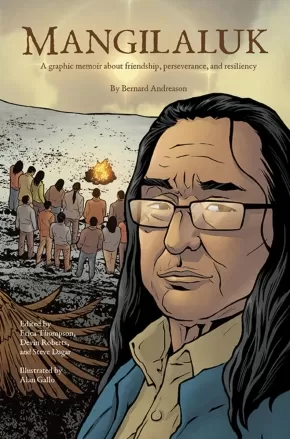


Synopsis:
“Some children are born into the world and are home as soon as they come Earthside. Others spend their lifetimes searching for a home, a place to belong, a place where they are safe. I am one of those children.”
After running away from residential school, Bernard Andreason and his two best friends begin a harrowing 130-kilometre journey from Inuvik to Tuktoyaktuk, one which only Bernard would survive. In this heartbreaking and beautifully told graphic memoir, Bernard recounts his time in residential school and the tragic journey that took the lives of his two best friends. We then follow Bernard as he returns home, haunted by his past and struggling to find his place. Despite enduring more challenges into adulthood, Bernard never stops pursuing healing and higher learning, and he finds a support network that helps him. His story shows us that the possibility of finding a safe and loving home exists, and it is something every child deserves.
Mangilaluk is an extraordinarily affecting new addition to Qinuisaarniq ("resiliency"), a collection of books created to educate readers about the history and impacts of residential schools.
Reviews
"Mangilaluk by Bernard Anderson is a middle-grade novel that immerses readers in the life of an Inuk boy named Mangilaluk, set against the backdrop of the Arctic. This coming-of-age tale explores themes of cultural identity, survival, and the clash between tradition and modern influences. In social studies and history, students can delve into the rich portrayal of Inuit culture, traditions, and the challenges faced by indigenous communities in the Arctic. In Science/Language Arts classes, the book offers insights into Arctic ecosystems, wildlife, and survival skills, making it valuable for science classes. Overall, Mangilaluk enriches education with its engaging narrative and educational connections across various disciplines, providing students a deeper understanding of Arctic life and cultural diversity." - David D., Indigenous Educator & Administrator, Indigenous Books for Schools
Educator Information
Recommended for ages 14-18 by the publisher. In the Indigenous Books for Schools database, it is recommended as a middle-grade work.
Mangilaluk exposes readers to the experience and perspective of an Inuk residential school survivor. It also shares a powerful story of friendship, personal growth and self-forgiveness, and the value of finding a supportive community.
This book is part of the Qinuisaarniq program. Qinuisaarniq (“resiliency”) is a program created to educate Nunavummiut and all Canadians about the history and impacts of residential schools, policies of assimilation, and other colonial acts that have affected the Canadian Arctic.
Each resource has been carefully written and reviewed to include level-appropriate opportunities for students to learn about colonial acts and policies that have affected Inuit. These acts and policies created long-lasting impacts on Inuit individuals and communities, which are still being felt today.
This book is included in the Indigenous Books for Schools database from the Association of Book Publishers of BC. It is recommended for Grades 5 to 8 for English Language Arts, Science, and Social Studies.
Caution: Residential school, abuse, drugs, and alcohol
Additional Information
100 pages | 7.25" x 11.00" | Paperback

Synopsis:
“Before schools were introduced to the Inuit, we were taught by our relatives.”
In this picture book, Monica Ittusardjuat shares how she learned knowledge and skills in a time before being taken to residential school. She describes how children learned through playing games, imitating grown-ups, and observing adults around them.
Educator & Series Information
Recommended for ages 7 to 9.
Inhabit Education Books is proud to introduce Qinuisaarniq (“resiliency”), a program created to educate Nunavummiut about the history and impacts of residential schools, policies of assimilation, and other colonial acts that affected the Canadian Arctic. This book is a part of that program.
Each resource in the program has been carefully written and reviewed to include level-appropriate opportunities for students to learn about colonial acts and policies that affected Inuit. Topics covered include the residential school system, relocations to settlements and the High Arctic, sled dog slaughters, the use of E and W numbers, and others. These acts and policies created long-lasting impacts on Inuit individuals and communities, which are still being felt today.
The resources in this program include personal interviews, testimony, and writing; non-fiction informational resources; and information about traditional Inuit practices.
This resource is included in the Canadian Indigenous Books for Schools 2020/2021 list as being useful for grades 2 to 4 for English Language Arts and Social Studies.
Additional Information
26 pages | 8.00" x 9.00"
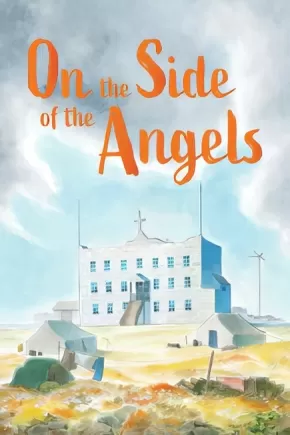
Synopsis:
"Then one day a ‘flyable’ took me away from our world through the sky to a dark and desolate place.”
Jose Kusugak had a typical Arctic childhood, growing up playing games, enjoying food caught by hunters, and watching his mother preparing skins. But he was one of the first generation of Inuit children who were taken from their homes and communities and sent to live in residential schools. In this moving and candid memoir, Jose tells of his experiences at residential school and the lifelong effects it had on him.
Educator & Series Information
Recommended for ages 12 to 15.
Included in the Canadian Indigenous Books for Schools 2020/2021 resource list for grades 6 to 9 for Social Studies, Science, and English Language Arts.
A personal, real story that introduces young readers to the memoir genre.
Inhabit Education Books is proud to introduce Qinuisaarniq (“resiliency”), a program created to educate Nunavummiut about the history and impacts of residential schools, policies of assimilation, and other colonial acts that affected the Canadian Arctic.
Each resource in the program has been carefully written and reviewed to include level-appropriate opportunities for students to learn about colonial acts and policies that affected Inuit. Topics covered include the residential school system, relocations to settlements and the High Arctic, sled dog slaughters, the use of E and W numbers, and others. These acts and policies created long-lasting impacts on Inuit individuals and communities, which are still being felt today.
The resources in this program include personal interviews, testimony, and writing; non-fiction informational resources; and information about traditional Inuit practices.
Additional Information
56 pages | 9.00" x 6.00". | b&w illustrations

Synopsis:
When Nellie Winters was 11 years old, she was sent to attend the Nain Boarding School, a residential school 400 kilometres from her home. In this memoir, she recalls life before residential school, her experiences at the school, and what it was like to come home.
Accompanied by the author’s original illustrations, this moving, often funny memoir sheds light on the experiences of Inuit residential school survivors in Labrador.
Educator & Series Information
Recommended for ages 11-14.
This book is recommended in the Canadian Indigenous Books for Schools 2020/2021 resource list for grades 5 to 7 for English Language Arts and Social Studies.
This book is part of the Qinuisaarniq (“resiliency”) program. This is a program created to educate Nunavummiut about the history and impacts of residential schools, policies of assimilation, and other colonial acts that have affected the Canadian Arctic.
Each resource has been carefully written and reviewed to include level-appropriate opportunities for students to learn about colonial acts and policies that have affected Inuit. These acts and policies created long-lasting impacts on Inuit individuals and communities, which are still being felt today.
The resources in this program include personal interviews, testimony, and writing; non-fiction informational resources; and information about traditional Inuit practices.
Additional Information
26 pages | 9.00" x 7.00" | Transcribed and edited by Erica Oberndorfer
 Our logo reflects the greater Nation we live within—Turtle Island (North America)—and the strength
and core of the Pacific Northwest Coast peoples—the Cedar Tree, known as the Tree of Life. We are
here to support the building of strong nations and help share Indigenous voices.
Our logo reflects the greater Nation we live within—Turtle Island (North America)—and the strength
and core of the Pacific Northwest Coast peoples—the Cedar Tree, known as the Tree of Life. We are
here to support the building of strong nations and help share Indigenous voices.


