


Samantha Beynon
Samantha Beynon was born and raised on Kxeen Island, British Columbia, on her ancestral Ts’msyen land. She now lives and works on the unceded territories of the lək̓ʷəŋən-speaking Peoples and the W̱SÁNEĆ Peoples. She has Nisg̱a'a, Ts’msyen, and European heritage with roots in Ging̱olx, Gitlax̱tʼaamiks, and Lax Kw’alaams. Maternally, she comes from Wilps Axdii Wil Luugooda (The House that is Always Full) and the Ganhada Frog Clan. She comes from the family names Beynon, Trimble, Gurney, Adams, and Fitzgerald. Samantha holds a Master of Education in Educational Leadership from Vancouver Island University, and she is committed to lifelong learning and supporting her community through Indigenous education. She is a passionate writer and educator, a loving mother and wife, and the author of Oolichan Moon and Celebrating Potlatches.
Kids Books (3)


Celebrating Potlatches
$21.95
Artists:
Format:
Hardcover
Text Content Territories:
Indigenous Canadian; First Nations; Tsimshian (Ts'msyen); Nisga'a;
ISBN / Barcode: 9781771746564
Synopsis:
Synopsis:
“Papa, what is a Potlatch?”
Inspired by Ts’msyen Chief William Beynon’s historic notebooks on Potlatches in the Gitxsan village of Gitsegukla, Celebrating Potlatches pairs intergenerational storytelling with beautiful illustrations to honour Indigenous traditions. From the award-winning author of Oolichan Moon and the accomplished illustrator of Be a Good Ancestor, this book recounts the 1885 Potlatch ban and the resilience of the communities who fought to keep their traditions alive.
Awards
- CCBC's Best Books for Kids & Teens, Fall 2025
Reviews
“Heartfelt and timely, Celebrating Potlatches gifts readers with cultural teachings through an intergenerational account of Indigenous resilience. This book is a beautiful tribute to the author’s great-grandfather, William Beynon, whose life’s work documenting oral histories of Sm’algya̱x-speaking Peoples and their Potlatches continues to be foundational to our cultural resurgence today.” – Sm Łoodm ‘Nüüsm (Dr. Mique’l Dangeli), Sm’algya̱x language expert and Assistant Professor of Indigenous Arts at the University of Victoria
“This beautiful book shares the importance of community, culture, and identity. As you make your way through the pictures and words, they bring you to an understanding of how important the Potlatch ceremony was and continues to be for Indigenous Peoples.” – Carolyn Roberts, educator, speaker, and author of Re-Storying Education
Educator Information
Recommended for ages 4 to 8.
Through this conversational historic account, readers can learn alongside the narrator as his Papa shares his wisdom about the rich history of the Potlatch.
Curriculum Connections
- Early literacy – listening, reading, and discussing
- Art – traditional Indigenous art, drumming, and regalia
- Social studies – the 1885 Potlatch ban, history of Indigenous Peoples, connection to community
- Social responsibility – uplifting ourselves and others, honouring traditions
- Indigenous knowledge and traditions – traditional teachings, Potlatch ceremonies, intergenerational storytelling
Two free, downloadable lesson plans—one for kindergarten to Grade 1 and one for Grades 2 to 3—provide connections to Social Studies curriculum.
Additional Information
32 Pages | 10" x 8.5" | Hardcover
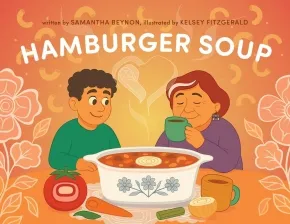
Hamburger Soup
$24.95
Artists:
Format:
Hardcover
Text Content Territories:
Indigenous Canadian; First Nations; Nisga'a;
ISBN / Barcode: 9781998526505
Synopsis:
Synopsis:
Celebrate contemporary Indigenous traditions with this illustrated children’s picture book!
A young Nisg̱a’a boy, Simgan, learns to cook hamburger soup and fry bread with Grandmother on a crisp fall day. As they gather ingredients, chop vegetables and stir the pot, Grandmother remembers coastal fishing trips and community with friends—blending Nisg̲a’a vocabulary into her stories of food, family and tradition to create cultural memory and document everyday life.
Indigenous people have many differences from Nation to Nation, yet the hamburger soup recipes in these households are often very similar. This story celebrates shared traditions, the wisdom of Elders and the importance of giving back to the community.
To assist early language learners, a pronunciation guide to the Nisg̱a’a vocabulary found within Hamburger Soup will be available on the author’s website, www.samanthabeynon.com.
Educator Information
Recommended for ages 6 to 8.
Additional Information
32 pages | 11.00" x 8.50" | Hardcover
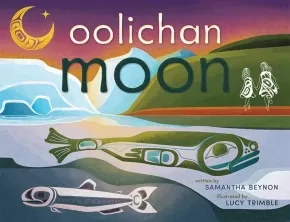
Oolichan Moon
$24.95
Artists:
Format:
Hardcover
Text Content Territories:
Indigenous Canadian; First Nations; Nisga'a;
ISBN / Barcode: 9781550179927
Synopsis:
Synopsis:
Oolichan Moon is a beautifully illustrated children’s book about passing down traditional knowledge from Nisga'a Elders and the sacredness of traditional foods, particularly the oolichan fish.
Together, author Samantha Beynon and illustrator Lucy Trimble have created a children’s book rich with cultural knowledge and tradition that relates to their Nisga'a ancestry surrounding the oolichan fish.
With playful text and vibrant illustrations, young readers can learn alongside the two Nisga'a sisters as they are gifted with sacred knowledge from their Elders, passed down for many generations in the oral tradition.
A gorgeous celebration of Nisga'a language, history and culture, Oolichan Moon also includes historical and cultural information about the oolichan fish and related Nisga'a vocabulary.
Awards
- 2023 Indigenous Voices Awards Winner: Published Graphic Novels, Comics and Illustrated Books
Reviews
"Oolichan Moon is a wonderful story with such simple teachings for all of us. The oolichan were so important for many people of the rivers. The long winter is over, and Spring is here and so too the oolichans return to feed and provide for the people. Today, we still fish for the Oolichan but like most fish of the river their numbers are low. This story teaches all of us that we must only take what is needed and that we should always give something back. This is survival. This is the teaching." — Joseph Dandurand, storyteller and author of A Magical Sturgeon and The Sasquatch, the Fire
"Samantha Beynon and Lucy Trimble have created a beautiful, heart-warming story featuring a nutritious and iconic little fish of the Northwest Coast. Since time immemorial, oulachens have served as a food and esteemed condiment for the Nisga’a Peoples of the Nass Valley and for many other coastal First Nations from Alaska to the Columbia River. Through the delightful teachings of wise and kind grandparents, the granddaughters—and we, as readers—are able to learn about oulachens and their immense cultural value. We learn how and when they are caught, and how they are prepared, and especially how they are rendered into a nutrient-rich and highly valued oil. At the same time, we experience “history, laughter, and love,” and gain insights into the deep and lasting relationships that Indigenous Peoples have developed with the fish and other species of their homelands and how children and youth are taught about these profound connections. The illustrations are stunning." — Nancy Turner, Professor Emeritus, University of Victoria, and author of Plants of Haida Gwaii
“I had a little tear welling up in my eye as I thought how cool it will be for kids to be reading about part of their culture. This kind of story is long overdue and badly needed. I hope it is the first of many.” — Edward Desson, fisheries manager, Nisga’a Fisheries and Wildlife, Nisga’a Lisims Government
"Packed with traditional knowledge, family values and deep wisdom, this story instantly transports you to a timeless place! Like visiting with family, you can feel strength and warmth beaming from each page." — Lucky Budd, author of Peace Dancer and One Eagle Soaring
Educator Information
Recommended for ages 3 to 6.
This is the first book in the Sisters Learn Foods of the Elders series.
Additional Information
32 pages | 11.00" x 8.50" | Hardcover
 Our logo reflects the greater Nation we live within—Turtle Island (North America)—and the strength
and core of the Pacific Northwest Coast peoples—the Cedar Tree, known as the Tree of Life. We are
here to support the building of strong nations and help share Indigenous voices.
Our logo reflects the greater Nation we live within—Turtle Island (North America)—and the strength
and core of the Pacific Northwest Coast peoples—the Cedar Tree, known as the Tree of Life. We are
here to support the building of strong nations and help share Indigenous voices.


